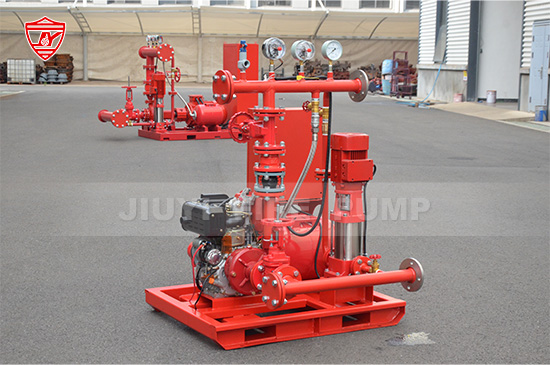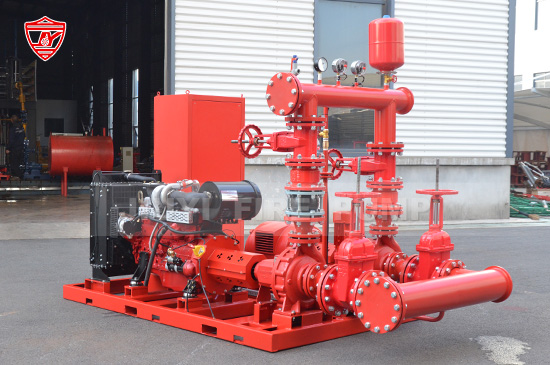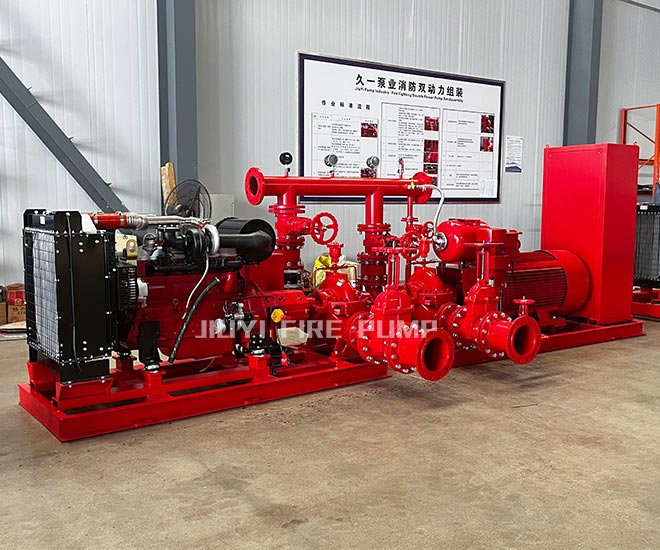
Fire pump systems are critical components of fire protection infrastructure. Whether installed in commercial buildings, industrial facilities, warehouses, airports, hospitals, or data centers, fire pumps must operate reliably whenever an emergency occurs. Among the many factors that influence the performance and reliability of a fire pump system, driver alignment is one of the most important yet often overlooked aspects.
Fire pump driver alignment refers to the precise positioning of the pump shaft and the driver shaft so that they operate on the same centerline. Proper alignment ensures efficient power transmission, minimizes vibration, reduces wear on mechanical components, and helps maintain the long-term reliability of the fire pump system.
This article explains what fire pump driver alignment is, why it matters, the types of alignment, common causes of misalignment, alignment methods, and best maintenance practices.
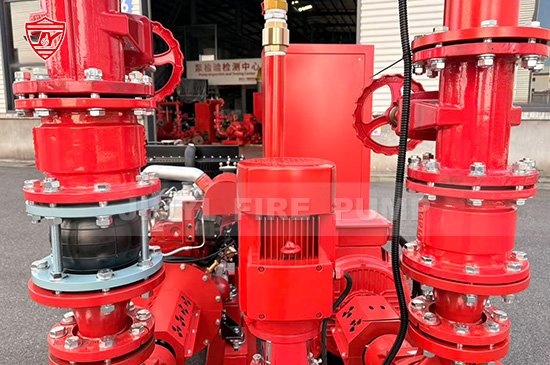
Before discussing alignment, it is important to understand what a fire pump driver is.
A fire pump driver is the power source that operates the fire pump. The most common types include:
The driver generates rotational energy, which is transferred to the pump through a coupling or drive system. This energy allows the pump to deliver water at the required pressure and flow rate during a fire emergency.
Because the driver and pump operate as a single mechanical unit, their shafts must remain properly aligned to ensure smooth operation.
Fire pump driver alignment is the process of adjusting the relative positions of the pump and driver shafts so that they rotate along a common centerline.
When alignment is correct, the rotational force produced by the driver is transmitted efficiently to the pump. The coupling connecting the two shafts experiences minimal stress, and the system operates with reduced vibration and mechanical wear.
When alignment is incorrect, the shafts are offset or angled relative to one another. This condition is known as misalignment and can create excessive stress throughout the entire pump assembly.
Even a small amount of misalignment can significantly affect equipment performance and reliability over time.
Proper alignment directly affects the safety, efficiency, and longevity of fire pump systems.
Fire pumps are emergency equipment that may remain idle for long periods before being required to operate immediately during a fire event.
Proper alignment reduces the likelihood of unexpected failures and helps ensure the system performs when needed.
Misalignment is one of the most common causes of excessive vibration in rotating equipment.
Excessive vibration can damage:
Proper alignment minimizes vibration and protects critical components.
When shafts are aligned correctly, loads are distributed evenly throughout the system.
This reduces wear on rotating components and extends the service life of both the pump and driver.
Misalignment often leads to premature component failures.
By maintaining proper alignment, facility owners can reduce repair costs, minimize downtime, and improve overall maintenance efficiency.
Proper alignment reduces friction and mechanical losses.
As a result, the driver requires less energy to operate the pump, improving overall system efficiency.
Understanding the different types of misalignment helps technicians identify and correct alignment issues more effectively.
Parallel misalignment occurs when the shafts are parallel to each other but not on the same centerline.
In this condition, the shaft centers are offset horizontally or vertically.
This type of misalignment creates continuous side loading on bearings and couplings.
Angular misalignment occurs when the shafts intersect at an angle rather than operating on the same centerline.
The shaft centerlines may meet at a point, but they are not parallel.
Angular misalignment often generates cyclic stresses and increased vibration.
In many cases, both parallel and angular misalignment occur simultaneously.
This combined condition is particularly harmful because it creates multiple sources of mechanical stress throughout the system.
Several factors can cause a properly aligned fire pump system to become misaligned over time.
Poor installation practices are among the most common causes of alignment problems.
If the pump and driver are not aligned accurately during installation, operational issues may appear immediately or develop gradually.
Over time, building foundations or concrete housekeeping pads may settle.
Even small foundation movements can affect shaft alignment.
Improperly supported piping can exert excessive forces on the pump casing.
These forces may distort equipment positioning and cause alignment changes.
As equipment operates, temperature changes can cause components to expand.
Differences in thermal expansion between the pump and driver may affect alignment during operation.
Long-term vibration and component wear can gradually shift equipment positions.
Loose bolts, worn bearings, and deteriorated mounting hardware can contribute to alignment issues.
Whenever a fire pump system is moved, repaired, or reassembled, alignment should be checked before returning the equipment to service.
Early detection of misalignment can prevent costly repairs and unexpected failures.
Common warning signs include:
Unusual vibration levels are often the first indication of alignment problems.
Technicians may notice vibration in:
Frequent bearing replacements may indicate underlying alignment issues.
Misalignment places additional loads on bearings, accelerating wear.
Premature coupling deterioration often points to shaft misalignment.
Damaged coupling elements may show uneven wear patterns.
Misalignment can increase friction within rotating components.
This often results in elevated bearing or coupling temperatures.
Grinding, rattling, or excessive mechanical noise can indicate alignment problems.
Mechanical seals are sensitive to shaft movement.
Misalignment may cause seal leakage and premature failure.
Proper alignment requires specialized tools and trained personnel.
The alignment process generally includes several steps.
Technicians inspect the entire pump assembly, including:
Any mechanical issues should be corrected before alignment begins.
The pump and driver are positioned approximately in line with one another.
This initial adjustment establishes a starting point for precision alignment.
Alignment measurements are taken using specialized tools.
Common measurement methods include:
This traditional method uses a straightedge and feeler gauges to measure shaft positioning.
Although simple, it offers limited accuracy compared to modern techniques.
Dial indicators measure shaft movement and positional differences during rotation.
This method provides greater accuracy and remains widely used in industrial applications.
Laser alignment technology is considered the industry standard.
Laser systems provide highly accurate measurements and real-time adjustment guidance.
Benefits include:
Technicians make horizontal and vertical corrections by adjusting the driver position.
Shims are commonly used to adjust vertical alignment.
After adjustments are completed, measurements are repeated to confirm alignment meets specified tolerances.
Alignment results should be documented for maintenance records and future reference.
Alignment tolerances vary depending on equipment design, operating speed, and manufacturer requirements.
Generally, higher-speed equipment requires tighter alignment tolerances.
Modern laser alignment systems often help technicians achieve precise tolerances recommended by equipment manufacturers.
Always follow manufacturer specifications and applicable standards when establishing alignment acceptance criteria.
Electric motor-driven fire pumps are common in commercial and industrial facilities.
When aligning electric motor-driven systems, technicians should pay special attention to:
Correcting soft foot conditions before alignment is particularly important because uneven motor support can create false alignment readings.
Diesel engine-driven fire pumps present additional alignment challenges.
Diesel engines generate higher vibration levels and experience greater thermal expansion than electric motors.
Important considerations include:
Proper alignment is essential for maintaining reliable operation under emergency conditions.
To maximize system reliability, facility owners should adopt a proactive maintenance approach.
Recommended practices include:
Accurate alignment during initial installation provides the foundation for long-term equipment reliability.
Routine inspections help identify potential alignment issues before failures occur.
Vibration analysis can detect developing alignment problems early.
Any maintenance involving pumps, motors, engines, couplings, or foundations should be followed by alignment verification.
Properly supported piping reduces external loads on the pump and helps preserve alignment.
Alignment measurements, vibration readings, and maintenance activities should be documented to support long-term asset management.
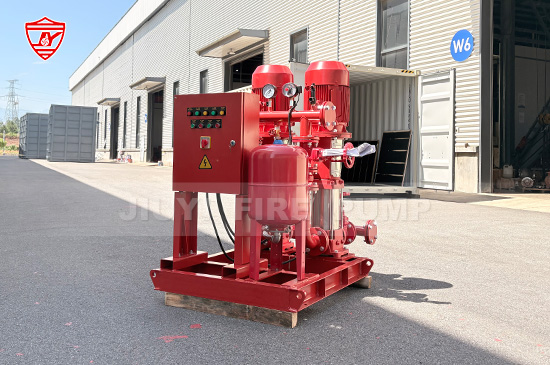
Fire pump driver alignment is a critical aspect of fire pump installation, operation, and maintenance. Proper alignment ensures that the pump and driver shafts rotate on the same centerline, allowing efficient power transmission while minimizing vibration, wear, and mechanical stress.
Misalignment can lead to bearing failures, coupling damage, seal leaks, increased maintenance costs, and reduced system reliability. By understanding the causes of misalignment, utilizing modern alignment techniques, and implementing regular inspection programs, facility owners can significantly improve fire pump performance and operational readiness.