Selecting the correct diesel fire pump is one of the most important decisions in the design of a fire protection system. A pump that is too small may not provide sufficient water flow or pressure when a fire occurs, while an oversized pump can increase equipment costs, energy consumption, installation requirements, and system complexity.
Diesel fire pump sizing should therefore be based on the actual hydraulic requirements of the fire protection system rather than simply selecting a pump with the highest available flow or pressure. The process requires an understanding of sprinkler demand, hose stream requirements, system pressure losses, elevation, water supply, pump performance, and applicable fire protection standards.
This guide explains the key factors to consider when sizing a diesel fire pump and provides a practical approach for engineers, contractors, distributors, and fire safety professionals.
The first step in diesel fire pump sizing is identifying the required duty point.
A fire pump duty point is generally expressed by two main parameters:
For example, a project may require a fire pump capable of delivering 1,000 GPM at 100 PSI. This does not mean the pump should simply be selected based on a 1,000 GPM nominal rating. The complete fire protection system must be hydraulically analyzed to determine the actual demand.
The required flow depends on the type of fire protection system and the hazard being protected. Different applications can have significantly different water demands.
Industrial facilities, warehouses, commercial buildings, high-rise buildings, manufacturing plants, and infrastructure projects may all require different fire pump capacities.
The correct starting point is therefore the hydraulic design of the fire protection system.
Flow is one of the most important parameters in diesel fire pump sizing.
The required flow may be determined from the combined demand of the fire protection equipment that needs to operate during the design fire scenario. Depending on the project, this can include automatic sprinklers, standpipe systems, hose stations, hydrants, water spray systems, foam systems, or other fixed fire suppression equipment.
For example, if a sprinkler system requires 750 GPM and the applicable hose stream allowance is 250 GPM, the total required flow could be approximately:
750 GPM + 250 GPM = 1,000 GPM
The final calculation must always follow the specific hydraulic design and applicable project requirements.
It is important not to estimate flow simply from building size. Two buildings with the same floor area can have very different fire protection requirements because of differences in occupancy, storage arrangement, commodity classification, ceiling height, sprinkler design, and hazard level.
Once the required flow has been established, the next step is determining the pressure the diesel fire pump must provide.
The required pump pressure needs to overcome the pressure requirements of the fire protection system and the losses between the water source and the hydraulically most remote point.
A simplified calculation can be expressed as:
Required Pump Pressure = Required System Pressure + Friction Losses + Elevation Losses + Other Required Losses
Several factors can affect the final pressure requirement.
Sprinklers, standpipes, hydrants, and other firefighting equipment may require a minimum operating pressure to function correctly.
Water loses pressure as it travels through pipes, fittings, valves, strainers, and other components. Longer pipe runs and smaller pipe diameters generally produce greater friction losses.
Elevation has a major impact on fire pump pressure. Water pressure decreases as elevation increases. High-rise buildings can therefore require substantially higher pump discharge pressure than low-rise facilities.
Additional pressure losses can occur across backflow preventers, valves, meters, filters, alarm devices, and other components.
All of these losses should be included in the hydraulic calculation before selecting the diesel fire pump.
The fire pump does not operate independently from the water source. Before selecting the pump, engineers should understand the available water supply.
The source may be a municipal water network, dedicated fire water tank, reservoir, or another approved water source.
Important water supply information can include:
The relationship between the water supply and pump demand is critical.
For example, if the incoming water supply already provides significant pressure, the fire pump may need to add less pressure. If the water supply has little or no usable pressure, the pump must provide most of the required pressure.
When the pump takes suction from a water storage tank, the tank capacity and elevation must also be considered.
One common mistake is selecting a diesel fire pump based only on its rated flow.
A proper selection should consider the entire certified or approved pump performance curve.
For example, a pump may be rated at 1,000 GPM, but its performance at the required pressure must also satisfy the project demand. The pump should be capable of delivering the required flow at the required pressure while remaining within the applicable performance requirements.
The following points are particularly important:
The pump should not simply meet one point on paper. Its performance should be appropriate for the expected operating range of the fire protection system.
A diesel fire pump system consists of more than the pump itself. The diesel engine must provide sufficient power to drive the selected pump across its required operating range.
The engine selection should therefore be based on the power required by the pump and the applicable fire protection requirements.
If the selected pump requires more horsepower at a particular operating point than the engine can reliably provide, the system may not perform as intended.
When selecting a diesel fire pump package, the pump, diesel engine, controller, fuel system, cooling system, and other components should be considered as an integrated system.
This is particularly important for projects requiring certified or listed fire pump equipment.
Fire protection systems may have operating conditions that require more than the nominal rated flow.
For this reason, engineers should evaluate the pump performance at higher flow conditions rather than checking only the rated duty point.
A pump that performs well at its rated flow but cannot provide suitable pressure at higher demand may not be an appropriate choice.
The hydraulic calculation should identify the expected maximum demand, and the selected pump should have an appropriate performance curve for that condition.
This is especially important for large industrial facilities, warehouses, process plants, and systems with multiple fire protection components.
Suction conditions are another critical consideration when sizing a diesel fire pump.
The pump must receive adequate water at its suction connection. Poor suction conditions can result in cavitation, unstable operation, reduced performance, or damage to the pump.
Factors to evaluate include:
A correctly sized pump can still experience operational problems if the suction arrangement is poorly designed.
The suction pipe should therefore be evaluated together with the pump selection rather than treated as a separate issue.
Elevation becomes particularly important in high-rise buildings and large industrial sites.
As water must be delivered to a higher elevation, additional pressure is required to overcome the elevation difference.
For long-distance firefighting systems, friction losses in the piping network can also become significant.
A pump that is suitable for a small low-rise building may therefore be completely unsuitable for a high-rise or large industrial installation, even if the required flow rate appears similar.
Hydraulic calculations should account for the complete route from the water source to the hydraulically most demanding point.
Oversizing may appear to provide additional safety, but selecting a significantly larger pump is not always the best solution.
An oversized fire pump can create several challenges, including:
The objective should be to select a pump that appropriately satisfies the calculated fire protection demand while complying with the applicable requirements.
A larger pump is not automatically a better pump.
For many international fire protection projects, pump selection must comply with specific standards and certification requirements.
NFPA 20 is one of the key standards commonly referenced for the selection and installation of stationary pumps for fire protection.
Projects may also require UL Listed or FM Approved fire pump equipment depending on the authority having jurisdiction, project specification, insurance requirements, or local regulations.
When certification is required, the complete pump package should be evaluated against the applicable certification requirements.
This can include the pump, diesel engine, controller, accessories, and other components of the fire pump assembly.
Always confirm the latest applicable requirements with the project's engineer, authority having jurisdiction, and certification requirements.
Diesel fire pumps depend on reliable fuel availability during an emergency.
After determining the pump size, the project should also evaluate the diesel engine's fuel consumption and required operating duration.
The fuel tank should be appropriately sized according to the applicable project requirements and local regulations.
The installation should also provide suitable ventilation, exhaust arrangements, cooling, battery systems, and maintenance access.
The objective is not simply to make the diesel engine powerful enough to drive the pump. The complete diesel fire pump system must be capable of starting and operating reliably when emergency water demand occurs.
Consider a hypothetical industrial facility with the following hydraulic requirements:
Sprinkler demand: 800 GPM
Hose stream allowance: 200 GPM
Total required flow: 1,000 GPM
Suppose the hydraulic calculation determines that the system requires 110 PSI at the pump discharge after considering the required system pressure, friction losses, elevation, and other losses.
The preliminary fire pump duty point would therefore be:
1,000 GPM at 110 PSI
The next step is to review available fire pump models and their performance curves.
The selected pump should be able to deliver the required 1,000 GPM at approximately 110 PSI while meeting the applicable performance requirements. The diesel engine should then be selected to provide sufficient power for the pump across the required operating range.
The final selection should also consider the water source, suction conditions, maximum flow, certification requirements, controller, fuel system, and installation conditions.
This example demonstrates why pump sizing should begin with hydraulic calculations rather than starting with a pump catalog.
Several mistakes can lead to incorrect pump selection.
A pump rated at the required GPM may not provide the required pressure. Flow and pressure must always be evaluated together.
High-elevation systems require additional pressure. Failing to account for elevation can result in insufficient pressure at the remote firefighting equipment.
Pipe length, pipe diameter, fittings, valves, and other components all affect system pressure.
Excessive capacity can create unnecessary cost and system design problems.
The diesel engine must have sufficient power for the selected pump and its required operating conditions.
A pump that meets the hydraulic requirement may not meet a project's required UL, FM, or other certification requirements.
Before finalizing a diesel fire pump selection, review the following information:
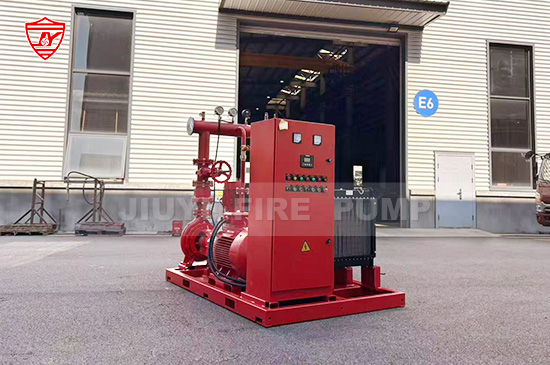
Correctly sizing a diesel fire pump requires more than choosing a pump with a suitable flow rating. The complete fire protection system must be evaluated to determine the required flow, pressure, elevation, friction losses, water supply, suction conditions, and operating requirements.
The selected diesel engine must also provide adequate power for the pump, while the complete package should meet the applicable project standards and certification requirements.
For fire pump manufacturers, engineers, contractors, and fire protection professionals, accurate hydraulic calculations and careful pump curve analysis are essential to achieving reliable emergency performance.
A correctly sized diesel fire pump provides the foundation for a dependable fire protection system. By evaluating the complete system rather than focusing on a single pump parameter, project teams can select equipment that provides the required firefighting performance while avoiding unnecessary oversizing and installation costs.