
Selecting the right diesel fire pump power is one of the most important decisions when designing a reliable fire protection system. An engine that is too small may fail to deliver the required flow and pressure, while an unnecessarily oversized engine can increase equipment cost, fuel consumption, installation requirements, and operating expenses.
For fire protection professionals, EPC contractors, system designers, distributors, and facility owners, diesel fire pump power should never be selected simply by comparing horsepower ratings. The correct power depends on the hydraulic requirements of the fire pump, including flow rate, pressure, total head, pump efficiency, speed, and operating conditions.
This guide explains the key factors to consider when selecting diesel fire pump power and provides a practical approach to making the right decision for your fire protection project.
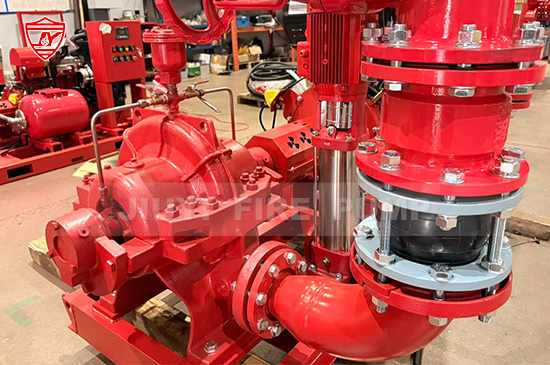
Diesel fire pump power refers to the engine output required to drive the fire pump under the specified operating conditions.
A diesel fire pump system normally consists of a diesel engine, fire pump, controller, fuel system, cooling system, and associated accessories. The diesel engine supplies mechanical power to the pump shaft, allowing the pump to generate the required water flow and pressure when the fire protection system demands it.
The required engine power is primarily determined by the pump's hydraulic power requirement. Therefore, selecting the engine should begin with understanding the pump's required performance rather than starting with the engine horsepower.
For example, two fire pumps may have the same rated flow but require different engine powers if they operate at different pressures, speeds, or efficiencies.
The first step in diesel fire pump sizing is determining the required flow rate.
Fire protection systems may require very different flow capacities depending on the application. A small commercial building may have significantly different requirements from a warehouse, manufacturing plant, high-rise building, airport, or petrochemical facility.
The required flow is normally determined from the hydraulic design of the fire protection system. Factors can include:
Fire pump capacity is commonly expressed in gallons per minute or liters per minute.
The selected diesel engine must provide sufficient power for the fire pump to meet the required flow at the specified pressure. Choosing engine power before determining the required pump flow can result in an improperly matched system.
Flow alone does not determine diesel fire pump power. Pressure is equally important.
The pump must overcome the total hydraulic resistance of the fire protection system and provide the required pressure at the most demanding point.
Total head may include:
A project requiring high pressure will generally require more engine power than a system with the same flow but lower pressure.
For this reason, a diesel fire pump rated at 1,000 GPM cannot be selected solely on the basis of its 1,000 GPM capacity. The required discharge pressure must also be considered.
The fundamental relationship between pump hydraulic performance and power can be simplified as:
Pump power is proportional to flow × pressure ÷ efficiency.
In practical pump engineering, the required brake horsepower depends on the pump's flow, total head, specific gravity of the pumped liquid, and pump efficiency.
For water, a commonly used formula in U.S. customary units is:
BHP = (Q × H) / (3960 × η)
Where:
This calculation provides an indication of the power required by the pump. The actual engine selection must also consider the complete pump performance curve and applicable certification and listing requirements.
For example, if the required flow increases while pressure remains constant, the required pump power increases. Similarly, if pressure increases while flow remains constant, the required power also increases.
This is why diesel fire pump power should always be evaluated together with the pump curve.
The pump performance curve is one of the most important documents for selecting the correct diesel engine.
A pump curve shows how the pump performs at different flow rates and pressures. It can also provide information about efficiency and power requirements.
When selecting an engine, engineers should check the maximum power requirement of the pump over the required operating range rather than looking only at the rated duty point.
This is especially important because a fire pump may operate at different flow conditions during testing or an actual emergency.
The engine should have adequate power to drive the pump throughout the applicable operating range without being overloaded.
For a packaged diesel fire pump set, the pump and engine should be properly matched by the manufacturer. The final selection should be based on verified pump performance data and the applicable fire protection requirements.
Engine speed also affects diesel fire pump selection.
Fire pump systems may use different operating speeds depending on pump design, engine characteristics, and project requirements. Common engine speeds can include 1,500 RPM, 1,800 RPM, or other configurations depending on the market and equipment.
A higher-speed engine may have a different power output, torque characteristic, cooling requirement, and maintenance profile compared with a lower-speed engine.
The engine speed must therefore be compatible with the pump speed and drive arrangement.
Selecting an engine with sufficient horsepower but an unsuitable speed is not an appropriate solution. The engine and pump must be designed as a matched system.
Environmental conditions can affect diesel engine performance.
At higher elevations, air density decreases. This can reduce the amount of oxygen available for combustion and may reduce the engine's available power.
High ambient temperatures can also affect engine performance and cooling capacity.
For projects located in high-altitude regions, hot climates, or enclosed mechanical rooms, the engine selection should take the actual site conditions into account.
This is particularly important for international projects where diesel fire pump systems may be installed in environments very different from the manufacturer's testing conditions.
Engine derating requirements should be evaluated before finalizing the diesel fire pump power.
Choosing an engine with exactly the calculated minimum power may not be the best approach.
The engine should have adequate capacity to meet the pump's requirements under the specified operating conditions. However, excessive oversizing should also be avoided.
An appropriate power margin helps prevent engine overload and provides reliable operation when the system operates under demanding conditions.
The correct margin depends on the pump design, engine characteristics, applicable standards, listing requirements, and manufacturer recommendations.
For listed fire pump equipment, the engine selection must satisfy the requirements associated with the complete listed assembly. The goal is not simply to select the largest available engine but to select an appropriately matched and approved engine.
For many international fire protection projects, NFPA 20 is an important reference for fire pump installation and equipment selection.
When a project requires UL Listed or FM Approved fire pump equipment, the selection process becomes more specific. The pump, diesel engine, controller, and other components may need to meet the applicable listing or approval requirements.
This means that an engine should not be substituted simply because it has the same horsepower rating.
The engine model, rated power, speed, pump combination, and control system may all be part of the approved configuration.
For projects requiring UL Listed or FM Approved equipment, always verify that the selected diesel engine and fire pump combination meets the project's certification requirements.
A diesel fire pump package should be treated as an integrated system.
The engine must provide sufficient power to drive the pump while maintaining reliable operation. At the same time, the pump must meet the required flow and pressure.
A proper selection process therefore follows this sequence:
Fire protection demand → Required flow and pressure → Pump selection → Pump power requirement → Diesel engine selection → Complete system verification
This approach is much more reliable than selecting a diesel engine based only on a desired horsepower number.
For example, selecting a 200 HP engine does not automatically mean the system can provide the required fire protection performance. The actual pump curve, flow, head, efficiency, engine speed, and operating conditions must all be considered.
Several mistakes occur frequently during fire pump selection.
Two pumps with the same flow can require different engine powers because their pressure requirements are different.
The engine should normally be selected after the hydraulic requirements and pump performance have been established.
A less efficient pump requires more input power to achieve the same hydraulic output.
Altitude, temperature, ventilation, and installation conditions can affect diesel engine performance.
A significantly oversized engine may increase equipment costs and fuel consumption without providing meaningful benefits.
A standard industrial diesel engine cannot automatically be used as a substitute for a listed or approved fire pump engine.
Engine horsepower is important, but it is only one part of the selection process. Engine speed, torque, duty rating, certification, cooling, fuel system, and compatibility with the pump must also be evaluated.
Working with an experienced fire pump manufacturer can simplify the selection process.
A professional manufacturer should be able to evaluate the required flow, pressure, pump curve, engine power, operating speed, environmental conditions, and certification requirements together.
For international projects, manufacturers should also be able to provide technical documentation such as pump performance curves, engine specifications, dimensional drawings, certification information, test reports, and complete fire pump package data.
This documentation allows consultants, EPC contractors, fire protection engineers, and project owners to verify that the selected equipment meets the project requirements.
Before confirming a diesel fire pump package, verify the following:
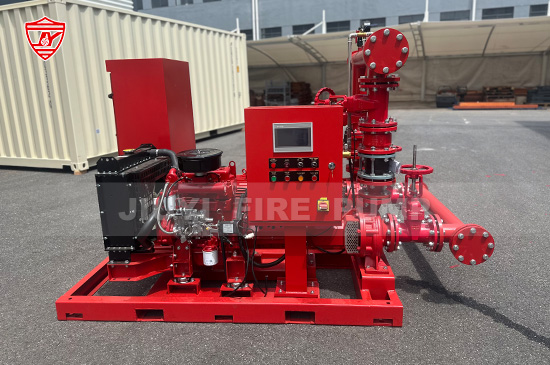
Choosing the right diesel fire pump power is not simply a matter of selecting an engine with a higher horsepower rating. The correct selection starts with the hydraulic requirements of the fire protection system and then considers flow, pressure, pump efficiency, pump performance, engine speed, site conditions, certification requirements, and the complete equipment configuration.
The best diesel fire pump is one that provides sufficient power to reliably drive the selected pump under the required operating conditions while meeting the applicable fire protection standards.
For fire pump manufacturers, distributors, EPC contractors, and system designers, taking a complete-system approach to diesel fire pump power selection can help prevent incorrect equipment selection, improve system reliability, and support long-term fire protection performance.
.jpg)