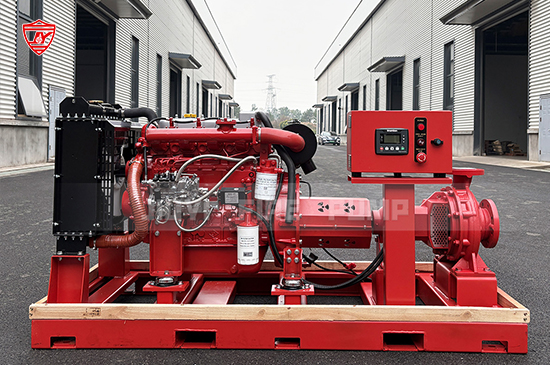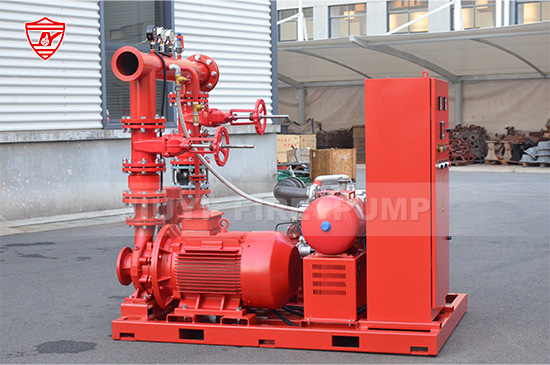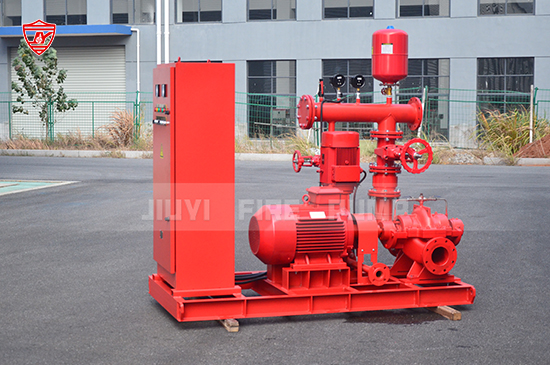
A diesel fire pump is a critical part of a fire protection system, particularly where a reliable water supply must remain available during a power failure. However, installing a high-quality diesel fire pump is only the first step. Regular testing is necessary to verify that the pump, diesel engine, controller, fuel system, and related equipment remain ready for emergency operation.
Diesel fire pump testing should be performed according to the applicable fire protection standards, the equipment manufacturer's instructions, and local authority requirements. In many installations, NFPA 25 provides the basis for inspection, testing, and maintenance of water-based fire protection systems, while NFPA 20 addresses the installation of stationary pumps for fire protection.
This guide explains the main steps involved in diesel fire pump testing and highlights the areas that fire safety professionals should pay attention to.
.jpg)
A diesel fire pump may remain unused for long periods because it is designed primarily for emergency situations. This creates a potential problem: equipment that is not regularly operated can develop hidden faults.
Testing helps identify problems before an actual fire emergency occurs. A test can reveal issues such as low battery voltage, insufficient fuel, starting-system problems, abnormal engine temperatures, lubrication problems, clogged filters, controller faults, or inadequate pump performance.
Regular testing also helps confirm that the complete fire pump system can deliver the required pressure and flow when demanded.
For building owners, facility managers, fire protection contractors, and system operators, the objective is simple: when the fire protection system needs water, the diesel fire pump should start promptly and perform as expected.
Before starting the diesel fire pump, perform a visual inspection of the equipment and surrounding area.
First, check the general condition of the pump and diesel engine. Look for visible leaks, damaged components, loose connections, corrosion, or unusual conditions around the equipment.
Next, inspect the fuel system. The diesel fuel tank should contain sufficient fuel for the installation's requirements, and the fuel system should be free from visible leakage or damage.
The engine oil level should also be checked according to the manufacturer's instructions. Inspect the cooling system and verify that the coolant level and related components are in satisfactory condition.
The batteries and battery connections are particularly important. A diesel fire pump depends on its starting batteries to operate during an emergency. Check battery condition, terminals, connections, and charger status.
The fire pump controller should also be inspected. Verify that the controller is in the correct automatic operating position and that there are no abnormal alarm or fault indications.
Finally, check the pump room itself. The area should be clean, accessible, adequately ventilated, and maintained at suitable environmental conditions for the equipment.
The controller is responsible for automatically starting the diesel engine when the fire protection system requires additional water pressure.
Before testing, verify that the controller is in automatic mode. Review any indicators or alarms and make sure there are no unresolved fault conditions.
Depending on the system design, the diesel engine may start automatically when system pressure falls below the predetermined starting pressure.
The controller should be operated according to the manufacturer's instructions. Do not bypass safety functions or modify controller settings simply to obtain a desired test result.
A properly functioning controller is essential because the pump may be mechanically capable of producing the required performance but still fail to operate automatically during an emergency if the starting system has a problem.
The next step is to verify that the diesel engine starts correctly.
During an automatic starting test, initiate the conditions required for the fire pump controller to call for the pump. Observe whether the diesel engine starts properly.
Pay attention to the starting time, engine sound, exhaust condition, oil pressure, coolant temperature, and other available engine indicators.
Once the engine has started, allow it to operate according to the applicable testing requirements and manufacturer's instructions.
A diesel engine that requires excessive cranking before starting, produces unusual noise, shows abnormal operating parameters, or fails to start consistently should be investigated immediately.
Do not consider a successful engine start alone to be proof that the entire fire pump system is ready. The pump must also be evaluated under appropriate operating conditions.
A churn test, also known as a no-flow test, evaluates the fire pump while operating without delivering its rated flow to the system.
During this test, the pump operates while the discharge flow is restricted according to the approved test arrangement. The pressure produced by the pump can then be observed.
Record the suction pressure and discharge pressure, where applicable, and compare the results with the expected pump performance.
The exact pressure at churn depends on the pump design and rated performance. It should not simply be judged against the rated pressure shown on the pump nameplate.
A significant change from expected performance may indicate problems such as impeller damage, incorrect rotation, wear, obstruction, suction problems, or other hydraulic issues.
The engine should also be monitored during operation to ensure that operating parameters remain within acceptable limits.
A flow test provides a more complete assessment of diesel fire pump performance.
Unlike a churn test, a flow test evaluates the pump while water is being discharged at different flow conditions. The test may use a calibrated flow meter, test header, hose streams, or another approved testing arrangement, depending on the system design.
Important readings can include:
The measured results should be compared with the approved pump performance curve and the requirements applicable to the installation.
A fire pump should not be evaluated solely by whether it starts. Its ability to provide the required flow and pressure is fundamental to fire protection system performance.
For this reason, accurate test equipment and properly calibrated instruments are important.
While the diesel fire pump is running, observe the engine carefully.
Check the oil pressure, coolant temperature, engine speed, battery charging condition, and other available indicators.
Listen for abnormal mechanical sounds. Excessive vibration, unusual exhaust smoke, unstable engine speed, overheating, or fluid leakage should not be ignored.
The cooling system is particularly important because diesel engines can generate substantial heat during operation. The cooling system must be capable of maintaining the engine within its intended operating range.
The exhaust system and ventilation arrangement should also be checked. Adequate ventilation is necessary to provide combustion air and remove heat and exhaust gases from the pump room.
After the diesel engine has been tested, verify the controller's normal operating functions.
Depending on the installation and applicable requirements, testing may include simulated pressure loss and verification of automatic starting functions.
The purpose is to confirm that the complete sequence works as intended: the system pressure falls, the controller detects the condition, the diesel engine starts, and the pump begins supplying water.
Any alarm, indicator, or monitoring function required by the system should also be checked according to the applicable testing procedure.
A diesel fire pump test should always be documented.
Important information can include the test date, pump identification, engine identification, suction pressure, discharge pressure, flow rate, engine operating parameters, battery condition, fuel level, and any abnormal observations.
Historical test records are valuable because they allow operators to identify changes in performance over time.
For example, if a pump previously delivered its expected flow and pressure but gradually shows reduced performance during subsequent tests, this may indicate developing mechanical or hydraulic problems.
Trend analysis can therefore help maintenance teams identify potential issues before they become serious failures.
Several problems are frequently associated with diesel fire pump systems.
Failure to start: Possible causes include weak batteries, poor battery connections, charger problems, controller faults, fuel-system problems, or engine issues.
Low discharge pressure: Potential causes include pump wear, impeller problems, incorrect rotation, suction restrictions, or changes in system conditions.
Insufficient flow: This may be associated with pump performance, suction conditions, valves, obstructions, or other hydraulic issues.
Engine overheating: Possible causes include cooling-system problems, inadequate ventilation, insufficient coolant, or abnormal operating conditions.
Low fuel level: Insufficient fuel can compromise the ability of the diesel engine to operate when required.
Abnormal vibration or noise: These conditions may indicate alignment, bearing, coupling, mechanical, or hydraulic problems and should be investigated.
The key principle is not to ignore a test result simply because the pump eventually starts. Any significant abnormal condition should be evaluated and corrected.
Testing frequency depends on the applicable fire protection standard, system type, jurisdiction, manufacturer requirements, and authority having jurisdiction.
NFPA 25 establishes inspection, testing, and maintenance requirements for water-based fire protection systems, including fire pumps. However, the exact testing schedule applicable to a particular installation should be confirmed against the current edition of the relevant standard and local requirements.
In many fire protection applications, diesel fire pumps are subject to regular operational testing, with more comprehensive performance testing performed at specified intervals.
Facility operators should maintain a documented testing program rather than treating testing as an occasional activity.
A reliable testing program should follow several basic principles.
First, use qualified personnel who understand diesel engines, fire pumps, controllers, and fire protection systems.
Second, use appropriate and properly maintained test instruments.
Third, follow the approved testing procedure and the manufacturer's instructions.
Fourth, compare test results with the pump's approved performance data rather than relying on a single pressure reading.
Fifth, document every test and investigate abnormal trends.
Finally, any deficiencies discovered during testing should be corrected promptly. A test is valuable only when its findings lead to appropriate maintenance or corrective action.
.jpg)
Testing a diesel fire pump is an essential part of maintaining fire protection system readiness. A proper test should go beyond confirming that the diesel engine starts. It should evaluate the controller, engine, pump, fuel system, batteries, cooling system, hydraulic performance, and other critical components.
Regular testing helps identify problems before an emergency occurs and provides valuable performance data for maintenance planning.
For fire pump manufacturers, contractors, facility managers, and fire safety professionals, the goal of diesel fire pump testing is ultimately the same: to ensure that the pump is capable of delivering the required water supply when fire protection systems need it most.
A well-designed diesel fire pump, combined with correct installation, regular testing, professional maintenance, and accurate performance records, provides a stronger foundation for reliable fire protection.