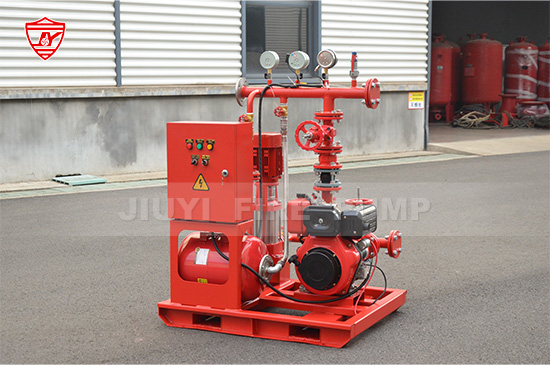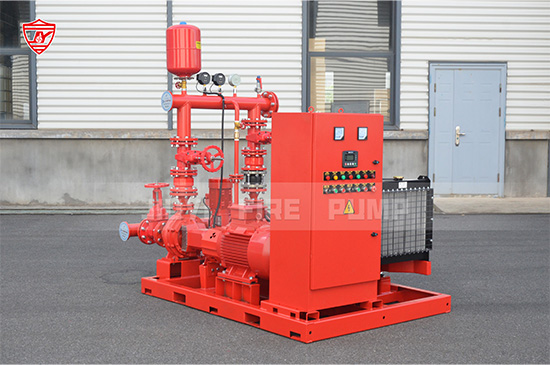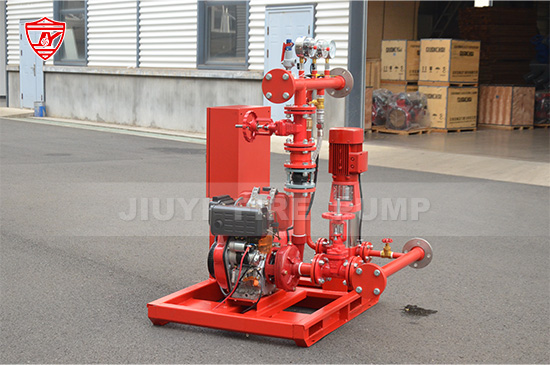
In fire protection systems, failure is not an option. When a fire pump is called into action, it must start immediately, deliver the required flow and pressure, and operate reliably under the most demanding conditions. For this reason, fire pump quality cannot be based on documentation alone. One of the most important safeguards in the entire supply chain is the Fire Pump Factory Acceptance Test, commonly known as FAT.
Fire pump FAT is not just a routine inspection step. It is a comprehensive verification process that ensures the pump system leaving the factory will perform exactly as designed when installed on site. For owners, consultants, and contractors, understanding why FAT is critical before shipment helps reduce risk, control costs, and protect lives and property.
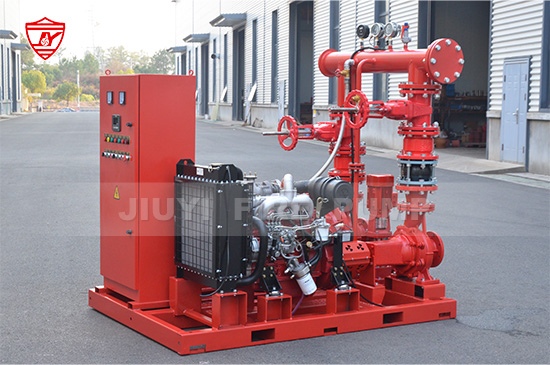
Fire pump FAT refers to a series of functional and performance tests conducted at the manufacturer’s facility before the fire pump is shipped to the project site. The objective is to confirm that the fire pump, driver, controller, and auxiliary components operate correctly as a complete system and comply with applicable standards and project requirements.
Unlike visual inspections or paperwork reviews, FAT validates real performance. Flow, pressure, speed, power, and system response are measured under controlled conditions. Any deviation from design expectations can be identified and corrected before the pump ever leaves the factory.
From a fire safety perspective, this is critical. Once a fire pump is installed, access for troubleshooting becomes more difficult and costly. FAT shifts risk from the construction site back to the factory, where problems are easier, faster, and safer to resolve.
One of the most important reasons fire pump FAT is critical before shipment is compliance with standards such as NFPA 20 and UL requirements. These standards define strict performance criteria for fire pumps, including rated flow, churn pressure, and overload conditions.
During FAT, the fire pump is tested across its performance curve to verify that it meets or exceeds the specified ratings. This includes confirming stable operation at 100 percent rated flow, acceptable performance at 150 percent flow, and proper pressure limits at churn. These tests demonstrate that the pump will perform as required during real fire scenarios, not just under ideal conditions.
For UL listed fire pumps, FAT also confirms that the configuration tested matches the configuration being shipped. Any unauthorized changes in components, materials, or assembly could invalidate compliance. FAT acts as a final checkpoint to ensure the delivered product remains consistent with its certification.
Another critical value of fire pump FAT is early detection of mechanical or electrical issues. Even with modern manufacturing processes, problems such as misalignment, vibration, improper wiring, control logic errors, or cooling system faults can occur.
Identifying these issues at the factory has a significant impact. Corrections can be made immediately by the manufacturer’s technical team, without the pressure of site schedules or limited resources. If such problems are discovered only during site testing, they often lead to delays, additional labor costs, and sometimes disputes between suppliers and contractors.
Fire pump FAT minimizes these risks by allowing the system to be fully operated and observed under load. Abnormal noise, overheating, unstable pressure, or irregular starting behavior can be investigated and resolved before shipment.
Fire pump systems are not single components. They are integrated assemblies that include the pump, driver, controller, coupling, baseplate, and auxiliary systems such as cooling water, fuel supply, or battery charging. FAT verifies that all these elements work together as a complete system.
For diesel fire pumps, FAT confirms proper engine starting, acceleration, speed regulation, fuel system performance, and cooling under load. For electric fire pumps, FAT verifies motor current, voltage stability, controller sequencing, and protection settings. These system-level checks are essential, because even if individual components are compliant, integration issues can still cause failure.
By validating system integration at the factory, FAT ensures that the fire pump set arriving on site is not just compliant on paper, but functional in reality.
Project delays are one of the most common and costly problems in fire protection installations. When a fire pump fails site acceptance testing, the consequences can cascade. Building handover is delayed, occupancy permits are withheld, and contractors may face penalties.
Fire pump FAT significantly reduces the likelihood of such outcomes. When a pump has already passed a documented FAT, site acceptance testing becomes a confirmation exercise rather than a troubleshooting process. Installation teams can proceed with greater confidence, knowing that the pump has already demonstrated its performance.
From a project management perspective, FAT before shipment is a proactive risk control measure. It shifts uncertainty away from the critical path of construction and into a controlled factory environment.
Fire safety systems are often subject to inspection by authorities having jurisdiction. When issues arise during site testing, questions are raised about design, manufacturing quality, and compliance. Fire pump FAT provides documented evidence that the equipment met requirements before it left the factory.
This documentation can be invaluable. FAT reports, performance curves, and test records help demonstrate due diligence by all parties involved. They support smoother inspections, faster approvals, and fewer disputes.
For building owners and operators, FAT documentation also becomes part of the long-term asset record. It establishes a baseline for future maintenance, performance comparison, and troubleshooting over the life of the fire pump.
Beyond compliance and logistics, fire pump FAT plays a direct role in life safety. Fire pumps exist to protect people, property, and critical infrastructure. Any failure during a fire event can have catastrophic consequences.
By verifying performance before shipment, FAT helps ensure that the pump will respond reliably when needed most. It reduces the probability of hidden defects, installation surprises, or performance shortfalls that could compromise fire protection.
From this perspective, FAT is not just a technical requirement. It is a responsibility shared by manufacturers, designers, and project stakeholders to ensure that fire protection systems perform as intended.
For manufacturers, fire pump FAT also reflects a commitment to quality and transparency. Inviting clients or third-party inspectors to witness FAT builds trust. It shows confidence in the product and demonstrates that performance claims are backed by real test results.
In competitive markets, this matters. Customers increasingly expect not only certified products, but also clear evidence of testing and accountability. A robust FAT process differentiates professional fire pump manufacturers from suppliers who rely solely on minimum documentation.
It is also important to understand that fire pump FAT is not a replacement for site acceptance testing. Both are necessary and serve different purposes. FAT verifies factory performance and system integrity before shipment, while site acceptance testing confirms proper installation and interaction with the building’s fire protection system.
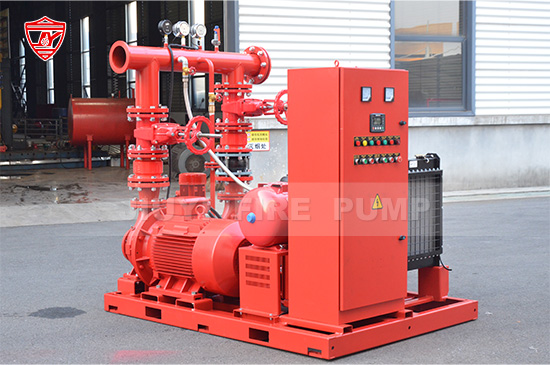
However, without a proper FAT, site acceptance testing becomes riskier and more unpredictable. With FAT, site testing is faster, smoother, and more reliable.
In summary, fire pump FAT is critical before shipment because it verifies compliance, confirms real performance, detects issues early, reduces project risk, and ultimately supports life safety. It protects all stakeholders involved, from manufacturers and contractors to building owners and occupants.
For any fire protection project, insisting on a thorough factory acceptance test is not an extra cost. It is a smart investment in reliability, safety, and peace of mind.