In fire protection systems, reliability is not optional—it is the foundation of life safety and property protection. Among all components in a fire protection system, the diesel fire pump plays a critical role, especially in facilities where electric power is unreliable or unavailable during emergencies. One of the most essential yet often misunderstood requirements of diesel fire pumps is the dual starting system.
This article explains why diesel fire pumps must have dual starting systems, how they work, what standards require them, and what risks arise if this redundancy is ignored. For engineers, contractors, project owners, and authorities having jurisdiction, understanding this requirement is fundamental to designing compliant and dependable fire protection systems.
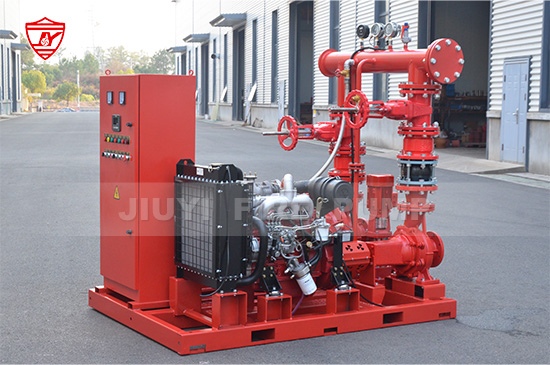
Diesel fire pumps are primarily used in situations where electrical power cannot be guaranteed during a fire event. Unlike electric fire pumps, diesel units operate independently of external power sources, making them ideal for:
Industrial plants
Oil and gas facilities
Remote or rural locations
High-risk buildings requiring maximum reliability
However, independence from external power does not eliminate all failure risks. Diesel fire pumps rely on mechanical and electrical subsystems to start and operate. If the engine fails to start, the pump cannot deliver water—regardless of how robust the pump itself may be.
This is where the dual starting system becomes critical.
A dual starting system refers to two completely independent engine starting circuits, each capable of starting the diesel engine on its own.
Typically, this includes:
Two separate battery banks
Two independent battery chargers
Separate wiring paths and control circuits
Independent starting attempts for each system
If one starting system fails, the second system must still be able to start the engine automatically.
This redundancy is not a design preference—it is a mandatory requirement in most recognized fire protection standards.
NFPA 20, the global reference standard for fire pump installations, clearly mandates dual starting arrangements for diesel fire pumps.
The standard requires that:
Diesel engines shall be equipped with two independent means of starting
Failure of one starting means shall not prevent the other from functioning
Each starting system must be capable of at least six start attempts
Battery chargers must be independent and supervised
The reasoning behind this requirement is simple: a single point of failure is unacceptable in fire protection systems.
Batteries are one of the most failure-prone components in diesel fire pump systems. Common causes include:
Aging and sulfation
Poor maintenance
Extreme temperatures
Charger malfunction
Loose or corroded terminals
Even with regular maintenance, battery failure can occur without warning. Relying on a single battery system creates an unacceptable risk.
During a fire event, environmental conditions deteriorate rapidly. Heat, smoke, vibration, and moisture can all affect electrical components. A single starting circuit exposed to these conditions may fail at the exact moment it is needed most.
Dual systems ensure that if one circuit is compromised, the other remains functional.
Maintenance errors are a real-world risk. Incorrect battery replacement, charger disconnection, or accidental isolation during servicing can disable a single starting system.
A dual starting system provides protection against human error by ensuring that one mistake does not render the fire pump inoperable.
Fire protection engineering is built on redundancy. This principle appears throughout system design:
Multiple pumps (main pump + standby)
Jockey pumps for pressure maintenance
Backup power supplies
Redundant controllers and alarms
The dual starting system follows the same philosophy. It ensures that no single failure can prevent the fire pump from starting.
The most critical moment for a fire pump is the first few seconds after a pressure drop occurs. If the engine does not start immediately, the system fails its purpose.
Dual starting systems dramatically increase the probability of successful engine start, even under degraded conditions.
Most authorities having jurisdiction and insurance providers require strict compliance with NFPA 20 or equivalent standards. A diesel fire pump without a dual starting system may result in:
Failed inspections
Rejected project approvals
Higher insurance premiums
Liability exposure after a fire incident
Dual starting systems protect not only lives but also legal and financial interests.
With dual starting systems, maintenance can be performed on one battery bank while the other remains operational. This allows:
Continuous system availability
Reduced risk during servicing
Improved overall reliability
No matter how high-quality a battery is, it remains a consumable component subject to degradation. Fire protection design does not rely on assumptions—it relies on redundancy.
Manual starting is not acceptable for automatic fire protection systems. Fire pumps must start automatically without human intervention, especially when buildings may be unoccupied.
While diesel engines eliminate reliance on utility power, they still depend on electrical energy for starting. Dual starting systems address this internal dependency.
Failure to provide dual starting systems can lead to catastrophic outcomes:
The engine fails to start during a fire
The fire protection system delivers no water
Fire spreads uncontrollably
Loss of life, assets, and business continuity
From a compliance perspective, such systems may also be deemed nonconforming, exposing owners and contractors to severe legal consequences.
To ensure maximum reliability, manufacturers and installers should follow these best practices:
Use two identical, properly sized battery banks
Install independent chargers for each battery
Physically separate wiring routes where possible
Provide clear labeling and monitoring for both systems
Include routine testing procedures for each starting circuit
A properly designed dual starting system should operate seamlessly without user intervention.
As a fire pump manufacturer, responsibility extends beyond producing a compliant pump. It includes:
Engineering systems that meet or exceed standards
Educating customers on critical safety requirements
Ensuring factory testing verifies starting system redundancy
Delivering reliable solutions for real emergency conditions
Dual starting systems are not an optional feature—they are a fundamental safety requirement.
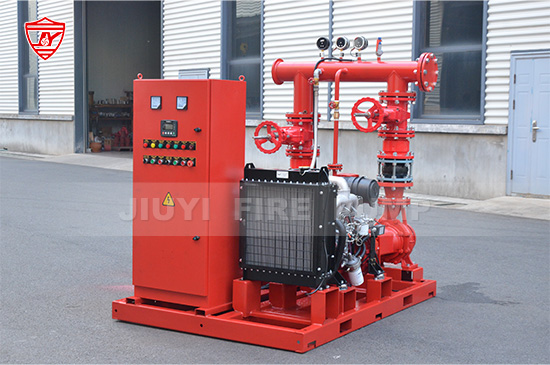
Diesel fire pumps exist to operate when everything else fails. That mission cannot be fulfilled without a reliable starting mechanism. Dual starting systems provide the redundancy necessary to ensure engine start under the most demanding conditions.
By eliminating single points of failure, complying with international standards, and safeguarding system reliability, dual starting systems protect lives, assets, and reputations.
In fire protection, success is measured not by how systems perform in normal conditions, but by how they perform in the worst possible moment. Dual starting systems ensure diesel fire pumps are ready when that moment arrives.