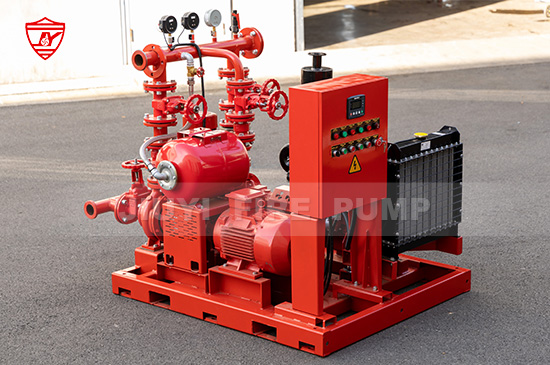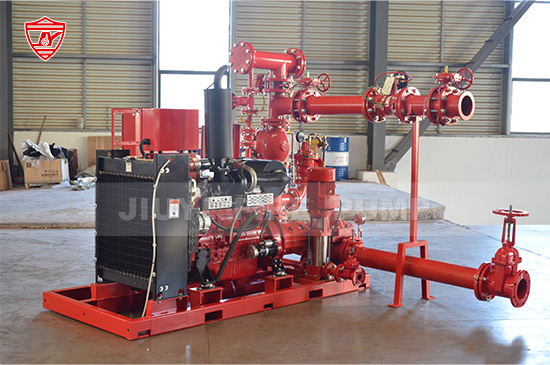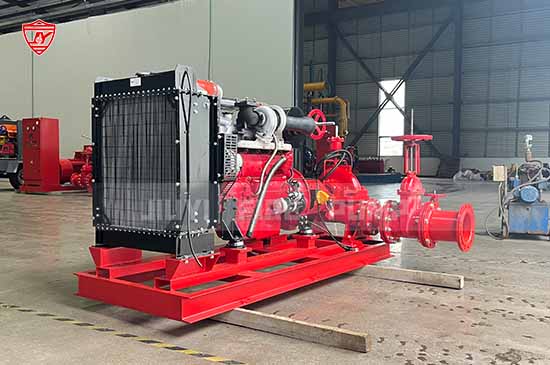
Fire pump systems are the heart of any fire protection infrastructure. Whether installed in commercial buildings, industrial facilities, power plants, or data centers, fire pumps are expected to operate reliably after long periods of inactivity. However, corrosion remains one of the most common and underestimated threats to fire pump performance, reliability, and service life.
Corrosion can silently weaken fire pump components, restrict flow, increase failure risk during emergencies, and lead to costly repairs or non-compliance with fire safety standards. For manufacturers, contractors, and system owners, understanding how corrosion develops and how to prevent it is essential to ensuring long-term system integrity.
This article provides a comprehensive guide on how to protect fire pump systems from corrosion, covering causes, materials, design considerations, environmental control, maintenance practices, and long-term protection strategies.
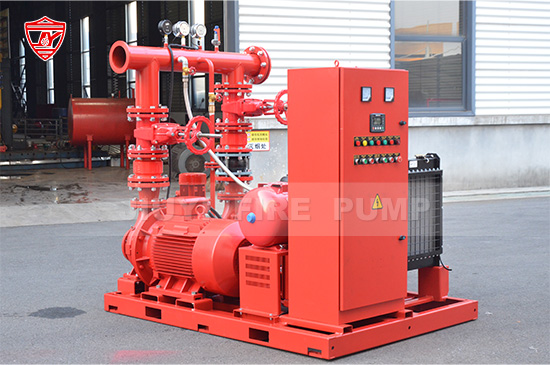
Corrosion is a natural electrochemical process that occurs when metal reacts with oxygen, moisture, or chemicals in its environment. In fire pump systems, corrosion can affect both internal and external components, often progressing unnoticed until significant damage has already occurred.
Pump casing and impeller
Shaft sleeves and bearings
Suction and discharge piping
Valves and fittings
Baseplates and anchor bolts
Fuel systems in diesel fire pumps
Cooling and exhaust components
Because fire pumps typically remain idle for long periods, stagnant water, trapped air, and condensation create ideal conditions for corrosion to develop internally.
Understanding the root causes of corrosion helps define effective prevention strategies.
Water used in fire protection systems often contains dissolved oxygen, minerals, chlorides, and other impurities. Poor water quality accelerates internal corrosion, particularly in cast iron and carbon steel components.
Fire pump rooms are frequently exposed to temperature fluctuations. When warm air meets cooler surfaces, condensation forms on metal components, leading to external corrosion.
Even when systems are filled, trapped air pockets introduce oxygen that promotes rust formation inside pump casings and piping.
When dissimilar metals are connected in the presence of an electrolyte, galvanic corrosion can occur. This is common when stainless steel, brass, and carbon steel components are improperly combined.
Fire pumps are designed for emergency use, not continuous operation. Long idle periods allow corrosion to progress without the protective effects of flowing water.
One of the most effective ways to protect fire pump systems from corrosion begins at the design and manufacturing stage.
Cast iron with high-quality internal coatings offers cost-effective corrosion resistance
Stainless steel shafts and fasteners resist rust and pitting
Bronze or corrosion-resistant alloys for impellers and wear rings improve longevity
Proper material compatibility reduces galvanic corrosion risks
Material selection should be aligned with water quality, environmental conditions, and system design requirements.
Applying appropriate coatings is a proven method for corrosion protection in fire pump systems.
Epoxy-based internal coatings are commonly used to protect pump casings, volutes, and piping from water-induced corrosion. These coatings create a barrier between metal surfaces and corrosive elements.
External surfaces benefit from industrial-grade paint systems designed for high-humidity environments. Multi-layer coatings provide long-term resistance against moisture and chemical exposure.
Coatings must be compatible with fire protection standards
Application quality is critical to ensure full coverage and adhesion
Damaged coatings should be repaired promptly
The fire pump room environment plays a major role in corrosion development.
Maintaining a stable temperature reduces condensation. Fire pump rooms should be heated where necessary to prevent cold surfaces that attract moisture.
High humidity accelerates corrosion. Ventilation systems or dehumidifiers help maintain acceptable humidity levels.
Standing water, leaks, and poor drainage significantly increase corrosion risks. Pump rooms should be kept clean, dry, and well-maintained at all times.
Design and installation quality directly influence corrosion resistance.
System layouts should minimize trapped air. Automatic air release valves can help remove oxygen from the system.
Proper pipe slope allows complete drainage during testing or maintenance, reducing stagnant water zones.
Where dissimilar metals are unavoidable, dielectric fittings should be used to isolate components and prevent galvanic corrosion.
Diesel fire pump systems face additional corrosion challenges beyond water exposure.
Fuel tanks, lines, and injectors can corrode due to moisture contamination. Regular fuel polishing and water separation are critical.
Heat exchangers and cooling water circuits should be protected with corrosion inhibitors and periodic flushing.
Exhaust components are exposed to condensation and acidic gases. Proper insulation and drainage reduce corrosion risks.
Preventive maintenance is one of the most effective corrosion control strategies.
Check for visible rust or coating damage
Inspect piping joints and valves
Monitor unusual vibrations or noise
Flow testing helps flush stagnant water, reducing internal corrosion and sediment buildup.
Proper lubrication of bearings and seals prevents moisture ingress and protects moving parts.
Recording inspection results helps identify early corrosion patterns and prevents unexpected failures.
In some systems, corrosion inhibitors can be used to slow chemical reactions that cause metal degradation.
Oxygen scavengers
pH stabilizers
Corrosion inhibitors compatible with fire systems
Any water treatment solution must comply with fire protection regulations and manufacturer recommendations.
Effective corrosion protection is not a single solution but a combination of design, materials, environment, and maintenance.
A comprehensive strategy includes:
Selecting corrosion-resistant materials during manufacturing
Applying high-quality internal and external coatings
Controlling fire pump room temperature and humidity
Designing systems to eliminate stagnant water and air pockets
Implementing routine inspection and testing programs
For fire pump manufacturers and system owners, investing in corrosion protection significantly reduces lifecycle costs, improves reliability, and ensures fire protection systems perform when needed most.
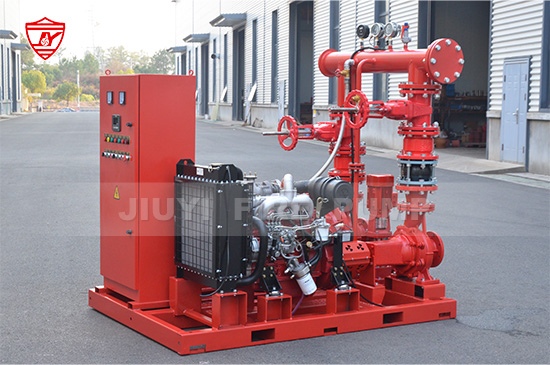
Corrosion is a silent but serious threat to fire pump systems. While it cannot be completely eliminated, it can be effectively controlled through proper design, material selection, environmental management, and disciplined maintenance.
Protecting fire pump systems from corrosion not only extends equipment lifespan but also safeguards lives and property by ensuring reliable performance during emergencies. In the fire safety field, corrosion prevention is not optional—it is a fundamental responsibility.