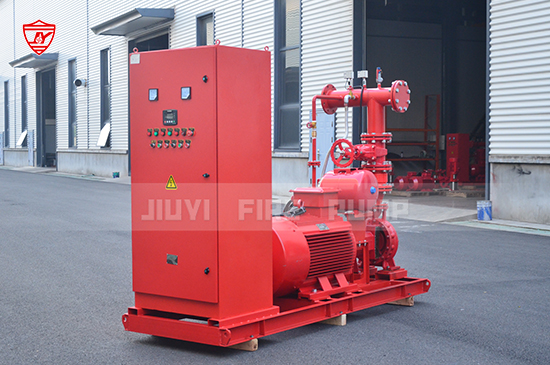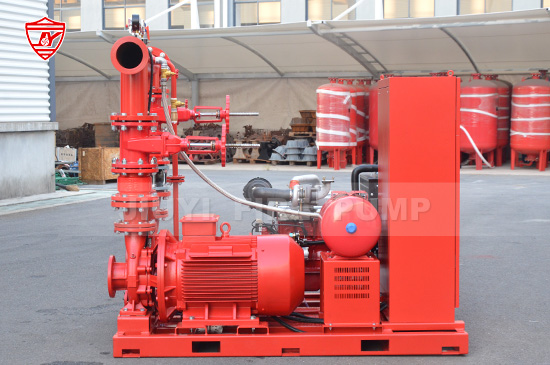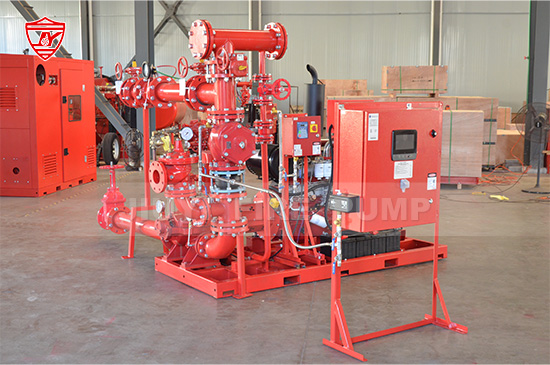
Accurately calculating fire pump system demand is one of the most critical steps in designing a reliable fire protection system. An undersized fire pump may fail during an emergency, while an oversized pump increases cost, energy consumption, and system stress. For engineers, contractors, and building owners, understanding how fire pump demand is determined ensures compliance, safety, and long-term system performance.
This article provides a practical, step-by-step explanation of how to calculate fire pump system demand accurately, focusing on flow requirements, pressure components, system losses, and real-world design considerations used in professional fire protection engineering.
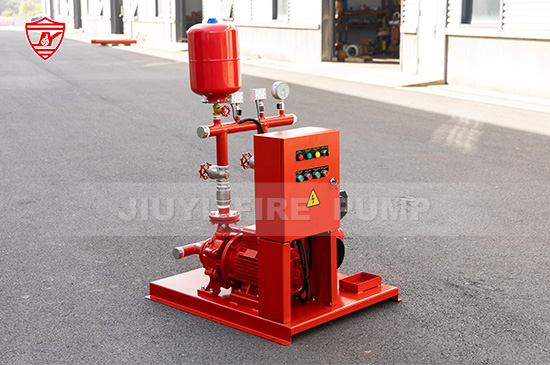
Fire pump system demand refers to the total flow and pressure required at the fire pump discharge flange to supply the most hydraulically demanding fire protection scenario in a building or facility.
It is not a single value taken from a catalog or code table. Instead, it is the result of combining:
Required fire flow
Required residual pressure at the most remote outlet
Elevation losses
Friction losses in piping and fittings
System component losses
The final demand point determines the minimum fire pump rating needed to ensure the system performs as intended during a fire event.
The first and most fundamental component of fire pump demand is required fire flow, usually expressed in gallons per minute (GPM) or cubic meters per hour.
Fire flow is dictated by the type of fire protection system installed, such as:
Automatic sprinkler systems
Standpipe systems
Combined sprinkler and standpipe systems
Deluge or water spray systems
For sprinkler systems, fire flow is typically determined by:
Occupancy classification
Hazard level (light, ordinary, extra hazard)
Design density and design area
For standpipe systems, fire flow depends on:
Class of standpipe
Number of hose connections flowing simultaneously
Building height and layout
The highest flow demand among all systems served by the fire pump becomes the base flow requirement for the pump.
Flow alone is not enough. The fire pump must also supply adequate pressure at the most remote or hydraulically unfavorable point in the system.
Residual pressure requirements vary by system type:
Sprinkler systems require sufficient pressure at the sprinkler head to achieve the required discharge density.
Standpipe systems require a minimum residual pressure at the most remote hose valve.
Residual pressure is measured at the point of use, not at the pump. This means pressure losses between the pump and that point must be added to the total demand.
Failing to account for residual pressure properly is one of the most common causes of underperforming fire pump systems.
Elevation has a direct and predictable effect on pressure. Any fire pump serving upper floors must overcome gravity to deliver water upward.
Elevation pressure loss is calculated using the vertical distance between the pump and the highest demand point.
As a general principle:
Every meter of elevation adds pressure loss
Every foot of elevation adds pressure loss
For high-rise buildings, elevation loss often becomes the largest single pressure component in the system demand calculation.
This step requires accurate building drawings and a clear understanding of where the most demanding outlet or sprinkler is located vertically.
Friction loss occurs when water flows through pipes due to resistance between the water and the pipe wall. The amount of friction loss depends on:
Pipe diameter
Pipe length
Flow rate
Pipe material
Internal pipe condition
Long pipe runs, smaller diameters, and higher flow rates all increase friction loss.
In a proper fire pump demand calculation, friction loss must be calculated for:
Suction piping (where applicable)
Discharge piping
Mains
Branch lines
Underground piping
Ignoring or underestimating friction loss can result in a pump that meets flow requirements on paper but fails to deliver adequate pressure in real conditions.
In addition to straight pipe, every fitting and valve introduces additional resistance. These include:
Elbows
Tees
Check valves
Control valves
Backflow preventers
Flow meters
Each component adds an equivalent length of pipe or a pressure loss value that must be included in the calculation.
In complex systems, fittings and valves can add a significant amount of pressure loss, especially near the pump discharge assembly where multiple components are installed.
Accurate demand calculations treat fittings losses with the same seriousness as pipe friction.
Modern fire protection systems often include additional equipment that affects pressure demand, such as:
Pressure reducing valves
Deluge valves
Foam proportioning equipment
Heat exchangers
Filters or strainers
Each of these components has a documented pressure loss at a given flow rate. These losses must be added to the total system demand.
Neglecting equipment losses is a common design oversight, particularly in industrial or special hazard applications.
In systems serving multiple zones or system types, the fire pump must be sized for the worst-case scenario, not the average condition.
This may be:
The highest floor sprinkler demand
A combination of standpipe and sprinkler flow
A remote outdoor hydrant combined with indoor demand
The correct approach is to calculate demand for each possible scenario and select the highest combined flow and pressure requirement.
Fire pump selection should always be based on the most demanding credible fire event.
Once total flow and total pressure are calculated, the demand point must be plotted on the fire pump performance curve.
Key considerations include:
The demand point must fall within the allowable operating range
The pump must not operate beyond its rated capacity
The pump must deliver required pressure at 100 percent rated flow
A properly selected fire pump should meet demand without operating at the extreme end of the curve, ensuring reliability and long service life.
Even experienced professionals can make errors if calculations are rushed or assumptions are incorrect. Common mistakes include:
Ignoring future system expansion
Underestimating friction losses
Using incorrect elevation values
Overlooking losses from valves and fittings
Selecting pumps based solely on flow without pressure verification
Avoiding these mistakes requires a methodical approach and a clear understanding of the entire fire protection system.
Accurate fire pump demand calculation impacts more than compliance. It affects:
System reliability during a real fire
Equipment lifespan
Energy efficiency
Installation and operating costs
Approval by authorities having jurisdiction
From a manufacturer’s perspective, a properly calculated demand ensures the selected fire pump operates exactly as designed, delivering dependable performance when lives and property are at risk.
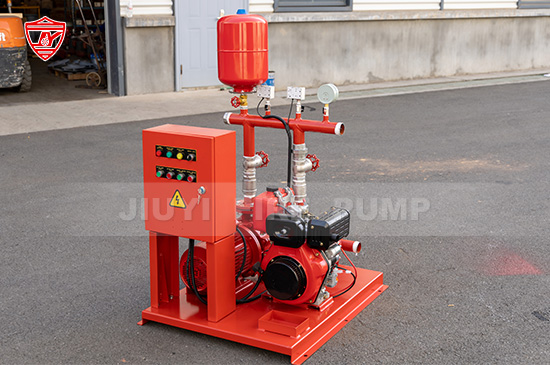
Calculating fire pump system demand accurately is a critical engineering task that combines hydraulics, system design, and practical field knowledge. By carefully evaluating flow requirements, pressure needs, elevation, friction, and system losses, engineers and contractors can select fire pumps that meet code requirements and perform reliably under emergency conditions.
A well-calculated fire pump system is not just compliant on paper—it is a vital safeguard that protects buildings, assets, and lives when it matters most.