Fire pumps are among the most critical components of any fire protection system. During an emergency, their role is straightforward but essential: deliver adequate water flow and pressure to protect lives, property, and business continuity. However, simply installing a fire pump does not guarantee reliable operation. Proper evaluation of fire pump performance is necessary to ensure the system performs exactly as designed when it matters most.
For facility owners, fire protection contractors, engineers, and maintenance teams, understanding how to evaluate fire pump performance helps reduce operational risk, improve compliance, extend equipment life, and maintain confidence in system readiness.
This guide explains the key indicators, testing methods, and practical considerations used to assess fire pump performance.
A fire pump may appear operational during routine checks but still fail to deliver the required performance under emergency conditions. Performance evaluation allows operators to identify problems before they become critical.
Regular performance assessment helps:
Performance evaluation should become part of a broader preventive maintenance strategy rather than a one-time commissioning activity.
Before evaluating performance, it is important to understand the purpose of a fire pump.
A fire pump increases water pressure within a fire protection system when the available water supply cannot meet system demand. The pump activates automatically when pressure drops below a predetermined set point.
Common fire pump types include:
Each type has different operating characteristics, but performance evaluation follows the same general principles.
Evaluating fire pump performance depends on measuring several critical parameters.
Flow rate measures the volume of water delivered over time.
It is commonly expressed as:
The flow rate should match the system design requirements and manufacturer specifications.
Low flow may indicate:
Excessive flow may create system instability and pressure problems.
Pressure is one of the most important indicators of fire pump performance.
Measure:
Compare actual values against design conditions and factory performance curves.
Abnormal pressure readings may indicate:
Pump head represents the total energy added to the water.
Total Dynamic Head (TDH) includes:
If actual head differs significantly from design expectations, investigate system conditions and pump health.
Efficiency determines how effectively input energy converts into hydraulic output.
Efficiency depends on:
Reduced efficiency often results in:
Monitoring energy usage can reveal performance changes.
For electric fire pumps:
For diesel fire pumps:
Unexpected increases may indicate internal inefficiencies.
The fire pump performance curve is one of the most valuable evaluation tools.
A pump curve shows the relationship between:
Typical operating points include:
The pump runs without water discharge.
Verify:
The pump should achieve:
This is considered the normal operating condition.
Typically evaluated around:
The pump should maintain acceptable pressure according to design standards.
If measured values differ substantially from the published performance curve, additional investigation is recommended.
Testing is the most reliable method for evaluating performance.
Check:
These inspections provide early detection opportunities.
Run the pump and verify:
Record readings consistently.
Annual testing provides comprehensive performance data.
Typical procedure:
Step 1: Prepare calibrated instruments.
Step 2: Establish baseline conditions.
Step 3: Run the pump at churn.
Step 4: Increase discharge gradually.
Step 5: Measure:
Step 6: Compare results with previous tests and manufacturer curves.
Historical trend analysis often reveals developing issues before failure occurs.
Mechanical behavior provides important performance insights.
Normal fire pumps operate with predictable vibration levels.
Excessive vibration may indicate:
Unusual sounds may include:
Grinding:
Possible bearing failure
Rattling:
Loose components
Popping:
Cavitation
Regular vibration monitoring improves predictive maintenance effectiveness.
Even a high-quality fire pump cannot perform correctly without proper suction conditions.
Inspect:
Poor suction conditions often lead to:
For vertical turbine installations, water level monitoring becomes especially important.
The pump itself is only part of the system.
Evaluate:
Inspect:
Verify:
Controller testing should confirm:
Reliable pump performance depends on reliable controls.
One isolated test result rarely tells the full story.
Maintain records including:
Trend analysis helps identify:
Digital monitoring systems can simplify long-term analysis.
Watch for these warning indicators:
Addressing these symptoms early reduces downtime and repair costs.
To keep fire pumps operating reliably:
Performance evaluation should be proactive rather than reactive.
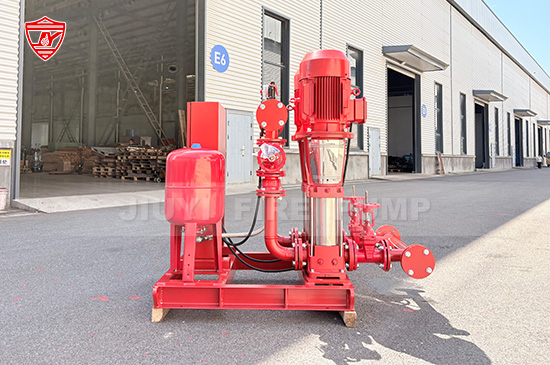
Evaluating fire pump performance is essential for maintaining an effective fire protection system. Reliable operation depends on more than installation—it requires regular testing, accurate measurements, trend analysis, and ongoing maintenance.
By monitoring flow, pressure, efficiency, suction conditions, vibration, and driver performance, organizations can ensure their fire pumps remain ready to respond during critical situations.