Selecting the right fire pump material is one of the most crucial decisions for ensuring long-term reliability in corrosive environments. Whether the fire pump is installed near the ocean, within a chemical plant, or exposed to industrial pollutants, corrosion can quickly compromise performance, reduce pump life, and lead to costly downtime. For fire protection systems—where failure is never an option—using the correct materials is essential.
This article provides an in-depth guide to selecting the best fire pump materials for corrosive conditions. We will compare material options, analyze the advantages and limitations of each, discuss performance considerations from NFPA-20, and highlight real-world application scenarios. By the end, you will understand exactly which materials should be specified to maximize the reliability and service life of your fire pump system.
Fire pumps operate in demanding environments and must continuously maintain readiness. When corrosion occurs, the consequences can be severe:
Reduced hydraulic efficiency
Pitting and erosion of casings and impellers
Seal failure and bearing damage
Premature pump breakdown
Increased risk of system malfunction during a fire emergency
Corrosive environments accelerate these risks. The wrong material choice may reduce a pump’s expected lifespan from decades to just a few years. For facilities handling sea water, brackish water, industrial chemicals, or high-humidity atmospheres, material selection becomes mission-critical.
NFPA-20 requires fire pumps to be durable, corrosion-resistant, and suitable for their intended service. Although it does not mandate specific materials, it emphasizes selecting components that can withstand long-term exposure to the operating environment. This means the responsibility falls on system designers, contractors, and manufacturers to specify materials that ensure reliability.
The environment where the fire pump will operate determines the corrosion risks. The most common corrosive conditions include:
Saltwater contains high levels of chlorides, which aggressively attack metals. Pumps installed near oceanfront facilities, ports, offshore platforms, or maritime terminals must withstand chloride-induced corrosion, pitting, and crevice attack.
Acids, alkalis, solvents, and industrial chemicals can create highly corrosive atmospheres. Pumps may be exposed through airborne vapors or direct contact with treated water.
Raw water, wastewater, and contaminated industrial fluids often carry corrosive agents, microorganisms, and abrasive solids.
Even clean-water applications can become corrosive in hot or humid climates—especially in enclosed pump rooms without ventilation.
Water with high iron content, high pH, low pH, or high dissolved oxygen can damage pump internals.
Understanding the exact nature of the environment allows for better material selection tailored to the pump’s operating conditions.
Different components of a fire pump—casing, impeller, shafts, bearings, wear rings—may require different materials based on their exposure level and function. Below are the main material types used in corrosive applications.
Cast iron is the standard material for most fire pumps because of its cost efficiency and structural strength. However, in corrosive environments, cast iron has notable limitations:
Cost-effective
High mechanical strength
Suitable for clean, non-corrosive water
Poor resistance to chlorides
Susceptible to rust and pitting
Not recommended for seawater, chemical plants, or wastewater
Fire pump systems exposed to even moderate corrosion should avoid cast iron unless upgraded with coatings or alternative component materials.
Bronze has long been the preferred choice for impellers and wear components exposed to mildly to moderately corrosive water. Nickel-aluminum bronze (NAB) offers even greater strength and corrosion resistance.
Excellent resistance to seawater and brackish water
Superior resistance to biofouling
Well-suited for impellers, wear rings, and bushings
Lower risk of galvanic corrosion compared to stainless steel
Higher cost than cast iron
Not suitable for highly acidic or alkaline water
Must be paired with compatible shaft materials
NAB is widely used in fire pumps installed in marine environments and offshore facilities.
Stainless steel is one of the most versatile and corrosion-resistant materials for fire pumps. For corrosive environments, the grade of stainless steel makes a significant difference.
Moderate corrosion resistance
Acceptable for mildly corrosive indoor environments
Not recommended for seawater
Contains molybdenum for greater chloride resistance
Widely used for brackish water and light industrial exposure
Suitable for shafts, fasteners, and internal components
Combines high mechanical strength with high corrosion resistance
Excellent resistance to pitting and crevice corrosion
Ideal for seawater and chemical environments
Highest resistance to chloride stress cracking
Suitable for the harshest seawater applications
Used in offshore rigs, desalination plants, and refineries
Higher cost
Risk of galvanic corrosion if paired with less noble materials
Requires strict manufacturing and handling standards
Stainless steel is ideal for users who want a long-term, maintenance-focused solution for corrosive conditions.
Coatings do not replace the need for corrosion-resistant metals, but they offer supplementary protection.
Internal pump casings
Suction bowls and discharge bowls
Surfaces exposed to abrasive or chemically active water
Cost-effective enhancement
Reduces surface roughness and improves pump efficiency
Provides a protective barrier against chemicals
Coating integrity depends on proper application
Requires long-term inspection and touch-up
Not a substitute for corrosion-resistant base materials in extreme environments
Coatings can extend pump life but must be combined with proper material selection.
These premium materials are used in extremely aggressive chemical environments.
Exceptional resistance to acids, chlorides, and solvents
Minimal risk of pitting or crevice corrosion
Very long service life
Very high cost
Often over-specified for standard fire pump applications
Most commonly used only in chemical, oil & gas, and high-risk industrial sectors
Unless the environment is extremely corrosive, stainless steel or bronze is usually sufficient.
Selecting materials requires both engineering judgment and environmental analysis. Here is a practical step-by-step method:
Ask these questions:
Will the pump handle fresh water, seawater, or chemically treated water?
Are there solids, sediments, or biological contaminants?
What are the chloride levels, pH level, and temperature?
Fluid characteristics directly influence corrosion type and severity.
Consider:
Proximity to the ocean
Indoor vs outdoor installation
Ventilation and humidity levels
Presence of industrial fumes or chemicals
Even pumps operating with clean water may corrode if the environment is corrosive.
Here is a simplified guide:
| Environment | Recommended Material |
|---|---|
| Mild corrosion (clean water, indoor) | Cast iron + coated interior; bronze impeller |
| Moderate corrosion (humidity, brackish water) | 316 SS shaft + bronze impeller; coated casing |
| Coastal or seawater applications | Duplex SS or NAB impeller; stainless steel shaft |
| Chemical processing or industrial fluids | Duplex SS, super duplex, or specialty alloys |
| Severe corrosion (offshore, extreme chloride exposure) | Super duplex or titanium components |
NFPA-20 emphasizes reliability and corrosion resistance. When selecting materials, ensure:
Components meet durability standards
Materials are consistent across pump and driver components
Any coating used is compatible with fire pump operating conditions
Standard compliance is essential for insurance approval and long-term safety.
Corrosion-resistant materials reduce:
Downtime
Unexpected failures
Replacement costs
High-grade stainless steel or bronze may have higher initial cost but offers lower total cost of ownership.
Below are typical configurations used by professional fire pump manufacturers:
Bronze or NAB impeller
316 or duplex stainless steel shaft
Coated cast iron casing or full stainless-steel casing
Stainless steel hardware
Duplex or super duplex stainless steel impeller and casing
Alloy 20 or Hastelloy if extremely acidic
Polymer-lined internal surfaces
Bronze or duplex stainless steel impeller
Coated casings
Hardened wear components
Corrosion-resistant coatings
316 stainless steel shafts
Bronze impellers
These combinations help balance cost, reliability, and environmental resistance.
Cast iron is not suitable for chloride-rich or acidic environments.
Improper combinations may cause galvanic corrosion.
Corrosion can occur even without corrosive water.
Cheaper materials may fail prematurely and increase lifecycle costs.
Coatings are useful but not a substitute for corrosion-resistant base metals.
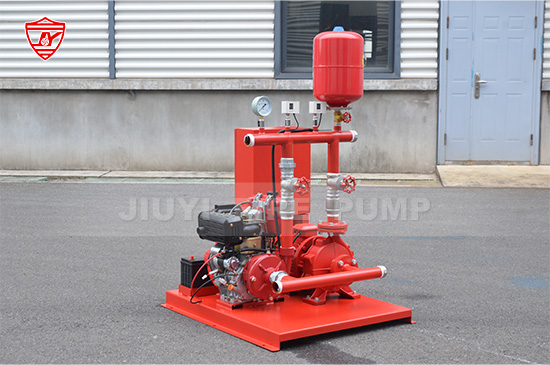
Choosing the correct fire pump material for corrosive environments ensures reliability, safety, and long-term performance. Whether your application involves seawater, chemical exposure, industrial atmospheres, or untreated water, material selection should always be based on the environment, fluid characteristics, and NFPA-20 requirements.
Bronze, nickel-aluminum bronze, 316 stainless steel, duplex stainless steel, and specialty alloys all offer levels of protection that can dramatically extend pump service life. For the best results, fire pump manufacturers and system designers should work closely to determine the ideal combination of materials for each installation.