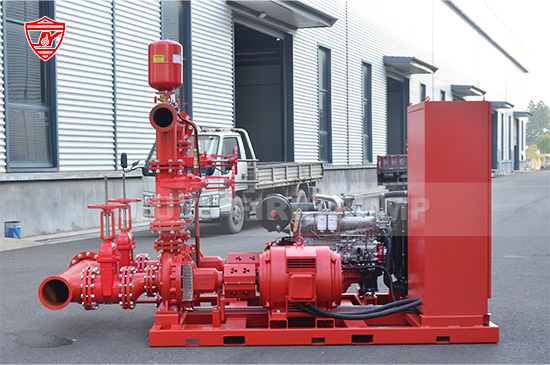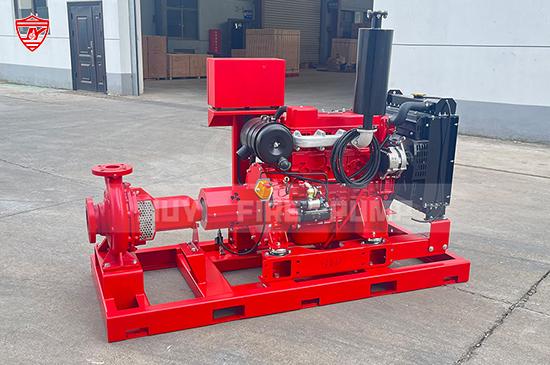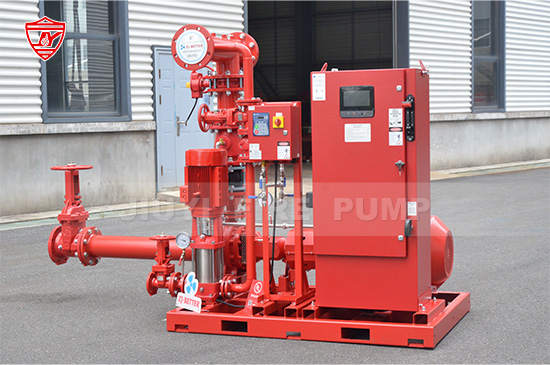
Fire pumps are the heart of a fire protection system. Whether installed in a high-rise building, industrial complex, airport, warehouse, or refinery, the purpose of a fire pump is simple: deliver sufficient pressure and flow when a fire emergency occurs. Among all the technical factors that influence a pump’s performance—impeller size, driver power, pump curve, suction conditions—one variable stands out as especially critical: RPM, or revolutions per minute.
Although it may sound like a basic mechanical specification, fire pump RPM directly determines whether the pump can produce the required pressure and flow for life-safety applications. Understanding how RPM influences system performance helps engineers, maintenance teams, and building owners make better decisions during pump selection, installation, and ongoing operation.
This article explains why fire pump speed matters, how it affects the pump curve, what happens when RPM is incorrect, and how to evaluate the right RPM for your fire pump system.
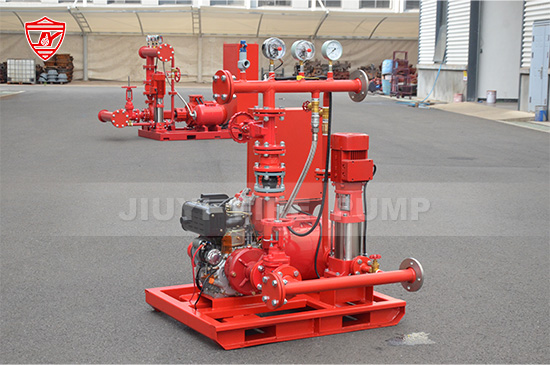
Fire pump RPM refers to the rotational speed of the pump shaft, typically driven by an electric motor or diesel engine. Standard fire pump speeds usually include:
1500 RPM
1800 RPM
3000 RPM
3600 RPM
The appropriate speed depends on the region, frequency (50 Hz vs 60 Hz), driver type, and performance requirements.
Electric fire pumps have precise, stable RPM because motor speed is tied to electrical frequency.
Diesel fire pumps can show slight RPM variations due to engine load, temperature, and mechanical adjustments.
Regardless of the driver, RPM is the foundation of how a centrifugal fire pump generates energy to move water.
The relationship between pump speed and performance is governed by the Affinity Laws. These laws describe how changes in RPM affect flow, pressure, and power:
Flow (Q) is directly proportional to RPM
If RPM increases by 10%, flow also increases by approximately 10%.
Head/Pressure (H) varies with the square of RPM
A 10% RPM increase yields ~21% more pressure.
Power (P) varies with the cube of RPM
A 10% RPM increase requires ~33% more power.
This means RPM does not simply adjust performance—it totally reshapes the pump’s behavior.
A pump rated for 1000 gpm at 3000 rpm will not produce that same flow at 2850 rpm or 3300 rpm. Even small deviations can lead to over-performance or under-performance, both of which are dangerous in a fire protection system.
If the RPM increases:
The pump delivers more flow than designed
The pump produces higher pressure
System components may be overstressed
Relief valves may open unexpectedly
Excessive churn pressure may damage pipelines and fittings
While higher performance may sound beneficial, excessive pressure can cause system failure, which NFPA 20 strictly prohibits.
If RPM is lower than required:
The pump cannot meet fire sprinkler or hydrant demand
Hose streams may be weak
Sprinkler coverage may fail to penetrate fire areas
Large facilities may lose water supply to upper floors
Pressure drop during fire conditions can become critical
Lower RPM is one of the most common causes of failed pump acceptance tests.
Even if a pump is rated for a specific speed, real-world conditions can affect actual RPM. Some common causes include:
Diesel engines use a governor to maintain constant RPM. If the governor is mis-calibrated, RPM may drift higher or lower than the rated speed.
Electric motor RPM corresponds to power frequency:
50 Hz motors typically run at 1450 or 2900 RPM
60 Hz motors typically run at 1750 or 3500 RPM
Using the wrong frequency motor leads to major performance errors.
As components wear, friction increases, which can affect speed—especially in diesel engines.
If the pump requires 3000 RPM but is paired with a 1500 RPM driver, the pump will never reach its rated performance.
Weak combustion reduces engine output, causing unstable speed.
The pump performance curve is the foundation of fire pump engineering. RPM determines the entire shape and position of this curve.
The pump produces its designed flow and pressure
The shutoff (churn) pressure stays within NFPA limits
The pump meets UL/FM performance certification
The entire pump curve shifts downward
Peak pressure and flow drop
The endpoint curve may not meet system demand
The curve shifts upward
Shutoff pressure may exceed allowable limits
System components risk damage
Thus, maintaining correct RPM is critical to ensuring the fire pump curve matches the hydraulic needs of the facility.
NFPA 20 provides strict requirements to ensure fire pump performance remains stable during emergencies.
Key requirements include:
Diesel fire pumps must maintain rated speed at rated load.
Governor settings must prevent overspeeding.
Electric motors must comply with frequency-matched RPM ratings.
Acceptance testing must confirm RPM accuracy.
Pump speed should be verified annually during flow testing.
Verifying RPM is not optional—It’s part of standard routine maintenance for all certified fire protection systems.
RPM controlled by engine governor
Slight variations are normal but must stay within permitted tolerance
More maintenance required to ensure stable speed
RPM tends to drop as fuel filters clog or as engines age
Diesel RPM instability can lead to performance issues if not monitored regularly.
RPM tied to electrical frequency
More stable and predictable
Less maintenance needed
Double-check that motor is correctly sized for the required RPM
Although more stable, electric pumps can still suffer from wrong motor selection or improper power supply frequency.
Incorrect RPM doesn’t only affect water delivery—it can actually damage the pump and the entire fire protection system.
Mechanical seals wear faster
Bearings overheat
Cavitation occurs due to excessive speed
Piping and valves experience unnecessary pressure stress
Pump operation becomes noisy and unstable
Pump operates inefficiently
Motor or engine may run hotter due to increased load
Pump struggles to build sufficient pressure
Sprinkler or hydrant performance becomes unreliable
Both situations shorten equipment lifespan and reduce reliability during real fire emergencies.
To ensure your fire pump operates at the exact rated speed, routine verification is necessary.
Handheld digital tachometer
Measures shaft rotation directly.
Diesel engine speed reading panel
Mounted on the controller panel.
Electric motor nameplate inspection
Confirms rated synchronous speed.
Flow test analysis
If flow/pressure is off target, RPM may be the cause.
Annual NFPA 25 maintenance checks
Keeping accurate RPM logs is a best practice for long-term equipment health.
Choosing the correct pump speed depends on multiple factors, including:
Required pressure for the building
Suction source characteristics
Pipe friction losses
Elevation differences
Sprinkler and hydrant demand
Available driver options
Longer lifespan
Lower noise
Lower vibration
Better for continuous operation
Ideal for large industrial systems
More compact and lower cost
Produce higher pressure in a smaller design
Common in commercial buildings
Require higher manufacturing precision
Engineers must balance performance needs and long-term reliability when choosing the appropriate RPM.
Quality fire pump manufacturers follow strict processes:
Precision-engineered impellers sized for specific RPM
Factory performance tests at certified speed
UL/FM certification at rated RPM
Matching pump to appropriate diesel engine or electric motor
Providing performance curves based on confirmed speed
Verifying churn and rated pressure under controlled RPM
When pump speed is correct from the design stage, the entire fire pump system becomes more stable, efficient, and reliable.
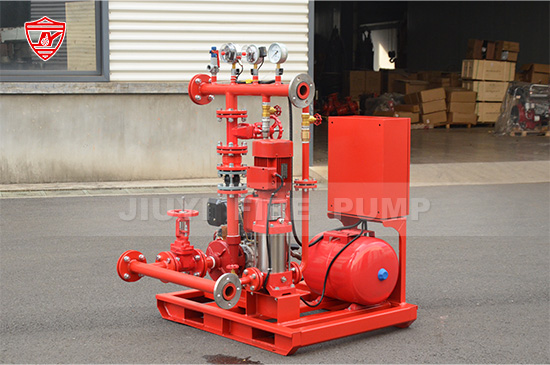
Fire pump RPM is not a technical detail—it is the core factor determining whether the pump can deliver the required flow and pressure during a fire emergency.
Correct RPM ensures:
Accurate pressure
Reliable flow
Stable pump performance
Longer equipment lifespan
NFPA 20 compliance
Successful acceptance testing
Safer building protection
Whether you rely on diesel fire pumps, electric fire pumps, or vertical turbine systems, RPM must always be verified, maintained, and tested regularly. Selecting the right speed and ensuring stable operation are essential steps to keeping your fire pump system ready for the moment it matters most.