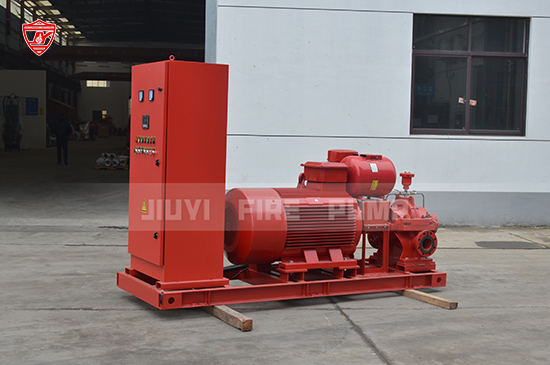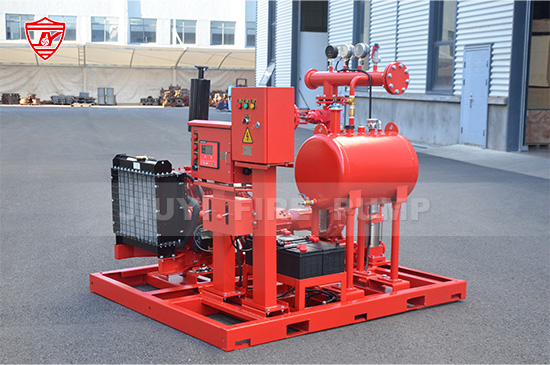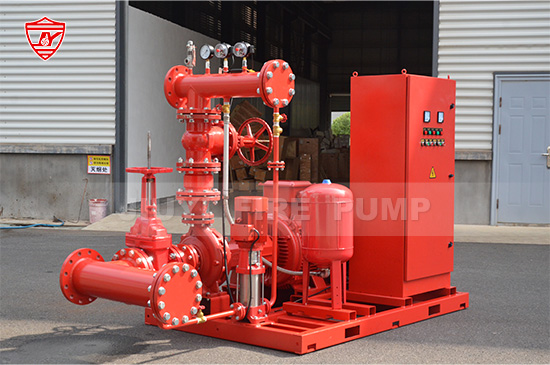
In every fire protection system, the order in which pumps start is not optional—it is a critical safety principle defined by engineering logic and industry standards. Among all components inside a fire pump room, one small but powerful piece often gets overlooked: the jockey pump. While it is much smaller than the main fire pump and consumes far less power, it plays a vital role in protecting the system, reducing false alarms, stabilizing pressure, and ensuring the main fire pump activates only when there is a genuine fire emergency.
Understanding why the jockey pump must start before the main fire pump is essential for engineers, installers, owners, and facility managers who rely on a reliable fire protection system. This article explains how jockey pumps work, why they start first, what problems they prevent, and the risks of incorrect pump sequencing.
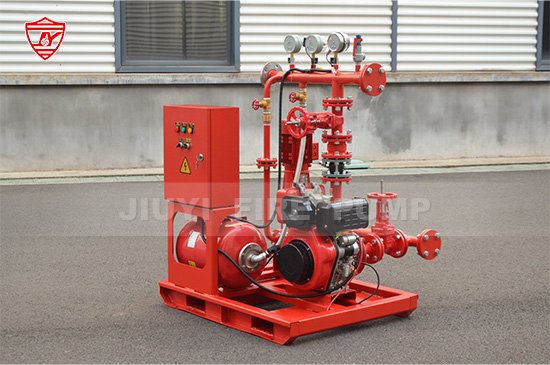
A jockey pump—also called a pressure maintenance pump—is a small-capacity pump designed to keep the fire protection system pressurized at all times. Fire sprinkler systems, hydrant networks, and standpipes are all closed-loop systems that rely on stable pressure to function correctly.
Because these networks contain long piping lengths, valves, joints, fittings, and sprinklers, small pressure fluctuations happen naturally. These drops are usually caused by:
Small leaks in pipe fittings
Temperature changes that cause expansion or contraction
Routine system testing activities
Air release or trapped air pockets
Minor seepage around valves
These are not signs of a fire, but they create pressure drops the system must respond to. This is where the jockey pump comes in.
The jockey pump automatically restores pressure when slight losses occur, ensuring the system always remains above the minimum design pressure recommended by standards such as NFPA 20.
The core reason is simple:
The jockey pump handles small pressure drops so the main fire pump only starts when there is an actual fire.
Here is a detailed breakdown of why this sequence is essential.
Main fire pumps—whether diesel or electric—are large, high-power machines designed for emergency use. If the jockey pump did not exist, even tiny pressure fluctuations would trigger the main pump to start. This would cause:
Excessive wear on pump bearings and impellers
Stress on the electric motor or diesel engine
Unnecessary fuel consumption for diesel pumps
Damage to pipes due to sudden high pressure
Higher maintenance and repair costs
Most importantly, repeated unnecessary starts shorten the life of the fire pump and can compromise reliability during a real fire.
Fire sprinkler systems activate only when a sprinkler head reaches its temperature rating. When this happens, it releases a large amount of water, causing a significant pressure drop—much larger than what the jockey pump can handle.
The system is designed so:
Small drops → jockey pump starts
Large drops → main fire pump starts
This ensures the main fire pump is reserved for genuine fire emergencies, not minor pressure changes.
For any fire protection system, stable pressure means readiness. The jockey pump ensures:
Fire sprinklers have the correct pressure when activated
Hydrants deliver sufficient force
Standpipes supply water to upper floors
Sprinkler heads operate uniformly
Without a jockey pump, system pressure could drift too low before the main pump engages, delaying the initial water delivery—critical seconds that can influence fire spread.
Water hammer is the sudden surge of pressure caused when a high-capacity pump starts unexpectedly. If the main pump must respond to every minor fluctuation, sudden surges happen regularly, increasing the risk of:
Pipe bursts
Fitting failures
Valve damage
Premature aging of the system
The jockey pump, by maintaining pressure smoothly, dramatically reduces the occurrence of water hammer events.
Diesel engine fire pumps are designed for emergency operation only. Frequent starting will cause:
Rapid engine wear
High fuel use
Damage to starter motors
Overheating during testing or accidental starts
By allowing the jockey pump to absorb routine pressure corrections, the diesel pump only starts during real emergencies or scheduled weekly tests.
NFPA 20 clearly outlines that fire pump systems must include a pressure maintenance pump to ensure the main fire pump does not start unnecessarily.
This is not just a recommendation—it is a requirement for fire safety, compliance, and system stability. In most regions, fire pump systems cannot pass inspection unless the jockey pump is correctly sized, installed, and controlled.
To understand the importance of pump sequence, imagine the fire protection system like a pressure ladder:
Jockey pump start pressure: Highest
Jockey pump stop pressure: Slightly higher than system normal
Main fire pump start pressure: Lower
Diesel pump low-pressure threshold: Lowest
The jockey pump is intentionally set to maintain pressure slightly above the main pump’s start point. This layered configuration ensures the main pump only activates when system pressure experiences a large drop caused by actual fire demand.
Example pressure settings (for illustration):
Jockey pump stops at: 110 psi
Jockey pump starts at: 100 psi
Main fire pump starts at: 90 psi
This guaranteed separation keeps pump operation smooth, predictable, and safe.
If the jockey pump is not functioning:
The main fire pump may start unnecessarily
System pressure may drift lower than safe limits
Diesel pumps may trigger unintentionally
Weekly, monthly, or annual operational issues may appear
The system may experience more water hammer
Maintenance frequency increases dramatically
The jockey pump should be inspected regularly and tested to ensure it responds correctly to pressure changes.
Even when the jockey pump is installed, improper controller settings can create problems, such as:
Caused by leaks, faulty valves, or wrong pressure settings. Frequent cycling also indicates system leakage that needs repair.
This may cause the main pump to start unnecessarily.
This can cause both pumps to start around the same time—a dangerous condition.
If the jockey pump cannot restore pressure quickly enough, the main pump will activate. Correct jockey pump sizing is essential for proper system performance.
A jockey pump is not designed to match the main fire pump. Instead, it is sized to handle only small pressure losses. Standard practice is:
Flow rate: 1% to 3% of the main fire pump’s rated flow
Head: Equal to or slightly above the main pump’s head
Oversized jockey pumps cause short cycling. Undersized pumps trigger false starts of the main pump.
Working with experienced fire pump manufacturers ensures the jockey pump size matches your fire protection system’s actual needs.
Any facility with a fire pump system benefits from correct jockey pump sequencing. These include:
High-rise buildings
Factories and manufacturing plants
Oil and gas facilities
Power stations
Data centers
Shopping malls
Warehouses and logistics centers
Airports and transportation hubs
Hospitals and large public buildings
In all these environments, reliable pressure maintenance ensures faster fire suppression response and reduced equipment wear.
Owners sometimes overlook jockey pumps because they are small and run quietly. However, their benefits directly affect operational costs and system reliability:
Lower electricity and fuel consumption
Longer lifespan of the main fire pump
Fewer emergency call-outs
Increased reliability during fire events
Full compliance with fire safety standards
Ignoring jockey pump maintenance or misconfiguring pressure settings can result in expensive repairs, system failures, or failed safety inspections.
Regular maintenance ensures continuous reliability. Recommended practices include:
Verify jockey pump starts and stops at correct pressures
Observe pressure stability
Listen for unusual sounds
Test automatic controller function
Inspect electrical connections
Check valves, gauges, and pressure switches
Full system test with main pump and jockey pump coordination
Evaluation of pressure settings
Inspection of piping for leaks
Proper maintenance ensures the jockey pump does its job—protecting your system and preventing premature activation of the main fire pump.

While the jockey pump is small compared to the main fire pump, its role is essential. It ensures that:
The system pressure remains stable
The main fire pump only starts when needed
Equipment lifespan is extended
Water hammer and pipe stress are minimized
Fire protection systems are always ready for emergencies
As a manufacturer of fire pumps, we always emphasize that the jockey pump is not an optional accessory—it is a key safety component that ensures proper fire pump operation and system reliability.