Designing a fire pump room is not just about selecting the right pump capacity or meeting hydraulic requirements. One of the most overlooked but critical aspects is drainage. Poor drainage design can lead to flooding, equipment damage, system failure, and non-compliance with standards.
For fire pump manufacturers, contractors, and engineers, understanding how to properly plan fire pump room drainage is essential to ensuring long-term system reliability and safety.
This article explains the key principles, design considerations, and best practices for fire pump room drainage, with a focus on compliance with NFPA 20, operational reliability, and real-world project challenges.
Fire pump rooms are inherently exposed to water. During testing, maintenance, or emergency operation, large volumes of water may be discharged. Additionally, leaks from pipes, valves, or fittings can accumulate over time.
Without proper drainage, water can quickly create hazardous conditions.
Equipment Damage
Electric motors, diesel engines, and control panels are highly sensitive to water. Flooding can lead to corrosion, short circuits, and permanent failure.
Loss of Fire Protection
If the fire pump system becomes inoperable due to water damage, the entire fire protection system may fail when it is most needed.
Safety Hazards
Standing water creates slip hazards and increases the risk of electrical accidents.
Non-Compliance
Improper drainage can violate NFPA 20 requirements and lead to failed inspections or legal liabilities.
The standard NFPA 20 provides clear guidance on fire pump room drainage.
According to NFPA 20:
The fire pump room must be protected against flooding.
Adequate drainage must be provided for all water discharge sources.
Drainage must handle flow from:
Pump packing leakage
Relief valves
Test headers
Cooling water discharge (diesel pumps)
The standard emphasizes that drainage systems should be reliable and capable of handling the worst-case scenario.
Before designing a drainage system, it is important to identify all potential sources of water.
Traditional packed pumps require continuous leakage for cooling and lubrication. This leakage must be drained properly.
Even pumps with mechanical seals can leak during failure or wear.
Relief valves release water to prevent overpressure conditions. This can result in significant water flow.
During routine testing, large volumes of water are discharged through test headers.
Diesel fire pumps often discharge cooling water continuously during operation.
Unexpected leaks can occur due to aging or installation defects.
Understanding these sources helps determine the required drainage capacity.
A well-designed drainage system should follow several fundamental principles.
Whenever possible, use gravity drainage instead of mechanical systems. Gravity systems are more reliable and do not depend on power supply.
Design considerations include:
Sloped floors (minimum 1–2%)
Strategic placement of floor drains
Direct piping to safe discharge locations
Floor drains should be located at the lowest points of the room to ensure water flows naturally toward them.
Key tips:
Use multiple drains for large rooms
Place drains near pumps, valves, and relief discharge points
Avoid flat surfaces where water can accumulate
When gravity drainage is not feasible, a sump pit with a sump pump is required.
Design recommendations:
Size the sump pit to handle peak discharge
Use dual sump pumps (duty + standby)
Provide automatic level controls
Include alarm systems for high water levels
This is especially important for basement pump rooms.
One of the most critical aspects is ensuring the drainage system can handle maximum water flow.
Consider the worst-case scenario:
Relief valve discharge
Pump leakage
Test flow water
Cooling water discharge
The drainage system must handle the combined flow rate.
Always include a safety margin (typically 25–50%) to account for unexpected conditions.
If the total estimated discharge is 50 GPM, the drainage system should be designed for at least 65–75 GPM.
When using sump pumps, careful selection is essential.
Capacity
The pump must handle peak flow rates.
Redundancy
Install at least two pumps (duty and standby) to ensure reliability.
Power Supply
Provide backup power if possible, especially for critical facilities.
Automatic Operation
Use float switches or level sensors for automatic activation.
Use corrosion-resistant materials
Provide easy maintenance access
Install check valves to prevent backflow
Diesel fire pumps require special attention due to additional water sources.
Diesel engines use heat exchangers that continuously discharge cooling water.
Design considerations:
Provide dedicated drainage lines
Ensure proper routing to avoid flooding
Avoid discharge near electrical components
Although drainage systems handle water, accidental fuel or oil leaks must be considered.
Use:
Oil-water separators
Containment systems
This helps prevent environmental contamination.
Proper floor construction is essential for effective drainage.
A slope of 1–2% ensures water flows toward drains.
Avoid:
Flat surfaces
Depressions that trap water
Use waterproof coatings to protect concrete surfaces and prevent long-term damage.
Install pumps and control panels on raised concrete pads.
Benefits:
Protection from minor flooding
Improved maintenance access
Drainage systems must not allow water to re-enter the pump room.
Install:
Backflow preventers
Check valves
For areas prone to flooding:
Elevate the pump room above flood level
Install watertight doors
Use external drainage systems
These measures ensure continuous operation during emergencies.
Even the best design will fail without proper maintenance.
Check for:
Blocked drains
Pump operation
Water accumulation
Test sump pumps regularly to ensure they operate correctly.
Remove debris from:
Floor drains
Sump pits
Discharge pipes
A well-maintained drainage system ensures long-term reliability.
Many fire pump rooms suffer from poor drainage due to avoidable mistakes.
Failing to consider peak flow leads to flooding.
Single sump pumps create a single point of failure.
Incorrect drain locations result in water accumulation.
Cooling water discharge is often underestimated.
Without alarms, flooding may go unnoticed.
Avoiding these mistakes significantly improves system reliability.
Consider a fire pump room with:
One electric fire pump
One diesel fire pump
One jockey pump
Identify all water sources
Calculate total discharge flow
Design floor slope toward drains
Install multiple floor drains
Provide sump pit with dual pumps
Add high-level alarm system
Ensure compliance with NFPA 20
This structured approach ensures a robust drainage system.
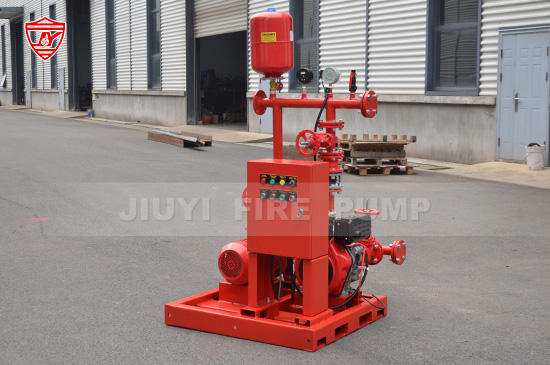
Fire pump room drainage is a critical but often underestimated aspect of fire protection system design. A well-designed drainage system prevents equipment damage, ensures compliance, and guarantees reliable operation during emergencies.
By following best practices—such as proper sizing, redundancy, floor design, and compliance with NFPA 20—engineers and contractors can significantly improve the safety and reliability of fire pump installations.
For fire pump manufacturers and project designers, integrating drainage considerations early in the design phase is essential. It not only protects valuable equipment but also ensures that the fire protection system performs when it matters most.
Investing in proper drainage design is not just a technical requirement—it is a commitment to safety and long-term performance.