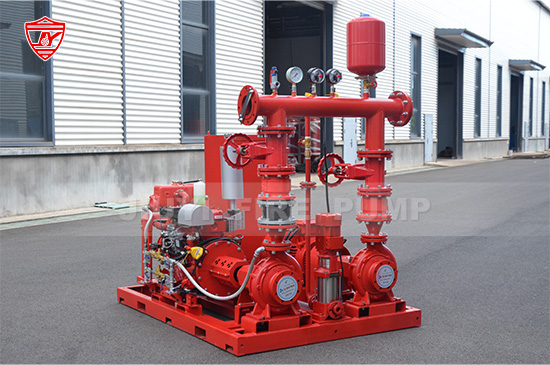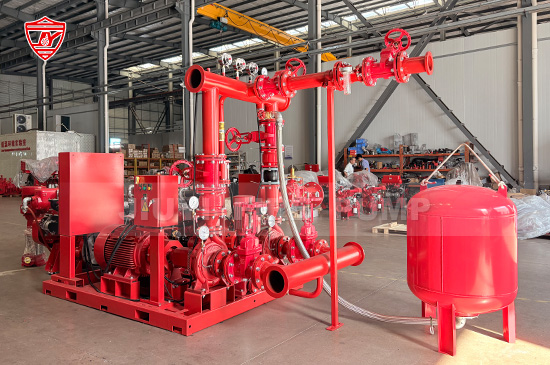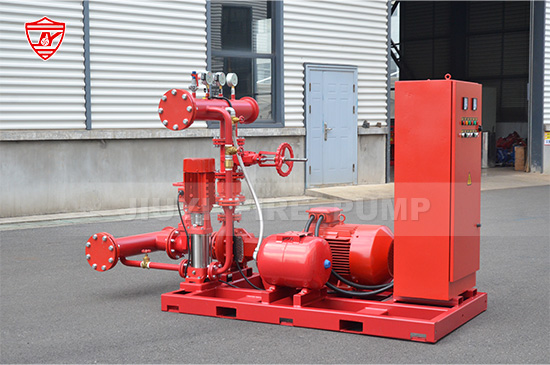
A fire protection system is only as reliable as its ability to deliver sufficient water when a fire occurs. Sprinklers, hydrants, standpipes, and other firefighting equipment depend on an adequate water supply and the pressure required to operate effectively. When the available water supply cannot meet these requirements, a properly selected fire pump becomes an essential component of the system.
However, choosing a fire pump involves much more than comparing motor power, flow rates, or purchase prices. Engineers and project contractors must consider building characteristics, hydraulic requirements, applicable fire protection standards, operating conditions, and long-term reliability. An incorrectly selected pump may fail to provide the required performance during an emergency, potentially compromising the entire fire protection system.
Understanding why fire pump selection matters helps fire protection engineers, system integrators, contractors, and building owners make informed decisions. By matching pump performance to the actual needs of a project, they can improve system reliability, support regulatory compliance, and protect people, property, and business operations.
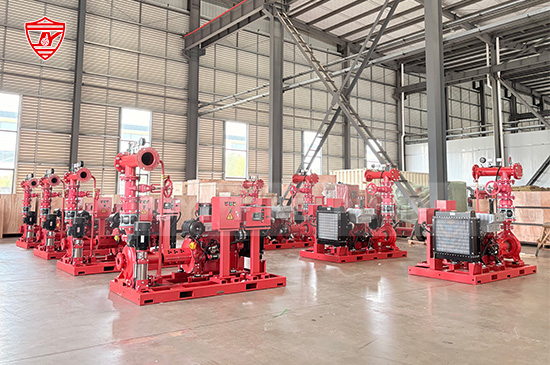
The primary purpose of a fire pump is to provide the water flow and pressure required by a fire protection system when the existing water supply is insufficient.
Different buildings and industrial facilities have different firefighting demands. A small commercial building may have relatively straightforward requirements, while a high-rise residential complex, petrochemical plant, logistics warehouse, or port facility may require significantly greater flow rates, discharge pressures, or specialized system configurations.
Two fundamental parameters determine whether a fire pump is suitable for an application: flow rate and pressure.
Flow rate represents the volume of water delivered over a specific period, commonly measured in gallons per minute (GPM) or cubic meters per hour (m³/h). Pressure, often expressed in pounds per square inch (PSI), bar, or meters of head, indicates the pump's ability to overcome resistance and deliver water where it is needed.
If the selected pump cannot provide the required flow rate, sprinklers and other firefighting devices may not receive sufficient water. If the pressure is inadequate, water may not reach the necessary elevations or operate equipment as intended.
Excessive pressure can also create problems, including increased stress on pipes, valves, fittings, and other system components.
Therefore, fire pump selection should begin with a hydraulic assessment that establishes the required flow and pressure at the relevant operating conditions. Selecting a pump that meets these requirements is fundamental to effective fire protection.
Fire pump requirements vary significantly according to the facility's size, layout, occupancy, fire hazards, and water supply conditions. Selecting the right pump requires an understanding of the environment in which it will operate.
Shopping malls, office buildings, apartment complexes, hotels, and hospitals may rely on sprinkler systems, standpipes, hydrants, or combinations of these systems.
Building height is particularly important because water must overcome elevation differences as well as friction losses in pipes and fittings. Engineers must also consider the required flow for the applicable design scenario and the characteristics of the building's water supply.
Oil refineries, chemical processing plants, power stations, and manufacturing facilities may present elevated fire risks. Their fire protection systems may need to serve hydrants, monitors, specialized sprinkler systems, or other firefighting equipment.
Environmental conditions, hazardous-area requirements, system demand, and the availability of backup power can influence the selection of fire pumps and their drivers.
Warehouses often contain large storage areas, high shelving, and substantial quantities of combustible materials. Their fire protection requirements depend on factors such as stored commodities, storage height, sprinkler design, and the applicable fire protection criteria.
A pump that is suitable for a small commercial building may not be appropriate for a large distribution center.
Ports, terminals, and other outdoor facilities may require firefighting water to be delivered across extensive pipe networks or to equipment positioned at considerable distances.
These applications require careful evaluation of hydraulic losses, water sources, environmental exposure, and operating conditions.
By considering the specific application, project teams can select a fire pump configuration that supports the actual requirements of the facility rather than relying on a general-purpose solution.
Fire pumps are available in several configurations. Each offers different advantages depending on the required performance, installation environment, and available utilities.
Electric fire pumps are widely used in commercial buildings, industrial facilities, and many other applications where a suitable electrical supply is available.
They offer straightforward starting and control arrangements and can be integrated into appropriately designed fire pump systems. However, the electrical infrastructure, motor ratings, starting characteristics, and reliability of the power supply must be evaluated as part of the overall design.
Diesel engine fire pumps are driven by dedicated diesel engines rather than electric motors. They can provide an alternative where electrical power availability, reliability, or project requirements make an engine-driven solution appropriate.
Their selection involves considerations such as engine power, fuel storage, ventilation, exhaust arrangements, cooling, starting batteries, maintenance access, and the environmental conditions of the installation.
A diesel-driven pump may also serve as part of a fire protection system designed with an independent driving source, subject to the project's applicable requirements.
Vertical turbine fire pumps are often considered when the water source is below the pump installation level, such as a deep well, reservoir, or certain water storage arrangements.
Their configuration allows water to be lifted from below the installation. Important selection factors include water source characteristics, required flow and head, installation depth, column and shaft arrangements, and available space.
Split case fire pumps are frequently considered for applications requiring substantial water flow and can be suitable for many commercial and industrial fire protection systems.
End suction fire pumps offer a more compact arrangement that may be appropriate for projects with suitable flow and pressure requirements.
The best choice depends on the duty point, hydraulic performance, installation constraints, maintenance requirements, and applicable standards. No single pump type is ideal for every project.
Fire protection systems must be designed and installed according to the codes, standards, and regulatory requirements applicable to the project location and building type.
In many projects, NFPA 20, Standard for the Installation of Stationary Pumps for Fire Protection, is an important reference for fire pump installation. Local building codes, fire authority requirements, insurance specifications, and other applicable standards may also influence equipment selection.
For projects that specify UL Listed or FM Approved equipment, the selected pump, driver, controller, and associated components must satisfy the relevant approval requirements and project specifications. Approval status should be verified for the actual equipment and configuration being supplied.
Compliance involves more than choosing a pump with a suitable rated flow and pressure. The complete arrangement may need to address controller requirements, driver performance, system accessories, installation conditions, testing, and acceptance procedures.
Early coordination between the fire protection engineer, equipment manufacturer, contractor, and approving authority helps reduce the risk of specification conflicts, installation delays, and costly equipment changes.
A manufacturer with relevant fire pump engineering and testing capabilities can assist project teams in confirming performance data, identifying configuration requirements, and preparing appropriate technical documentation.
Unlike ordinary water supply pumps, fire pumps are installed to support a critical safety function. They may remain inactive for extended periods and then be required to operate when a fire occurs.
This makes reliability a central consideration in fire pump selection.
Several factors influence the reliability of a fire pump system.
First, the pump must be capable of delivering the required performance under the specified operating conditions. Selection based only on nominal motor power or maximum flow is insufficient.
Second, the driver must be suitable for the pump's operating requirements. Electric motors and diesel engines have different power supply, starting, cooling, and maintenance considerations.
Third, the controller and associated equipment must be compatible with the selected driver and designed for the intended fire protection application.
Fourth, installation conditions must support dependable operation. Adequate ventilation, suitable foundations, proper alignment, accessible maintenance areas, and appropriate suction piping all contribute to overall system performance.
Finally, routine inspection, testing, and maintenance are essential. Even a correctly selected fire pump can become unreliable if components deteriorate, valves are improperly positioned, or defects remain undetected.
A complete fire pump solution should therefore be evaluated as a coordinated system rather than as an isolated piece of equipment.
Incorrect fire pump sizing can create technical and financial problems.
An undersized pump may fail to meet the required flow and pressure at the design operating point. This can undermine the performance of the connected fire protection equipment and may require expensive corrective work after installation.
An oversized pump is not automatically a safer choice. Depending on the system design and operating conditions, excessive capacity or pressure may introduce additional challenges involving system pressure limits, water supply limitations, control arrangements, and equipment selection.
Oversizing can also increase initial equipment costs and may lead to unnecessary power, space, or infrastructure requirements.
The objective is to select a pump that satisfies the required performance criteria across the relevant operating range.
Engineers should evaluate the pump curve against the system demand curve, considering friction losses, elevation differences, suction conditions, and the available water supply. They should also verify the required performance at the relevant rated and test conditions specified by the applicable standard and project design.
This approach supports a technically appropriate selection without relying on unnecessary capacity margins or assumptions that the largest available pump is always the best option.
The initial purchase price is only one part of the overall cost of a fire pump system.
A lower-cost pump may appear attractive during procurement, but its suitability must be assessed against the technical specification, manufacturing quality, testing requirements, installation costs, and long-term service needs.
The total cost of ownership can include equipment purchase, transportation, installation, commissioning, energy or fuel consumption, inspection, maintenance, spare parts, and eventual replacement.
Electric fire pumps require consideration of electrical infrastructure and the cost of operating the motor. Diesel engine fire pumps involve additional requirements for fuel, batteries, engine servicing, exhaust systems, and other supporting equipment.
Maintenance accessibility is another important consideration. A configuration that allows technicians to inspect and service components efficiently can simplify ongoing maintenance.
Purchasing teams should also evaluate manufacturer documentation, quality control processes, testing capabilities, warranty conditions, and the availability of technical support.
The goal is not simply to minimize the purchase price. It is to obtain a suitable, dependable fire pump system that meets the project's requirements throughout its intended service life.
The manufacturer's engineering and quality assurance capabilities can significantly influence the consistency and reliability of the supplied equipment.
When evaluating a fire pump manufacturer, project teams should examine whether the manufacturer can provide relevant technical documentation, performance curves, material specifications, dimensional drawings, and test records.
Factory testing is particularly important because it helps verify that the equipment performs according to the specified requirements before delivery. Depending on the project and applicable standards, testing may include flow, pressure, power, speed, and other relevant performance parameters.
For customized or packaged fire pump systems, teams should also evaluate the integration of pumps, drivers, controllers, piping, valves, and accessories.
A manufacturer with coordinated design, production, assembly, and testing processes can help identify compatibility issues earlier and provide more consistent technical support.
BETTER Technology Group manufactures fire pump products and related equipment for a range of fire protection applications. When selecting a supplier, customers should confirm the specific product configuration, required performance, applicable approvals, and testing arrangements against their project specifications.
Clear communication between the manufacturer and project team helps ensure that the supplied equipment matches the approved design.
Before finalizing a fire pump specification, engineers, contractors, and procurement teams should review several essential factors.
Required flow rate and pressure: Confirm the hydraulic demand of the fire protection system and the pump's ability to meet the specified duty point.
Water supply conditions: Evaluate the source, available flow, suction pressure, water level, and other conditions that may affect pump operation.
Pump configuration: Determine whether an end suction, split case, vertical turbine, or another suitable arrangement best meets the application requirements.
Driver selection: Assess the suitability of an electric motor or diesel engine based on the project design, utilities, and applicable standards.
Applicable standards and approvals: Verify local regulations, project specifications, and any required UL Listing or FM Approval for the supplied equipment.
Installation environment: Consider available space, ambient temperature, ventilation, drainage, maintenance access, and other site conditions.
Controller and accessories: Confirm compatibility among the pump, driver, controller, valves, and required supporting equipment.
Testing and documentation: Establish the required factory testing, acceptance testing, performance documentation, and commissioning procedures.
Maintenance and technical support: Evaluate service accessibility, spare parts, maintenance requirements, and the manufacturer's support capabilities.
Reviewing these factors early can help reduce specification errors, prevent unnecessary modifications, and improve coordination among engineers, suppliers, and contractors.
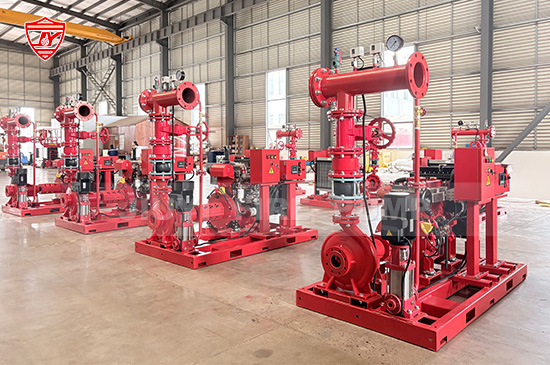
Fire pump selection is a critical engineering decision that directly affects the ability of a fire protection system to deliver the water required during an emergency. The correct selection must account for hydraulic performance, building characteristics, pump configuration, driver reliability, applicable standards, installation conditions, and long-term maintenance.
Choosing a pump based only on price, motor power, or maximum flow can overlook important requirements. A more effective approach begins with an accurate hydraulic assessment and continues through equipment evaluation, manufacturer coordination, testing, installation, and commissioning.
For fire protection engineers, system integrators, contractors, and facility owners, working with a qualified manufacturer can help clarify technical requirements and identify a suitable solution for each project.