Fire protection is an essential part of building safety, industrial risk management, and infrastructure planning. In commercial buildings, industrial facilities, warehouses, ports, and petrochemical plants, a reliable fire protection system can make a critical difference during an emergency. At the heart of many of these systems is the fire pump, which supplies the water flow and pressure required to support firefighting operations.
However, selecting a fire pump involves much more than choosing a pump with a particular flow rate or motor power. A complete fire pump system includes several interconnected components, each contributing to reliable operation. Understanding how these components work together helps project owners, fire protection engineers, contractors, and system integrators make informed decisions.
This guide explains everything you need to know about fire pump systems, from their operating principles and main types to system sizing, installation, testing, and maintenance.
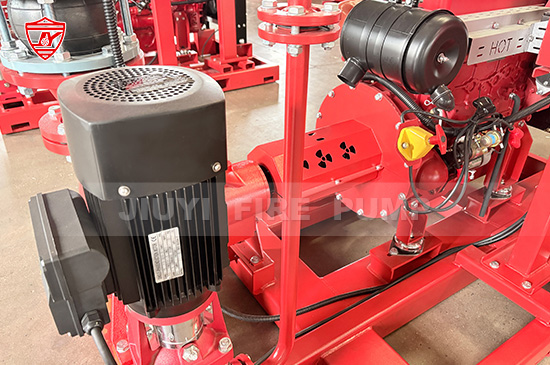
A fire pump system is a mechanical system designed to deliver water at the flow rate and pressure required by a fire protection network. It is commonly used when the available water supply cannot provide sufficient pressure or flow to meet the hydraulic demands of the fire protection system.
Fire pumps are frequently installed in high-rise buildings, industrial plants, distribution centers, airports, shopping malls, manufacturing facilities, and other locations where dependable fire protection is essential.
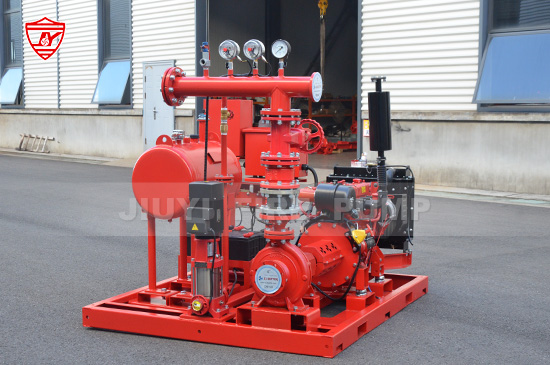
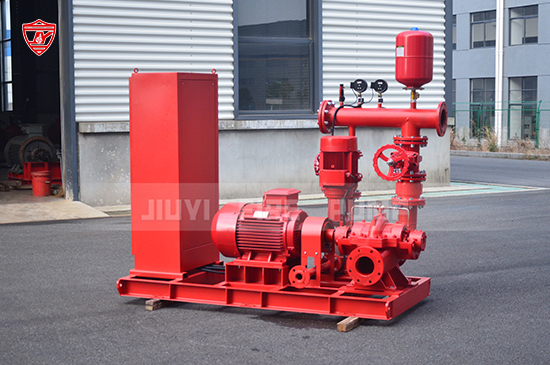
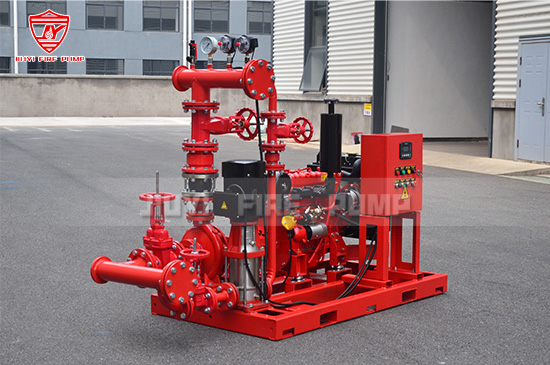
A typical fire pump system consists of a main fire pump, a driver such as an electric motor or diesel engine, a controller, a pressure-sensing arrangement, piping, valves, and associated accessories. A jockey pump is often included to maintain system pressure during normal conditions.
When the fire protection system operates, the main fire pump delivers the required water supply to sprinklers, standpipes, hydrants, or other connected firefighting equipment, depending on the system design.
It is important to understand that a fire pump does not create a water source. Instead, it increases the pressure and delivers the flow available from an appropriately designed water supply.
The operation of a fire pump system depends on the interaction between the water supply, pressure controls, main pump, and fire protection network.
Under normal conditions, the system remains pressurized. Small pressure fluctuations caused by minor leakage or temperature changes may be corrected by the jockey pump, which is designed to maintain pressure rather than supply the full firefighting demand.
When a fire occurs and water begins flowing through sprinklers, standpipes, or other firefighting outlets, system pressure may decrease. If the pressure reaches the designated starting threshold, the fire pump controller initiates the main fire pump according to the system's control philosophy and applicable requirements.
Once running, the pump supplies water at the required flow and pressure, helping the fire protection network operate as designed.
The pump continues to operate according to its control arrangement and applicable fire protection standards. Many fire pump installations require manual shutdown rather than automatic stopping after pressure is restored. The precise sequence depends on the applicable standard, controller design, and project requirements.
A properly engineered system coordinates all these functions to ensure that water is available when it is needed most.
Different projects require different fire pump configurations. Pump selection depends on the required flow, discharge pressure, water source, installation conditions, power availability, and applicable standards.
Electric fire pumps use electric motors to drive the pumps. They are widely used in commercial buildings, industrial facilities, residential developments, and infrastructure projects where a suitable electrical power supply is available.
Their advantages include straightforward operation, relatively low routine maintenance requirements, and convenient integration with electrical control systems.
When selecting an electric fire pump, engineers should evaluate motor power, starting characteristics, voltage, frequency, available electrical capacity, and the reliability of the power supply.
For critical applications, the project design should also consider the electrical infrastructure and any backup power arrangements required by applicable codes.
Diesel engine fire pumps are driven by diesel engines and are commonly selected for projects that require an alternative to electrically driven main pumps or where electrical supply reliability is a concern.
They are particularly useful in industrial facilities, remote installations, ports, petrochemical plants, and locations where maintaining dependable fire protection is a priority.
A diesel-driven system typically includes an engine, fuel system, batteries, charging equipment, cooling arrangements, exhaust components, and a dedicated controller.
Proper ventilation, exhaust routing, fuel availability, battery condition, and engine maintenance are essential for reliable operation.
Diesel fire pumps can provide an important alternative to electric pumps, but the appropriate configuration must be determined by the project's fire protection design and applicable requirements.
A jockey pump is a small auxiliary pump used to maintain pressure in a fire protection piping network.
Minor leakage and normal pressure fluctuations can cause the system pressure to decrease gradually. Without a jockey pump, the main fire pump might start unnecessarily, increasing wear and potentially causing operational problems.
The jockey pump is therefore selected to maintain normal system pressure while remaining separate from the main firefighting duty.
Its capacity and pressure settings must be coordinated with the main fire pump and the characteristics of the fire protection network.
Vertical turbine fire pumps are commonly used when the water source is located below the pump installation level, such as in a well, reservoir, tank, or other suitable water source.
Their vertical configuration allows the pumping assembly to extend downward into the water supply.
These pumps are particularly useful for applications involving deep water sources, large flow requirements, and installations where conventional horizontal pumps may not be suitable.
Important selection factors include the available water level, required flow and pressure, column length, submergence, motor arrangement, and installation geometry.
Horizontal split case fire pumps are frequently selected for medium- to large-capacity fire protection systems.
Their casing is divided into two sections, allowing convenient access to internal components during inspection and maintenance. Many designs use a double-suction impeller, which can provide favorable hydraulic characteristics and reduce axial thrust under appropriate operating conditions.
These pumps are suitable for industrial facilities, commercial complexes, warehouses, and large infrastructure projects where substantial water flow is required.
End suction fire pumps feature a compact design, with water entering through the suction end and leaving through the discharge connection.
They are commonly used in applications where the required capacity and pressure can be achieved with a relatively compact pump arrangement.
Their smaller footprint can make them attractive for equipment rooms and packaged fire pump installations.
The final selection should always be based on the required hydraulic duty and the applicable fire protection standards.
A reliable fire pump system requires more than a pump and a driver. Each component must be selected and installed to support the complete system.
Main fire pump: Delivers the required water flow and pressure to the fire protection network.
Driver: An electric motor or diesel engine supplies the mechanical power needed to operate the pump.
Fire pump controller: Monitors relevant operating conditions and manages the starting and control functions of the pump in accordance with the system design.
Jockey pump and controller: Maintain normal system pressure and help prevent unnecessary starts of the main fire pump.
Suction and discharge piping: Connect the pump to the water supply and fire protection network. Correct pipe sizing and routing are important for minimizing hydraulic losses.
Valves and accessories: Isolation valves, check valves, pressure gauges, flow-measuring equipment, and other accessories support system operation, inspection, and testing as required by the design.
Water supply: A reliable source, such as a dedicated storage tank, reservoir, or suitable municipal supply, must provide adequate water for the intended firefighting demand.
Monitoring and alarms: Where required, monitoring equipment communicates operating status, faults, and other important conditions to facility personnel or the building management system.
For diesel-driven systems, additional components include the fuel supply, batteries, charging equipment, cooling system, and exhaust arrangement.
The compatibility of these components is just as important as the performance of the individual pump.
Selecting the correct fire pump is one of the most important steps in designing a dependable fire protection system.
Flow rate represents the volume of water the pump must deliver over a given period. It is commonly expressed in gallons per minute (GPM) or cubic meters per hour (m³/h).
The required flow depends on the fire protection system's hydraulic calculations, the number and type of firefighting outlets that may operate, and the applicable design criteria.
A pump that delivers insufficient flow may fail to meet the system's requirements, while selecting an unnecessarily large pump can increase costs and create hydraulic or operational challenges.
The pump must provide enough pressure to overcome elevation differences, friction losses in piping, and the pressure required at the relevant discharge points.
For high-rise buildings, elevation can significantly affect the required pump pressure. Industrial installations may also involve long pipe runs, complex distribution networks, or specialized firefighting equipment.
Engineers should evaluate the complete system rather than relying solely on the pump's rated discharge pressure.
A pump performance curve shows how flow rate, head, and other performance characteristics relate to one another.
The selected pump should operate within an appropriate range of its performance curve and satisfy the project's required duty point. Engineers should also examine shutoff head, rated performance, power requirements, and operation at relevant flow conditions.
For fire protection applications, pump selection must consider the performance criteria specified by the applicable standard, not simply the maximum flow or maximum pressure shown in a product catalog.
Electric pumps require an appropriate electrical supply, while diesel pumps require a properly engineered engine and fuel system.
Project teams should verify the available voltage, frequency, motor rating, starting method, electrical infrastructure, environmental conditions, and relevant backup arrangements.
For diesel systems, engine performance under site conditions, cooling capacity, ventilation, and exhaust requirements should also be considered.
Fire pump standards and certification requirements vary according to the project location, building regulations, insurance requirements, and owner specifications.
In many projects, NFPA 20 is a key reference for the installation of stationary fire pumps. UL Listed or FM Approved equipment may be specified where required by the project or authority having jurisdiction.
A UL Listed fire pump should not automatically be described as FM Approved, and equipment certification should be verified for the specific model and configuration being supplied.
Early confirmation of the required standards can help avoid redesign, procurement delays, and compliance issues.
Fire pump ratings are usually expressed through rated flow, rated pressure or head, and driver power.
For example, a project may require a fire pump rated at 750 GPM with a specified pressure at the pump discharge. These figures describe the required duty point, but they do not fully define the suitability of the pump.
Engineers must also consider the available suction pressure, water level, elevation, piping losses, and the performance requirements at other operating points.
A fire pump's performance curve helps establish how the pump behaves as flow changes. The relationship between flow and pressure is particularly important when assessing whether the pump can satisfy the system's requirements during different operating conditions.
The selected motor or diesel engine must also provide sufficient power across the required operating range, accounting for the applicable design and standard requirements.
For international projects, teams should confirm units, voltage, frequency, motor efficiency requirements, and certification documentation before placing an order.
Correct installation is essential for achieving the performance expected from the selected pump.
The pump should be installed in a suitable location that provides adequate access for inspection, testing, and maintenance. The installation environment must meet the requirements for temperature, drainage, ventilation, lighting, and protection from environmental hazards.
The foundation must support the equipment and help maintain alignment. Piping should be independently supported so that excessive forces are not transferred to the pump connections.
Suction piping deserves particular attention because poor design can contribute to excessive hydraulic losses, air accumulation, cavitation, and reduced pump performance.
For electric pumps, electrical connections, grounding, motor rotation, controller settings, and supply characteristics should be verified. For diesel pumps, commissioning should include checks of the engine, batteries, charging equipment, fuel system, cooling arrangements, and exhaust installation.
Before the system is accepted, commissioning personnel should verify that the pump starts correctly, operates safely, and delivers the required performance.
A documented acceptance test should follow the applicable standard, approved project specifications, and manufacturer instructions. Testing should be performed by qualified personnel using suitable instruments and an appropriate test arrangement.
Regular testing and preventive maintenance help identify developing problems before they affect system availability.
The specific testing schedule depends on the applicable standards, local regulations, equipment type, and facility requirements.
Common inspection and maintenance activities include checking controller status, examining valves and piping, inspecting electrical connections, verifying diesel engine readiness, and reviewing relevant alarms and operating records.
Routine testing may include a no-flow test, where appropriate, and performance testing at multiple flow conditions. Depending on the installation, testing may verify rated flow and pressure, assess operation at other required points, and identify changes in performance.
Diesel-driven systems require particular attention to fuel quality, battery condition, charging equipment, engine fluids, cooling systems, and exhaust components.
Electric systems require checks of the motor, electrical supply, controller, and associated equipment.
Test results should be documented and compared with previous records. A significant change in pressure, flow, vibration, temperature, or starting behavior may indicate a developing issue that requires investigation.
Fire pumps should never be treated as ordinary water supply pumps that can be ignored when they are not running. Their readiness must be maintained because their primary purpose is to operate during an emergency.
Several common issues can affect fire pump reliability.
Insufficient discharge pressure: Potential causes include inadequate suction conditions, incorrect pump selection, excessive piping losses, or mechanical wear. Reviewing hydraulic conditions and measured performance can help identify the underlying problem.
Failure to start: Possible causes include electrical supply problems, controller faults, battery issues, engine problems, or incorrect control settings. Regular inspections and functional testing help detect these issues early.
Excessive vibration or noise: Misalignment, cavitation, loose foundations, bearing problems, or unsuitable operating conditions may contribute to abnormal vibration and noise. These symptoms should be investigated rather than ignored.
Frequent jockey pump operation: Repeated starts may indicate leakage, pressure fluctuations, incorrect settings, or other system problems. The cause should be identified before unnecessary operation affects equipment life.
Overheating: Excessive temperatures may result from inadequate cooling, poor ventilation, operation under unsuitable conditions, or mechanical problems.
A structured maintenance program, proper installation, suitable equipment selection, and accurate commissioning records can reduce the likelihood of unexpected failures.
A containerized fire pump system integrates fire pump equipment into a prefabricated enclosure or container-based package.
Depending on the project requirements, the package may include electric fire pumps, diesel engine fire pumps, jockey pumps, controllers, piping, valves, fuel systems, ventilation, lighting, and other supporting equipment.
This configuration is particularly useful for industrial facilities, remote sites, ports, petrochemical installations, and projects where a dedicated pump room is difficult to construct.
Containerized systems can simplify transportation, equipment integration, and on-site installation. Factory assembly and testing can also help project teams identify integration issues before delivery.
However, the container must be engineered for the intended environment. Important considerations include structural design, access for maintenance, ventilation, exhaust discharge, temperature control, drainage, fire safety, and transportation requirements.
The complete package should be evaluated as an integrated system, with each component meeting the relevant project specifications.
Choosing an experienced manufacturer can help simplify equipment selection, system integration, quality control, and project coordination.
A qualified fire pump manufacturer should be able to provide technical documentation, performance curves, dimensional drawings, relevant test reports, and information about available certifications.
Manufacturing capabilities also matter. Consistent machining, controlled assembly, driver matching, and systematic performance testing can help reduce the risk of defects and improve product consistency.
For international projects, buyers should consider whether the manufacturer can accommodate different voltage and frequency requirements, project-specific configurations, packaging needs, and applicable certification requirements.
Manufacturers with experience in electric fire pumps, diesel engine fire pumps, jockey pumps, vertical turbine pumps, and split case pumps can offer a broader range of solutions for different applications.
For large industrial or infrastructure projects, technical communication and after-sales support are equally important. Clear coordination during specification review, manufacturing, inspection, and delivery helps ensure that the supplied equipment matches the approved design.
At BETTER Technology Group, fire pump solutions are developed for a range of fire protection applications, with product configurations tailored to project requirements. Selecting the right solution begins with understanding the required flow, pressure, water source, power supply, installation environment, and applicable standards.
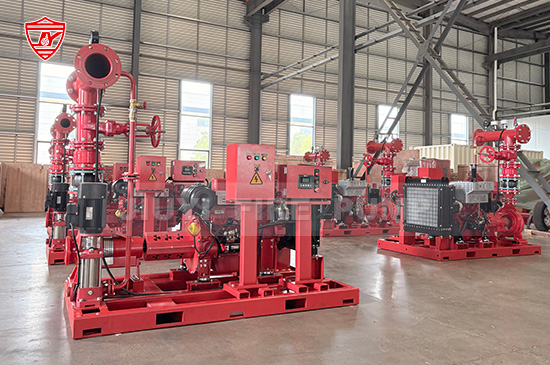
A fire pump system is a critical part of many fire protection installations. Its reliability depends on more than the pump itself. The water supply, driver, controller, piping, valves, installation quality, commissioning process, and maintenance program must all work together.
Understanding the differences between electric fire pumps, diesel engine fire pumps, jockey pumps, vertical turbine pumps, split case pumps, and end suction pumps helps project teams identify suitable equipment for their specific applications.
Before selecting a fire pump, confirm the required flow and pressure, review the pump performance curve, evaluate the available power supply, and verify all relevant certification and installation requirements.