Fire protection systems are essential for protecting people, property, equipment, and critical infrastructure from fire hazards. In industrial facilities, commercial buildings, ports, warehouses, and oil and gas installations, a reliable fire water supply can make a significant difference in an emergency. However, installing a conventional fire pump room is not always practical, particularly at remote project sites or locations where construction space is limited.
Containerized fire pump units offer a practical alternative. By integrating fire pumps, drivers, controllers, piping, and auxiliary equipment into a dedicated enclosure, these systems provide a compact and coordinated solution for fire protection projects. They can simplify transportation, reduce on-site construction requirements, and support faster project installation when properly designed and manufactured.
For project owners, fire protection contractors, engineering companies, and system integrators, understanding how containerized fire pump units work is an important step toward selecting the right equipment.
This guide explains their structure, working principles, advantages, applications, configuration options, and key considerations when choosing a containerized fire pump system.
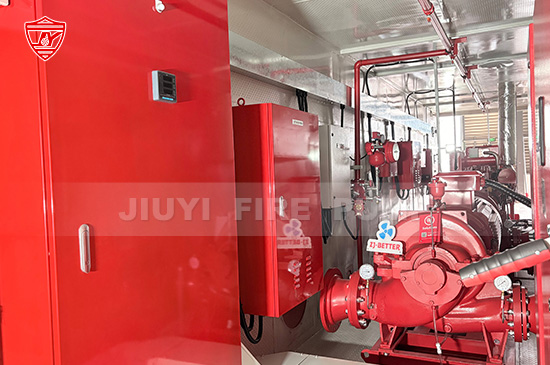
A containerized fire pump unit is a packaged fire protection system installed inside a specially designed enclosure or container. The container provides a dedicated space for the main pumping equipment and associated components, helping protect the system from environmental exposure while keeping the equipment organized and accessible.
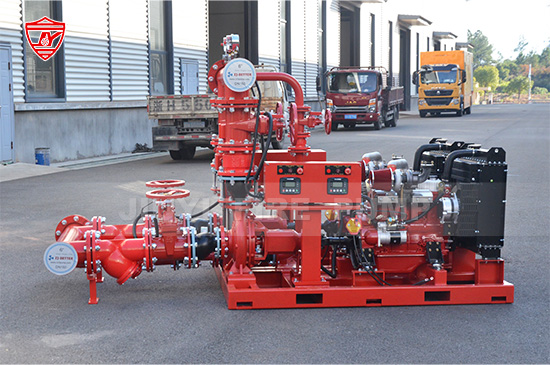
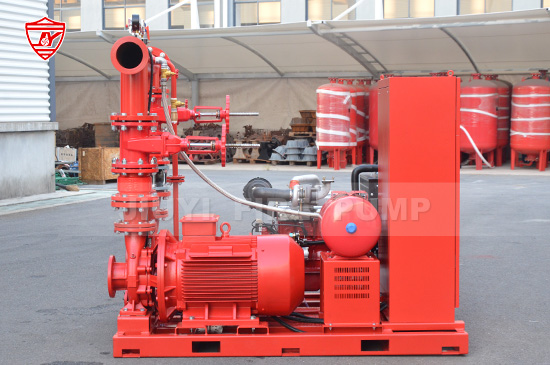
Unlike a conventional fire pump room built directly on-site, a containerized system is typically assembled and integrated at a manufacturing facility before delivery. Depending on the project requirements, the package may include electric fire pumps, diesel engine fire pumps, jockey pumps, controllers, piping, valves, ventilation systems, lighting, and monitoring equipment.
The final configuration depends on the required fire water flow rate, discharge pressure, applicable standards, site conditions, and project specifications.
Containerized fire pump units are particularly useful for projects that require a dedicated fire pump installation but face limitations involving space, construction schedules, or local building infrastructure.
They can be designed as standalone packages or integrated into a larger fire protection system connected to water storage tanks, hydrants, sprinkler networks, fire monitors, and other firefighting equipment.
A containerized fire pump package is more than a pump placed inside a metal enclosure. Its reliability depends on the correct selection and integration of multiple components.
The fire pump is the core of the system. It supplies water at the flow rate and pressure required by the fire protection network.
Depending on the application, the package may use several pump types.
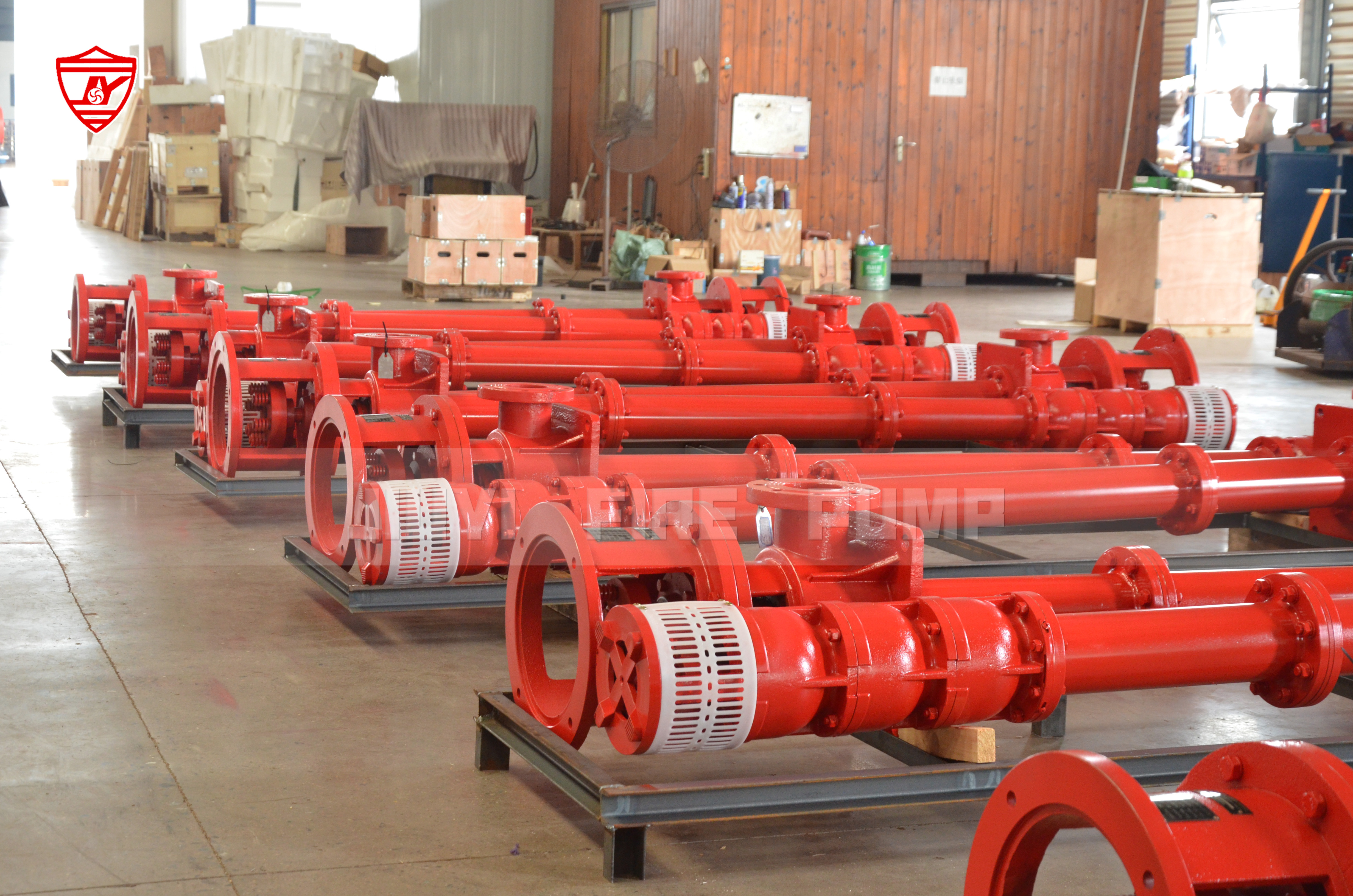
End suction fire pumps are suitable for many applications requiring a compact and straightforward configuration. Split case fire pumps are often selected for larger flow requirements and industrial installations. Vertical turbine fire pumps can be appropriate where the water source is located below the pump installation level, such as certain tanks, reservoirs, or other water supplies.
Pump selection should be based on hydraulic calculations, system demand, suction conditions, and the required operating range.
Fire pumps commonly use electric motors or diesel engines as their driving equipment.
Electric fire pumps are suitable for sites with a dependable power supply and an electrical infrastructure that meets the project's requirements. Diesel engine fire pumps provide an alternative where independent mechanical drive capability is required or where the project design calls for a diesel-driven standby pump.
Some installations combine electric and diesel fire pumps to provide different driving arrangements within the same fire protection system.
The driver must be correctly matched to the pump's power requirements and operating conditions. For diesel-driven packages, additional considerations include fuel storage, exhaust routing, cooling, ventilation, and engine starting arrangements.
A jockey pump maintains pressure within the fire protection piping network and helps compensate for small pressure losses.
It is not intended to replace the main fire pump during a fire emergency. Instead, it helps reduce unnecessary starting of the main pumps caused by minor pressure fluctuations.
A typical configuration may combine an electric main fire pump, a diesel standby fire pump, and a jockey pump. The exact arrangement depends on the applicable design requirements and project specifications.
Controllers manage the starting and operating functions of the pumps according to the system design.
Electric fire pump controllers and diesel engine fire pump controllers have different requirements because they operate different types of drivers. Their configuration should reflect the specified starting methods, monitoring functions, alarms, and control philosophy.
Controllers must be selected and installed in accordance with the relevant standards, environmental conditions, and equipment requirements.
The internal piping connects the equipment and supports the movement of water through the package. Valves, pressure gauges, test connections, fittings, and other accessories may be incorporated as required.
Proper pipe sizing, connection design, support arrangements, and accessibility are important for reliable operation and maintenance.
The enclosure protects the equipment and provides a controlled arrangement for installation and servicing.
Depending on the location and design, auxiliary systems may include ventilation, lighting, drainage, exhaust systems, temperature control, fire detection, and monitoring equipment.
These systems are particularly important for diesel-driven packages, which generate heat and exhaust gases during operation.
Containerized fire pump units offer several advantages for projects where conventional pump rooms may be difficult or costly to construct.
Because much of the equipment integration can be completed at the factory, containerized packages can reduce the amount of on-site assembly required.
Instead of constructing a dedicated building and installing every component separately, the project team can receive a coordinated package prepared for installation and connection.
Civil works, foundations, utilities, and external piping are still required, but the overall installation process can become more organized.
Factory assembly allows multiple manufacturing activities to take place before the installation site is fully prepared.
While site preparation and package manufacturing may proceed in parallel, the total project schedule depends on engineering approvals, equipment lead times, transportation, utility connections, and commissioning requirements.
For projects with demanding construction schedules, this coordinated approach can help improve installation planning.
A containerized fire pump system consolidates the principal equipment within a defined footprint.
This can be useful at ports, industrial plants, warehouses, and existing facilities where available space is limited. The enclosure can be configured to accommodate the necessary equipment while maintaining appropriate access for operation and maintenance.
The required container dimensions must be determined by the equipment layout, ventilation needs, access clearances, and applicable safety requirements.
Factory integration allows manufacturers to inspect the relationships between pumps, drivers, controllers, piping, and auxiliary systems before shipment.
Depending on the project scope, inspections may cover dimensional checks, wiring verification, component identification, controller checks, and pump performance testing.
Testing at the manufacturing facility can help identify integration issues before the equipment reaches the project site. However, factory testing does not eliminate the need for site acceptance checks and commissioning.
Containerized fire pump packages can be engineered for a range of applications, flow requirements, driving arrangements, and environmental conditions.
Options may include electric or diesel-driven pumps, jockey pumps, different pump designs, customized piping layouts, and project-specific monitoring equipment.
This flexibility makes containerized solutions useful for both new developments and selected facility upgrades.
Containerized fire pump units are used across industries where dependable firefighting water supply is a critical part of risk management.
Oil refineries, chemical plants, fuel storage terminals, and processing facilities may face substantial fire risks associated with flammable liquids, gases, and industrial processes.
Containerized fire pump systems can support fire protection networks serving hydrants, monitors, and other approved firefighting equipment.
Project design must consider the facility's hazard assessment, environmental conditions, required water demand, and applicable fire protection standards.
Ports handle cargo, fuel, containers, and heavy industrial equipment across large operating areas.
A containerized fire pump package can provide a dedicated pumping installation where space, construction access, or the existing infrastructure makes a conventional pump room less practical.
The design should account for corrosion risks, humidity, wind exposure, and the specific environmental conditions of the site.
Large warehouses and distribution facilities may require substantial water flow to support their fire sprinkler and hydrant systems.
Containerized fire pump units can consolidate pumping equipment in a dedicated installation outside the main building, subject to the approved fire protection design and local requirements.
The pump capacity must be determined by the hydraulic demand of the complete system rather than the warehouse floor area alone.
Shopping centers, residential developments, industrial parks, and other large building projects may benefit from packaged fire pump installations when the layout and project requirements permit.
A containerized solution can help organize the mechanical equipment while keeping it separate from occupied areas.
Its suitability depends on local building regulations, fire protection standards, access requirements, and the availability of an appropriate installation location.
Remote factories, energy projects, mining facilities, and infrastructure developments may lack existing buildings or dedicated mechanical rooms.
A factory-integrated containerized package can simplify equipment coordination and transportation to the site.
Nevertheless, remote projects require careful planning for water supply, power or fuel availability, maintenance access, spare parts, and environmental protection.
Selecting the right package requires more than comparing pump prices or container dimensions. Buyers should evaluate the complete fire protection requirement.
The first step is to establish the required flow rate and pressure based on the hydraulic calculations for the fire protection system.
These requirements may be influenced by sprinkler demand, hydrant demand, fire monitors, elevation differences, friction losses, and other system characteristics.
The pump must operate appropriately at the required duty point and across the specified operating range.
Oversizing or undersizing the pump without a sound engineering basis can affect system performance, energy use, and equipment selection.
The most suitable pump type depends on the required capacity, pressure, water source, installation arrangement, and project specifications.
End suction pumps may suit compact installations, split case pumps may serve higher-capacity applications, and vertical turbine pumps may be required for particular water-source arrangements.
The final selection should reflect the actual hydraulic and mechanical requirements.
Determine whether the installation requires an electric fire pump, a diesel engine fire pump, or a combination of the two.
Evaluate the availability and reliability of electrical power, fuel storage arrangements, engine cooling, ventilation, and maintenance capabilities.
For projects requiring redundant pumping arrangements, the complete configuration should be reviewed against the applicable fire protection standard and the authority having jurisdiction.
Fire pump requirements vary by market, project specification, and local regulations.
Some projects specify NFPA 20, which addresses the installation of stationary pumps for fire protection, while others require particular product listings or approvals, such as UL Listed equipment.
It is important to distinguish between the compliance status of individual components and that of the complete packaged installation. A containerized package should not be described as UL Listed or certified as a whole unless that status is supported by the relevant certification and scope.
Buyers should confirm the required standards, documentation, product listings, and approval process before placing an order.
The container must be designed for the conditions in which it will operate.
Important factors include ambient temperature, humidity, rainfall, dust, corrosive atmospheres, wind exposure, and potential flooding.
For diesel engine packages, sufficient combustion air, ventilation, heat removal, and safe exhaust discharge are essential.
Where necessary, additional insulation, heating, cooling, corrosion protection, or other environmental controls should be incorporated into the design.
A compact package should not compromise maintenance.
The layout should provide appropriate access to pumps, motors, engines, controllers, valves, and other serviceable components. Adequate clearance may be required for inspection, routine maintenance, and equipment replacement.
A well-designed containerized fire pump unit balances space efficiency with practical operation and servicing.
Although containerized fire pump units are substantially assembled before delivery, correct site installation remains essential.
The foundation must support the equipment's weight and operating loads. The package must be positioned according to the approved layout, with suitable access for maintenance and emergency operations.
External suction and discharge piping must be correctly sized and installed. Pipe loads should not be transferred improperly to pump connections, and suction arrangements must meet the requirements of the selected equipment and applicable standards.
Electrical supplies, grounding, controller connections, diesel fuel systems, ventilation, and exhaust arrangements must be completed and inspected as applicable.
Before the system is placed into service, commissioning should verify that the installation matches the approved design and manufacturer instructions.
Typical checks may include:
Inspection of the foundation, enclosure, and equipment installation.
Verification of electrical connections and control wiring.
Inspection of suction and discharge piping, valves, and accessories.
Verification of diesel fuel, cooling, ventilation, and exhaust systems where applicable.
Testing of pump starting, control functions, alarms, and monitoring.
Performance testing under the specified conditions.
Confirmation that operating documentation and maintenance instructions are available.
Commissioning should be performed by qualified personnel following the applicable standards, approved procedures, and project requirements.
Both containerized fire pump units and conventional pump rooms can provide effective fire protection when properly designed. The best choice depends on the specific project.
A conventional pump room may be preferable when a suitable building already exists, substantial equipment expansion is anticipated, or the facility requires a permanent integrated mechanical space.
A containerized package may be more attractive when factory integration, a defined installation footprint, transportation as a coordinated unit, or reduced on-site assembly is important.
However, containerized systems are not automatically less expensive or faster in every situation. Transportation, lifting, foundations, environmental controls, access requirements, and site utilities all affect the final cost and schedule.
The decision should be based on a comparison of the complete installed solution, including equipment, civil works, installation, testing, maintenance, and long-term operating requirements.
Several mistakes can reduce the effectiveness of a containerized fire pump installation.
Selecting equipment based on price alone. A lower initial purchase price does not guarantee suitable hydraulic performance, reliable integration, or lower lifecycle costs.
Ignoring ventilation and heat management. Poorly designed ventilation can affect diesel engine performance, operating temperatures, and equipment reliability.
Overlooking maintenance clearance. A package that is too compact can make routine inspections and equipment replacement difficult.
Assuming factory assembly eliminates site testing. Transportation, installation, and connection work can introduce issues that must be identified during commissioning.
Failing to confirm certification requirements. The specified listing or approval must match the actual equipment, project requirements, and intended application.
Neglecting environmental protection. Corrosion, condensation, extreme temperatures, and dust can affect equipment service life if not addressed during design.
Avoiding these mistakes begins with a clearly defined project specification and close coordination among the owner, engineering consultant, fire protection contractor, and fire pump manufacturer.
Choosing an experienced manufacturer can simplify the process of developing a suitable containerized fire pump solution.
A capable manufacturer should be able to support pump selection, equipment configuration, enclosure layout, driver matching, piping integration, controller coordination, and factory testing.
Manufacturing capabilities also matter. Consistent machining, assembly procedures, quality inspections, and documented testing help support product reliability and traceability.
For international projects, manufacturers should also understand export packaging, transportation constraints, project documentation, and the technical requirements of different markets.
At BETTER Technology Group, our fire pump business focuses on fire pump equipment and integrated pumping solutions for industrial and building fire protection applications. Depending on project requirements, containerized packages can be configured around electric fire pumps, diesel engine fire pumps, jockey pumps, and associated equipment.
For buyers evaluating a containerized fire pump unit, providing the required flow rate, pressure, pump arrangement, applicable standards, installation environment, and destination market helps establish a more accurate technical proposal.
A well-engineered package should deliver more than a compact arrangement of equipment. It should provide a coordinated solution that meets the project's hydraulic requirements, supports reliable operation, and allows practical inspection and maintenance throughout its service life.
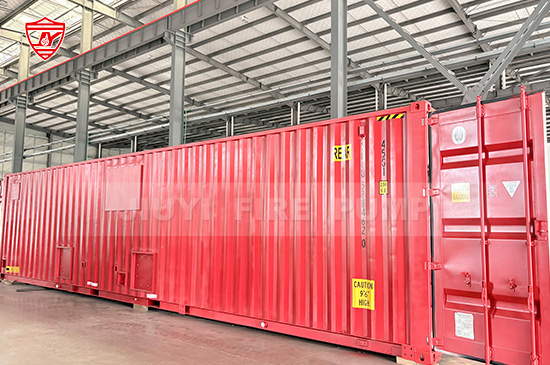
Containerized fire pump units provide a practical approach to fire protection equipment integration, particularly for industrial facilities, ports, warehouses, oil and petrochemical projects, and remote installations.
By combining fire pumps, drivers, controllers, piping, and auxiliary systems within a dedicated enclosure, these packages can reduce on-site assembly work, simplify equipment coordination, and support efficient project execution.
Successful implementation depends on correct hydraulic sizing, suitable pump and driver selection, careful enclosure design, compliance with applicable standards, and thorough commissioning.
For fire protection contractors, engineering companies, project owners, and system integrators, working with an experienced manufacturer helps ensure that the selected package aligns with the project's technical requirements and installation conditions.