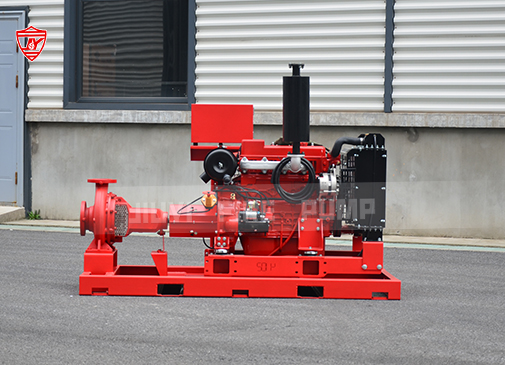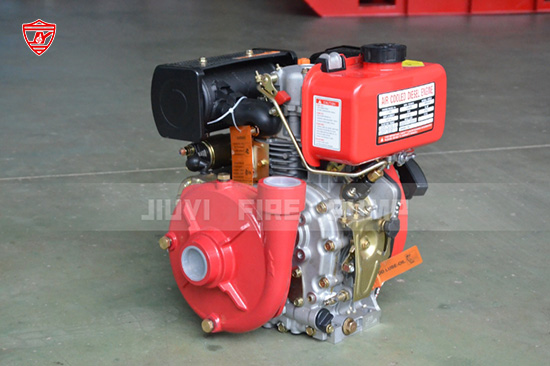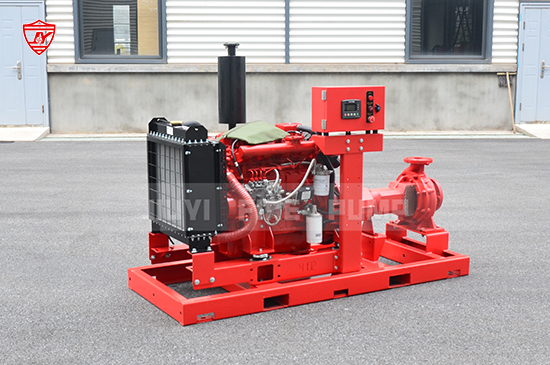
Fire pump pressure loss calculation is a critical engineering process used to determine how much pressure a fire pump must generate to deliver the required water flow to the most remote fire protection demand point. It accounts for all pressure losses and gains within a fire pump system, ensuring that sprinklers, hydrants, or hose reels operate effectively during a fire emergency.
In fire protection systems, pressure loss calculation is not optional. It is a fundamental requirement for system design, equipment selection, and compliance with fire safety standards such as NFPA 20 and NFPA 13. An inaccurate calculation can result in insufficient water pressure, system failure, or costly redesigns after installation.
This article explains what fire pump pressure loss calculation is, why it matters, what factors affect it, and how it is calculated in practical fire pump applications.
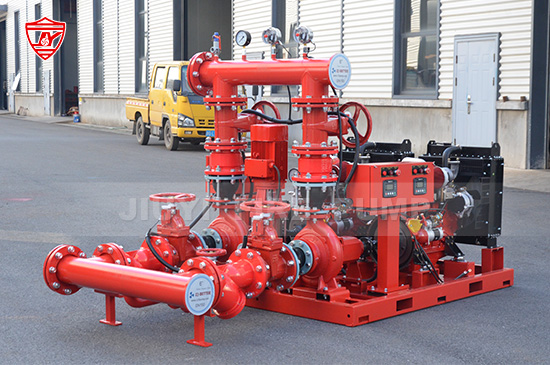
Fire protection systems are designed for worst-case scenarios. During a fire, water must reach the highest, farthest, or most hydraulically demanding point in the system at a specific flow rate and pressure.
Pressure loss calculation ensures:
The selected fire pump can meet system demand
Water reaches all protected areas reliably
Fire pumps comply with design codes and project specifications
Oversizing or undersizing of fire pumps is avoided
The system passes acceptance testing and inspections
Without accurate pressure loss calculation, a fire pump may fail to deliver adequate pressure at the point of use, even if the pump itself is operating correctly.
Pressure loss refers to the reduction in water pressure as it flows through a fire protection system. This loss occurs due to resistance created by pipes, fittings, valves, elevation changes, and system components.
In a fire pump system, pressure loss occurs both upstream and downstream of the pump. However, fire pump pressure loss calculation primarily focuses on downstream losses, as the pump must overcome these losses to meet system demand.
Pressure is typically expressed in:
PSI (pounds per square inch)
Bar
Meters of water column
Fire pump pressure loss calculation includes several components that must be evaluated together. Each component contributes to the total pressure the fire pump must generate.
Friction loss is the pressure loss caused by water flowing through pipes. It depends on:
Pipe diameter
Pipe length
Pipe material
Flow rate
Internal pipe roughness
As flow rate increases, friction loss increases exponentially. This is why accurate flow data is essential when calculating fire pump pressure loss.
Long pipe runs, undersized pipes, and higher flow demands significantly increase friction loss.
Fittings and valves introduce additional resistance to water flow. Common contributors include:
Elbows
Tees
Check valves
Control valves
Backflow preventers
Each fitting has an equivalent length of pipe that adds to total friction loss. In fire pump pressure loss calculation, these equivalent lengths must be included to ensure accuracy.
Elevation loss occurs when water must be lifted to a higher elevation. This is also known as static head.
As a general rule:
Every 1 meter of elevation equals approximately 0.1 bar
Every 10 feet of elevation equals approximately 4.3 psi
High-rise buildings and elevated storage systems require careful elevation loss calculation, as this component alone can consume a large portion of available pump pressure.
Fire protection standards require a minimum residual pressure at the most remote discharge point.
Examples include:
Sprinkler systems requiring a specific pressure at the sprinkler head
Fire hose systems requiring minimum nozzle pressure
Hydrant systems requiring adequate residual pressure during flow
This required pressure is not a loss, but it must be added to total pressure loss to determine the fire pump discharge pressure.
Many engineers include a safety margin to account for:
Pipe aging and internal corrosion
Future system expansion
Minor calculation inaccuracies
While standards discourage excessive margins, a reasonable allowance helps ensure long-term system reliability.
The simplified concept behind fire pump pressure loss calculation can be expressed as:
Required Fire Pump Pressure =
Friction Loss + Elevation Loss + Required Residual Pressure
Each term must be calculated accurately using accepted hydraulic methods and design data.
The most remote point is not always the farthest physically. It is the point requiring the highest combination of flow and pressure, often located at:
The highest elevation
The longest pipe run
The hydraulically most demanding sprinkler zone
This point determines the fire pump’s required performance.
System flow demand is defined by:
Sprinkler system design density
Hose stream allowance
Standpipe or hydrant flow requirements
Flow demand directly impacts friction loss and must be accurately defined before calculations begin.
Pipe friction loss is calculated using accepted hydraulic formulas, based on:
Pipe size
Pipe length
Flow rate
Pipe material
The total friction loss includes all straight pipe sections from the pump discharge to the demand point.
All fittings and valves along the flow path must be included using equivalent length or loss coefficient methods. Ignoring these losses can result in significant underestimation of total pressure loss.
Measure the vertical distance from the fire pump centerline to the demand point. Convert this height into pressure loss using standard conversion values.
Add the minimum pressure required at the discharge device, such as:
Sprinkler operating pressure
Hose nozzle pressure
This ensures the system performs as designed during a fire event.
The final calculated pressure determines the required fire pump rated pressure. The selected fire pump must meet this pressure at the required flow while complying with applicable standards.
One of the most common mistakes is underestimating friction loss by ignoring fittings or using incorrect pipe sizes. Another frequent issue is misidentifying the most remote demand point, leading to insufficient pump pressure.
Other errors include:
Using incorrect flow data
Overlooking future system expansion
Applying excessive safety margins that result in oversized pumps
Not accounting for pressure losses across control valves and backflow devices
Accurate calculation requires experience, attention to detail, and a thorough understanding of fire protection systems.
NFPA 20 requires that fire pumps be selected to meet the system demand without exceeding allowable performance limits. While NFPA 20 does not prescribe a single calculation method, it emphasizes:
Accurate hydraulic calculations
Proper pump selection based on system demand
Verification through acceptance testing
Fire pump pressure loss calculation is therefore a foundational element of NFPA-compliant system design.
As a fire pump manufacturer, pressure loss calculation directly influences:
Pump type selection
Rated pressure and flow
Motor or engine sizing
Controller selection
System reliability and compliance
Manufacturers rely on accurate calculations provided by designers or offer technical support to ensure the selected fire pump matches project requirements. A well-matched pump improves system efficiency, reduces energy waste, and extends equipment life.
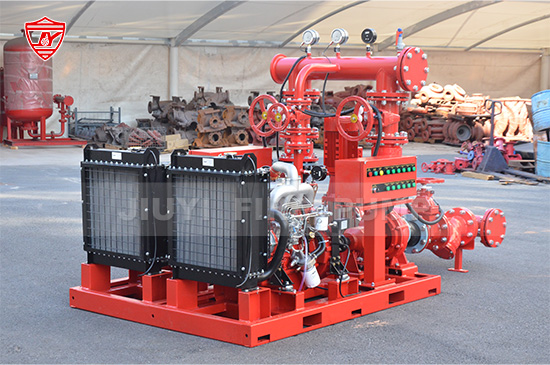
Fire pump pressure loss calculation is a critical process that ensures fire protection systems perform reliably when they are needed most. By accurately accounting for friction loss, elevation loss, and required residual pressure, engineers and contractors can select fire pumps that meet both system demands and regulatory requirements.