Fire protection systems play a critical role in protecting people, property, industrial equipment, and business operations. In commercial buildings, manufacturing plants, oil and gas facilities, warehouses, ports, and other high-risk environments, a reliable fire pump system is essential for delivering the water flow and pressure required for firefighting operations.
Among the available fire pump solutions, diesel engine-driven fire pumps are widely used in facilities where dependable emergency water supply is a priority. Unlike electrically driven fire pumps, diesel fire pumps use a dedicated diesel engine to drive the pump, allowing them to operate without relying on an external electrical power supply for their primary driving power.
This characteristic makes diesel engine-driven fire pumps an important option for facilities exposed to power outages, unstable electricity, or demanding operating conditions. They can also provide a practical solution for remote locations and large industrial projects where electrical infrastructure may be limited.
Understanding the advantages of diesel fire pumps helps building owners, fire protection engineers, contractors, and project managers select suitable equipment for their fire protection requirements. This article explores the key benefits of diesel engine-driven fire pumps, their common applications, and the factors to consider when selecting a reliable system.
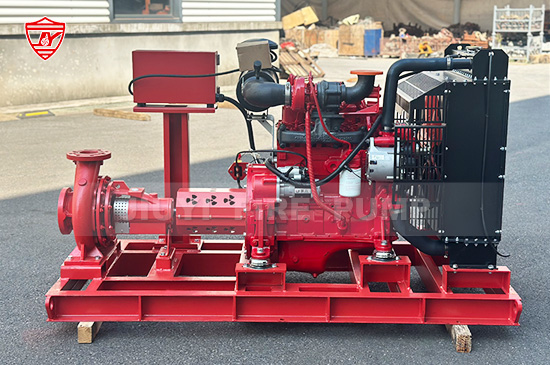
One of the most important advantages of diesel engine-driven fire pumps is their independence from external electrical power for pump operation.
During a fire emergency, the normal electrical supply may be interrupted by fire damage, equipment failure, grid instability, or other unexpected events. An electrically driven fire pump that depends on the affected power source may be unable to operate unless an appropriate alternative power arrangement is available.
A diesel engine-driven fire pump uses a diesel engine as its driving source. As long as the engine, fuel supply, starting system, and associated equipment are properly maintained and operational, the pump can deliver water without depending on the facility's normal electrical supply to drive the pump.
This independence is particularly valuable in locations where power reliability is a concern. Examples include remote industrial facilities, outdoor storage areas, ports, construction sites, and infrastructure projects.
However, diesel fire pumps still require reliable starting arrangements, appropriate battery maintenance, adequate fuel, and properly functioning control equipment. Independence from the main electrical supply does not eliminate the need for regular inspection and testing.
Fire protection equipment must be ready to operate when an emergency occurs, even if the system has remained inactive for an extended period.
Diesel engine-driven fire pumps can provide a dependable source of firefighting water when they are correctly specified, installed, commissioned, and maintained. Their reliability comes from the integration of a suitable pump, diesel engine, controller, starting system, fuel system, cooling arrangement, and associated accessories.
A properly configured diesel fire pump package is designed to support emergency operation under the conditions established for the project. Regular inspections and scheduled testing help identify potential problems before an emergency occurs.
For example, checking engine oil, coolant, fuel quality, battery condition, and controller status can help prevent avoidable starting failures. Testing also provides an opportunity to identify leaks, abnormal vibration, cooling problems, and other issues that could affect performance.
It is important to recognize that diesel-driven equipment is not automatically more reliable than every electric alternative. Actual reliability depends on system design, equipment quality, installation conditions, maintenance practices, and compliance with applicable fire protection requirements.
When these factors are properly managed, diesel engine-driven fire pumps can serve as a dependable component of an emergency fire protection strategy.
Not every industrial or commercial site has access to a stable and sufficient electrical supply.
Some projects are located in developing industrial zones, remote areas, coastal facilities, or locations where the electrical infrastructure is still being expanded. In these environments, installing an electrically driven fire pump may require additional power infrastructure or a carefully engineered alternative supply arrangement.
A diesel fire pump provides another option because its primary driving power comes from the diesel engine rather than the site's normal electrical network.
This can simplify certain aspects of project planning, particularly when a suitable electrical supply is difficult to provide at the required location. It may also help reduce dependence on the facility's electrical distribution system during a fire emergency.
Nevertheless, project designers must evaluate the electrical requirements of the complete installation. Diesel fire pump controllers, battery chargers, monitoring equipment, lighting, and other accessories may still require electrical power. The specific configuration should be determined by the applicable standards and project specifications.
Industrial fire protection systems may require substantial water flow and pressure to support hydrants, hose systems, sprinkler installations, or other firefighting equipment.
Diesel engines are available in a wide range of power ratings, allowing engineers to select a suitable driver for different pump capacities and operating requirements.
Depending on the pump design, engine rating, and system configuration, diesel engine-driven fire pumps can support applications ranging from commercial buildings to large industrial installations.
Typical applications include oil and petrochemical facilities, manufacturing plants, logistics centers, warehouses, ports, terminals, and other sites where fire protection requirements may be demanding.
Selecting a diesel fire pump requires more than comparing engine horsepower. Engineers must determine the required flow rate, rated pressure or head, suction conditions, system losses, and applicable operating requirements. The selected engine must have sufficient power for the pump's required operating range under the specified site conditions.
A properly matched pump and engine help ensure that the complete system can meet its intended hydraulic performance without placing unnecessary demands on the driver.
Diesel engine-driven fire pumps can be installed in a variety of facility layouts, subject to the applicable fire protection standards and site conditions.
For projects where the pump room is separated from the main building, or where the installation is located outdoors, a diesel-driven arrangement may offer practical advantages because the pump's driving power does not depend on a dedicated high-capacity electrical supply for normal pump operation.
For example, remote warehouses, industrial storage yards, ports, and infrastructure projects may require a dedicated fire pump installation outside the main facility.
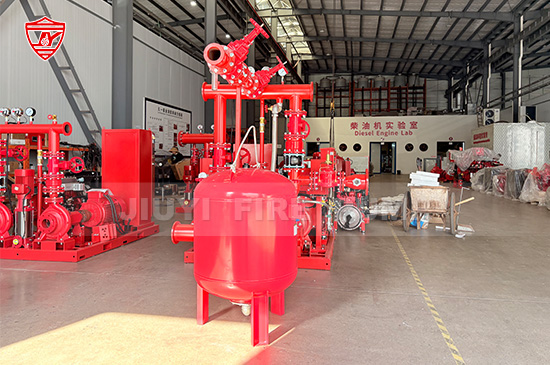
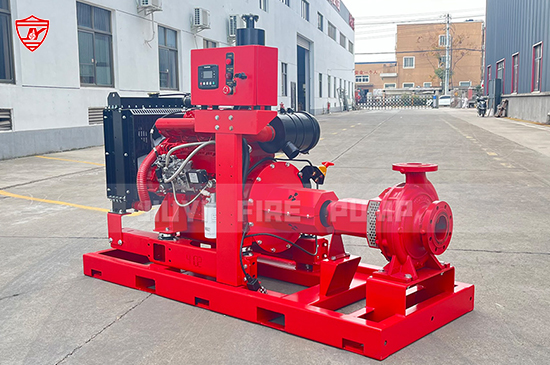
In suitable applications, a packaged diesel fire pump set can integrate the pump, engine, controller, and selected accessories into a coordinated assembly. This approach can help simplify equipment transportation, installation planning, and coordination between different system components.
For projects with more demanding environmental or space requirements, a containerized fire pump system may also be considered. A containerized arrangement can provide an integrated equipment space and may incorporate ventilation, exhaust routing, lighting, monitoring, and other project-specific features.
However, the installation must still satisfy requirements for access, ventilation, exhaust discharge, cooling, fuel storage, fire separation, drainage, and maintenance clearance. Packaging the equipment does not remove the need for proper engineering.
Certain industrial environments require particular attention to fire protection system design because a fire may threaten personnel, equipment, stored materials, and surrounding operations.
Oil and petrochemical plants, fuel storage facilities, ports, terminals, and large warehouses are examples of locations where reliable firefighting water delivery can be especially important.
In these environments, diesel engine-driven fire pumps can provide an independent pump-driving source that supports the facility's broader fire protection strategy.
For example, a petrochemical facility may require a fire pump system capable of supplying a designated firewater network during an emergency. A diesel-driven pump can be selected as part of the planned fire pump arrangement to reduce dependence on the normal electrical supply.
The final configuration depends on the facility's hazard assessment, hydraulic calculations, required redundancy, applicable regulations, and insurance or owner specifications.
Diesel fire pumps should therefore be viewed as part of a complete fire protection system rather than as standalone equipment. Their effectiveness depends on the availability of the water source, suitable piping, correctly selected firefighting equipment, operational controls, and a maintenance program that keeps the system ready for use.
Many fire protection systems use more than one pump to meet different operating requirements.
A typical arrangement may include an electric fire pump, a diesel engine-driven fire pump, and a jockey pump. In an electric-diesel-jockey configuration, the electric pump serves as the primary fire pump under the intended design conditions, while the diesel-driven pump provides an alternative driving source when required. The jockey pump helps maintain system pressure and compensates for small pressure losses.
The actual sequence of operation must be established by the system design and control logic. A jockey pump is not intended to replace the main fire pump during a major fire demand.
Combining electric and diesel fire pumps can help provide an additional layer of operational resilience, particularly where continuity of fire protection is a priority.
Diesel fire pumps can also be specified as part of dedicated diesel-driven packages or other engineered configurations, depending on the project's requirements.
When designing a multi-pump system, engineers should evaluate pump capacity, starting arrangements, control interfaces, power availability, water supply, and the intended response to different failure scenarios. Proper coordination helps ensure that each pump performs its designated role.
Some facilities use standby generators to support electrically driven fire pumps during power outages. This arrangement may be suitable when it is permitted by the governing requirements and properly designed.
However, a standby generator introduces additional equipment and considerations, including generator capacity, starting performance, fuel availability, transfer arrangements, electrical protection, and maintenance.
A diesel engine-driven fire pump provides a different approach because its engine directly drives the pump. It does not require a standby electrical generator to supply the pump's primary driving power.
This can reduce the need to rely on a generator specifically for that purpose, although the overall facility may still require emergency electrical generation for other critical loads.
The choice between a diesel-driven pump and an electric pump supported by an emergency power system should be based on the applicable fire protection standards, project design, lifecycle cost, maintenance capability, and required reliability.
The objective is not simply to minimize the number of components, but to provide a compliant and dependable fire protection solution.
Diesel engine-driven fire pumps require routine maintenance to preserve their readiness and performance. Although maintenance involves ongoing effort, a structured program can help identify developing issues and reduce the risk of unexpected equipment failure.
Important maintenance activities may include inspecting engine oil and coolant levels, checking fuel condition, examining batteries and charging systems, verifying controller indications, inspecting hoses and connections, and checking for leaks.
The pump and engine should also be tested in accordance with the applicable standards, manufacturer instructions, and the project's maintenance requirements. Testing should verify the operation of relevant starting and control functions and evaluate hydraulic performance under appropriate conditions.
Fuel quality deserves particular attention because contaminated or degraded fuel can affect engine starting and operation. Batteries must also be maintained because a diesel engine that cannot start may be unable to provide the intended emergency protection.
Maintenance personnel should keep inspection and test records, document deficiencies, and ensure that corrective actions are completed promptly.
For facility owners, a well-managed maintenance program supports long-term operational readiness and helps protect the investment in the fire pump system.
Although diesel engine-driven fire pumps offer several advantages, selecting the right equipment requires a comprehensive technical assessment.
First, determine the required flow rate and pressure based on the hydraulic design of the fire protection system. The pump must meet the specified duty point and applicable performance requirements.
Second, verify that the diesel engine has sufficient rated power for the selected pump and the expected operating conditions. Environmental factors such as ambient temperature, altitude, ventilation, and cooling arrangements may affect engine performance.
Third, evaluate the fuel storage capacity and fuel supply arrangement. The installation should meet applicable requirements for fuel availability, storage safety, accessibility, and emergency operation.
Fourth, review the starting system, batteries, charger, controller, alarms, and monitoring functions. These components play an important role in ensuring that the engine can start when required.
Fifth, assess the installation environment. Engine ventilation, exhaust discharge, heat rejection, noise, drainage, access, and maintenance space should all be considered during the design stage.
Finally, confirm the applicable standards, approval requirements, and project specifications. Depending on the project, these may include NFPA 20 and relevant local fire codes or other governing requirements. Where UL listing or FM approval is specified, the exact pump, driver, controller, and package configuration should be verified against the required certification scope.
Working with an experienced fire pump manufacturer can help project teams coordinate pump selection, engine matching, control arrangements, testing, and package configuration.
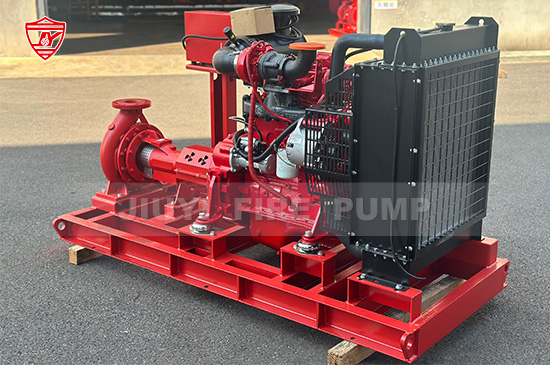
Diesel engine-driven fire pumps offer several important advantages for fire protection applications, including independence from the normal electrical supply for pump driving power, suitability for locations with unstable electricity, flexible installation options, and the ability to support demanding industrial fire protection requirements.
They are particularly valuable in projects where power resilience and dependable emergency water delivery are central design considerations. When integrated with suitable electric fire pumps, jockey pumps, controllers, and supporting equipment, diesel-driven units can form part of a comprehensive fire protection system.
However, reliable operation depends on correct hydraulic selection, proper engine matching, suitable installation conditions, compliance with applicable standards, and consistent inspection and testing.
For fire protection engineers, contractors, and facility owners, the best solution is one that matches the project's technical requirements while supporting long-term operational readiness.
As a fire pump manufacturer, BETTER Technology Group provides fire pump solutions for different project requirements, including diesel engine-driven fire pump sets and integrated fire pump packages. By evaluating flow, pressure, driving power, installation conditions, and project specifications, customers can identify a suitable configuration for their fire protection needs.