Selecting the right fire pump driver is a critical decision when designing a fire protection system. Whether the project involves a commercial building, industrial facility, warehouse, oil and gas installation, or port terminal, the fire pump must deliver the required water flow and pressure when an emergency occurs. However, achieving the required hydraulic performance is only part of the equation. The driver that powers the pump also plays an important role in system reliability, operational costs, maintenance requirements, and emergency readiness.
Electric motor fire pumps and diesel engine fire pumps are two widely used solutions in fire protection systems. Electric drivers are often preferred for their straightforward operation, lower routine maintenance requirements, and integration with building electrical systems. Diesel drivers offer an independent power source that can be particularly valuable when the reliability of the electrical supply is a concern.
So, how should engineers, fire protection contractors, project developers, and facility managers choose between electric and diesel fire pump drivers?
The answer depends on several factors, including power supply reliability, project requirements, applicable fire protection standards, installation conditions, lifecycle costs, and maintenance capabilities. Understanding these considerations will help project teams select a suitable fire pump configuration for their specific application.
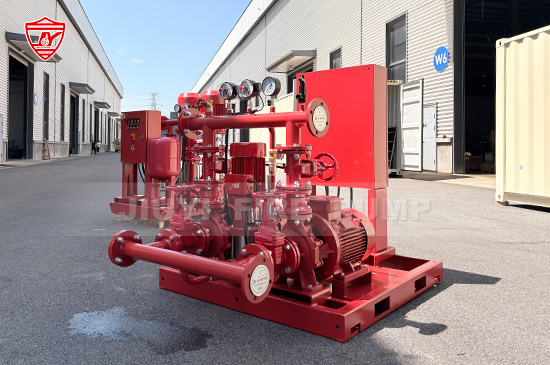
Before comparing the two options, it is important to understand how each driver operates and what role it plays in a fire protection system.
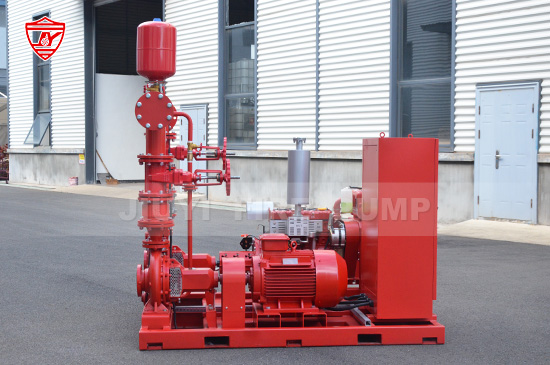
An electric fire pump uses an electric motor to drive the pump shaft and deliver water at the required flow and pressure. The motor receives power from an electrical supply through an appropriately selected fire pump controller.
Electric fire pump systems are commonly installed in commercial buildings, residential developments, shopping malls, manufacturing facilities, and industrial plants where a suitable electrical supply is available.
Their main advantages include relatively simple operation, compact installation arrangements, and lower routine maintenance requirements compared with diesel-driven systems. Electric motors also avoid the need for diesel fuel storage, engine exhaust arrangements, and many engine-specific maintenance procedures.
However, an electric fire pump depends on an electrical supply that can provide the required starting current and operating power. The electrical infrastructure, supply reliability, and protection arrangements must therefore be carefully evaluated during system design.
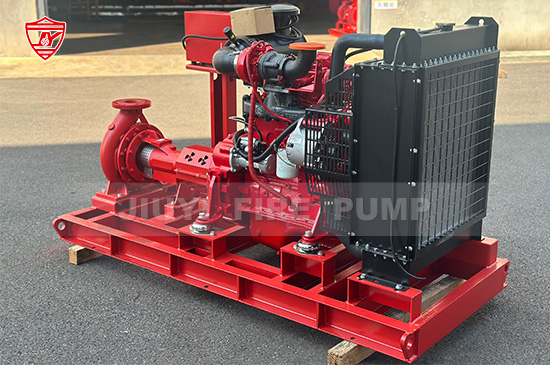
A diesel fire pump uses a diesel engine as its driving source. The engine converts fuel energy into mechanical power, which drives the pump and supplies water to the fire protection network.
Diesel fire pumps are frequently considered for industrial facilities, remote installations, oil and gas projects, ports, warehouses, and other sites where an independent driving source provides an important additional layer of protection.
A diesel engine fire pump does not rely on the normal electrical supply to drive the pump itself. Nevertheless, its starting batteries, battery chargers, control equipment, and other auxiliary components must be properly maintained and supplied with power as required by the applicable design standard.
Diesel-driven systems also require adequate fuel storage, ventilation, exhaust arrangements, cooling provisions, and access for engine maintenance.
The choice is therefore not simply between electricity and diesel fuel. It is a decision about the overall reliability and operational requirements of the fire pump system.
Electric and diesel fire pump drivers can both support reliable fire protection when properly selected, installed, tested, and maintained. Their differences become more significant when considering site conditions and long-term operation.
|
Comparison factor |
Electric fire pump |
Diesel fire pump |
|---|---|---|
|
Driving power source |
Electrical supply |
Diesel engine and fuel |
|
Dependence on normal site power |
Required for pump operation |
Not required to drive the pump |
|
Routine maintenance |
Generally lower |
Generally higher |
|
Installation requirements |
Electrical infrastructure and controller |
Fuel system, batteries, ventilation, exhaust, and cooling provisions |
|
Space considerations |
Often more compact |
Usually requires more space for the engine and associated equipment |
|
Operating noise |
Generally lower |
Generally higher |
|
Fuel management |
Not applicable to the electric driver |
Requires fuel storage and management |
|
Typical operating costs |
Often lower routine maintenance costs |
Includes fuel-system and engine maintenance costs |
|
Emergency power considerations |
Supply reliability and permitted backup arrangements |
Engine starting reliability and fuel availability |
|
Suitable applications |
Sites with an appropriate, reliable electrical supply |
Sites requiring an independent mechanical driving source or where project requirements favor diesel |
These are general comparisons rather than universal rules. Actual costs, space requirements, and reliability depend on equipment specifications, installation design, local conditions, and the applicable fire protection requirements.
Power supply reliability is often the most important factor when choosing between electric and diesel fire pump drivers.
A fire pump must be available when required, including during emergencies that may affect other building services. Project teams should therefore examine how the electrical supply is arranged and whether it meets the applicable requirements for fire pump service.
An electric fire pump may be an appropriate choice when the facility has a reliable electrical supply and the fire pump circuit is designed in accordance with applicable regulations and standards.
Before selecting an electric driver, engineers should evaluate the following:
The reliability and capacity of the electrical supply.
The availability and suitability of a dedicated fire pump power source.
The motor's starting current and the ability of the electrical system to support starting and running conditions.
The design of the fire pump controller and associated electrical equipment.
The routing and protection of power cables where required.
Any required emergency or alternate power arrangements.
A reliable electrical supply can make electric fire pumps an efficient and practical solution, particularly in buildings and industrial facilities with established electrical infrastructure.
A diesel fire pump is worth considering when the project requires a driving source independent of the normal electrical supply.
This can be particularly relevant in remote industrial facilities, petroleum storage installations, ports, and other locations where power interruptions may be a significant concern.
However, diesel operation should not be treated as automatically guaranteeing reliability. The engine must be capable of starting when required, the fuel supply must be adequate, the batteries must be maintained, and the installation must meet the relevant environmental and operational requirements.
For both options, the objective is to ensure that the fire pump can perform its intended function under the conditions anticipated by the fire protection system design.
Fire pump selection must comply with the codes, regulations, and specifications governing the project. These requirements may determine which driver arrangements are acceptable and whether additional equipment is necessary.
For projects designed around NFPA 20, the Standard for the Installation of Stationary Pumps for Fire Protection, the selection of electric or diesel drivers should be evaluated alongside the requirements for the complete fire pump installation.
For projects requiring UL Listed equipment, engineers should also verify that the relevant pump, driver, controller, and other specified components have the required listing and are suitable for the intended application. Where FM Approval is specified, the relevant approval requirements must likewise be confirmed.
It is important to distinguish between a product certification and approval of an entire system. A pump, motor, diesel engine, or controller may have its own certification status, but that does not automatically establish that every possible combination of these components meets a project's requirements.
Before finalizing the driver, confirm:
The governing fire protection standard and its applicable edition.
The required flow rate and discharge pressure.
The specified equipment listing or approval requirements.
The acceptable driver and controller configurations.
The required power supply and starting arrangements.
The installation, testing, inspection, and maintenance requirements.
International projects may also be subject to local building codes, insurance requirements, authority having jurisdiction decisions, and project-specific engineering specifications.
Early coordination among the consulting engineer, fire protection contractor, equipment supplier, and approving authority can help prevent costly design changes later.
Purchase price is important, but it should not be the only financial consideration when selecting a fire pump driver.
Electric and diesel systems have different installation requirements and long-term operating expenses. A useful comparison should include the initial equipment cost, installation work, routine maintenance, testing, energy or fuel consumption, and expected service life.
Electric fire pump systems can offer cost advantages because electric motors generally require less routine maintenance than diesel engines.
They do not require engine oil changes, diesel fuel management, or the same level of engine-specific servicing. Their installation may also be more straightforward when the required electrical infrastructure is already available.
Nevertheless, the overall project cost can increase if substantial electrical upgrades are needed. Depending on the installation, the project may require dedicated electrical equipment, additional power infrastructure, or an engineered alternate power arrangement.
Diesel fire pump systems typically involve additional components and installation work, including the engine, fuel tank, starting batteries, exhaust system, ventilation, and associated accessories.
Ongoing expenses may include engine servicing, oil and filter replacement, fuel quality management, battery replacement, and maintenance of cooling and exhaust systems.
Diesel systems may also require more installation space and additional arrangements for managing heat, noise, and exhaust gases.
Despite these additional costs, a diesel driver may be justified when the project places a high priority on independence from the normal electrical supply or when the governing specifications require it.
When preparing a project budget, compare the expected total cost of ownership rather than only the initial quotation.
The calculation should account for equipment purchase, installation, commissioning, scheduled maintenance, periodic testing, energy or fuel, replacement parts, and the expected operating period.
The lowest-cost option is not necessarily the most appropriate. For fire protection equipment, cost decisions must remain consistent with the required level of protection, applicable standards, and the consequences of equipment unavailability.
The physical characteristics of the installation site can influence the choice of driver.
Electric fire pump systems often have a more straightforward equipment arrangement because they do not need a diesel engine exhaust system or fuel storage installation. This can be beneficial in buildings with limited plant-room space or projects where noise and exhaust emissions must be carefully controlled.
Diesel fire pump systems need sufficient room for the engine, fuel tank, batteries, ventilation, exhaust routing, and maintenance access. The installation must also account for engine heat, combustion air, and any requirements for cooling.
For industrial and remote projects, a diesel-driven fire pump may be installed as part of a packaged or containerized fire pump system. Such arrangements can integrate the pump, driver, controller, and supporting equipment into a coordinated installation, depending on the project design.
Containerized fire pump systems can be useful where equipment protection, transportation, site layout, and installation efficiency are important considerations. However, the enclosure must be properly designed for ventilation, exhaust discharge, heat management, and equipment access. An enclosed installation should never compromise the operating conditions required by the driver.
Site conditions should therefore be reviewed before equipment dimensions and driver arrangements are finalized.
A fire pump system must remain ready for service throughout its operating life. Choosing the right driver also means considering whether the facility can maintain and test the equipment properly.
Electric motors generally require less routine servicing than diesel engines, but they are not maintenance-free.
Inspection and maintenance may include checking electrical connections, monitoring operating conditions, inspecting bearings where applicable, evaluating insulation condition when required, and verifying the operation of the controller and associated equipment.
The motor and controller should be inspected and tested in accordance with the manufacturer's instructions and applicable fire protection requirements.
The electrical supply must also remain suitable for the intended duty, and any faults affecting the starting or operation of the pump must be addressed promptly.
Diesel engines require a more comprehensive maintenance program.
Typical tasks include checking engine oil and coolant, inspecting fuel lines, monitoring battery condition, maintaining the starting system, inspecting the exhaust arrangement, and following the manufacturer's recommended servicing intervals.
Fuel quality and storage conditions also matter. Water contamination, fuel deterioration, or an inadequate fuel supply can affect engine readiness.
Diesel fire pump systems must be tested and maintained in accordance with the applicable standards and manufacturer instructions. Maintenance personnel should understand the engine, starting system, fuel arrangements, and other equipment associated with the installation.
When evaluating the two options, consider the technical skills available at the site, the accessibility of replacement parts, the availability of service personnel, and the facility's ability to follow the required inspection and testing schedule.
In some projects, the most appropriate solution is not a simple choice between a single electric pump and a single diesel pump. The required system configuration may include multiple fire pumps with different driving sources.
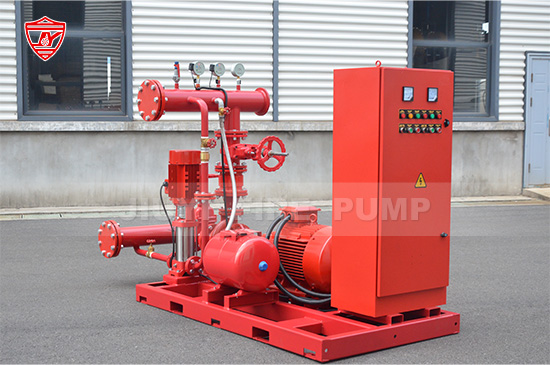
An electric-and-diesel fire pump arrangement can provide diversity in the driving sources, subject to the applicable design requirements. If one driving source becomes unavailable, the other may provide an alternative means of supplying water, provided the complete system has been correctly designed and the alternative equipment remains operational.
A typical arrangement may include an electric main fire pump, a diesel-driven main fire pump, and a jockey pump to maintain system pressure and compensate for minor pressure losses.
The jockey pump is not a substitute for a main fire pump. Its role is to maintain pressure under normal conditions and reduce unnecessary starting of the main pumps.
The final number, capacity, and arrangement of pumps must be determined by the project's hydraulic requirements, applicable standards, and engineering design. Adding both electric and diesel drivers does not automatically make a system compliant or eliminate every possible failure mode.
When selecting a combined arrangement, engineers should consider the independence of the power sources, the hydraulic performance of each main pump, controller arrangements, starting sequences, and the maintenance requirements of the complete system.
For projects where continuity of fire protection is especially important, reviewing the entire system architecture is more valuable than comparing the drivers in isolation.
Different facilities have different operating conditions, infrastructure, and risk profiles. The following examples provide a starting point for project evaluation.
Electric fire pumps are often suitable for residential communities, office buildings, shopping malls, and similar developments where reliable electrical infrastructure is available.
Their relatively straightforward installation and lower routine driver maintenance requirements can be advantageous. The final selection must still account for the required power supply arrangements and local fire protection regulations.
Warehouses and logistics facilities may use electric fire pumps where the electrical supply meets the design requirements.
For large facilities, high-value inventory, or projects with specific requirements for an independent driving source, a diesel fire pump or a combined electric-and-diesel arrangement may be considered.
Storage height, commodity classification, sprinkler demand, water supply, and the required hydraulic performance are all relevant to the final system design.
Oil refineries, chemical plants, and petroleum storage facilities often require careful evaluation of power supply reliability, environmental conditions, hazardous-area considerations, and project specifications.
Diesel fire pumps may be attractive where an independent driving source is required or preferred. Electric fire pumps may also be suitable when the electrical system and installation meet the relevant requirements.
The selection should be based on the facility's risk assessment, engineering design, and governing standards rather than assuming that one driver is universally superior.
Ports, terminals, and remote industrial sites may face challenging operating conditions, demanding installation requirements, and varying levels of electrical infrastructure reliability.
Diesel-driven pumps can provide a practical option where independence from the normal site power supply is important. Electric drivers can also be effective when the electrical infrastructure is properly designed and maintained.
For either option, environmental protection, equipment access, corrosion resistance, and service support should be evaluated as part of the complete installation.
Before making the final decision, project teams should answer the following questions:
What flow rate and discharge pressure does the fire protection system require?
Which fire protection codes, standards, and project specifications apply?
Is the electrical supply reliable and suitable for the required motor starting and running conditions?
Is an independent mechanical driving source required or preferred?
What equipment listings or approvals are specified?
How much installation space is available?
Can the site accommodate diesel fuel storage, ventilation, exhaust, and engine maintenance if required?
What are the expected installation, operating, testing, and maintenance costs?
Are qualified maintenance personnel and replacement parts readily available?
Would a combined electric-and-diesel arrangement better meet the project's requirements?
Answering these questions early can help engineers and contractors narrow down suitable configurations and reduce the risk of equipment mismatches.
The pump, driver, controller, and associated accessories should ultimately be selected as a coordinated system, with each component suitable for the required duty and installation conditions.
Choosing between electric and diesel fire pump drivers requires a balanced assessment of power supply reliability, installation conditions, maintenance resources, lifecycle costs, and applicable fire protection standards.
Electric fire pumps are often an attractive choice for facilities with a suitable and reliable electrical supply. They generally offer simpler routine maintenance, lower operating complexity, and convenient integration into building services.
Diesel fire pumps offer an independent mechanical driving source and may be particularly suitable for projects where electrical supply reliability is a concern or where the design specifications call for diesel-driven equipment. Their additional fuel, ventilation, exhaust, and maintenance requirements must be included in the project evaluation.
For some applications, a combined electric-and-diesel fire pump arrangement may provide a suitable solution when the design calls for different driving sources.
As a fire pump manufacturer, BETTER Technology Group understands the importance of matching pump performance and driver configuration to actual project requirements. A well-selected fire pump system begins with accurate hydraulic calculations, a clear understanding of site conditions, and careful coordination of the pump, driver, controller, and supporting equipment.
By evaluating these factors before procurement, engineers, contractors, and facility owners can make more informed decisions and develop fire protection systems designed for dependable performance when they are needed most.