Fire protection systems are essential for protecting lives, property, and critical infrastructure. In commercial buildings, industrial facilities, warehouses, ports, and petrochemical plants, a reliable water supply is a fundamental part of an effective fire protection strategy. However, having an adequate water source is not always enough. Water must also be delivered at the required pressure and flow rate to meet the demands of the fire protection system.
This is where a fire pump package becomes essential.
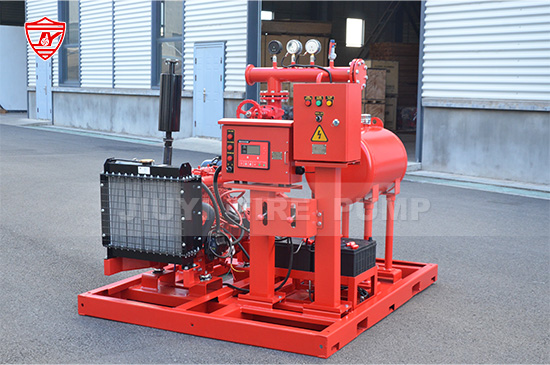
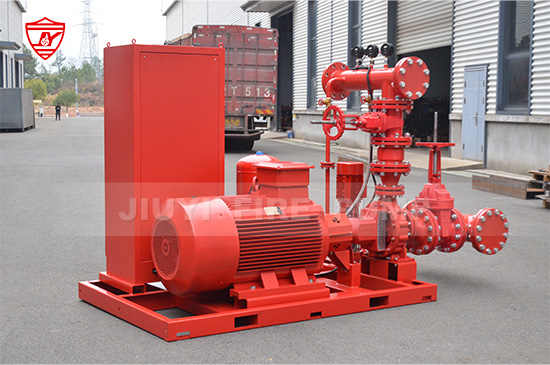
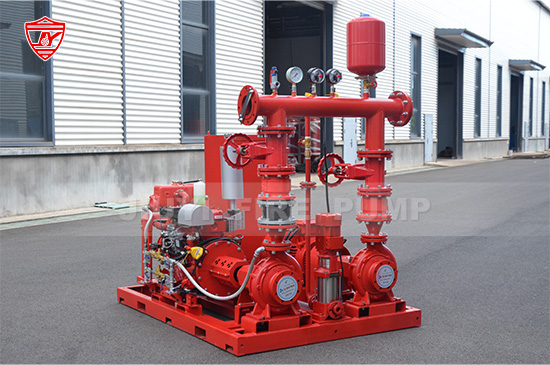
A fire pump package combines the main fire pump, its driver, control equipment, and other necessary components into an integrated system designed to supply water to firefighting equipment. Depending on the project requirements, a package may include an electric fire pump, a diesel engine fire pump, a jockey pump, controllers, piping, valves, instrumentation, and a common base frame or skid.
Understanding what a fire pump package includes, how its components work together, and how to select the right configuration helps project owners, fire protection contractors, engineering companies, and system integrators make informed purchasing decisions.
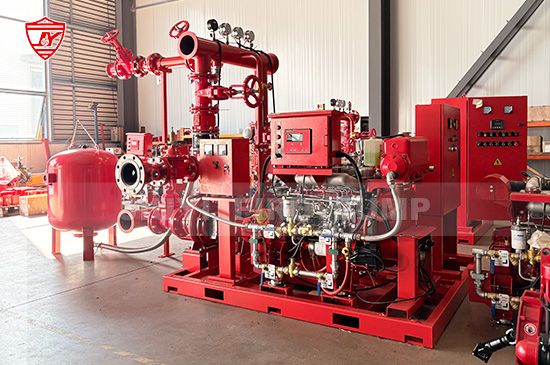
A fire pump package is an integrated assembly of equipment designed to deliver the water flow and pressure required by a fire protection system.
Unlike purchasing an individual fire pump, selecting a complete fire pump package involves coordinating the pump, power source, controller, supporting equipment, and installation requirements. The objective is to ensure that the components are compatible and that the assembled system meets the project's hydraulic, electrical, mechanical, and applicable fire protection requirements.
Fire pump packages are commonly used in:
Commercial buildings, including shopping malls, office buildings, and residential developments
Industrial facilities and manufacturing plants
Oil and petrochemical installations
Warehouses and logistics centers
Ports, terminals, and transportation infrastructure
Power plants and utility facilities
Data centers and other facilities requiring dependable fire protection
The configuration of a fire pump package depends on several factors, including the required flow rate, discharge pressure, water source, available power supply, site conditions, applicable standards, and project specifications.
For example, a commercial building with a reliable electrical supply may use an electric-driven fire pump as its main unit. A large industrial facility may require both electric and diesel-driven pumps to provide different sources of power for fire protection. A jockey pump is often included to maintain system pressure during normal standby conditions.
Therefore, a fire pump package should be selected as a complete system rather than as a collection of unrelated components.
Although configurations vary by application, a typical fire pump package contains several major components.
The main fire pump is the central component of the package. Its primary function is to provide the required water flow and pressure when the fire protection system demands water.
The pump draws water from an approved supply source, such as a storage tank, reservoir, or other suitable water supply, and delivers it into the fire protection network.
Different pump types are available to accommodate different site conditions and hydraulic requirements.
End suction fire pumps are commonly used in applications where a compact installation and straightforward maintenance are important. They are suitable for many commercial and industrial fire protection systems when their hydraulic performance meets the project requirements.
Split case fire pumps are frequently selected for larger flow requirements. Their design can facilitate inspection and maintenance of internal components, making them suitable for demanding commercial and industrial installations.
Vertical turbine fire pumps are used when the water source is located below the pump installation level, such as in certain tanks, wells, or reservoirs. Their vertical configuration allows water to be lifted from a lower source.
The appropriate pump type depends on the required flow, pressure, suction conditions, installation arrangement, and project specifications.
When evaluating a fire pump, buyers should review its rated flow and pressure, performance curve, motor or engine compatibility, materials, and applicable certification requirements.
The driver supplies the mechanical power required to operate the main fire pump. The two most common options are electric motors and diesel engines.
Electric fire pump package
An electric fire pump package uses an electric motor to drive the pump. It is often selected for buildings and industrial facilities with a suitable electrical infrastructure.
Key considerations include motor power, voltage, frequency, starting method, electrical protection, and compatibility with the fire pump controller. The electrical supply must be evaluated in accordance with the applicable fire protection requirements.
Electric-driven pumps can offer straightforward operation and maintenance when the electrical installation is properly designed.
Diesel fire pump package
A diesel fire pump package uses a diesel engine as its power source. It is particularly useful when a project requires an engine-driven pump or when an independent source of driving power is specified.
A diesel-driven package may include an engine, engine controller, starting batteries, battery charger, fuel tank, fuel supply arrangements, cooling equipment, exhaust components, and ventilation provisions, depending on the design.
Diesel engines require particular attention to fuel availability, starting reliability, cooling, exhaust discharge, and room ventilation. These requirements should be addressed during the engineering and installation stages.
The choice between electric and diesel drivers depends on the site's power infrastructure, applicable codes, project risk assessment, and required system configuration.
A jockey pump, also called a pressure-maintenance pump, is a small auxiliary pump used to maintain pressure in a fire protection piping network.
Fire protection systems may experience minor pressure losses due to small leaks, temperature changes, or other normal operating conditions. Without a pressure-maintenance arrangement, these losses could cause the main fire pump to start unnecessarily.
The jockey pump helps compensate for minor pressure drops. When the system pressure decreases to a designated setting, the jockey pump starts and restores the pressure. It then stops when the required pressure is reached.
The jockey pump is not intended to supply the full firefighting demand. Its capacity and pressure settings must be coordinated with the main fire pump and the overall system design.
A complete fire pump package may therefore include a main electric or diesel pump and a separate jockey pump with its own control arrangement.
The controller is responsible for managing the operation of the fire pump according to the system design and applicable requirements.
An electric fire pump controller typically provides the functions necessary to start and operate the electric motor, monitor relevant electrical conditions, and display operating status or alarms.
A diesel engine fire pump controller manages engine starting and monitors designated operating conditions. Depending on the configuration, these may include battery status, engine speed, oil pressure, coolant temperature, and other engine-related parameters.
A jockey pump controller manages the pressure-maintenance pump according to the specified pressure settings.
The controller configuration must match the driver, pump rating, power supply, and applicable standards. Fire pump control requirements differ from those of ordinary industrial pumping equipment, so standard motor control panels should not automatically be considered suitable substitutes.
For projects requiring listed or approved equipment, the relevant controller and associated components must meet the specific requirements stated in the project documents.
The base frame or skid supports the pump, driver, and other equipment included in the assembly.
It helps maintain the alignment of the pump and driver, provides a stable mounting arrangement, and facilitates transportation, handling, and installation.
For packaged fire pump systems, the base frame is particularly important because incorrect alignment or inadequate support can affect equipment performance and long-term reliability.
The design should consider the combined weight of the equipment, foundation conditions, lifting arrangements, vibration considerations, maintenance access, and the installation environment.
For projects requiring a more integrated solution, a skid-mounted package can reduce the amount of on-site equipment positioning and assembly. However, foundation preparation, final connections, alignment verification, and commissioning remain important.
Piping and valves connect the pump to the water supply and discharge network.
Depending on the package scope, these components may include suction piping, discharge piping, isolation valves, check valves, pressure gauges, pressure-sensing connections, and other required fittings.
Their purpose is to support the intended flow path, permit appropriate system isolation, and provide the connections and monitoring arrangements needed for operation and maintenance.
The specific components depend on the fire pump type, installation arrangement, governing standards, and project requirements.
Suction piping deserves particular attention because unsuitable pipe sizing, excessive restrictions, poor routing, or unfavorable water supply conditions can negatively affect pump performance.
Discharge piping and associated valves must also be selected and arranged to meet the design requirements.
Not every fire pump package includes all system piping and valves. Some manufacturers supply a complete skid-mounted assembly, while others supply the pump, driver, controller, and selected accessories for integration by the installation contractor.
Buyers should confirm the exact scope of supply before placing an order.
Instrumentation allows operators and commissioning personnel to check important operating conditions.
Common examples include suction and discharge pressure gauges, pressure switches, pressure transmitters where specified, and other monitoring devices appropriate to the package configuration.
Electric and diesel-driven systems may also have driver-specific monitoring equipment.
These devices help verify operating conditions, identify abnormal readings, and support inspection and maintenance activities.
Instrumentation must be suitable for the intended service and installed in accordance with the system design. Monitoring equipment does not replace the need for correct pump selection, proper installation, and functional testing.
Fire pump packages are available in different configurations to accommodate project requirements.
An electric fire pump package generally consists of a main pump, electric motor, compatible controller, and supporting accessories. It may also include a jockey pump and its controller.
This configuration is suitable for many commercial buildings, factories, and industrial facilities with an appropriate electrical supply.
A diesel fire pump package combines a pump with a diesel engine and the necessary engine-related equipment. Depending on the scope, it may include batteries, a fuel tank, cooling arrangements, an exhaust system, and an engine controller.
It is commonly specified for projects requiring a diesel-driven fire pump.
Some projects require both electric-driven and diesel-driven main fire pumps. A combined configuration may provide different driving power sources in accordance with the project's fire protection design.
The complete arrangement may also include a jockey pump, controllers, piping, valves, and monitoring devices.
The exact configuration must be established through the project design rather than assumed from the package name alone.
A skid-mounted fire pump package integrates selected components onto a common structural base.
Depending on the design, the package can include main pumps, drivers, controllers, jockey pumps, piping, valves, and instrumentation.
This arrangement can simplify logistics and on-site installation by allowing more assembly and inspection to take place at the manufacturing facility.
For projects requiring an enclosed or self-contained installation, a containerized fire pump package may be considered.
It can incorporate fire pumps, drivers, control equipment, piping, and supporting systems within a purpose-designed enclosure.
The container design may need to accommodate ventilation, diesel engine exhaust, fuel arrangements, access for maintenance, drainage, lighting, environmental conditions, and equipment lifting or transportation requirements.
A containerized package is not automatically compliant with every fire protection standard. Its design, equipment selection, enclosure arrangement, and testing must be evaluated against the applicable project requirements.
A fire pump package operates as part of a larger fire protection system.
Under normal standby conditions, the system remains pressurized. The jockey pump may start when pressure falls below its designated starting setting and stop when the pressure returns to the specified range.
When a fire protection system demands substantial water flow, system pressure changes according to the hydraulic conditions. The main fire pump starts through the specified automatic or manual starting arrangement.
Once operating, the main pump draws water from the designated source and supplies it to the fire protection network at the required flow and pressure, subject to the available water supply and the pump's performance characteristics.
The controller monitors designated conditions and provides operating indications or alarms. If the package includes diesel-driven equipment, the engine's starting and operating systems must function as intended.
A fire pump package must be designed and installed so that the pump, driver, controller, water supply, and piping work together correctly.
The sequence of operation, pressure settings, starting arrangements, and alarm functions must follow the applicable standards and approved system design. Proper commissioning verifies that the package performs as required under the specified operating conditions.
Selecting the correct fire pump package requires more than comparing prices or choosing a pump with a particular flow rating.
Several technical and commercial factors should be evaluated.
Determine the required flow and pressure. Establish the hydraulic demand of the fire protection system, including the required flow rate, pressure, and relevant system losses. Pump selection should be based on the approved hydraulic calculations and performance requirements.
Evaluate the water supply. Confirm the water source, available capacity, suction conditions, and any elevation differences. The pump must be suitable for the actual water supply arrangement.
Choose the appropriate pump type. End suction, split case, and vertical turbine pumps serve different installation and performance requirements. The selection should reflect the project conditions rather than a preference for one design alone.
Select the appropriate driver. Consider the available electrical supply, project specifications, reliability requirements, and whether electric and diesel-driven pumps are required.
Confirm controller compatibility. Ensure that the controllers match the pump drivers and meet the applicable requirements for fire pump operation.
Review certification requirements. Some projects specify UL Listed or FM Approved equipment. Confirm the status of each relevant product and the precise scope of the certification. Do not assume that certification of one component automatically covers the complete package.
Consider installation conditions. Assess available space, foundation requirements, maintenance clearances, ventilation, exhaust routing, environmental conditions, and transportation constraints.
Clarify the manufacturer's scope of supply. Identify which components are included, which accessories are optional, and which items must be provided by the contractor or other suppliers.
Evaluate testing and documentation. Request the relevant pump performance data, drawings, equipment specifications, operating instructions, and inspection or test documentation required by the project.
A well-defined specification helps reduce misunderstandings, avoid compatibility problems, and improve coordination among manufacturers, contractors, and engineering teams.
Fire pump packages are safety-critical equipment, so their selection and verification should follow the requirements applicable to the project.
In many projects, NFPA 20 is a key reference for the installation of stationary pumps for fire protection. Local regulations, building codes, authority requirements, and project specifications may also apply.
UL Listing and FM Approval are separate product conformity programs. Where a project requires either status, buyers should verify the relevant equipment, model, rating, and certification scope rather than relying on a general claim about a manufacturer's product range.
Manufacturing quality control is equally important. Important considerations include dimensional inspection, material verification where specified, pump and driver alignment, controller compatibility, assembly inspection, and performance testing.
Pump performance testing helps verify whether the equipment meets its specified hydraulic requirements. Depending on the package and project scope, additional functional checks may be necessary to evaluate the driver, starting arrangement, alarms, instrumentation, and control functions.
For diesel-driven packages, particular attention should be given to the engine's operating condition, starting system, cooling arrangements, and other equipment specified for the installation.
Documentation should clearly identify the supplied equipment and provide the information needed for installation, commissioning, operation, and maintenance.
A complete quality assurance process helps establish confidence that the delivered package is suitable for its intended application.
Working with an experienced manufacturer can simplify the process of specifying and procuring a fire pump package.
A manufacturer familiar with different pump designs, electric and diesel drivers, controllers, and package configurations can help customers identify suitable equipment based on their technical requirements.
Integrated manufacturing and assembly can also improve coordination between individual components. When pump selection, driver matching, assembly, and testing are managed through a coordinated process, it becomes easier to verify compatibility and maintain consistent documentation.
For international projects, additional considerations may include electrical standards, voltage and frequency, local installation requirements, certification scope, shipping dimensions, and the availability of technical support.
Customers should evaluate a manufacturer's engineering capabilities, production quality, testing facilities, product range, and experience with comparable applications.
A clear technical specification and a well-defined scope of supply remain essential, even when working with a single supplier.
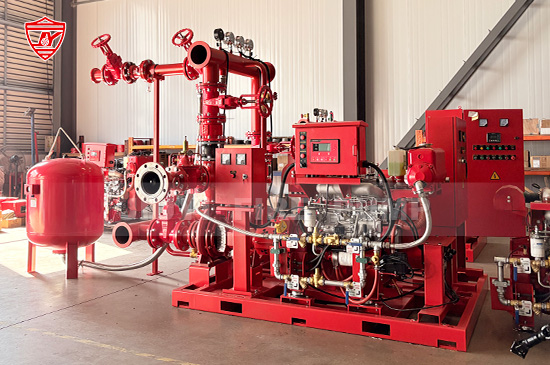
A fire pump package is more than a main pump and its driver. It is an integrated arrangement of equipment designed to deliver the flow and pressure required by a fire protection system.
Depending on the project, it may include an electric or diesel-driven main pump, a jockey pump, controllers, a base frame, piping, valves, instrumentation, and additional supporting equipment. Skid-mounted and containerized configurations can provide further integration when required by the installation.
Choosing the right fire pump package starts with understanding the hydraulic demand, water supply, driver requirements, applicable standards, installation conditions, and manufacturer's scope of supply. Compatibility between components, appropriate testing, and correct commissioning are also essential to dependable operation.
For fire protection contractors, engineering companies, project owners, and system integrators, a clearly specified package helps simplify procurement, improve installation coordination, and support the long-term reliability of the fire protection system.
As a fire pump manufacturer, BETTER Technology Group provides fire pump solutions for a range of commercial and industrial applications. By considering the specific requirements of each project, customers can work toward selecting a suitable fire pump package that aligns with their performance needs, installation conditions, and applicable fire protection requirements.