Water pressure is one of the most important factors in a fire protection system. During a fire emergency, sprinklers, standpipes, and hydrants must receive sufficient water at the required pressure and flow rate to support firefighting operations. However, the available pressure from a municipal water supply, storage tank, or other water source may not be sufficient to meet the demands of the entire system. This is where a fire pump plays a critical role.
A fire pump is designed to increase water pressure and deliver the required flow to a fire protection system. Together with a jockey pump, pressure sensing devices, controllers, and a reliable water source, it helps ensure that the system is ready to respond when needed.
But how does a fire pump maintain water pressure? Does it run continuously? How does it respond when pressure drops? And what is the role of a jockey pump in keeping the system ready for an emergency?
Understanding these principles helps building owners, fire protection engineers, contractors, and system integrators select, install, and maintain appropriate fire pump equipment.
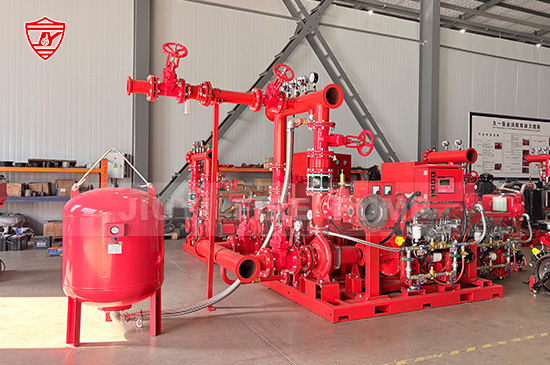
A fire pump is a mechanical device that increases the pressure and energy of water to meet the hydraulic requirements of a fire protection system. It does not create water; instead, it adds energy to water supplied by a suitable source, such as a storage tank, reservoir, or municipal water connection.
In a typical fire protection system, water travels from the source through the pump and into a network of pipes supplying sprinklers, hydrants, hose connections, or standpipes.
The fire pump must provide sufficient pressure to overcome several factors, including elevation differences, friction losses in piping, and the pressure required by the fire protection equipment.
For example, a high-rise building may require more pressure than a low-rise building because water must travel to higher floors. Similarly, an industrial facility with extensive piping may experience greater friction losses than a compact installation.
The required pump performance depends on the system's hydraulic design. Engineers must consider both flow rate and pressure rather than selecting a pump based on pressure alone.
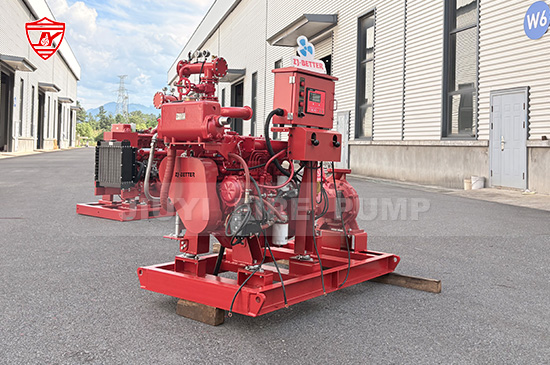
Fire pumps are commonly driven by electric motors or diesel engines. Electric fire pumps are widely used where a suitable electrical supply is available, while diesel engine fire pumps can provide an alternative source of mechanical power when electrical supply reliability is a concern. Some installations use both types as part of a coordinated fire protection arrangement.
Most fire pumps used in building and industrial fire protection systems are centrifugal pumps. They use a rotating impeller to transfer energy to water.
When the pump operates, water enters the impeller through the suction inlet. The rotating impeller accelerates the water outward, increasing its velocity. The pump casing and associated flow passages convert part of this velocity into pressure, allowing water to discharge at a higher pressure than at the suction inlet.
The amount of pressure a pump can develop depends on its design, rotational speed, impeller characteristics, and operating flow rate, as well as the conditions on the suction side.
A fire pump is selected according to a specified performance curve that shows the relationship between flow and discharge pressure or head. As flow changes, the pressure developed by a centrifugal pump generally changes as well.
This means a fire pump does not necessarily maintain exactly the same discharge pressure under every operating condition. Instead, it is selected to deliver the required flow at the required pressure within its approved or specified operating range.
For fire protection engineers, understanding the pump curve is essential. A pump must satisfy the system's demand without exceeding applicable equipment limitations or operating outside the permitted performance range.
A fire pump system typically relies on pressure monitoring and automatic starting controls to respond when system pressure falls.
Pressure-sensing devices monitor the pressure in a designated part of the fire protection system. When pressure drops to a predetermined level, the control arrangement responds according to the configured starting sequence.
In many installations, the jockey pump handles small pressure losses first. If pressure continues to fall and reaches the fire pump's starting threshold, the main fire pump starts.
The process generally follows these stages:
Stage 1: Normal standby condition
The fire protection piping remains filled with water and pressurized. The main fire pump is normally stopped, while the jockey pump starts and stops as necessary to compensate for minor pressure losses.
Stage 2: Pressure begins to decrease
Small leaks, temperature-related changes, or other minor losses may cause system pressure to fall. The pressure-sensing arrangement detects the decrease.
Stage 3: The jockey pump restores pressure
If the pressure drop falls within the jockey pump's operating range, the jockey pump starts and supplies a relatively small quantity of water. Once the pressure reaches its designated stopping setting, the jockey pump stops.
Stage 4: A significant water demand occurs
When a sprinkler opens, a hydrant is used, or another substantial demand develops, pressure may fall more rapidly. If the pressure reaches the main fire pump's start setting, the fire pump controller initiates the pump's starting sequence.
Stage 5: The main fire pump supplies the required flow
The main pump delivers water according to its performance curve and the hydraulic demands of the system. It is generally intended to continue operating after an automatic start until it is stopped in accordance with the applicable code, standard, and approved control arrangement.
The exact pressure settings, starting sequence, and stopping logic must be established by qualified fire protection professionals and must comply with the applicable requirements. A fire pump should not be treated like an ordinary domestic water pump that automatically cycles on and off simply to maintain a constant pressure.
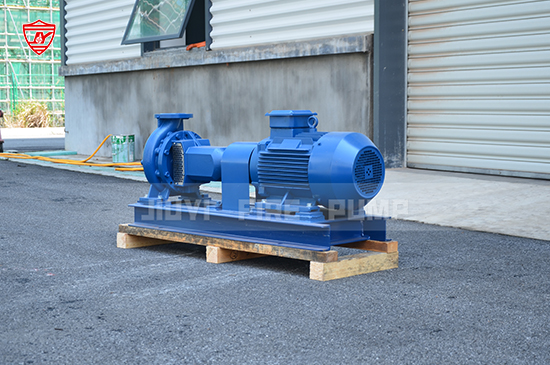
A jockey pump, also called a pressure maintenance pump, is a small pump installed in many fire protection systems to compensate for minor water losses and maintain system pressure during standby conditions.
Although the jockey pump and the main fire pump work together, they perform different functions.
The jockey pump is designed for relatively low flow rates and frequent pressure maintenance. The main fire pump is designed to supply the substantially greater flow required during a fire emergency.
Without a properly selected jockey pump, minor pressure losses could cause the main fire pump to start repeatedly. Excessive starts can increase equipment wear and may indicate a problem with the system's pressure maintenance arrangement.
A properly designed jockey pump helps reduce unnecessary main pump starts while keeping the piping network pressurized.
However, jockey pump sizing is important. If the pump is too small, it may be unable to compensate for normal pressure losses. If it is too large, it may delay the main fire pump's start during a genuine demand or contribute to an unsuitable pressure-control arrangement.
Engineers should determine jockey pump capacity and pressure settings based on the system's characteristics and the applicable fire protection requirements. The settings should provide appropriate separation between jockey pump operation and main fire pump starting thresholds.
It is also important to remember that a jockey pump does not replace the main fire pump. It cannot be relied upon to deliver the flow required for firefighting.
A fire pump controller is responsible for managing the starting and other control functions of the fire pump according to its design and applicable requirements.
For an automatic fire pump installation, pressure-sensing signals can initiate the starting sequence when system pressure falls to the specified threshold.
The controller's functions depend on the type of driver and the system configuration.
An electric fire pump controller manages the electrical starting and operating functions of a motor-driven fire pump. A diesel engine fire pump controller manages the starting sequence and relevant operating functions of an engine-driven pump.
Controllers may also provide operating status indications, alarms, and fault information, depending on the equipment design.
It is important to distinguish between starting the pump in response to pressure and continuously regulating discharge pressure. A conventional fire pump installation generally starts the pump when required and then delivers water according to its hydraulic performance curve. It does not necessarily use variable-speed control to maintain a perfectly constant discharge pressure.
In many conventional installations, the pump continues running even if system pressure subsequently rises. Shutdown procedures must follow the applicable requirements and the approved system design.
For projects requiring listed or otherwise approved fire pump equipment, the pump, controller, driver, and associated components should be selected as compatible equipment suitable for the intended application.
Even a properly selected fire pump cannot compensate for every problem in a fire protection system. Several factors influence the pressure available at the system's discharge points.
A fire pump requires an adequate water supply. Insufficient source capacity, an excessively low water level, restricted suction piping, or unsuitable suction conditions can affect pump performance.
Inadequate suction pressure can reduce the pressure available at the discharge and may cause cavitation or other operational problems. Engineers must verify that the water source and suction arrangement can meet the pump's requirements under the expected operating conditions.
A pump must be selected to match the required flow and pressure. A pump that is too small may not meet the system demand, while an unsuitable pump curve may result in excessive pressure at certain operating conditions.
The selection process should account for the required duty point, the pump's allowable operating range, and the relevant fire protection design requirements.
Water loses pressure as it moves through pipes, fittings, valves, and other components. Longer piping runs, smaller pipe diameters, unnecessary restrictions, and higher flow rates can increase friction losses.
Elevation also matters. Water must overcome the static head associated with lifting it to higher levels. For this reason, the pressure measured near the pump discharge may differ significantly from the pressure available at a remote sprinkler or hydrant.
Partially closed valves, blocked strainers, damaged impellers, worn internal components, and other mechanical problems can affect the performance of a fire pump system.
Correct valve positioning and routine inspection help ensure that the intended water flow path remains available.
Electric fire pumps depend on suitable electrical power and properly functioning starting equipment. Diesel engine fire pumps require a reliable engine, starting system, fuel supply, cooling arrangement, and other supporting components.
A failure in the driver or its supporting systems may prevent the pump from starting or operating as intended, regardless of the pressure settings.
Pressure readings alone are not sufficient to determine whether a fire pump system is performing correctly. Engineers must evaluate both pressure and flow under appropriate test conditions.
A practical assessment includes several key checks.
First, verify the pressure-sensing and controller settings against the approved design and applicable requirements. Confirm that the jockey pump and main fire pump have appropriately coordinated starting thresholds.
Second, inspect the water source, suction piping, valves, and other components that could restrict the water supply.
Third, review the pump's performance curve and compare actual test results with the expected performance at the specified flow conditions.
Fourth, perform the required pump tests using suitable instruments and approved procedures. Depending on the installation and applicable requirements, testing may include no-flow, rated-flow, and higher-flow performance points.
During testing, qualified personnel should record relevant suction pressure, discharge pressure, flow rate, driver operating conditions, and other required measurements. The results can help identify whether a problem originates in the water supply, the pump, the driver, the controls, or the downstream piping network.
Testing must be conducted safely and in accordance with the applicable standards, manufacturer instructions, and site procedures. Fire protection systems must remain adequately protected during inspection and maintenance.
Regular testing and maintenance are particularly important for industrial facilities, warehouses, ports, petrochemical installations, and large commercial buildings, where a reliable fire water supply is essential.
When a fire pump system cannot maintain the expected pressure, the cause should be investigated systematically rather than assuming that the pump itself is defective.
Low discharge pressure: Possible causes include inadequate suction conditions, a restricted water supply, incorrect pump rotation, mechanical wear, or operation outside the intended performance range.
Frequent jockey pump starts: Potential causes include piping leaks, pressure fluctuations, unsuitable pressure settings, or a jockey pump that is not properly matched to the system.
Frequent main fire pump starts: Investigate pressure maintenance performance, system leakage, pressure-sensing equipment, and the coordination between the jockey pump and main pump controls.
Pressure drops during high water demand: The system may have excessive friction losses, an inadequate water source, an unsuitable pump selection, or a demand that exceeds the design conditions.
Pump fails to start at the expected pressure: Check the controller status, pressure-sensing arrangement, power or starting system, and relevant control settings through qualified personnel.
Pressure rises above the expected level: Review the pump performance curve, system operating conditions, pressure settings, and the suitability of the overall hydraulic design.
Changes to pressure settings should never be used to conceal an underlying fault. Any adjustment must be evaluated against the approved design and applicable fire protection requirements.
Selecting a fire pump begins with a clear understanding of the project's hydraulic requirements.
Fire protection engineers should establish the required flow rate, discharge pressure, water source characteristics, elevation differences, piping losses, and the pressure requirements of the connected equipment.
They should then select a pump whose certified or documented performance curve meets the required duty point and applicable operating limits.
The driver must also suit the installation. Electric fire pumps can be appropriate where the required electrical infrastructure is available, while diesel engine fire pumps may be selected where a separate mechanical drive is required by the project design.
For larger or more complex systems, split-case fire pumps may be suitable for high-flow applications, while vertical turbine fire pumps can be considered where water must be drawn from sources such as tanks, reservoirs, or wells with specific suction arrangements.
The choice of pump type depends on the project rather than on a single universal solution.
In addition to the pump itself, attention should be given to compatible controllers, pressure maintenance equipment, suction piping, valves, instrumentation, and testing arrangements. For projects requiring UL Listed or other specifically approved equipment, confirm that the selected models and complete configuration meet the project's applicable approval and certification requirements.
Working with an experienced fire pump manufacturer can help project teams evaluate pump curves, driver options, system configurations, and equipment requirements before finalizing a selection.
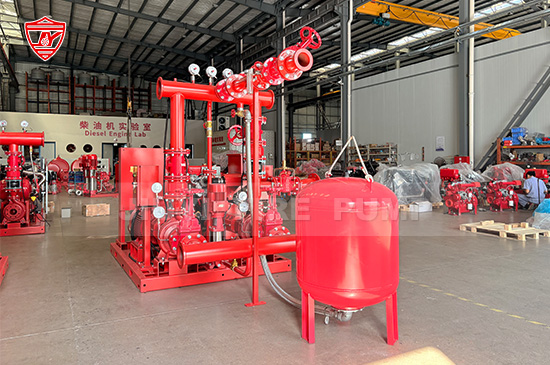
A fire pump maintains the water pressure required by a fire protection system by adding energy to the water and delivering the flow needed for the designed operating conditions. Pressure-sensing devices and controllers help initiate pump operation when system pressure falls, while a jockey pump compensates for minor losses during standby conditions.
However, reliable pressure performance depends on more than the pump alone. The water source, suction conditions, pump curve, driver, controller, piping network, and maintenance program all contribute to overall system performance.
For fire protection contractors, engineers, and facility operators, understanding how these components work together is essential to selecting suitable equipment and maintaining readiness for an emergency.
As a fire pump manufacturer, BETTER Technology Group supports fire protection projects with electric fire pumps, diesel engine fire pumps, jockey pumps, and other pump solutions for a range of industrial and commercial applications. By matching pump performance to project requirements and emphasizing appropriate manufacturing and testing practices, the right fire pump system can help provide the dependable water supply that fire protection systems are designed to deliver.