A fire pump is one of the most critical components of a fire protection system. When a fire emergency occurs, the pump must deliver the required flow and pressure to the sprinkler, hydrant, standpipe, or other firefighting equipment. There is little room for performance uncertainty.
For this reason, factory testing should be an essential part of the manufacturing process before a fire pump is shipped to the customer. Factory testing allows manufacturers to verify whether the finished pump performs according to its design requirements and provides an opportunity to identify potential problems before the equipment reaches the project site.
For building owners, contractors, EPC companies, fire protection engineers, and distributors, purchasing a fire pump is not simply about selecting a pump with the correct rated capacity. It is also about confidence that the equipment will perform as expected after installation.
A well-controlled factory testing process provides that confidence.
.jpg)
One of the most important reasons for factory testing is to confirm the actual hydraulic performance of the completed fire pump.
A pump may be designed for a specific rated flow and pressure, but design calculations alone cannot replace physical performance testing. During factory testing, the manufacturer can operate the pump under controlled conditions and measure important parameters such as flow, pressure, speed, power consumption, and operating conditions.
The test results can then be compared with the required performance curve and applicable project specifications.
For example, a fire pump may have a rated capacity of 1,000 GPM at a specified pressure. Factory testing can help verify whether the finished pump can achieve the required rated point and whether its performance at different flow conditions is consistent with the design.
This is particularly important for fire pumps because the system may depend on reliable performance at multiple operating points rather than at only one rated condition.
Finding a problem at the factory is significantly easier than finding the same problem after the pump has arrived at a construction site.
Once equipment has been shipped internationally, transported to a project location, installed, connected to pipelines, wired to electrical systems, and commissioned, correcting a manufacturing problem can become more complicated and expensive.
Factory testing creates an opportunity to identify potential issues before shipment.
Depending on the pump and test requirements, manufacturers may evaluate:
If abnormal performance is discovered, the manufacturer can investigate the cause and make adjustments before the equipment leaves the factory.
This approach reduces the risk of costly troubleshooting during installation and commissioning.
Quality control should not end when the pump components are manufactured. The complete assembled fire pump system also needs to be evaluated.
A fire pump may consist of multiple components, including the pump casing, impeller, shaft, bearings, motor or diesel engine, coupling, controller, valves, pressure equipment, and other accessories. The final performance depends on how these components work together as a complete system.
Factory testing provides a final quality-control checkpoint after assembly.
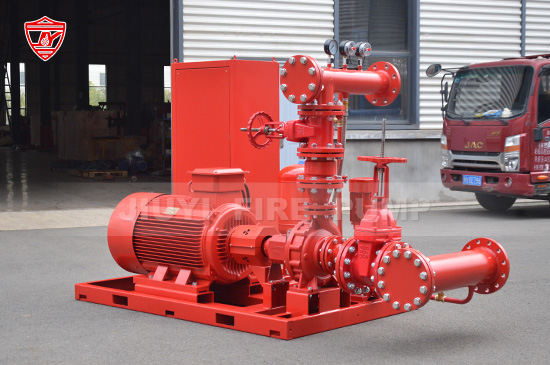
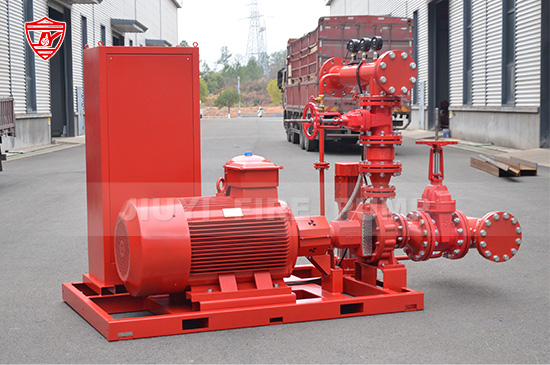
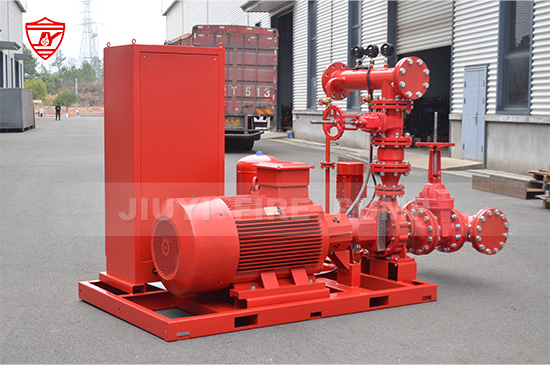
This is especially valuable for packaged fire pump systems, such as electric and diesel fire pump configurations with jockey pumps. Instead of evaluating individual components independently, the manufacturer can test the assembled system and verify that the complete package operates correctly.
This final verification helps ensure that manufacturing, assembly, configuration, and component selection have produced the intended result.
Project installation can involve many variables. Site conditions, piping arrangements, electrical connections, fuel systems, suction conditions, and other factors can influence the commissioning process.
Factory testing cannot eliminate every site-related issue, but it can reduce the number of unknowns.
When the pump has already passed controlled testing before shipment, contractors and commissioning teams have greater confidence that the equipment itself has been verified.
If a problem occurs during site commissioning, previous factory test records can also provide useful reference information. Engineers can compare the site's operating conditions with the original factory results to help determine whether an issue is related to the pump or to the installation environment.
This can make troubleshooting faster and more systematic.
A professional factory testing process should produce test records that document the performance of the equipment.
Depending on the product, project, and applicable requirements, documentation may include pump model information, rated flow, rated pressure, operating speed, measured performance, motor or engine information, and other relevant test parameters.
These records can become part of the project's quality documentation.
For contractors and EPC companies, documented testing can also support project inspection, commissioning, acceptance, and handover procedures.
For distributors and end users, factory test documentation provides additional evidence that the equipment has undergone performance verification before delivery.
Good documentation is therefore not just paperwork. It is part of the overall quality assurance process.
For fire pumps manufactured for regulated or certified applications, testing becomes even more important.
Fire protection projects may require equipment to comply with specific standards, certification requirements, or project specifications. Depending on the market and application, requirements may involve standards such as NFPA 20 as well as certification schemes such as UL or FM.
Manufacturers producing certified fire pump equipment need robust manufacturing and quality-control processes to maintain consistent product performance.
Testing helps manufacturers verify that production units continue to meet their defined performance requirements.
For customers, this provides another level of confidence when selecting equipment for demanding fire protection applications.
However, it is important to distinguish between general factory performance testing and certification itself. Passing a factory test does not automatically mean that a product is UL Listed, FM Approved, or certified to another standard. Certification depends on the applicable certification program and its specific requirements.
The pump itself is only one part of a fire pump system. The driver must provide sufficient power to operate the pump under the required conditions.
Electric fire pumps depend on properly matched electric motors, while diesel-driven fire pumps depend on suitable diesel engines and associated control systems.
Factory testing allows the manufacturer to evaluate the relationship between the pump and its driver.
For an electric fire pump, testing may help verify operating performance, power requirements, motor speed, and overall system operation.
For a diesel fire pump, testing can help evaluate engine operation, pump performance, starting functions, and the interaction between the diesel engine and pump assembly.
This is important because the pump and driver must work together as a complete system rather than simply meet their specifications independently.
Even when manufacturing processes are standardized, small variations can occur between individual products. Machining tolerances, component assembly, impeller dimensions, alignment, clearances, and other manufacturing factors can influence final pump performance.
A strong quality-control system uses testing to detect these variations.
Instead of assuming that every finished pump will perform exactly like the theoretical design, the manufacturer verifies the actual finished product.
This creates a practical feedback loop:
Design → Manufacturing → Assembly → Testing → Verification → Shipment
If the test results meet the required criteria, the product can proceed to shipment. If they do not, the manufacturer has an opportunity to investigate and correct the issue.
This process is one of the foundations of reliable pump manufacturing.
Customers purchasing fire pumps often cannot inspect every manufacturing process themselves. They need a reliable way to evaluate whether the supplier has effective quality-control procedures.
A documented factory test demonstrates that the manufacturer is not relying solely on product specifications or theoretical calculations.
For international customers, this can be particularly valuable. When equipment is manufactured in one country and installed thousands of kilometers away, returning equipment or sending technicians to resolve a manufacturing problem can be costly and time-consuming.
Pre-shipment testing helps reduce this risk by verifying the equipment before it begins its journey.
For manufacturers, it also demonstrates a commitment to quality and technical responsibility.
When evaluating a fire pump manufacturer, customers should look beyond price and rated specifications. The manufacturer's testing capability can provide valuable insight into its overall technical and quality-control capabilities.
Important questions include:
These questions can help buyers distinguish between a manufacturer that simply assembles equipment and one that maintains a comprehensive quality-control process.
A typical factory testing process begins before the pump reaches the test bench.
First, the manufacturer checks the product configuration against the order requirements. The pump model, driver, controller, rated flow, pressure, accessories, and other components should be confirmed.
Next, the assembled equipment is prepared for testing. Connections are inspected, instrumentation is checked, and the test system is prepared.
The pump is then operated under controlled conditions. Engineers collect performance data at relevant operating points and compare the results with the required specifications.
If the results meet the acceptance criteria, the test can be documented and the equipment can proceed through final inspection and shipment preparation.
If a result does not meet the required criteria, the manufacturer should investigate the cause rather than simply ship the equipment. Depending on the situation, this may involve checking assembly, alignment, components, driver performance, or hydraulic characteristics before repeating the test.
This closed-loop process helps ensure that the product leaving the factory is ready for its intended application.
The ultimate purpose of fire pump testing is not simply to produce a test report. It is to improve confidence in equipment that may be required during a critical emergency.
A fire protection system can remain unused for months or years. When a fire occurs, however, the system must respond immediately. The fire pump must start and deliver the required water flow and pressure when needed.
That makes reliability particularly important.
Factory testing provides a controlled opportunity to verify the equipment before it becomes part of a real fire protection system. It helps manufacturers control quality, helps contractors reduce commissioning risks, and helps end users gain confidence in the equipment they are relying on.
.jpg)
Factory testing is an essential quality-control step before a fire pump is shipped. It verifies actual hydraulic performance, helps identify manufacturing or assembly problems, supports documentation, reduces installation risks, and provides greater confidence to contractors, distributors, engineers, and end users.
For fire pump manufacturers, a professional test facility is more than a production asset. It is an important part of the product quality system.
At BETTER Technology Group, fire pump manufacturing is supported by dedicated testing capabilities designed to verify product performance and quality before shipment. Our intelligent pump testing equipment covers a wide power range and supports multiple voltage and frequency conditions, providing comprehensive testing capabilities for fire pump products.
For customers selecting a fire pump manufacturer, asking how the equipment is tested before shipment can be just as important as asking about the pump's rated flow and pressure.