
In fire protection systems, understanding key pump performance parameters is essential to ensure reliability, safety, and compliance. One of the most important but often misunderstood concepts is fire pump shutoff head.
For engineers, contractors, and facility owners, knowing how shutoff head works helps prevent system overpressure, ensures proper equipment selection, and guarantees compliance with industry standards such as NFPA 20.
This article explains what fire pump shutoff head is, how it is measured, why it matters, and how it influences the design and operation of fire pump systems.
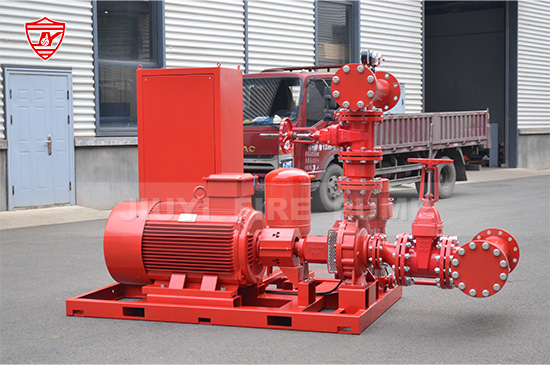
Fire pump shutoff head refers to the maximum pressure a pump can generate when there is zero flow.
In other words, it is the pressure at the point where the discharge valve is completely closed and no water is moving through the system. This condition is also known as churn.
At shutoff, the pump is still running, but since no water is flowing, all the energy is converted into pressure rather than flow.
To fully understand shutoff head, it is important to look at the fire pump performance curve.
A typical centrifugal fire pump curve shows the relationship between flow rate and pressure:
At 0% flow, the pump produces its maximum pressure (shutoff head)
At 100% flow (rated point), the pump delivers its rated pressure
At 150% flow, the pressure drops but must still meet minimum standards
The shutoff head is located at the far left of the curve and represents the highest pressure the pump can achieve.
According to NFPA 20 requirements:
The shutoff head of a fire pump should not exceed 140% of the rated pressure
For example:
Rated pressure: 100 psi
Maximum shutoff pressure: 140 psi
This limitation is critical because excessive pressure can damage piping, valves, and system components.
When a fire pump operates at shutoff conditions, it generates maximum pressure. If this pressure exceeds system limits, it can:
Damage pipes and fittings
Cause leaks or ruptures
Shorten equipment lifespan
Properly controlling shutoff head helps protect the entire fire protection system.
Fire pump systems must comply with NFPA 20, which specifies performance limits including shutoff head.
If the shutoff head is too high, the pump may fail inspection or require redesign.
If a fire pump produces excessive shutoff pressure, a pressure relief valve may be required.
This valve protects the system by releasing excess pressure when it exceeds safe limits.
Shutoff head directly affects:
Pipe pressure ratings
Valve selection
Tank design
Overall system safety
Designers must consider worst-case scenarios, including zero-flow conditions.
It is important to distinguish between shutoff head and rated head:
| Parameter | Description |
|---|---|
| Shutoff Head | Maximum pressure at zero flow |
| Rated Head | Pressure at the pump’s rated flow |
| Minimum Head | Pressure at 150% of rated flow |
While rated head defines normal operation, shutoff head defines the maximum pressure the system must safely withstand.
Several factors influence shutoff head in a fire pump:
Different pump types produce different shutoff characteristics:
End suction pumps
Split case pumps
Vertical turbine pumps
Each design has its own curve and pressure profile.
A larger impeller generally produces higher pressure, increasing shutoff head.
Higher rotational speed increases energy input, resulting in higher pressure.
Although shutoff head occurs at zero flow, system configuration still influences how pressure behaves during operation.
Compact design
Moderate shutoff head
Common in smaller systems
Stable performance
Widely used in commercial and industrial projects
Controlled shutoff head within NFPA limits
Used when water source is below ground
May have higher pressure depending on staging
Requires careful design to manage shutoff head
As a manufacturer of vertical turbine fire pumps, it is especially important to ensure that multi-stage configurations do not exceed allowable pressure limits.
Fire pumps must undergo performance testing to verify compliance.
Manufacturers test pumps before delivery to confirm:
Rated flow and pressure
Shutoff head
Overall performance curve
After installation, pumps are tested on-site to ensure:
System integration
Actual performance matches specifications
During testing, the discharge valve is gradually closed to measure shutoff pressure.
Shutoff head occurs during churn, when the pump runs without flow.
This condition can happen:
During system startup
When valves are closed
During testing
Heat buildup in the pump
Mechanical damage
Seal failure
For this reason, fire pumps should not operate at shutoff conditions for extended periods.
When shutoff head exceeds safe limits, pressure relief valves are installed.
Prevent overpressure
Protect equipment
Maintain system safety
Diesel engine fire pumps
High-pressure systems
Relief valves discharge water to a safe location when pressure exceeds set limits.
Choose a pump with a performance curve that meets system requirements without exceeding pressure limits.
Reducing impeller diameter can lower shutoff head.
Provides protection when pressure spikes occur.
Ensure all components can withstand maximum pressure conditions.
Shutoff head only occurs at zero flow and is not the typical operating condition.
Excessive pressure can damage the system. The goal is controlled, compliant performance.
Ignoring shutoff head can lead to system failure, especially during testing or abnormal conditions.
Consider a fire pump with:
Rated flow: 1000 GPM
Rated pressure: 100 psi
According to standards:
Maximum shutoff pressure = 140 psi
If the actual shutoff head is 150 psi:
The system may require a pressure relief valve
Components must be re-evaluated
The pump may not meet compliance
For manufacturers, shutoff head is a critical design parameter.
A well-designed fire pump should:
Meet NFPA 20 requirements
Maintain stable performance across the curve
Avoid excessive shutoff pressure
Ensure long-term reliability
As a professional fire pump manufacturer, providing accurate performance curves and properly engineered products helps customers design safer and more compliant fire protection systems.
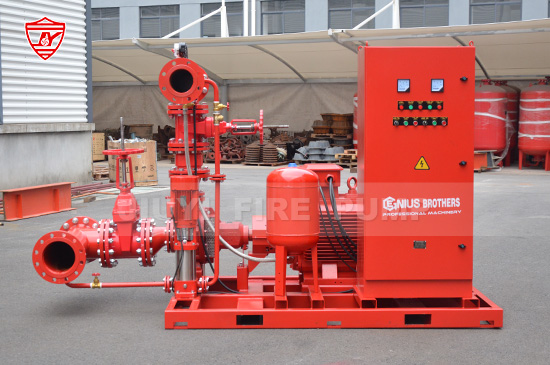
Fire pump shutoff head is the maximum pressure generated at zero flow and is a critical factor in fire protection system design.
Understanding and controlling shutoff head ensures:
Compliance with NFPA 20
Protection against overpressure
Reliable system operation
Long equipment life
Whether selecting a pump, designing a system, or performing testing, shutoff head must always be considered to ensure safety and performance.
By choosing the right pump and implementing proper controls, engineers and facility owners can build fire protection systems that perform reliably under all conditions.
.jpg)
.jpg)