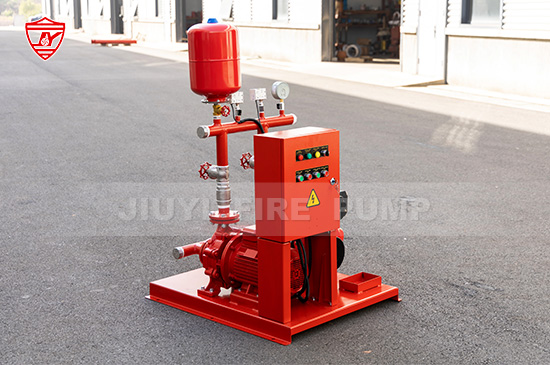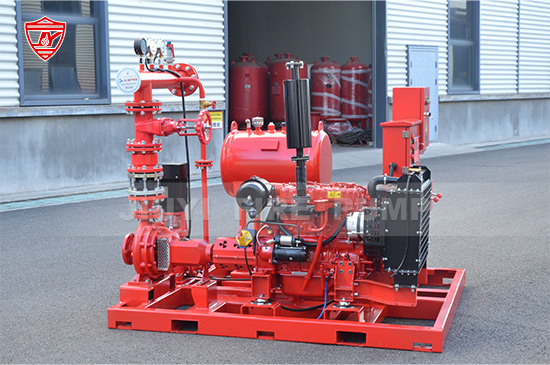
Fire pump systems are the backbone of any fire protection infrastructure. While much attention is often given to pump capacity, certifications, and component quality, system layout is frequently underestimated. In reality, fire pump system layout plays a decisive role in long-term reliability, operational stability, and emergency performance.
A well-designed layout ensures that the fire pump delivers the required flow and pressure when it matters most. A poor layout, even with a high-quality pump, can introduce hydraulic losses, mechanical stress, air entrainment, vibration, and maintenance challenges that compromise the entire system. For manufacturers, installers, and end users alike, understanding the impact of fire pump system layout is essential for preventing failure and ensuring code compliance.
This article explores why fire pump system layout directly impacts reliability, how layout-related issues cause failures, and what principles should guide a robust fire pump installation.

Fire pump reliability is often perceived as a product characteristic. In practice, reliability begins at the system level, long before commissioning and operation. The physical arrangement of pumps, piping, valves, controllers, and auxiliary components determines how smoothly the system functions under both normal and emergency conditions.
Even a UL-listed or NFPA-compliant fire pump can perform poorly if installed in an unfavorable layout. Excessive pipe bends, improper suction conditions, cramped pump rooms, and poor access for inspection all increase the probability of malfunction over time.
Layout decisions influence:
Hydraulic efficiency
Mechanical stress on pump components
Ease of inspection and maintenance
System response during fire events
Compliance with NFPA 20 and local codes
Reliability is not accidental; it is engineered through layout.
The suction side of a fire pump is one of the most sensitive areas in system layout. Improper suction piping design is among the leading causes of fire pump performance issues and failures.
A reliable fire pump system requires:
Straight, unobstructed suction piping
Proper pipe diameter relative to pump flow
Adequate straight length before the pump inlet
Minimal turbulence and pressure loss
Poor suction layout can result in cavitation, vibration, and unstable pressure. Cavitation, in particular, causes internal damage to the impeller and casing, significantly reducing pump life and reliability.
Additionally, inadequate suction conditions may prevent the pump from reaching its rated capacity during acceptance testing or real fire scenarios. Reliability is compromised not because the pump is defective, but because the layout prevents proper hydraulic performance.
While suction layout determines how well the pump receives water, discharge layout governs how efficiently pressure and flow are delivered to the fire protection system.
Discharge piping with excessive elbows, abrupt diameter changes, or poorly positioned valves introduces unnecessary friction losses. These losses force the pump to work harder, increasing mechanical load and energy consumption while reducing effective system pressure.
An unstable discharge layout can lead to:
Pressure fluctuations
Unintended pump cycling
Premature wear on seals and bearings
Difficulty maintaining system pressure during operation
Reliable fire pump systems maintain smooth, predictable discharge flow paths that preserve pump performance across the full operating range.
The fire pump room is not just a housing space; it is an operational environment. Fire pump system layout within the room directly affects accessibility, ventilation, drainage, and safety.
Common layout-related reliability issues include:
Insufficient clearance around pumps and motors
Inaccessible valves or controllers
Poor ventilation leading to overheating
Inadequate drainage causing water damage
A cramped or poorly planned fire pump room makes routine inspection and maintenance difficult. Over time, minor issues go unnoticed, gradually evolving into major failures. In contrast, a well-organized pump room layout encourages regular checks, faster troubleshooting, and safer operation.
Reliability improves when systems are designed with the technician, inspector, and emergency responder in mind.
Fire pumps are precision mechanical systems. Misalignment caused by improper layout introduces unnecessary stress on shafts, couplings, and bearings.
Common layout mistakes include:
Improper foundation elevation
Misaligned piping connections pulling on pump flanges
Rigid piping without allowance for thermal expansion
These issues create continuous mechanical strain during operation. Over time, this strain leads to vibration, noise, seal failure, and bearing damage. Reliability suffers not due to material defects, but because layout-induced forces exceed design expectations.
Correct layout minimizes external loads on the pump, allowing it to operate as intended under emergency conditions.
Fire pump reliability is closely tied to code compliance. NFPA 20 provides detailed guidance on fire pump room design, suction and discharge piping arrangement, valve placement, and accessibility.
Non-compliant layouts often result in:
Failed acceptance tests
Rework during inspection
Delayed project handover
Reduced confidence in system performance
More importantly, non-compliance increases the risk of system failure during an actual fire event. A layout that adheres to NFPA 20 is not only a regulatory requirement but a proven reliability framework based on decades of field experience.
Fire pump systems are expected to remain idle for long periods and then operate flawlessly under extreme conditions. This makes regular inspection, testing, and maintenance essential.
Layout directly determines whether maintenance tasks are practical or neglected.
Reliable layouts provide:
Clear access to gauges and valves
Space to remove components without dismantling piping
Safe working distances around rotating equipment
Logical arrangement of controllers and accessories
When maintenance is easy, it happens consistently. When maintenance is difficult, it is postponed. Over time, deferred maintenance undermines reliability more than any single component failure.
In an emergency, fire pump systems must operate immediately and continuously. Layout flaws that seem minor during normal operation become critical during a fire.
Examples include:
Air pockets in suction piping delaying pump priming
Poor drainage causing pump room flooding
Inaccessible isolation valves preventing rapid response
Controller placement that complicates manual intervention
Emergency reliability depends on predictable system behavior under stress. A well-engineered layout ensures that the fire pump responds as designed, without surprises.
Reliable fire pump system layout is best achieved when manufacturers, designers, and installers collaborate early in the project.
Manufacturers understand:
Optimal suction and discharge configurations
Load limits on pump nozzles
Maintenance requirements
Field-proven layout best practices
When this knowledge is incorporated into system design, reliability improves significantly. Layout decisions should never be made in isolation from the pump’s mechanical and hydraulic characteristics.
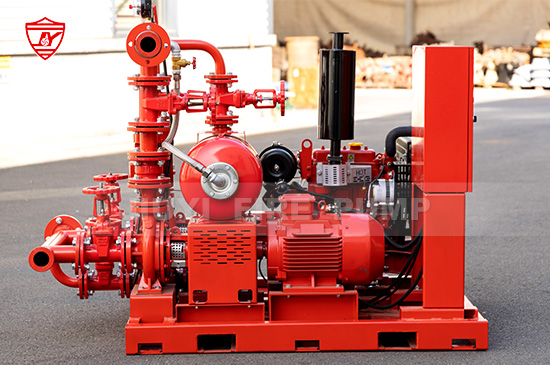
Fire pump system layout is not merely a spatial arrangement; it is a fundamental reliability decision. The most advanced fire pump cannot compensate for poor suction conditions, excessive hydraulic losses, mechanical misalignment, or inaccessible maintenance spaces.
A reliable fire pump system is the result of:
Proper suction and discharge piping layout
Thoughtful fire pump room design
Compliance with NFPA 20 principles
Mechanical alignment and stress reduction
Maintenance-friendly configuration
For fire safety professionals, recognizing the impact of system layout is essential. Reliability is engineered at the design stage, reinforced during installation, and preserved through accessible maintenance. When layout is done right, the fire pump system stands ready to perform when lives and assets depend on it.
.jpg)