Fire pumps are the heart of any fire protection system. When a fire emergency occurs, the pump must start instantly and deliver stable pressure and flow to sprinklers, hydrants, and standpipes. However, one of the most common and damaging failure modes in fire pump systems is cavitation. Cavitation is often misunderstood as a pump manufacturing defect, but in reality, most cavitation problems originate from poor suction design and improper installation.
Suction design determines how water enters the pump. If water does not reach the impeller under the correct pressure and flow conditions, vapor bubbles form and collapse violently, causing erosion, vibration, noise, and long-term damage. In critical fire protection systems, cavitation can lead to performance degradation, unexpected downtime, and failure during emergencies. Understanding why fire pump suction design is essential for preventing cavitation failures is therefore a key responsibility for engineers, contractors, and facility owners.
This article explains how cavitation forms in fire pumps, why suction design plays a decisive role, and what best practices can be applied to ensure reliable, long-term fire pump operation.
Cavitation occurs when the pressure of water at the pump inlet drops below the vapor pressure of the liquid. When this happens, small vapor bubbles form inside the fluid. As the fluid moves into higher pressure regions within the pump, these bubbles collapse suddenly. The implosion of these bubbles generates micro-jets and shock waves that strike metal surfaces inside the pump, particularly the impeller and casing.
Over time, this repeated impact causes pitting, surface erosion, and material fatigue. In fire pumps, cavitation can result in reduced flow, unstable pressure, increased vibration, excessive noise, seal failures, bearing damage, and eventually catastrophic pump failure. Unlike minor wear, cavitation damage can progress rapidly, especially under continuous operation or frequent testing.
Fire pumps are often tested weekly or monthly and may run for extended periods during emergencies. This makes them particularly vulnerable to cavitation damage if suction conditions are not properly designed from the beginning.
The suction side of a fire pump controls how water enters the pump impeller. The pump itself cannot create water; it only converts mechanical energy into hydraulic energy. If the suction system does not provide sufficient pressure and smooth flow, the pump will operate in a low-pressure environment, creating ideal conditions for cavitation.
Several factors related to suction design directly influence cavitation risk:
First, insufficient available NPSH at the pump inlet is a primary cause of cavitation. NPSH, or Net Positive Suction Head, represents the pressure head available to keep the liquid from vaporizing. If the available NPSH is lower than the pump’s required NPSH, cavitation becomes inevitable.
Second, poor suction piping layout introduces turbulence, pressure losses, and uneven flow into the pump. Sharp elbows, undersized pipes, sudden contractions, and poorly positioned fittings increase friction losses and reduce inlet pressure.
Third, air entrainment and vortex formation at the water source can introduce air into the pump. Air pockets reduce effective suction pressure and disturb flow patterns, which can trigger cavitation even when static water levels appear sufficient.
Fourth, excessive suction lift in installations where the pump is located above the water source further reduces inlet pressure. As suction lift increases, the margin between available pressure and vapor pressure decreases, making cavitation more likely.
All these issues are design-related rather than pump-related. Even a high-quality fire pump with excellent hydraulic design cannot compensate for poor suction conditions.
Net Positive Suction Head is one of the most critical parameters in fire pump system design. It represents the absolute pressure of the liquid at the pump inlet, expressed in terms of liquid head, minus the vapor pressure head of the liquid. In simple terms, NPSH tells us how close the liquid is to boiling under operating conditions.
Fire pump manufacturers specify the required NPSH for each pump model and operating point. This value indicates the minimum suction pressure needed to avoid cavitation. The system designer must ensure that the available NPSH provided by the water source, piping layout, and installation geometry is higher than the required NPSH by a safe margin.
Suction design directly influences available NPSH. Long suction lines, small pipe diameters, rough internal surfaces, and excessive fittings increase friction losses. Every pressure drop reduces the NPSH margin. Temperature also plays a role, as warmer water has a higher vapor pressure, reducing the safety margin further.
In fire protection systems, where reliability is paramount, designers should aim for conservative NPSH margins. A well-designed suction system ensures that even under worst-case conditions, the available NPSH remains comfortably above the required value, preventing cavitation during both normal operation and emergency demand.
Many cavitation failures in fire pumps can be traced back to a small set of recurring design and installation mistakes.
One frequent issue is undersized suction piping. When the suction pipe diameter is too small, water velocity increases, leading to higher friction losses and lower inlet pressure. High velocity also promotes turbulence, which disturbs the flow entering the impeller and increases cavitation risk.
Another common mistake is placing elbows or valves too close to the pump inlet. Disturbed flow patterns entering the impeller eye create localized low-pressure zones. Even if the average suction pressure is acceptable, these localized drops can initiate cavitation. A straight, unobstructed length of pipe before the pump inlet is essential to ensure uniform flow distribution.
Poor water source conditions also contribute to cavitation. Shallow tanks, insufficient submergence of the suction pipe, and inadequate anti-vortex measures can allow air to be drawn into the pump. Air reduces effective suction pressure and destabilizes flow, increasing the likelihood of vapor bubble formation.
Improper suction lift in above-ground installations is another frequent cause. Designers sometimes underestimate the impact of elevation differences and pressure losses. Even small increases in suction lift can significantly reduce available NPSH, particularly when combined with long suction lines or warm water temperatures.
A well-engineered suction system provides stable, high-pressure, low-turbulence flow to the pump inlet. This stable inlet condition ensures that water remains in liquid form as it enters the impeller, preventing vapor bubble formation.
Proper suction design begins with selecting an appropriate pipe diameter. Larger suction pipes reduce flow velocity and friction losses, preserving inlet pressure. Smooth internal surfaces further minimize pressure drop and turbulence.
Layout is equally important. Straight pipe runs before the pump inlet allow the velocity profile to stabilize, ensuring uniform pressure distribution across the impeller eye. Gentle transitions, long-radius elbows, and properly positioned valves help maintain smooth flow.
Water source design also plays a crucial role. Adequate submergence of suction inlets prevents vortex formation and air entrainment. In tank-fed systems, baffles and anti-vortex devices can stabilize flow and protect against air ingestion.
For installations with suction lift, minimizing elevation differences and optimizing piping routes helps preserve available NPSH. In some cases, relocating the pump closer to the water source or lowering the pump elevation significantly improves suction conditions and eliminates cavitation risks altogether.
Cavitation damage is progressive and cumulative. Early symptoms such as noise and vibration may be overlooked, but internal erosion continues even when external signs are minimal. Over time, impeller blades lose material, hydraulic efficiency drops, and pressure output becomes unstable.
In fire protection systems, degraded pump performance can have serious consequences. Reduced flow or pressure may compromise sprinkler coverage, hydrant performance, and standpipe functionality. In extreme cases, severe cavitation can cause sudden mechanical failure, rendering the pump inoperable during an emergency.
Beyond safety risks, cavitation increases maintenance costs and downtime. Frequent repairs, premature component replacement, and unplanned shutdowns disrupt facility operations and increase lifecycle costs. A well-designed suction system, by contrast, protects the pump from unnecessary stress and significantly extends service life.
Effective suction design starts at the planning stage. Designers should consider water source characteristics, elevation differences, pipe routing, and pump performance requirements together rather than treating suction piping as a secondary detail.
Key best practices include selecting suction pipe diameters that exceed minimum code requirements, providing straight pipe lengths before the pump inlet, avoiding unnecessary fittings, and ensuring adequate water submergence at the source. Designers should also evaluate worst-case operating conditions, including maximum flow demand and elevated water temperatures, when calculating NPSH margins.
Coordination between pump manufacturers, system designers, and installation contractors is critical. Manufacturer recommendations on suction piping layout and NPSH requirements should be followed closely. During installation, careful attention to alignment, cleanliness, and sealing prevents additional pressure losses and air ingress.
Regular inspection and testing of suction conditions help identify early warning signs of cavitation. Monitoring vibration, noise, and pressure stability during routine fire pump testing can reveal suction-related issues before they escalate into serious failures.
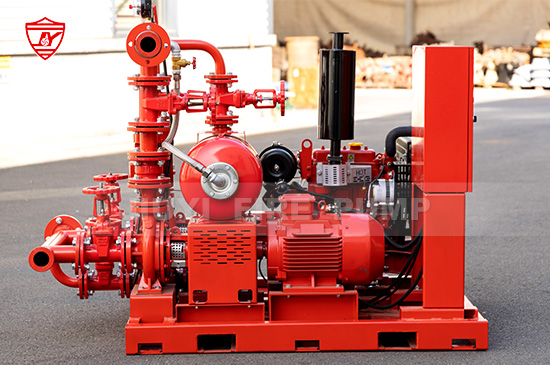
Fire pump cavitation failures are rarely caused by the pump itself. In most cases, they are the result of inadequate suction design that deprives the pump of stable, high-pressure inlet conditions. By understanding how suction piping, water source configuration, and NPSH margins influence cavitation, system designers and operators can prevent one of the most damaging and costly failure modes in fire protection systems.
Proper suction design is not just a matter of compliance; it is a foundation for long-term reliability and safety. When suction conditions are optimized, fire pumps operate smoothly, maintain performance under emergency demand, and deliver the dependable protection that fire safety systems are meant to provide.