High-value educational content for fire safety professionals, installers, and project engineers.
Fire pump systems are the backbone of building fire protection, but without a functioning and intelligent controller, the pump itself cannot perform its most important job—delivering reliable and immediate water pressure during a fire. In the world of fire safety, the fire pump controller is often referred to as the “brain” of the entire system. This nickname is not an exaggeration. Just as the human brain interprets signals, makes decisions, and coordinates responses, the fire pump controller constantly monitors system conditions, activates the pump when needed, and ensures smooth, compliant, and fail-safe operation.
For building owners, contractors, and fire protection engineers, understanding the importance of fire pump controllers is essential. This article explains how controllers work, why they are central to the entire fire protection system, and what features make a controller compliant, reliable, and suitable for different applications.
1. What a Fire Pump Controller Actually Does
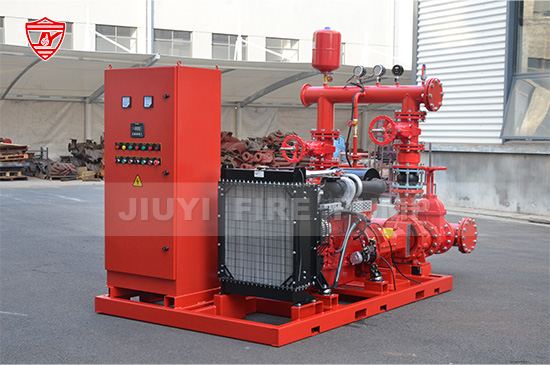
A fire pump controller is far more than a simple electrical switch. It is a sophisticated control and monitoring center designed to ensure that the fire pump activates instantly and consistently during an emergency.
In every fire protection system, pressure drops are the primary trigger for pump activation. When a sprinkler head opens or a hose reel is used, the system pressure decreases. The fire pump controller continuously monitors this pressure and responds accordingly. If the pressure falls below the preset threshold, the controller immediately sends a start signal to the pump—often in under a second.
The controller also manages multiple start methods, supervises system conditions, records events, and ensures safe shutdown after the fire has been controlled. This combination of sensing, decision-making, and operating functions is why the controller is truly the brain behind the system.
2. Why Controllers Are Crucial for Reliable Fire Protection
Fire protection is a field where reliability is not optional. A system that works 99% of the time is not acceptable—because the missing 1% may be the moment a fire breaks out. Fire pump controllers are designed to guarantee operation even under the most difficult conditions.
Instant Activation in Emergencies
When a fire triggers the sprinkler system, every second matters. The fire pump controller’s ability to detect a pressure drop and immediately start the pump ensures that the required water flow and pressure reach the sprinkler or hydrant system without delay.
Multiple Start Commands
To avoid a single-point failure, fire pump controllers include several independent means of starting the pump. These often include:
-
Automatic start via pressure switch
-
Manual start from the panel
-
Manual start from remote locations
-
Automatic start through deluge or flow switches
This redundancy further reinforces the system’s reliability.
Monitoring and Diagnostics
Fire pump controllers continuously monitor motor condition, voltage, phase balance, battery charge (for diesel pumps), and the status of power sources. Any abnormal condition will be announced through alarms or indicators, enabling maintenance teams to take action before issues become critical.
Supervised Safety
Controllers prevent accidental shutdowns during fire conditions. Once the pump is running due to fire demand, only manual intervention is allowed to stop it. This ensures uninterrupted water supply during fire suppression operations.
3. Types of Fire Pump Controllers
Fire pump controllers differ depending on the type of fire pump being used. Each pump type requires specific control logic and hardware components.
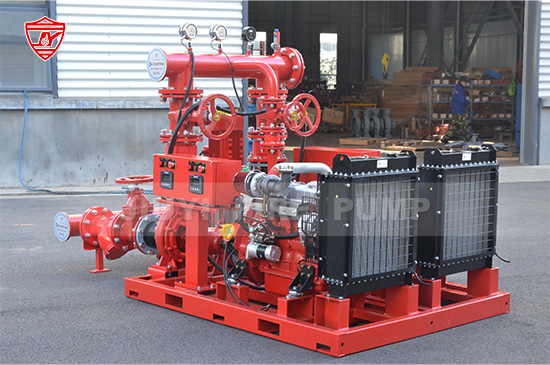
Electric Fire Pump Controllers
Electric controllers manage motors that run on utility electrical power or alternate backup sources. Key functions include:
-
Automatic start upon pressure drop
-
Motor overload protection
-
Phase failure and phase reversal monitoring
-
Soft starting or across-the-line starting
-
Jockey pump interface
Electric controllers are typically used in buildings with reliable electrical infrastructure.
Diesel Engine Fire Pump Controllers
Diesel fire pump controllers are more complex due to the need to manage engine functions such as fuel, temperature, and battery systems. Key features include:
-
Dual battery monitoring
-
Automatic engine cranking cycles
-
Overspeed protection
-
Engine performance indicators
-
Fuel system supervision
Diesel controllers are essential in areas where electrical reliability is a concern or where regulations require redundant power sources.
Variable Frequency Drive (VFD) Fire Pump Controllers
VFD controllers are used to regulate pump speed and maintain stable pressure in certain fire protection designs. While less common due to strict compliance requirements, they are useful in large or high-rise systems. The controller must still meet NFPA 20 guidelines for fire pump applications.
4. The Importance of NFPA 20 and UL Listings
A fire pump controller is not truly the “brain” unless it meets the regulatory expectations that ensure safety, performance, and reliability. In most global markets, NFPA 20 is the governing standard for fire pump installation and equipment requirements.
NFPA 20 Compliance
NFPA 20 defines:
-
How fire pump controllers must be constructed
-
Required alarm functions
-
Start and stop logic
-
Power transfer methods
-
Safety protections
-
Inspection and testing requirements
When choosing a controller, ensuring it complies with NFPA 20 is non-negotiable.
UL Listed Controllers
A UL Listing indicates that the controller has passed rigorous performance and safety tests. UL-listed controllers are trusted worldwide and often required by insurers, fire departments, and project consultants. For many building certification projects, UL listing is mandatory.
Controllers that are both NFPA 20 compliant and UL listed give building owners and engineers peace of mind that the system will perform when needed.
5. Fire Pump Controller Features That Matter Most
While all controllers perform basic tasks, advanced models include additional features that enhance safety and ease of maintenance.
Event Logging
Modern controllers record hundreds or thousands of historical events, helping service teams diagnose issues such as:
-
Overcrank
-
Low battery
-
Phase imbalance
-
Start failures
Event logs make root-cause analysis much faster and more accurate.
Remote Monitoring
Many modern fire pump controllers can integrate with building management systems (BMS) to provide real-time data on pump performance, alarms, and system conditions. This reduces the risk of unnoticed failures.
User-Friendly Interface
Clear indicators, large control buttons, and simple displays help operators understand system conditions instantly. During emergencies, clarity is critical.
Environmental Protection
Controllers are often installed in pump rooms that may experience high humidity, dust, or vibration. A durable, well-sealed enclosure helps maintain long-term reliability.
6. How Controllers Enhance System Longevity and Safety
Fire pump operation is not constant, but controllers help maintain pump health even when not active. Routine churn tests, supervision, and alarms all contribute to system longevity.
Weekly Automatic Testing
Controllers can initiate test runs to ensure that pumps remain operational. These tests help detect motor issues, battery problems, or valve failures early.
Protection of Pump Components
Through monitoring and intelligent control, the controller prevents:
-
Motor overheating
-
Electrical phase damage
-
Overuse of engine starter systems
-
Dry running
These protections extend the lifespan of both the pump and the motor or engine.
Avoiding Human Error
Manual fire pump start/stop is prone to oversight. Controllers automate these processes, reducing the risk of mistakes during maintenance or emergencies.
7. Common Mistakes to Avoid in Fire Pump Controller Selection
Choosing the wrong controller can lead to compliance violations, unreliable performance, or costly modifications later. Common mistakes include:
Selecting Non-Compliant Models
Some controllers may appear cost-effective but do not meet NFPA 20 or UL requirements. Always verify compliance before purchasing.
Ignoring Environmental Conditions
Pump rooms may require:
-
Temperature-controlled enclosures
-
Corrosion-resistant materials
-
Additional ventilation
Choosing a controller without considering the environment can lead to premature failure.
Underestimating Monitoring Needs
Large buildings require remote integration and event analysis. Basic controllers may not provide enough data for modern BMS systems.
Mismatch with Pump Type
Electric pumps require different logic and components compared with diesel engines. Ensure the controller is explicitly designed for the pump it will operate.
8. The Future of Fire Pump Controllers: Intelligent Fire Safety
Fire pump controllers are evolving alongside advancements in industrial automation. The next generation of controllers will incorporate:
IoT Capabilities
Real-time online monitoring, data storage, and mobile notifications will allow engineers to oversee pump performance from anywhere.
Predictive Maintenance
Algorithms can detect performance trends and issue warnings before critical failures occur, reducing maintenance costs and downtime.
Simplified User Experiences
Touchscreens, intuitive menus, and clearer alarms will make operation easier for both maintenance personnel and emergency responders.
Energy Management
Smart controllers may improve the efficiency of pump operations, particularly in systems with variable demand.
Conclusion
Fire pump controllers deserve their reputation as the “brain” of the fire protection system. They manage start logic, monitor safety conditions, supervise pump operation, and ensure absolute reliability when the system is under fire emergency demand. As fire pump manufacturers, we know that the controller is often the difference between a system that works during a fire and one that fails at the most critical moment.
Selecting a high-quality, compliant, and well-designed fire pump controller ensures that the entire fire protection system works as intended—protecting lives, property, and business continuity. For project consultants, engineers, and building owners, understanding the controller’s role is essential to making informed decisions and achieving long-term fire safety performance.