In fire protection systems, reliability is not optional. When a fire occurs, there is no opportunity for second chances, adjustments, or on-site troubleshooting. The fire pump must start immediately, perform exactly as designed, and deliver the required pressure and flow without failure. For this reason, reducing risk at every stage of a fire pump system’s lifecycle is critical.
One of the most effective ways to reduce risk in modern fire protection projects is fire pump package standardization. Standardized fire pump packages are increasingly preferred by consultants, contractors, owners, and authorities having jurisdiction because they offer predictable performance, controlled quality, and fewer variables that can lead to failure.
This article explains why fire pump package standardization significantly reduces technical, installation, compliance, and operational risks, and why it is becoming a best practice in the fire safety industry.
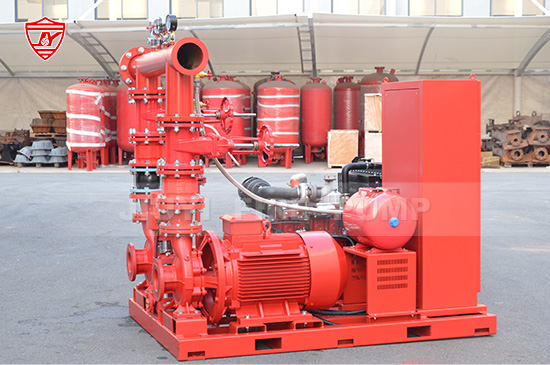
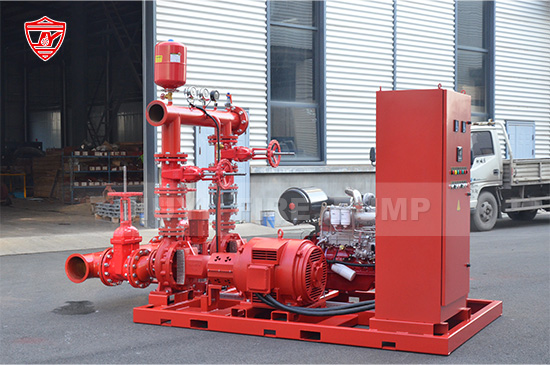
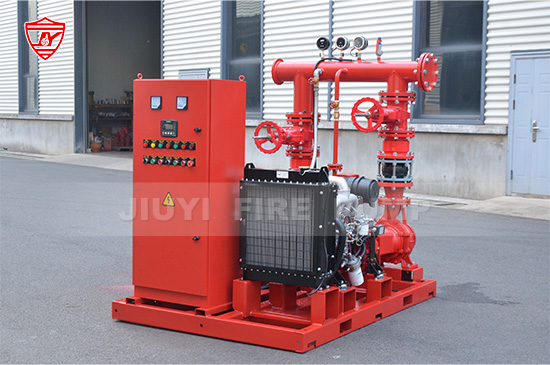
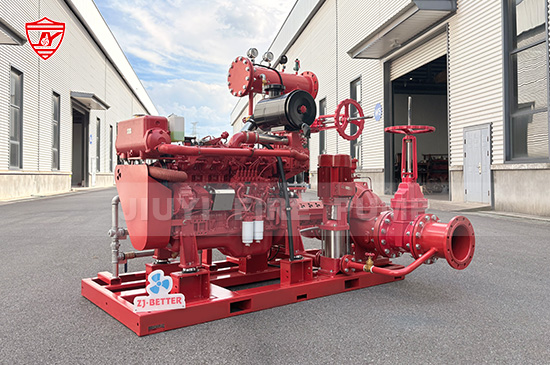
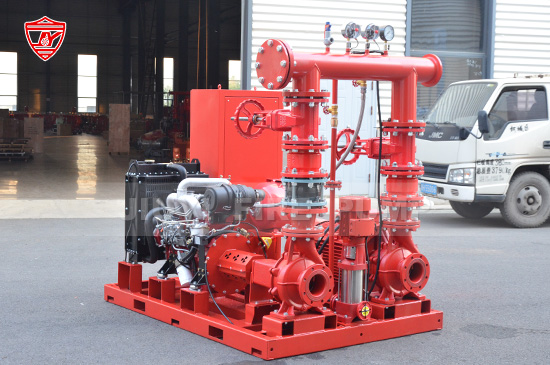
Fire pump package standardization means that the fire pump, driver, controller, accessories, baseplate, piping connections, and system layout are designed, assembled, and tested according to a consistent and proven configuration.
Instead of assembling components from multiple suppliers on site, a standardized fire pump package is:
Engineered using repeatable designs
Manufactured under controlled factory conditions
Pre-aligned, pre-wired, and pre-configured
Tested as a complete system before shipment
These standardized packages are typically designed to meet recognized fire protection standards such as NFPA 20 and certification requirements such as UL or FM, depending on project needs.
Traditional site-assembled fire pump systems often introduce unnecessary risk. When components are sourced separately and assembled on site, the final system performance depends heavily on:
Installer experience
Site conditions
Interpretation of drawings
Coordination between multiple suppliers
Even small deviations in alignment, wiring, valve orientation, or controller settings can lead to serious problems such as:
Failure to start
Insufficient pressure or flow
Excessive vibration
Premature component wear
Inspection failure or project delays
Non-standardized systems also increase responsibility gaps, making it difficult to determine accountability when issues arise.
Engineering risk is reduced when fire pump packages follow proven, repeatable designs.
Standardized packages are based on designs that have been:
Validated through repeated applications
Reviewed against applicable standards
Optimized for hydraulic performance and mechanical reliability
This reduces the likelihood of:
Incorrect pipe sizing
Improper suction or discharge configurations
Incompatible component selection
Control logic errors
For engineers and consultants, standardized fire pump packages provide confidence that the system design aligns with real-world performance, not just theoretical calculations.
Installation is one of the highest-risk phases for fire pump systems. Site conditions are unpredictable, time pressure is high, and skilled labor availability may be limited.
Standardized fire pump packages significantly reduce installation risk by:
Minimizing on-site assembly work
Reducing alignment and wiring errors
Providing clear, repeatable installation procedures
Shortening installation time
Since major components are already assembled and aligned at the factory, contractors focus primarily on placement, external connections, and commissioning, rather than complex system integration.
This leads to fewer installation mistakes and more consistent outcomes across different projects and locations.
Compliance risk is a major concern in fire protection projects. Failure to meet NFPA 20 or certification requirements can result in:
Failed inspections
Project delays
Costly rework
Loss of owner confidence
Standardized fire pump packages are designed specifically to meet code requirements from the beginning. This includes:
Proper component spacing
Approved materials and configurations
Correct controller functionality
Required instrumentation and safety devices
Because standardized packages are often UL listed or factory tested to NFPA criteria, inspectors and authorities can more easily verify compliance, reducing approval uncertainty.
One of the most important advantages of standardized fire pump packages is factory testing.
When a fire pump package is tested as a complete system before shipment, manufacturers can:
Verify flow and pressure performance
Check controller operation
Confirm automatic start sequences
Identify leaks, vibration, or abnormal behavior
Ensure proper interaction between components
This process dramatically reduces the risk of discovering performance issues during site acceptance testing, where corrections are more expensive and time-consuming.
Factory testing ensures that the system arriving on site is already proven to perform as required.
Standardization does not stop at installation. It also plays a critical role in long-term operation and maintenance.
Standardized fire pump packages offer:
Consistent component layout
Clear documentation
Familiar configurations for service technicians
Easier training for maintenance staff
When systems are standardized, operators can quickly understand system behavior, identify abnormalities, and perform routine inspections more effectively.
This reduces the risk of:
Improper maintenance
Missed warning signs
Incorrect adjustments
Extended downtime during servicing
Over the life of the system, this translates into greater reliability and lower operational risk.
In non-standard systems, components are often sourced from different manufacturers and integrated on site. This creates multiple interfaces where problems can occur.
Standardized fire pump packages are engineered as unified systems. All components are selected and configured to work together, reducing risks such as:
Electrical incompatibility
Control signal mismatches
Mechanical misalignment
Pressure losses due to poor piping transitions
By controlling interfaces at the manufacturing stage, standardized packages reduce the chance of hidden system weaknesses.
Risk is not limited to technical performance. Project delays and cost overruns are also major concerns for owners and contractors.
Standardized fire pump packages help reduce financial and scheduling risk by:
Shortening installation timelines
Reducing rework and corrective actions
Improving first-time inspection pass rates
Simplifying procurement and coordination
With fewer variables and surprises, project planning becomes more reliable and predictable.
For owners with multiple facilities or developers managing large portfolios, consistency is a key risk-management strategy.
Standardized fire pump packages allow organizations to:
Apply the same system design across projects
Simplify spare parts management
Standardize maintenance procedures
Improve training efficiency
This consistency reduces long-term operational risk and improves overall fire protection management.
The effectiveness of fire pump package standardization depends heavily on the manufacturer.
A qualified fire pump manufacturer ensures:
Engineering expertise aligned with fire standards
Strict quality control during assembly
Comprehensive factory testing
Accurate documentation and technical support
Manufacturers with experience in standardized fire pump packages act as risk partners, not just equipment suppliers.
Fire pump package standardization is not about limiting flexibility. It is about controlling risk in systems where failure is unacceptable.
By reducing engineering uncertainty, minimizing installation errors, improving compliance, and ensuring proven performance, standardized fire pump packages deliver higher reliability throughout the system lifecycle.
For engineers, contractors, owners, and authorities, standardization offers confidence. For manufacturers, it represents a commitment to safety, quality, and accountability. In an industry where every second and every component matters, standardization is one of the most powerful tools available to reduce risk and protect lives and property.