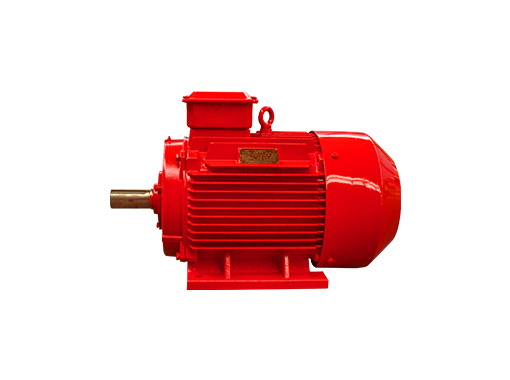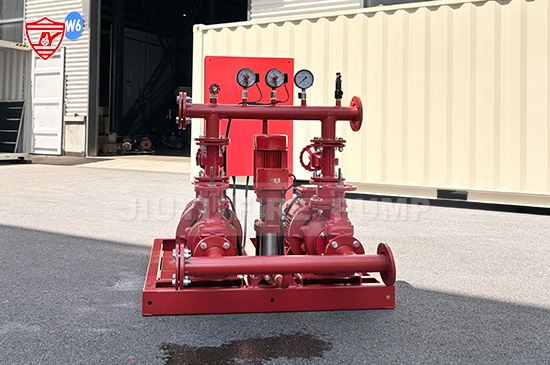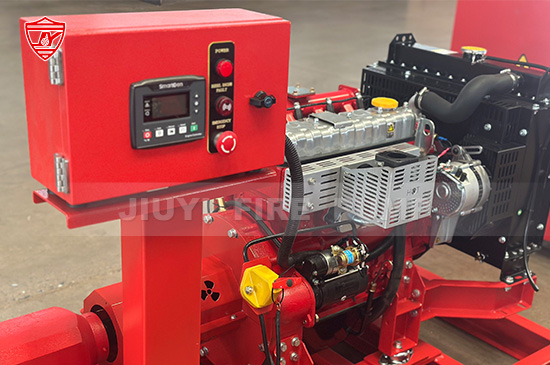
Fire pumps are the heart of any fire protection system. When a fire occurs, the pump must deliver the right amount of water, at the right pressure, instantly and reliably. However, one of the most common and costly mistakes in fire protection system design is fire pump oversizing.
At first glance, oversizing a fire pump may seem like a safe or conservative decision. Many project owners, contractors, and even designers believe that a larger pump provides extra security, future expansion capability, or a stronger safety margin. In reality, oversizing often introduces hidden technical, operational, and financial problems that can affect the fire pump system for decades.
This article explains why fire pump oversizing creates long-term problems, how it impacts system performance, and why correct fire pump sizing in accordance with standards and real system demand is critical.
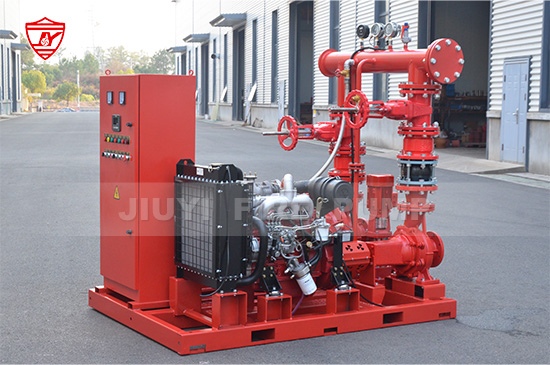
Fire pump oversizing occurs when the selected fire pump delivers significantly more flow or pressure than the fire protection system actually requires. This usually happens when:
System demand calculations are overly conservative
Designers select the next larger pump size “just in case”
Future expansion is assumed without proper analysis
Standard pump models are chosen without hydraulic optimization
An oversized fire pump does not operate near its best efficiency point. Instead, it often runs under partial load conditions, which creates a chain of performance and reliability issues.
One of the most immediate consequences of fire pump oversizing is excessive system pressure. When a pump produces more pressure than the system components are designed for, several risks emerge.
High pressure can damage valves, fittings, hoses, and sprinkler components over time. Even if these components meet code requirements, constant exposure to higher-than-necessary pressure accelerates wear and increases the likelihood of leaks or failures during an emergency.
In extreme cases, excessive pressure may trigger frequent pressure relief valve discharge, wasting energy and water while placing unnecessary stress on the pump and piping network.
Every fire pump has an optimal operating range known as the best efficiency point. Oversized fire pumps rarely operate in this range because system demand is lower than the pump’s rated capacity.
Operating far from the best efficiency point results in:
Higher energy consumption
Increased vibration
Unstable hydraulic performance
Excess heat generation
For electric fire pumps, this means higher power demand during testing and operation. For diesel fire pumps, it leads to inefficient fuel consumption and increased engine wear.
Over time, poor efficiency translates into higher operating costs and reduced equipment life.
Oversized fire pumps experience higher mechanical stress due to frequent throttling, pressure fluctuations, and off-design operation. These conditions affect multiple components, including:
Pump bearings
Mechanical seals
Couplings
Shafts
Diesel engine components
Repeated stress accelerates fatigue and shortens maintenance intervals. What was expected to be a robust and long-lasting fire pump system becomes a frequent maintenance concern.
This is particularly problematic in critical facilities such as data centers, industrial plants, hospitals, and high-rise buildings, where fire pump reliability is non-negotiable.
Ironically, a larger fire pump does not always perform better during an actual fire.
Fire protection systems are designed around specific flow and pressure requirements. When an oversized pump operates at low flow conditions, it may produce unstable discharge pressure, making it difficult for the system to regulate water delivery.
In some cases, this can result in:
Difficulty maintaining steady sprinkler pressure
Hose stream pressure exceeding safe handling limits
Delayed system stabilization during startup
A correctly sized fire pump delivers predictable and stable performance, which is essential during emergency conditions.
Oversizing increases costs at every stage of a fire pump’s lifecycle.
Initial costs rise because larger pumps require:
Bigger motors or diesel engines
Larger controllers
Stronger foundations
Larger diameter piping
Heavier structural support
Installation costs also increase due to additional labor, space requirements, and system modifications.
Over the long term, operational costs rise due to higher energy consumption, increased fuel use, frequent maintenance, and premature component replacement. When evaluated over 20 to 30 years, an oversized fire pump can cost significantly more than a properly sized alternative.
Fire pump systems must comply with NFPA 20 requirements, which emphasize correct sizing based on system demand rather than arbitrary safety margins.
Oversizing may create compliance challenges such as:
Excessive churn pressure
Inability to maintain required pressure ranges
Over-reliance on pressure relief devices
During inspections and acceptance testing, these issues may lead to failed tests, system modifications, or additional equipment installation to compensate for oversizing errors.
Proper sizing aligned with NFPA 20 helps ensure smooth approvals and long-term compliance.
Oversized fire pumps are more prone to cavitation, especially when suction conditions are less than ideal. Cavitation occurs when vapor bubbles form and collapse inside the pump, causing noise, vibration, and internal damage.
Factors contributing to cavitation in oversized pumps include:
Low flow operation
High pump speed relative to system demand
Marginal suction supply
Cavitation not only damages pump components but also reduces the pump’s ability to deliver reliable water flow during a fire event.
Perhaps the most dangerous consequence of fire pump oversizing is the false sense of security it creates.
A larger pump may appear more powerful on paper, but fire protection is not about maximum capacity. It is about delivering the right performance, instantly and reliably, under real-world conditions.
Oversizing masks poor system design rather than solving it. True fire safety comes from accurate hydraulic calculations, proper pump selection, quality manufacturing, and professional installation.
Correct fire pump sizing ensures that the pump:
Operates close to its best efficiency point
Delivers stable pressure and flow
Meets NFPA 20 requirements
Minimizes energy and fuel consumption
Reduces maintenance and lifecycle costs
Provides predictable performance during emergencies
For manufacturers, engineers, and project owners, proper sizing reflects professionalism, technical expertise, and a long-term safety mindset.
As a fire pump manufacturer, we see firsthand how oversizing affects system performance over time. Manufacturers play a critical role by:
Providing accurate pump performance curves
Supporting proper system demand analysis
Offering multiple pump configurations instead of one-size-fits-all solutions
Educating customers on lifecycle cost and efficiency
Fire pump selection should be a collaborative process focused on engineering accuracy rather than assumptions.
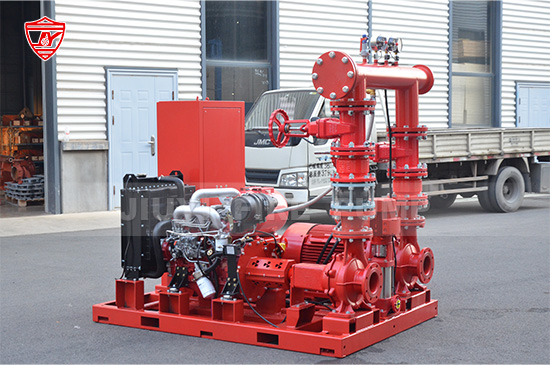
Fire pump oversizing may seem like a safe decision, but it often creates serious long-term problems that compromise efficiency, reliability, compliance, and cost control. Excess pressure, mechanical stress, higher operating costs, and unstable performance are all common outcomes of oversizing.
Correct fire pump sizing, based on real system demand and established standards, is the foundation of a reliable fire protection system. It protects not only equipment investment but also lives and property.