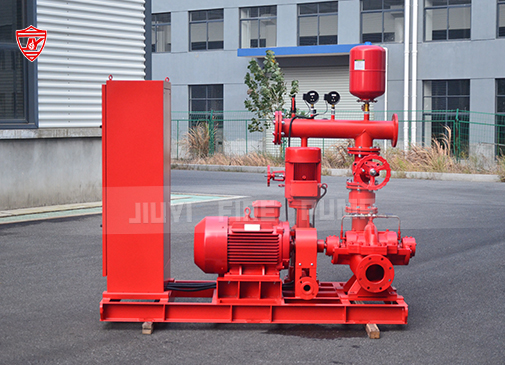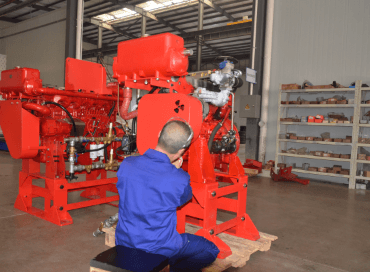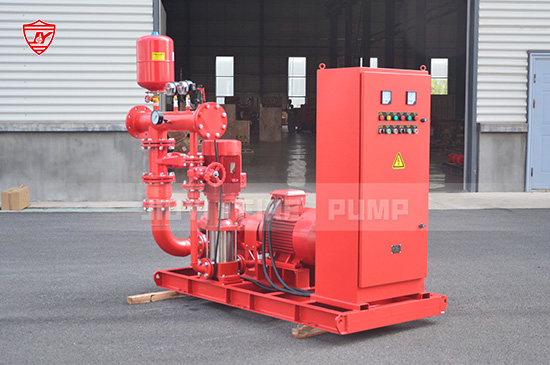
In fire protection engineering, project risk doesn’t simply exist at the installation stage—risk is carried throughout design, procurement, commissioning, inspection, and long-term operation. Every component selected for a fire protection system shapes the system’s safety performance and compliance profile. Among all major equipment, the fire pump is the heart of the entire firefighting water supply, and its reliability defines whether the system performs under emergency conditions.
For this reason, UL fire pump sets have become the preferred choice for consultants, contractors, and project owners who aim to minimize technical, compliance, and operational risks. A UL Listed fire pump is not just a product; it is a proven and verified fire protection asset that has passed the industry’s most stringent testing. This article explains why UL fire pump sets significantly reduce project risk and why they are a strategic choice for modern fire safety projects.
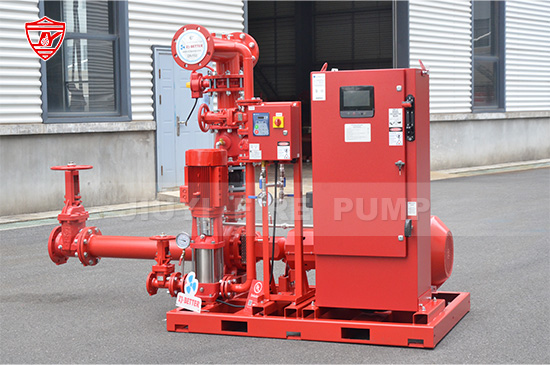
Underwriters Laboratories (UL) is one of the most respected certification bodies in the global fire safety industry. UL’s testing standards for fire pumps are designed to verify the reliability, performance consistency, and safety of every pump component and the complete package.
A UL certified fire pump set is tested for:
Flow and pressure performance (not only at rated duty but also at overload points)
Mechanical integrity under continuous operation
Electrical safety for motors and controllers
Diesel engine reliability during long-duration operation
Stable performance under varying suction and discharge conditions
Durability and material quality
Compliance with NFPA 20 requirements
Because UL testing is performed by third-party authorities—not by the manufacturer itself—its certification provides project stakeholders with unquestionable, internationally recognized proof of product reliability.
This third-party assurance eliminates the uncertainty that often surrounds non-certified pumps and directly reduces risk for all parties involved.
One of the biggest sources of project risk in fire protection is design uncertainty. When performance data does not match actual pump output, the entire fire protection system may fail to deliver required pressure during emergencies.
UL fire pump sets eliminate this design-phase risk by providing:
Accurate, verified performance curves
Reliable duty-point characteristics
Guaranteed flow–pressure relationship
Consistent repeatability during real-world operation
Engineers and consultants can design systems confidently, knowing that theoretical calculations match certified pump performance. This accuracy ensures the entire firefighting system—from pipelines and valves to sprinklers and hydrants—is optimized for real performance, not assumptions.
UL Listing is not a one-time test. Manufacturers must undergo continuous UL audits, random inspections, and testing throughout the production lifecycle. This ensures that every unit leaving the factory maintains the same high standard.
For contractors and procurement teams, this means:
Lower risk of receiving inconsistent products
Reduced risk of installation delays caused by defects
Fewer quality disputes with project owners
Lower lifetime failure rates
Selecting a UL fire pump set ensures that the product consistently meets internationally recognized fire safety standards, delivering predictable quality across every project.
In many regions—especially the Middle East, Southeast Asia, and high-value commercial projects—UL Listed fire pump sets are either preferred or mandatory. They help ensure full compliance with NFPA 20, the world’s most widely adopted standard for fire pump installations.
By choosing UL fire pumps, project teams benefit from:
Faster approval from authorities having jurisdiction (AHJ)
Reduced compliance rework
Lower regulatory penalties
Smoother inspections and commissioning
Compliance risk can lead to costly project delays, redesigns, and even legal liabilities. A UL Listed fire pump minimizes these risks by providing documentation and certification already recognized and trusted by fire safety authorities worldwide.
Fire pump installation and commissioning is one of the most time-sensitive stages in a fire protection project. Any failure during system testing can cause major delays and financial losses.
UL fire pump sets significantly reduce these risks because:
They offer predictable performance, ensuring the pump meets its rated flow and pressure during final acceptance testing.
They come with standardized installation parameters, simplifying contractor work.
Their components—controllers, drivers, bases, and accessories—are designed to work together as an integrated system.
Contractors benefit from fewer installation problems, fewer return visits, and faster handover to the client.
A fire pump must operate reliably even after years of inactivity. During a true emergency, the system has no second chance. One of the key advantages of UL fire pump sets is their proven long-term reliability.
UL pumps are tested for:
Continuous operation endurance
Thermal and mechanical stability
Resistance to corrosion and material degradation
Reliable startup performance after long idle periods
This gives building owners and facility managers confidence that the fire pump will start and run at full performance when needed most. Operational risk is further reduced through:
Higher manufacturing consistency
Longer pump and engine lifespan
Lower risk of sudden failure
Predictable maintenance intervals
For high-value assets—such as industrial facilities, commercial towers, hospitals, hotels, and logistics hubs—this reliability directly translates into reduced liability.
While a UL fire pump set may have a higher initial price compared with non-listed pumps, it reduces multiple categories of financial risk over the pump’s lifetime.
Lower maintenance cost due to higher component quality
Fewer pump failures, reducing repair and replacement fees
Reduced downtime, preventing operational losses
Fewer inspection failures, reducing expensive corrective work
Better energy efficiency, especially for electric-driven pumps
Lower long-term liability exposure
Project owners often find that UL pumps have a significantly lower total cost of ownership, making them the economically smarter choice—not just the safer one.
If a fire pump fails during an emergency, the consequences can be severe, and responsibility may fall on multiple stakeholders. Using UL fire pump sets reduces legal and financial liability because:
The equipment meets international safety standards
Performance is certified and documented
Authorities recognize UL as a trusted verification body
Third-party testing provides protection against claims of improper equipment selection
Simply put, UL Listing protects everyone involved in the project—from designers and contractors to building owners and operators.
For contractors, consultants, and developers, selecting UL fire pump sets sends a strong signal:
Commitment to safety
Commitment to quality
Commitment to compliance
Fire protection is built on trust, and trust is built on proven equipment. Using UL certified pumps helps companies improve their professional image and increases their competitiveness when bidding for premium projects such as airports, high-rise towers, industrial plants, data centers, or government facilities.
In a market where reliability must never be compromised, UL listing becomes an advantage that helps win contracts and maintain long-term relationships with clients.
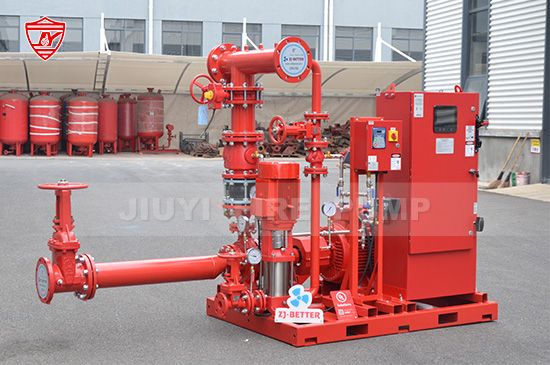
Project risk in fire safety is multi-dimensional, covering design accuracy, procurement quality, installation reliability, regulatory compliance, and long-term operational stability. UL fire pump sets reduce risk across every phase.
They deliver:
Verified and certified performance
Compliance with international fire safety standards
Reliable long-term operation
Reduced maintenance requirements
Lower total cost of ownership
Faster approval from authorities
Protection from legal and operational liability
For engineers, consultants, contractors, and building owners, choosing UL fire pump sets is not simply a product decision—it is a strategic investment in safety, risk reduction, and long-term project value.