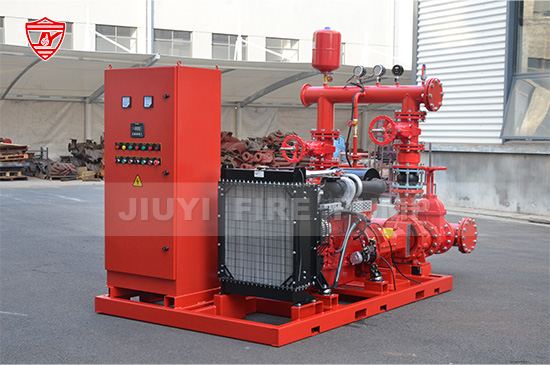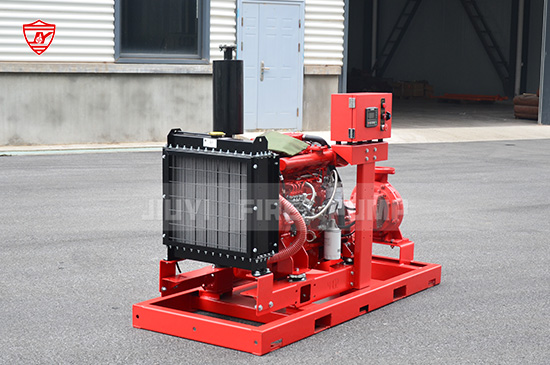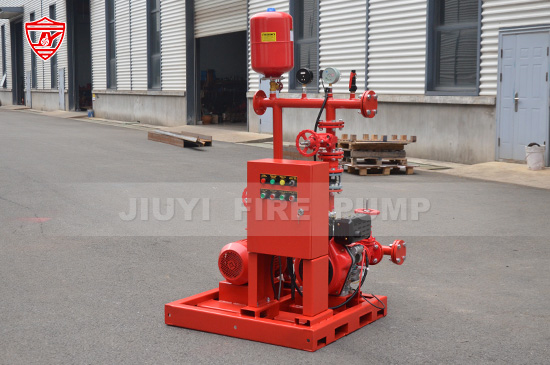
Fire pump performance determines whether a fire protection system can deliver the required water flow and pressure when it is needed most. Understanding fire pump performance is essential for engineers, contractors, system designers, facility owners, and fire safety professionals responsible for selecting, installing, testing, and maintaining fire pumps.
A fire pump is not simply a piece of equipment that produces water pressure. Its performance depends on the interaction between the pump, driver, piping system, water supply, valves, fittings, controllers, and operating conditions. A properly selected and maintained fire pump must provide the required flow and pressure at the system demand point and continue operating reliably under emergency conditions.
This article explains the key factors that determine fire pump performance and what professionals should consider when evaluating a fire pump for a fire protection project.
.jpg)
Fire pump performance describes the pump's ability to deliver a specific water flow at a specific pressure under defined operating conditions.
The two most important performance parameters are:
Flow is generally expressed in gallons per minute (GPM), liters per minute (L/min), cubic meters per hour (m³/h), or another applicable unit.
Pressure may be expressed in pounds per square inch (PSI), bar, meters of water column, or other pressure units.
For example, a fire pump may be required to deliver 1,000 GPM at a specified pressure. This requirement becomes the basis for selecting the pump, driver, controller, and associated equipment.
However, one operating point does not completely describe pump performance. A fire pump can operate at different flow rates and corresponding pressures. This relationship is represented by the fire pump performance curve.
The performance curve is one of the most important documents for evaluating a fire pump.
A typical pump curve shows flow on the horizontal axis and pressure or head on the vertical axis. As flow increases, the available pressure from a centrifugal fire pump generally decreases.
The curve allows engineers and users to understand how the pump behaves under different operating conditions.
Several important points should be considered when reviewing a fire pump curve.
Rated flow is the flow capacity at which the pump is designated for its rated performance.
Common fire pump ratings may include 250 GPM, 500 GPM, 750 GPM, 1,000 GPM, 1,500 GPM, 2,000 GPM, 3,000 GPM, and larger capacities.
The rated flow should be selected based on the hydraulic demand of the fire protection system rather than simply choosing the largest available pump.
Rated pressure is the pressure the pump is designed to provide at its rated flow.
For example, a pump may have a rated capacity of 1,000 GPM and a rated pressure of 100 PSI. The actual pressure available at other flow conditions will depend on the pump's performance curve.
Shutoff pressure, sometimes called churn pressure, is the pressure produced when the pump is operating with essentially zero flow.
This point is important because the pump may operate near this condition when the fire protection system has little or no water demand.
Shutoff pressure must be considered when evaluating system components because excessive pressure can affect piping, valves, sprinklers, fittings, and other equipment.
The maximum flow point represents a high-flow operating condition. The pressure available at high flow can be significantly lower than the rated pressure.
This is why selecting a fire pump based only on rated pressure can be misleading. The complete performance curve should always be evaluated.
A fire protection system needs sufficient water flow to supply sprinklers, hydrants, standpipes, hose stations, or other fire protection equipment.
At the same time, sufficient pressure is necessary to ensure that water reaches the required location and operates the fire protection equipment correctly.
A pump with insufficient flow may not provide enough water to the system. A pump with insufficient pressure may fail to overcome elevation, friction losses, and equipment pressure requirements.
The required pump duty point is therefore determined by the overall hydraulic characteristics of the system.
A simplified relationship can be expressed as:
Required pump pressure = required system pressure + elevation loss + friction loss + other system losses
Actual hydraulic calculations are more detailed and should account for the specific design, piping configuration, water source, fire protection equipment, and applicable requirements.
The duty point is the operating condition where the required flow and pressure of the fire protection system intersect with the pump's available performance.
For example, if a hydraulic calculation determines that the system requires 1,000 GPM at 120 PSI, the selected pump should be capable of meeting this demand under the applicable operating conditions.
The duty point should be evaluated against the complete pump performance curve.
A common mistake is to compare only the pump's rated flow and rated pressure with the system requirements. The pump curve provides a much better understanding of how the pump will perform across different flow conditions.
Efficiency is another important aspect of pump performance.
Pump efficiency describes how effectively the pump converts input power into hydraulic output.
Although fire pumps are designed primarily for reliable fire protection performance, efficiency remains important because it can influence driver sizing, operating conditions, energy consumption during testing, and overall equipment design.
Pump efficiency can vary significantly depending on the operating point.
The best efficiency point, often referred to as BEP, represents the region where the pump operates most efficiently. The actual required fire protection duty point may not be exactly at BEP.
The objective is not simply to maximize efficiency at one theoretical point. The selected fire pump should provide suitable performance across the range required by the fire protection system.
Fire pump performance depends on more than the pump itself. Several external factors can affect actual operating conditions.
The available water supply is critical.
A pump cannot produce the expected performance if the suction supply is inadequate. Insufficient suction pressure, restrictions, inadequate water volume, or poor suction piping design can reduce pump performance and may contribute to unstable operation.
Suction piping should be properly sized and configured to minimize unnecessary losses.
Sharp changes in direction, restrictions, poorly positioned valves, air pockets, and other installation problems can affect the water entering the pump.
Discharge piping creates friction losses as water travels through the system. Pipe diameter, length, fittings, valves, elevation, and flow rate all influence the total pressure loss.
As flow increases, friction losses generally increase as well.
The driver must provide sufficient power to operate the pump throughout the required operating range.
Electric motors and diesel engines have different operating characteristics and installation requirements. Proper driver sizing is essential to ensure that the pump can achieve its required performance.
Pump speed directly affects pump performance.
Changes in rotational speed can change flow, pressure, and power requirements. Therefore, the pump speed must be compatible with the approved or specified pump design and driver.
Even a properly designed pump can perform poorly if installation conditions are incorrect.
Examples include improper alignment, inadequate suction conditions, incorrect valve positions, blocked strainers, air entering the suction line, and discharge restrictions.
For this reason, performance evaluation should consider the complete fire pump installation rather than the pump alone.
Fire pump testing verifies whether the installed equipment performs as expected.
A typical performance test evaluates the pump at several operating conditions rather than only at rated flow.
Common test points include:
The actual pressure and flow at each point can then be compared with the applicable pump performance requirements and approved documentation.
Testing can identify problems such as insufficient flow, low pressure, suction restrictions, driver problems, incorrect valve positions, or deterioration of pump performance.
Regular testing is therefore an important part of fire pump system reliability.
Factory testing provides an opportunity to verify pump performance before equipment is shipped to the project site.
A professional fire pump manufacturer can test pumps using controlled conditions and appropriate measuring equipment.
Factory testing may include verification of:
For larger or specialized fire pump systems, testing becomes particularly important because site conditions may make troubleshooting more complicated and expensive.
A properly equipped fire pump manufacturer should have appropriate test facilities and experienced technical personnel capable of evaluating the equipment against the required performance criteria.
Several signs may indicate that a fire pump is not performing as expected.
These can include:
When abnormal performance is identified, the entire system should be investigated.
The problem may originate from the pump, driver, suction supply, piping, valves, instrumentation, or operating conditions.
Oversizing a fire pump may appear to provide additional safety, but selecting a pump that is significantly larger than the actual system requirement can create unnecessary problems.
An oversized pump can produce excessive pressure under certain operating conditions. This may require additional pressure management or system components.
Oversizing can also affect equipment costs, driver requirements, electrical infrastructure, fuel consumption during testing, and system design.
The better approach is to select a pump based on the actual hydraulic requirements and applicable fire protection standards.
When selecting a fire pump, professionals should evaluate the complete performance requirements rather than focusing on one specification.
Important factors include:
The pump should provide adequate performance across the required operating range while remaining compatible with the complete fire protection system.
Electric and diesel-driven fire pumps can both be used in fire protection systems, but their operating characteristics and installation requirements differ.
Electric fire pumps depend on a suitable electrical power supply and properly sized electrical equipment. They can provide consistent operating speed when supplied with appropriate power.
Diesel fire pumps use a diesel engine as the driver and require fuel storage, exhaust arrangements, ventilation, cooling, batteries, and engine control equipment.
The choice between electric and diesel drivers depends on the project design, available utilities, fire protection requirements, local regulations, and system configuration.
In many installations, electric and diesel pumps may be used together to provide different levels of redundancy and operational capability.
One of the most important principles to understand is that fire pump performance cannot be evaluated independently from the fire protection system.
A pump may perform correctly during factory testing but produce different results after installation if the suction supply, piping, valves, elevation, or other system conditions differ from the expected design.
Likewise, a pump that appears to have adequate pressure at one operating condition may not provide sufficient flow at another point.
For this reason, hydraulic calculations, pump curves, factory testing, installation inspection, commissioning, and periodic performance testing should all work together.
.jpg)
Fire pump performance is a fundamental factor in the reliability of a fire protection system. Flow, pressure, pump curves, duty points, efficiency, driver capability, water supply, piping, and installation conditions all contribute to actual system performance.
For engineers, contractors, and facility owners, understanding these factors makes it easier to select the appropriate fire pump and identify potential performance problems.
For manufacturers, performance testing and quality control are equally important. A reliable fire pump should be designed, manufactured, tested, and documented according to the requirements of the intended application and applicable standards.
As a fire pump manufacturer, Better Technology Group focuses on the complete performance of fire pump equipment, from pump design and manufacturing to factory testing and system configuration. By combining appropriate hydraulic design, reliable components, professional manufacturing, and systematic testing, fire pump equipment can be prepared to meet the demanding requirements of modern fire protection applications.