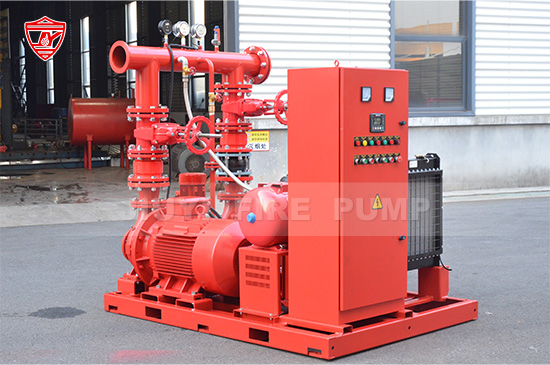
A containerized fire pump provides a practical solution for fire protection projects that require a complete pumping system in a protected, transportable, and space-efficient enclosure. By integrating fire pumps, drivers, controllers, fuel systems, piping, valves, and related equipment into a container, these systems can be deployed in industrial facilities, warehouses, remote sites, construction projects, infrastructure developments, and other locations where a conventional pump room is difficult or expensive to build.
However, placing fire pump equipment inside a container creates an important engineering requirement: proper ventilation.
Ventilation is not simply an accessory added to a containerized fire pump system. It is an essential part of the overall system design, particularly when the container includes a diesel engine. A fire pump enclosure must provide sufficient airflow to support engine combustion, remove heat, control exhaust gases, protect equipment, and maintain suitable operating conditions.
Understanding why ventilation matters can help fire protection engineers, contractors, system integrators, and project owners make better decisions when selecting and installing a containerized fire pump system.
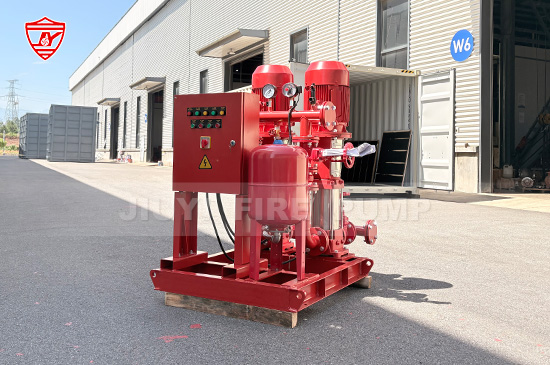
A containerized fire pump is a fire protection pumping system installed inside a purpose-designed container or enclosure. Instead of constructing a dedicated pump room, the major components of the fire pump system are assembled and tested within the container before delivery to the project site.
Depending on project requirements, a containerized system may include an electric fire pump, diesel engine fire pump, jockey pump, fire pump controllers, diesel fuel tank, batteries, exhaust system, valves, piping, monitoring equipment, and other accessories.
One of the major advantages of this configuration is that the system can be manufactured and tested in a controlled factory environment before being transported to the installation site.
The container provides protection from weather and environmental conditions while also simplifying installation. However, because the equipment is enclosed within a relatively limited space, heat and exhaust management become important design considerations.
This is where ventilation plays a critical role.
The primary purpose of ventilation is to maintain an appropriate environment inside the fire pump container while the equipment is operating.
A diesel engine generates a significant amount of heat during operation. It also consumes large quantities of air for combustion and produces exhaust gases that must be safely discharged outside the enclosure.
Without sufficient ventilation, several problems can occur.
The internal temperature may rise rapidly. Hot air can accumulate around the engine, pump, controller, batteries, and other components. At the same time, insufficient fresh air can affect diesel engine combustion and performance.
Poor ventilation can therefore affect both equipment protection and fire pump reliability.
A properly designed ventilation system provides a controlled path for fresh air to enter the container and hot air to leave. When combined with a correctly designed exhaust system, it helps create an operating environment suitable for the fire pump equipment.
A diesel fire pump engine requires sufficient air to operate properly.
During combustion, the engine draws in air and mixes it with fuel. The amount of air required depends on the engine size, operating speed, fuel consumption, and other characteristics.
If the container does not provide enough fresh air, the engine may not receive the airflow required for efficient combustion.
A well-designed ventilation system therefore needs to consider the engine's combustion air requirements as part of the overall container design.
This is particularly important for high-capacity diesel fire pumps. Larger engines generally require greater airflow, meaning that ventilation openings, fans, louvers, and airflow paths must be appropriately sized.
The ventilation system should not be treated as a standard opening that is the same for every project. It should be designed according to the actual equipment and operating conditions.
Heat management is one of the most important reasons for providing ventilation.
A running diesel engine produces substantial heat. Although some heat is transferred through the cooling system and exhaust system, heat is also released into the surrounding environment.
Other equipment inside the container can contribute to the overall heat load. These components may include electric motors, controllers, batteries, lighting equipment, chargers, and other electrical devices.
If the heat generated inside the container cannot escape efficiently, the internal temperature can continue to increase.
Excessive temperature can negatively affect equipment performance and service life. Electrical components, batteries, cables, seals, lubricants, and electronic controllers can all be affected by high temperatures.
Proper ventilation helps maintain a more controlled temperature by continuously replacing hot air with cooler outside air.
For containerized fire pump systems, ventilation design should therefore consider the total heat generated by the equipment rather than focusing only on the diesel engine.
A diesel engine produces exhaust gases that must be safely discharged from the container.
Exhaust gases can contain carbon monoxide, nitrogen oxides, particulate matter, and other combustion products. These gases should not be allowed to accumulate inside an enclosed fire pump container.
The exhaust system and ventilation system must therefore work together.
The engine exhaust should be routed through a properly designed exhaust system to a safe discharge location outside the container. Ventilation should provide adequate airflow within the enclosure to prevent the accumulation of unwanted heat and residual gases.
The exhaust pipe itself can also become extremely hot during engine operation. Its routing and insulation should therefore be considered carefully to reduce heat transfer to nearby equipment and container structures.
For this reason, a containerized diesel fire pump should be designed as an integrated system rather than simply placing a diesel engine inside a standard shipping container.
Reliable fire protection depends on the availability of the fire pump when it is needed.
A fire pump may remain on standby for long periods and then be required to start automatically during an emergency. When that happens, the equipment must be capable of operating correctly.
A poorly ventilated enclosure can create unfavorable conditions that may affect equipment reliability.
For example, excessive heat can place additional stress on electrical components and engine systems. High temperatures can also affect batteries and other equipment required for reliable engine starting.
Good ventilation helps maintain a more suitable environment for the entire fire pump package.
This is especially important because a fire pump is safety-critical equipment. Its purpose is not continuous everyday operation but dependable performance when a fire protection system requires water at the necessary pressure and flow.
Electric fire pumps and diesel fire pumps have different ventilation requirements.
An electric motor does not produce combustion exhaust gases, so an electric fire pump container may have a different ventilation strategy. However, heat generated by the motor and electrical equipment still needs to be considered.
A diesel fire pump has additional requirements because the diesel engine requires combustion air and produces exhaust gases and significant heat.
For a containerized diesel fire pump, the ventilation design may therefore include natural ventilation, mechanical ventilation, exhaust fans, air intake louvers, hot-air discharge openings, and other components depending on the project design.
The exact configuration should be determined based on the engine manufacturer's requirements, applicable fire protection standards, environmental conditions, and project specifications.
Containerized fire pump systems may use natural ventilation, mechanical ventilation, or a combination of both.
Natural ventilation relies on properly positioned openings, louvers, and the natural movement of air. When the container layout and environmental conditions allow sufficient airflow, natural ventilation can provide a relatively simple solution.
However, natural airflow can be affected by outside temperature, wind conditions, container configuration, equipment arrangement, and other factors.
Mechanical ventilation uses fans or other equipment to actively move air through the enclosure. This approach can provide greater control over airflow and heat removal.
For larger diesel engines or installations with high heat loads, mechanical ventilation may be required depending on the design conditions.
The choice should be based on engineering calculations rather than simply selecting the most convenient option.
Having ventilation openings is not enough. The location and arrangement of those openings are also important.
Fresh air should enter the container through an appropriate intake location, while hot air should be directed toward a suitable discharge point.
The airflow path should be designed to prevent hot air from being repeatedly circulated around the engine and other equipment.
Equipment layout is therefore closely related to ventilation performance.
A containerized fire pump manufacturer should consider the position of the diesel engine, pump, controller, fuel tank, batteries, exhaust pipe, ventilation openings, fans, and maintenance access areas during the design stage.
A well-planned airflow path can improve heat removal and reduce the possibility of hot-air accumulation.
A containerized fire pump may be installed in very different environments.
Some systems operate in hot and humid climates. Others may be installed in cold regions, coastal areas, deserts, industrial facilities, or remote locations.
Ambient temperature has a direct effect on ventilation requirements.
For example, a system installed in a hot climate may require greater consideration of heat rejection because the temperature difference between the container interior and outside air is smaller.
At the same time, systems installed in cold environments may require different strategies to maintain suitable engine starting and operating conditions.
Dust, sand, humidity, salt air, and other environmental factors can also influence the selection of ventilation equipment and protective measures.
Therefore, ventilation should be designed according to the actual installation environment rather than relying on a generic container configuration.
The purpose of a containerized fire pump is to support a fire protection system. Consequently, ventilation design must not compromise other fire safety requirements.
Ventilation openings, fans, dampers, electrical equipment, exhaust systems, and other components should be considered as part of the complete fire pump package.
The design should also account for access to the equipment for inspection, maintenance, testing, and emergency operation.
The container should provide sufficient working space around important components while maintaining an effective airflow path.
Good engineering balances equipment protection, ventilation, fire safety, accessibility, and operational reliability.
A professional containerized fire pump manufacturer should evaluate several factors before finalizing the enclosure design.
These factors include:
Diesel engine power and airflow requirements
Engine combustion air requirements
Heat generated by the engine and other equipment
Exhaust gas temperature and discharge requirements
Ambient temperature
Container dimensions
Equipment layout
Required airflow rate
Ventilation opening size and position
Mechanical fan requirements
Electrical equipment and controller requirements
Fuel system arrangement
Battery and charger location
Maintenance access
Applicable fire protection standards and project specifications
The manufacturer should also verify the system through appropriate factory testing whenever practical.
Factory assembly and testing can help identify potential issues with equipment arrangement, airflow, exhaust routing, access, and overall system integration before the container is shipped to the project site.
The ultimate goal of ventilation is not simply to move air. It is to help ensure that the fire pump remains capable of performing its required function.
A properly ventilated container can help:
Provide sufficient combustion air for diesel engines.
Reduce excessive heat accumulation.
Improve operating conditions for electrical components.
Protect batteries and control equipment from excessive temperatures.
Reduce the accumulation of exhaust gases.
Improve the working environment inside the enclosure.
Support reliable fire pump operation during emergency conditions.
Extend the service life of selected components by reducing thermal stress.
These benefits make ventilation an important part of the overall reliability strategy for containerized fire pump systems.
Several mistakes can reduce the effectiveness of container ventilation.
One common mistake is using a standard container without modifying it for fire pump equipment. A conventional cargo container is not automatically suitable for housing a diesel fire pump.
Another mistake is providing ventilation openings without considering airflow direction. Air needs to move through the equipment area rather than simply enter and exit through openings that do not create effective circulation.
Another issue is ignoring exhaust heat. Even if the container has adequate fresh-air openings, a poorly designed exhaust system can introduce significant heat into the enclosure.
Undersized ventilation fans can also result in insufficient airflow, particularly when the diesel engine is operating at full load.
Finally, ventilation requirements should not be separated from equipment selection and container layout. These elements need to be considered together during the engineering stage.
When selecting a manufacturer for a containerized fire pump system, customers should look beyond the pump itself.
A complete containerized fire pump is an engineered system. The pump, driver, controller, fuel system, ventilation, exhaust system, piping, valves, electrical components, and enclosure all need to work together.
Customers should ask whether the manufacturer can provide an integrated design based on the project's flow, pressure, engine requirements, environmental conditions, and installation requirements.
Factory testing capability is also an important consideration. Testing the complete package before delivery can help verify the integration of major components and reduce installation difficulties at the project site.
For projects where reliability is critical, the manufacturer's experience with fire pump systems and containerized solutions should be considered as part of the procurement process.
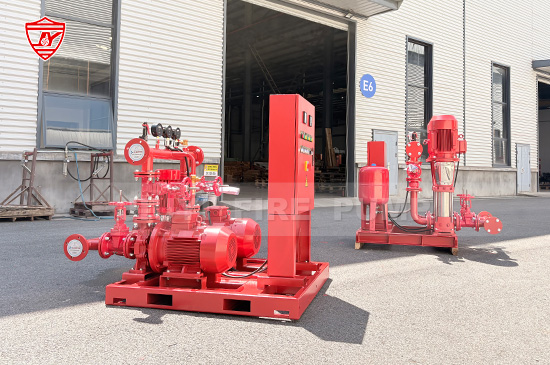
Proper ventilation is a fundamental part of a containerized fire pump system, especially when a diesel engine is installed inside the enclosure.
Ventilation provides combustion air, removes heat, supports exhaust gas management, protects equipment, and helps maintain reliable operating conditions. The ventilation system must be designed together with the diesel engine, exhaust system, container layout, electrical equipment, and environmental conditions.
A containerized fire pump should therefore never be considered simply as a fire pump placed inside a container. It is a complete engineered fire protection package that requires careful attention to airflow, heat management, exhaust, accessibility, testing, and operational reliability.
For fire protection contractors, engineers, consultants, and project owners, understanding ventilation requirements at the design stage can help avoid overheating, poor airflow, equipment problems, and unnecessary modifications during installation.
For manufacturers, the objective is to deliver a containerized fire pump system in which every major component works together as one reliable package. Proper ventilation is an essential part of achieving that goal.
(1).jpg)