A fire pump is a critical component of many fire protection systems, providing the pressure and water flow needed for sprinklers, hydrants, standpipes, and other firefighting equipment. Understanding what a fire pump is, how it works, and how its major components work together is essential for fire safety engineers, contractors, system designers, and building owners.
In this article, we explain the working principle of a fire pump, the main types of fire pumps, the components of a typical fire pump system, and the key factors to consider when selecting a pump for a fire protection application.
.jpg)
A fire pump is a specially designed pump used to supply water at the required pressure and flow rate for a fire protection system.
Unlike ordinary water supply pumps, fire pumps are designed for emergency applications where reliable water delivery is essential. When a fire occurs, the water demand in a sprinkler, hydrant, standpipe, or other fire protection system can exceed the pressure or flow available from the normal water supply.
The fire pump increases the available water pressure and delivers the required flow to the fire protection system.
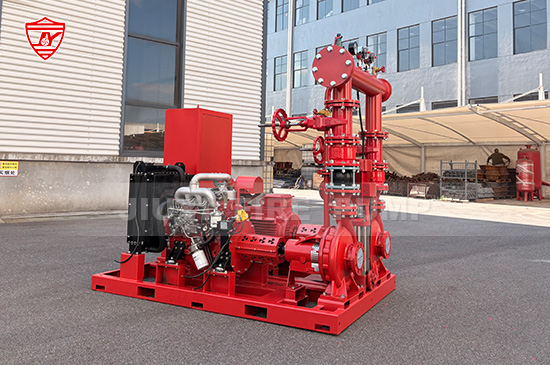
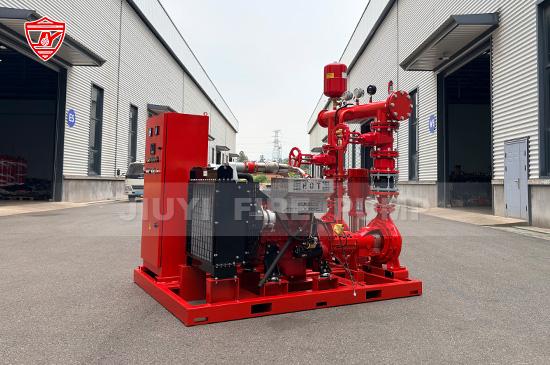
A complete fire pump installation may include a pump, driver, controller, suction and discharge piping, valves, pressure-sensing equipment, and other supporting components. Depending on the application, a fire pump system may use an electric motor or diesel engine as the driver.
The purpose is straightforward: when the fire protection system requires more water pressure and flow, the fire pump provides the additional hydraulic performance needed to help the system operate as designed.
The basic working principle of a fire pump is relatively simple.
Under normal conditions, a fire protection system remains pressurized. When a sprinkler operates or another firefighting outlet is opened, water begins to flow. As water flows, the system pressure decreases.
The fire pump controller monitors the system conditions. When the pressure falls to the designated starting point, the controller starts the fire pump driver.
For an electric fire pump, the electric motor drives the pump shaft. For a diesel fire pump, the diesel engine provides the mechanical power required to rotate the pump.
As the pump rotates, the impeller transfers energy to the water. The pump increases the water pressure and produces the required flow through the discharge piping. The water is then delivered to the fire protection system.
The exact hydraulic performance depends on the pump design, impeller diameter, speed, system resistance, suction conditions, and operating point.
A simplified operating sequence is:
The fire protection system is pressurized.
A sprinkler, hydrant, or other outlet opens.
Water begins to flow.
System pressure decreases.
The fire pump controller detects the pressure drop.
The pump driver starts.
The pump increases water pressure and maintains the required flow.
Water is delivered to the fire protection system.
This automatic response allows the fire pump to provide additional water supply when the fire protection system needs it.
Not every water supply can provide sufficient pressure and flow for a fire protection system.
A building may have a municipal water supply, water storage tank, elevated tank, or other water source. However, the available pressure may not be enough to meet the hydraulic requirements of the system, particularly in large or tall buildings.
For example, water must overcome several types of resistance before reaching the point of discharge. These can include elevation differences, pipe friction, fittings, valves, sprinkler requirements, and other system losses.
A fire pump provides the additional pressure and flow needed to overcome these requirements.
Fire pumps are commonly used in:
Commercial buildings
Industrial facilities
Warehouses
Manufacturing plants
High-rise buildings
Hospitals
Data centers
Airports
Shopping centers
Hotels
Petrochemical facilities
Large residential developments
The actual requirement for a fire pump depends on the design of the fire protection system and the available water supply.
Different fire protection applications require different pump configurations. Selecting the appropriate fire pump depends on flow, pressure, water source, building configuration, space limitations, and project requirements.
An electric fire pump uses an electric motor as its driver.
Electric fire pumps are widely used where a reliable electrical power supply is available. They can provide consistent pump performance and are commonly integrated with automatic fire pump controllers.
The motor and pump must be properly matched to the required operating conditions. Electrical characteristics such as voltage, frequency, phase, and motor power must also be considered during system design.
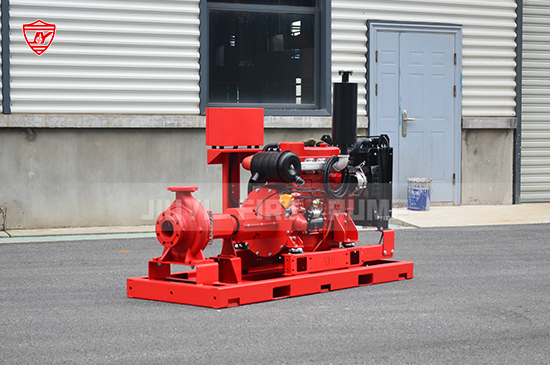
A diesel fire pump uses a diesel engine to drive the pump.
Diesel-driven fire pumps are particularly useful where electrical power may not be sufficiently reliable or where the fire protection design requires an independent power source.
A diesel fire pump system normally includes the diesel engine, batteries, fuel system, engine controller, cooling system, exhaust system, and associated monitoring equipment.
Because diesel engines operate differently from electric motors, installation and maintenance requirements must account for fuel storage, ventilation, exhaust, starting batteries, cooling, and engine operating conditions.
A jockey pump is a small pump used to maintain pressure in a fire protection system during normal conditions.
It is not intended to provide the main firefighting flow.
Small pressure losses can occur naturally in a fire protection system. If the main fire pump started every time the pressure dropped slightly, unnecessary starting and stopping could occur.
The jockey pump compensates for these minor pressure losses and helps maintain the system's normal pressure.
When a significant pressure drop occurs because of actual water flow, the main fire pump starts.
Vertical turbine fire pumps are commonly used when the water source is located below the pump discharge level or when a vertical pump arrangement is required.
They are often used with water storage tanks, reservoirs, wells, and other water sources where special suction arrangements are necessary.
Vertical turbine pumps can be designed for high flow and pressure requirements and are frequently selected for large industrial and infrastructure projects.
Horizontal split case fire pumps are widely used in larger fire protection systems.
Their casing design allows access to internal components for inspection and maintenance without necessarily removing the pump from the piping system.
Split case pumps can provide high flow rates and are commonly used in industrial facilities, warehouses, commercial buildings, and other large installations.
End suction fire pumps have a compact configuration in which water enters the pump through the suction end and exits through the discharge connection.
Their relatively compact footprint makes them suitable for many commercial and industrial applications where space is an important consideration.
The appropriate pump configuration should always be selected according to the hydraulic requirements and applicable project standards.
A fire pump is only one part of a complete fire protection water supply system.
The pump converts mechanical energy from the driver into hydraulic energy, increasing water pressure and delivering the required flow.
The driver supplies the mechanical power needed to operate the pump.
The two common driver types are electric motors and diesel engines.
The fire pump controller controls the starting and monitoring functions of the fire pump driver.
Depending on the configuration, it can monitor pressure, starting conditions, power supply, engine status, alarms, and other operating parameters.
The jockey pump maintains normal system pressure and helps prevent unnecessary starting of the main fire pump caused by small pressure losses.
Suction piping delivers water from the water source to the fire pump.
Proper suction piping design is important because inadequate suction conditions can negatively affect pump performance and reliability.
Discharge piping carries pressurized water from the fire pump into the fire protection system.
Its size, configuration, fittings, valves, and hydraulic resistance all influence system performance.
Fire pump systems include various valves and accessories used for isolation, testing, monitoring, and safe operation.
The exact arrangement depends on the pump configuration and the requirements of the fire protection system.
A fire pump normally starts automatically when the pressure in the fire protection system falls below a predetermined level.
For example, when a sprinkler activates, water begins flowing through the system. The resulting pressure drop is detected by the pressure-sensing system connected to the controller.
The controller then initiates the starting sequence.
An electric fire pump starts its motor, while a diesel fire pump starts its engine using the starting system.
Once operating, the pump supplies water to the system. Depending on the design, the pump may continue running until it is manually stopped according to the applicable system requirements and operating procedures.
The exact starting and stopping sequence should be established according to the applicable fire protection standards and the specific project design.
Two of the most important characteristics of a fire pump are flow and pressure.
Flow is generally expressed in units such as gallons per minute or cubic meters per hour. It describes how much water the pump can deliver over a specific period.
Pressure describes the energy available to move water through the fire protection system and is commonly expressed in psi, bar, or meters of head.
A fire pump is not selected based only on its maximum flow or maximum pressure. Engineers must consider the complete pump performance curve and the hydraulic requirements of the system.
The required operating point should be determined through hydraulic calculations and system design.
Important performance points may include rated flow, rated pressure, churn or shutoff pressure, and other specified operating conditions.
Understanding the relationship between flow and pressure is essential when selecting and evaluating a fire pump.
Choosing a fire pump requires more than selecting a pump with a large motor or a high pressure rating.
The selection process should consider:
Determine the water flow required by the fire protection system based on the system design and hydraulic calculations.
Calculate the pressure required at the pump discharge to overcome elevation, friction losses, equipment losses, and the pressure requirements of the system's discharge devices.
Identify whether the water source is a municipal supply, storage tank, reservoir, or another source.
The available suction conditions can influence the appropriate pump type and configuration.
Consider whether an end suction, horizontal split case, vertical turbine, or another configuration is appropriate for the project.
Determine whether an electric motor or diesel engine is suitable based on the available power supply, project requirements, and system design.
Fire pump equipment must be designed, manufactured, installed, tested, and maintained according to the applicable codes, standards, certification requirements, and local regulations for the project.
These requirements can vary depending on the country, authority having jurisdiction, building type, and application.
A fire pump may remain inactive for long periods, but it must be ready to operate when an emergency occurs.
Testing helps verify that the pump, driver, controller, and related equipment are operating as intended.
Performance testing can also help identify problems such as inadequate water supply, mechanical issues, abnormal vibration, incorrect operating conditions, or other performance concerns.
For manufacturers, factory testing is an important part of quality control. Pump performance can be verified against specified flow and pressure requirements before equipment is shipped to a project.
For fire protection professionals, understanding the difference between design performance, factory test performance, and field performance is important when evaluating a complete fire pump system.
The reliability of a fire pump begins with its design and manufacturing process.
A professional fire pump manufacturer must control multiple stages of production, including hydraulic design, casting or fabrication, machining, assembly, motor or engine matching, electrical control, coating, inspection, and performance testing.
Hydraulic performance is particularly important because the pump must deliver predictable flow and pressure across its operating range.
Manufacturing quality also depends on dimensional accuracy, material selection, shaft alignment, bearing performance, sealing, assembly procedures, and quality inspection.
Testing equipment is equally important. A manufacturer with appropriate pump test facilities can evaluate hydraulic performance under controlled conditions and verify that the finished equipment meets the specified requirements.
For projects requiring certified fire pump equipment, certification and testing requirements should be considered from the beginning of the equipment selection process.
.jpg)
A fire pump is a key component of many fire protection systems. Its primary function is to provide the water flow and pressure required when the available water supply cannot meet the demands of the fire protection system.
The basic operating principle is straightforward: a pressure drop caused by water flow triggers the fire pump system, the driver operates the pump, and the pump increases water pressure to deliver water through the fire protection network.
However, designing and selecting a reliable fire pump involves much more than understanding this basic principle. Pump type, flow, pressure, water source, driver, controller, system configuration, testing, certification, and applicable standards all need to be considered.
For fire safety engineers, contractors, system integrators, and building owners, understanding how fire pumps work provides a strong foundation for making appropriate equipment and system design decisions.
As a fire pump manufacturer, BETTER Technology Group focuses on the development and manufacturing of fire pump equipment for different fire protection applications, including electric fire pumps, diesel fire pumps, jockey pumps, horizontal split case pumps, end suction pumps, and vertical turbine fire pumps. By combining hydraulic engineering, manufacturing capabilities, quality control, and performance testing, a fire pump manufacturer can help provide dependable equipment for demanding fire protection applications.