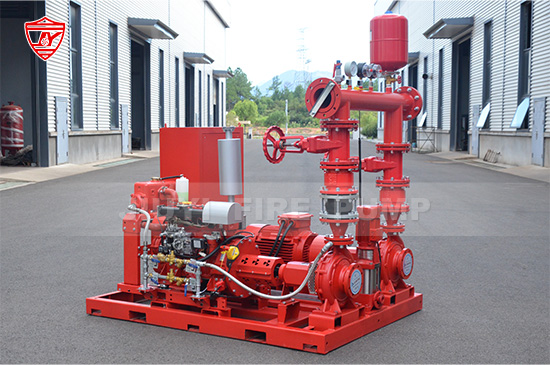
Containerized fire pumps provide a practical solution for projects that require reliable fire protection within a limited installation schedule. By integrating the fire pump, driver, controller, piping, valves, fuel system, ventilation, and other essential components into a protected container, these systems can significantly reduce on-site installation work. This makes them particularly suitable for industrial facilities, warehouses, infrastructure projects, remote sites, temporary facilities, and projects where conventional fire pump rooms are difficult or time-consuming to construct.
For fire protection engineers, EPC contractors, installers, and project owners, installation time is often an important consideration alongside pump performance, reliability, compliance, and lifecycle cost. A containerized fire pump system can move much of the work from the construction site to a controlled manufacturing environment, allowing more components to be assembled, tested, and prepared before delivery.
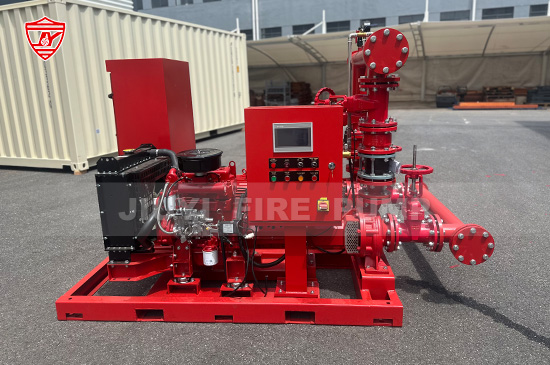
A containerized fire pump system is a packaged fire protection system installed inside a specially designed container or enclosure. Depending on the project requirements, the system may include an electric fire pump, diesel fire pump, jockey pump, controllers, suction and discharge piping, valves, fuel tank, ventilation equipment, exhaust system, lighting, monitoring devices, and other accessories.
Instead of constructing a dedicated pump room and installing each component individually at the project site, the major equipment can be integrated into the container before shipment.
The exact configuration depends on the required flow, pressure, power supply, fire protection standard, environmental conditions, and project application. Systems can also be engineered according to specific site requirements, making containerized solutions suitable for a wide range of fire protection applications.
Fire protection systems are often installed during the later stages of a construction project, when multiple contractors are working simultaneously. Delays in one part of the project can affect commissioning, inspections, occupancy schedules, and overall project completion.
A conventional fire pump room may require civil construction, equipment foundations, piping installation, electrical work, ventilation, fuel system installation, painting, insulation, and other site activities. Each activity requires coordination between different teams.
Containerized fire pump systems change this installation model.
Much of the equipment assembly can be completed before the system reaches the site. Once the container arrives, the installation team can focus primarily on positioning the unit, connecting the required external services, and completing site-specific commissioning work.
This approach can help reduce the number of individual installation activities required on site.
One of the biggest advantages of a containerized fire pump is pre-assembly.
In a conventional installation, the fire pump, motor or diesel engine, controller, valves, piping, fuel tank, ventilation system, and other components may arrive separately. Contractors then need to position and connect each component according to the approved design.
With a containerized system, these components can be integrated into one engineered package.
The manufacturer can install internal piping, valves, pump equipment, controllers, fuel systems, ventilation equipment, and other components in advance. This reduces the amount of mechanical assembly required at the project site.
For contractors working under tight schedules, reducing the number of individual installation activities can make project execution more predictable.
A major reason containerized fire pump systems can be installed quickly is that manufacturing and site construction can happen in parallel.
While the project site is still undergoing civil or structural work, the fire pump package can be manufactured, assembled, inspected, and tested at the factory.
This creates a different project workflow.
Instead of waiting until the pump room is completely finished before installing the fire pump system, the packaged system can be prepared simultaneously with other construction activities.
Once the site is ready for the equipment, the completed containerized system can be transported to the project location.
This parallel approach can be especially valuable for large industrial projects where construction schedules are tightly coordinated.
Traditional fire pump installations commonly require a dedicated pump room with sufficient space for pumps, drivers, controllers, piping, ventilation, fuel storage, access, maintenance, and safety requirements.
Constructing such a room can take considerable time.
A containerized fire pump can reduce the need for extensive dedicated building construction because the equipment is housed within a purpose-designed enclosure.
The container itself provides the physical space needed to accommodate the fire pump system and its associated equipment.
Depending on the project design and applicable fire protection requirements, the container can be positioned in a designated outdoor area and connected to the site's fire water infrastructure.
This can simplify project planning, particularly where building space is limited.
A containerized fire pump is designed as a transportable package.
Instead of coordinating the transportation of numerous individual components, contractors can receive a substantially integrated system. The container can be transported to the project site and positioned using suitable lifting and handling equipment.
This can reduce the amount of material handling and internal transportation required after delivery.
For remote projects, this advantage can be particularly important. Moving individual pumps, piping components, fuel tanks, controllers, and accessories to an isolated location can require significant logistical coordination.
A packaged system consolidates many of these components into one transportable unit.
Although a containerized fire pump still requires site connections, the amount of work can be reduced because major internal connections have already been completed.
Typical site work may include connecting the suction and discharge fire water piping, electrical power, control signals, fuel-related services where applicable, drainage, and other external connections.
The exact connection requirements depend on the system configuration and project design.
Because the internal system is already assembled, installation teams can work from a clearly defined interface between the containerized package and the external infrastructure.
This can make coordination easier and reduce the time required for field assembly.
Another important advantage is the opportunity for extensive factory inspection and testing before shipment.
A professional fire pump manufacturer can assemble the system under controlled factory conditions and verify important components before delivery.
Pump performance, driver operation, controller functions, piping arrangements, alarms, monitoring systems, ventilation, and other relevant functions can be checked according to the project requirements and applicable standards.
Factory testing does not eliminate the need for site commissioning. The completed system must still be checked after installation because site conditions and external connections can affect performance.
However, identifying and resolving assembly issues before shipment can help reduce the amount of troubleshooting required during final commissioning.
Containerized fire pump systems can be particularly useful when a traditional pump room is impractical.
Examples include remote industrial facilities, construction sites, mining operations, oil and gas facilities, warehouses, infrastructure projects, agricultural facilities, power-related installations, and other locations where permanent building construction may be difficult.
For these applications, constructing a dedicated pump building may add significant time and cost to the project.
A containerized solution can provide a dedicated environment for the fire pump equipment without requiring the same level of conventional building construction.
However, the container location and design still need to satisfy applicable fire protection, electrical, ventilation, access, environmental, and safety requirements.
A properly engineered containerized fire pump enclosure can provide a controlled environment for sensitive equipment.
The enclosure can be designed with ventilation, lighting, access doors, insulation, heating or cooling provisions, exhaust systems, and other features according to the project's environmental conditions.
This can be especially important in areas exposed to rain, dust, extreme temperatures, humidity, or other environmental factors.
For diesel-driven systems, ventilation and exhaust design are particularly important because the engine generates heat and exhaust gases during operation.
The container must therefore be engineered as part of the overall fire pump system rather than treated simply as a storage box.
Fire protection projects involve many parties, including owners, consultants, EPC contractors, mechanical contractors, electrical contractors, commissioning teams, and inspectors.
A containerized fire pump system provides a defined equipment package with established interfaces.
This can simplify coordination because many components are supplied as part of one integrated system.
The manufacturer can provide equipment drawings, connection information, technical documentation, and other project-specific information before delivery. Contractors can then prepare the site according to the package requirements.
Clear coordination at the design stage is essential. The container dimensions, access requirements, lifting method, pipe connections, electrical requirements, drainage, ventilation, exhaust discharge, and maintenance clearances should all be considered before installation.
Containerized fire pumps are particularly attractive for fast-track construction projects.
When project completion dates are fixed, reducing installation activities can have significant value. Instead of performing extensive equipment assembly after the building is completed, the fire pump package can be prepared at the factory while other construction activities continue.
Once the site is ready, the system can be transported, positioned, connected, inspected, and commissioned.
This approach can help project teams shorten the installation phase and improve schedule coordination.
The actual installation duration will depend on the project scope, container size, pump configuration, site accessibility, foundation or support requirements, piping connections, electrical work, testing requirements, and local regulations. Therefore, containerization should be viewed as a method for reducing installation complexity rather than a guarantee of a specific installation time.
Fast installation starts with good engineering.
Before manufacturing, the project team should confirm the required fire pump flow and pressure, pump type, driver type, power supply, controller configuration, suction and discharge connections, fuel capacity, ventilation requirements, exhaust arrangement, environmental conditions, container dimensions, transportation limitations, lifting requirements, maintenance access, and applicable fire protection standards.
The installation location should also be evaluated carefully.
There should be sufficient space for transportation, lifting, installation, operation, maintenance, inspection, and future equipment replacement. External piping should be designed to minimize unnecessary bends and pressure losses while maintaining the required hydraulic performance.
For diesel fire pump systems, fuel storage, exhaust discharge, ventilation, engine cooling, and environmental protection require particular attention.
For electric fire pump systems, incoming power, electrical protection, cable routing, controller location, and emergency power requirements must be coordinated with the overall project design.
Not necessarily.
A conventional fire pump room may remain the preferred solution when a suitable permanent building is already available or when the project requires a particular architectural, structural, or operational arrangement.
Containerized systems also require careful engineering to ensure that the enclosure, internal equipment arrangement, ventilation, access, drainage, temperature control, and other features are appropriate for the application.
The decision should therefore be based on the project schedule, available space, environmental conditions, installation requirements, transportation constraints, applicable standards, and lifecycle considerations.
The manufacturer's role is important in achieving the full installation benefits of a containerized fire pump system.
A capable manufacturer should be able to support the project from initial configuration and hydraulic selection through system integration, manufacturing, factory testing, documentation, transportation preparation, and commissioning support.
The earlier the manufacturer becomes involved, the easier it is to optimize the container layout and external connection points.
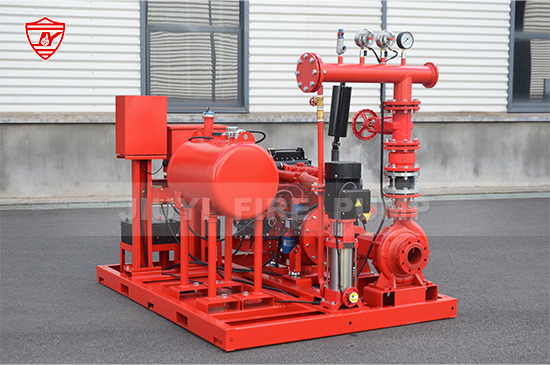
For example, designing the pump, driver, controller, piping, valves, fuel tank, ventilation, exhaust, and maintenance areas as one integrated system can prevent conflicts that might otherwise be discovered during site installation.
Factory quality control is equally important. The more work that can be completed and verified before shipment, the less field assembly may be required.
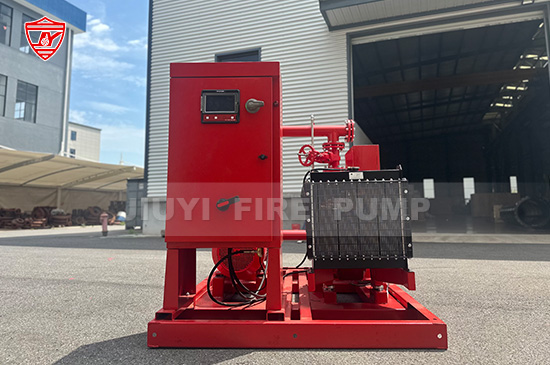
Containerized fire pumps are designed around a simple project advantage: move as much work as possible from the construction site to a controlled manufacturing environment.
Pre-assembled components, integrated piping, factory testing, simplified transportation, reduced civil construction requirements, and faster site connections can make containerized fire pump systems an effective option for projects where installation speed is important.
For remote locations, industrial facilities, infrastructure projects, warehouses, and fast-track construction, the ability to receive a largely integrated fire protection package can simplify project execution and reduce installation complexity.
However, fast installation should never come at the expense of fire protection performance or compliance. Proper hydraulic design, equipment selection, container engineering, factory testing, site preparation, installation, and commissioning remain essential.
As a fire pump manufacturer, the goal should be more than simply supplying a pump inside a container. A properly engineered containerized fire pump system should provide an integrated, tested, and project-specific fire protection solution that helps contractors install equipment efficiently while supporting reliable long-term operation.
For projects where schedule, site limitations, and installation efficiency are critical, containerized fire pump technology provides a practical way to bring factory integration directly to the job site.
.jpg)