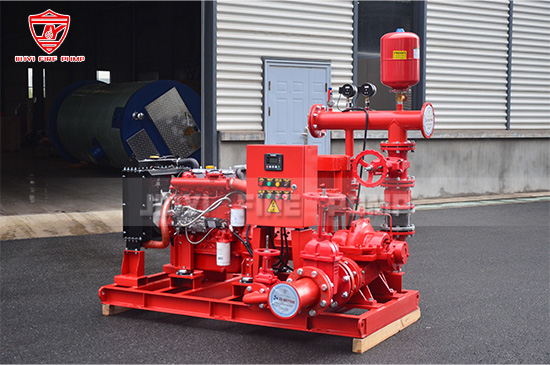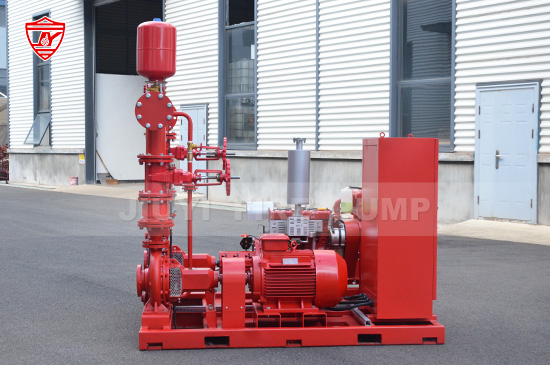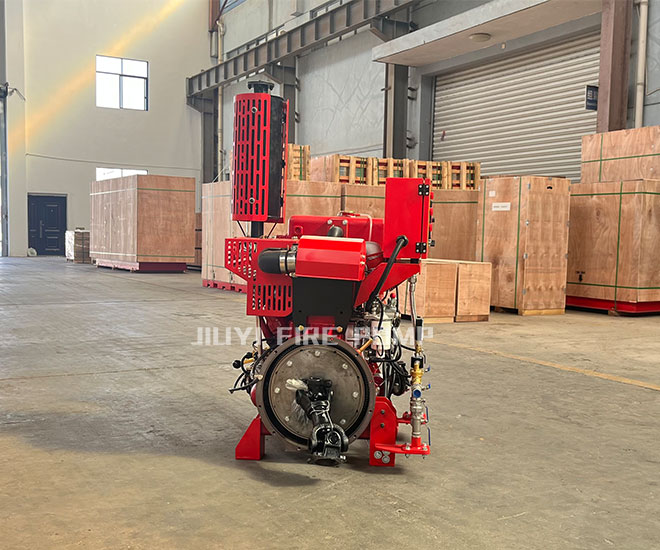
Fire protection requirements are becoming increasingly complex. Construction projects are expanding into remote locations, industrial facilities are becoming larger, and many sites need reliable fire protection systems without the time and cost associated with constructing dedicated pump houses. These changing requirements are driving greater interest in containerized fire pumps.
A containerized fire pump system integrates the major components of a fire pumping system into a specially designed container or enclosure. Depending on the project, the system can include a diesel engine fire pump, electric fire pump, jockey pump, controller, fuel tank, ventilation system, exhaust system, piping, valves, monitoring equipment, and other necessary components.
For contractors, system integrators, engineers, and facility owners, this approach can simplify installation while providing a practical solution for projects where a conventional pump room is difficult or expensive to build.
So, why are containerized fire pumps becoming more popular? Several important factors are contributing to this trend.
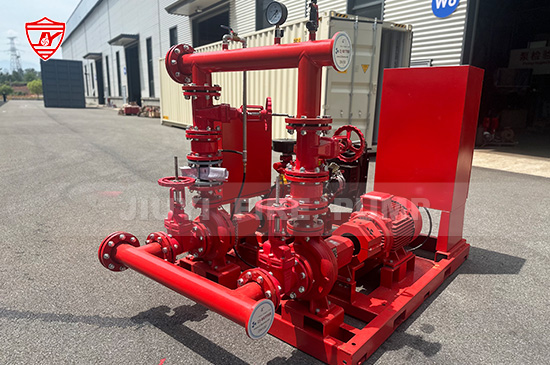
One of the biggest advantages of a containerized fire pump is reduced installation work at the project site.
With a conventional fire pump system, many components must be transported individually and installed inside a dedicated pump room. This can involve civil construction, equipment positioning, pipe installation, electrical work, ventilation, fuel system installation, and commissioning.
A containerized fire pump can be assembled and tested at the manufacturing facility before shipment. Major components are installed within the container according to the project requirements. Once the unit reaches the site, installation can focus primarily on positioning, connecting the fire water supply, discharge piping, power or fuel connections, and other required interfaces.
This can significantly simplify project execution.
For projects operating under tight construction schedules, reducing site installation time can be particularly valuable.
Building a dedicated pump house requires additional space, structural work, construction materials, labor, and time.
Not every project has the space or conditions required for a conventional pump room. Remote industrial facilities, temporary construction sites, warehouses, mining operations, agricultural facilities, infrastructure projects, and emergency response applications may have limited building space.
A containerized fire pump provides an alternative.
The container itself becomes the protected equipment enclosure. It can be positioned outdoors in an appropriate location while providing an organized environment for the fire pump equipment.
This does not mean that every project can simply place a container anywhere. Site conditions, local regulations, environmental requirements, fire protection standards, accessibility, drainage, ventilation, temperature, and equipment clearances must all be considered during system design.
However, when properly engineered, containerized systems can reduce the need for conventional building construction.
Many modern fire protection projects are located far from major cities or established infrastructure.
Examples include mining sites, oil and gas facilities, power plants, logistics terminals, agricultural projects, construction sites, water infrastructure, and industrial facilities.
Transporting and constructing a complete pump house at these locations can be challenging.
A containerized fire pump can be manufactured, assembled, tested, and prepared for transportation before arriving at the project site. This factory-based approach can reduce the amount of specialized installation work required in remote areas.
For international projects, containerization can also simplify transportation and handling because the system is designed around a standard shipping container format or a purpose-built enclosure.
This makes containerized fire pumps particularly attractive when accessibility is a major project consideration.
Another important reason for the growing popularity of containerized fire pump systems is the ability to complete more of the manufacturing process under controlled factory conditions.
A fire pump system is not simply a pump. It is a complete combination of mechanical, electrical, control, fuel, ventilation, piping, and safety components.
When these components are assembled at the project site, quality can depend heavily on site conditions, installation teams, weather, available equipment, and local workmanship.
With a containerized system, more work can be completed and inspected at the factory.
The manufacturer can verify equipment installation, piping arrangements, controller connections, engine systems, ventilation, fuel systems, and other components before shipment.
Where applicable, the complete system can also undergo factory testing according to the project specification and applicable fire protection requirements.
This gives project stakeholders greater visibility into the system before it reaches the final installation location.
Fire pump equipment may need to operate in challenging environmental conditions.
Dust, rain, wind, extreme temperatures, humidity, and other environmental factors can affect equipment if the installation is not properly designed.
A containerized fire pump provides an enclosed environment that can be engineered with appropriate ventilation, insulation, heating, cooling, lighting, drainage, and other features according to the project requirements.
For diesel fire pump systems, ventilation and exhaust design are especially important because the engine generates heat and exhaust gases during operation.
Fuel storage and fuel system components can also be integrated into the overall containerized design.
The enclosure therefore provides more than simple weather protection. It can be designed as an integrated operating environment for the complete fire pump system.
One reason containerized fire pumps are becoming more widely adopted is their flexibility.
Different projects require different fire pump configurations.
For example, a system may use an electric fire pump and jockey pump. Another project may require a diesel fire pump with a jockey pump. Larger or more critical installations may require combinations of electric and diesel-driven fire pumps to provide the required level of redundancy.
Containerized systems can be designed around these different configurations.
Depending on the project, the container may include:
Electric fire pumps
Diesel engine fire pumps
Jockey pumps
Fire pump controllers
Diesel engine controllers
Fuel tanks
Batteries and battery chargers
Ventilation systems
Exhaust systems
Fire pump test piping
Valves and fittings
Monitoring and alarm equipment
Lighting and electrical systems
Insulation and environmental control equipment
The exact configuration should be determined by the hydraulic requirements, applicable standards, site conditions, and project specifications.
Mobility is another major advantage.
Some facilities are temporary, while others may expand or change their layouts over time. Construction projects and temporary industrial operations may require fire protection for only a specific period.
A permanent pump house is not always practical for these applications.
A containerized fire pump can be transported to the required location and, when the project changes, potentially relocated or redeployed.
This makes containerized systems useful for temporary facilities, construction projects, emergency response applications, rental equipment, and other situations where flexibility is important.
The ability to move the system does not eliminate the need for proper engineering at the new location. Hydraulic calculations, water supply, electrical or fuel requirements, environmental conditions, and applicable fire protection regulations must still be evaluated.
A conventional fire pump installation involves coordination between multiple parties.
Civil contractors may construct the pump room. Mechanical contractors install the pump and piping. Electrical contractors handle power and controls. Ventilation contractors install ventilation and exhaust systems. Other contractors may be responsible for fuel systems, fire alarms, and monitoring.
A containerized fire pump can consolidate many of these requirements into one engineered package.
This can make project coordination easier.
Instead of managing numerous equipment interfaces separately, contractors can work with a more integrated system supplied by one manufacturer or system integrator.
For international projects, this can also simplify communication between the equipment manufacturer, engineering company, EPC contractor, and installation team.
Land and construction space can be expensive, particularly at industrial sites.
A traditional pump room requires a dedicated building footprint. A containerized system can provide a compact equipment arrangement while utilizing the internal space efficiently.
The layout must still provide sufficient access for operation, maintenance, inspection, ventilation, and equipment replacement.
The advantage is that the fire pump system can be designed as a complete package rather than creating a large building specifically around individual components.
This can be particularly useful when adding fire protection equipment to an existing facility.
The broader fire protection industry is increasingly focused on integrated and engineered solutions.
Project owners often want equipment that can be manufactured, tested, transported, installed, and commissioned with fewer site uncertainties.
A containerized fire pump fits this requirement.
Instead of purchasing separate equipment and coordinating every stage of field assembly, customers can specify a complete fire pumping package designed around their project requirements.
For manufacturers, this also creates an opportunity to provide more engineering support and customization.
The container can be configured according to pump capacity, pressure, engine type, electrical requirements, environmental conditions, fuel storage requirements, and local project standards.
Containerized fire pump systems can serve a wide range of industries.
They may be considered for:
Oil and gas facilities
Mining projects
Power plants
Warehouses and logistics centers
Manufacturing facilities
Construction sites
Data centers
Agricultural and irrigation projects
Ports and terminals
Water treatment facilities
Infrastructure projects
Remote industrial facilities
Temporary facilities
Each application has different requirements, so the system should be engineered based on the actual hazard, required flow and pressure, water source, environmental conditions, and applicable fire protection standards.
Popularity alone should not determine equipment selection. The most important consideration is whether the system meets the technical requirements of the project.
Before selecting a containerized fire pump, project teams should evaluate several factors.
First, determine the required fire pump flow rate and pressure based on the hydraulic design. The pump should be selected according to the actual fire protection demand rather than simply choosing a standard pump size.
Second, consider the required pump configuration. Depending on the project, this may include an electric fire pump, diesel fire pump, jockey pump, or a combination of these systems.
Third, evaluate environmental conditions. Temperature range, humidity, dust, rain, snow, altitude, ventilation requirements, and corrosive environments can all influence container design.
Fourth, consider applicable standards and certification requirements. Projects may require specific fire pump standards, listed equipment, approved components, or local regulatory compliance.
Finally, consider maintenance and access. Fire pump systems must remain accessible for inspection, testing, maintenance, and emergency operation throughout their service life.
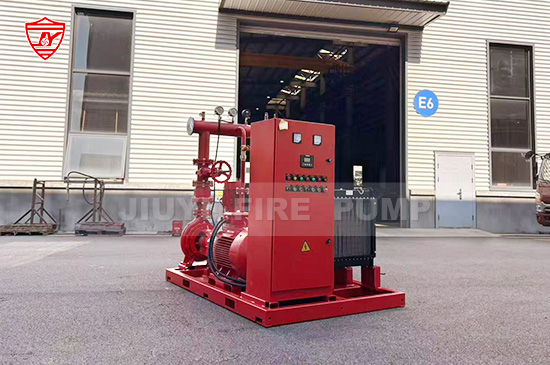
The increasing popularity of containerized fire pumps reflects a broader demand for faster, more flexible, and more integrated fire protection solutions.
They can help reduce on-site construction work, simplify project coordination, support remote installations, and provide a controlled environment for fire pump equipment.
However, a containerized fire pump should not be viewed simply as a pump placed inside a container. A properly engineered system requires careful integration of the fire pump, driver, controller, piping, fuel system, ventilation, exhaust, electrical equipment, monitoring equipment, and enclosure.
For customers, the value comes from the complete engineered package.
As fire protection projects become more complex and more facilities are built in remote or space-constrained locations, containerized fire pump systems are likely to remain an important solution for modern fire protection applications.
For fire pump manufacturers, the ability to provide customized containerized systems, factory assembly, testing, and project-specific engineering support can help customers achieve a more streamlined path from equipment selection to final commissioning.