In fire protection system design, one of the most critical decisions is matching fire pump capacity with hazard classification. An undersized pump can lead to system failure during a fire emergency, while an oversized pump may cause unnecessary cost, pressure control issues, and long-term operational inefficiencies.
For contractors, consultants, and facility owners, understanding how hazard classification affects fire pump flow and pressure requirements is essential. This article explains how to properly match fire pump capacity with hazard classification using practical design principles aligned with NFPA standards.
Hazard classification defines the level of fire risk within a building. According to National Fire Protection Association standards such as NFPA 13, occupancies are divided into categories based on fuel load, combustibility, and fire growth potential.
The three primary classifications are:
Typical examples:
Offices
Schools
Hospitals
Hotels
These environments have low fuel loads and relatively slow fire development. Sprinkler design densities are lower, resulting in reduced flow demand.
Divided into:
Ordinary Hazard Group 1 (OH1)
Ordinary Hazard Group 2 (OH2)
Typical examples:
Commercial kitchens
Parking garages
Light manufacturing facilities
These occupancies have moderate fuel loads and faster fire development than light hazard spaces.
Divided into:
Extra Hazard Group 1 (EH1)
Extra Hazard Group 2 (EH2)
Typical examples:
Chemical plants
Aircraft hangars
Flammable liquid storage
Heavy manufacturing
These environments involve high fuel loads, rapid fire spread, and significant heat release rates, requiring much higher water density and pressure.
Hazard classification directly determines sprinkler density and design area, which together define the total required fire flow.
Fire pump capacity must be based on the system demand curve, not guesswork.
Sprinkler demand is calculated as:
Design Density (gpm/ft²) × Design Area (ft²) = Required Flow (gpm)
For example:
Light Hazard:
Density: 0.10 gpm/ft²
Design Area: 1,500 ft²
Flow: 150 gpm
Ordinary Hazard Group 2:
Density: 0.20 gpm/ft²
Design Area: 1,500 ft²
Flow: 300 gpm
Extra Hazard Group 2:
Density: 0.40 gpm/ft²
Design Area: 2,500 ft²
Flow: 1,000 gpm
This shows how hazard classification dramatically increases required flow.
In addition to sprinkler demand, hose stream allowance must be added. Depending on occupancy, this may range from 100 to 500 gpm or more.
Total System Demand = Sprinkler Demand + Hose Allowance
This total becomes the minimum required fire pump flow capacity.
Flow alone is not enough. Fire pump capacity must also satisfy pressure requirements at the most hydraulically remote point.
Pressure losses include:
Elevation loss (0.433 psi per foot of height)
Friction loss in pipes
Loss across valves and fittings
Backflow preventer loss
Minimum sprinkler operating pressure
For high-rise buildings, elevation is often the dominant factor. For industrial facilities, friction loss in long underground mains may control design pressure.
The pump rated pressure must overcome:
Total Required Pressure = Remote Sprinkler Pressure + Elevation Loss + Friction Loss + Safety Margin
This ensures the system performs under worst-case fire conditions.
According to NFPA 20, fire pumps are rated at:
100% rated flow at 100% rated pressure
150% rated flow at not less than 65% of rated pressure
This performance curve is critical when matching pump capacity to hazard classification.
For example:
If total system demand is:
750 gpm at 110 psi
You would typically select:
750 gpm @ 110 psi pump
or
1,000 gpm @ 110 psi pump (if future expansion or safety margin required)
Choosing a pump too close to maximum demand leaves no flexibility. However, excessive oversizing can create pressure regulation challenges.
Different hazard classifications may influence pump configuration.
Often require:
Smaller capacity pumps (500–750 gpm)
Electric motor driven pumps
Compact fire pump package systems
These systems prioritize efficiency and stable pressure control.
Typically require:
750–1,500 gpm pumps
Either electric or diesel engine driven pumps
Reliable jockey pump integration for pressure maintenance
Frequently require:
1,500–5,000 gpm pumps
Diesel engine driven fire pumps for reliability
Redundant pump systems
Vertical turbine fire pumps if supplied from open water source
Hazard classification often correlates with system complexity and redundancy requirements.
Matching fire pump capacity to hazard classification must also consider water supply:
Municipal supply pressure
Available flow test results
Static and residual pressure
Water storage tank capacity
Suction conditions
For example:
If a city main already provides:
500 gpm at 70 psi
A light hazard occupancy may not need a fire pump at all.
However, an extra hazard facility requiring:
2,000 gpm at 150 psi
Will require a high-capacity diesel fire pump, possibly with a vertical turbine configuration.
Fire pump capacity must always be based on hydraulic calculation, not building size alone.
Industrial facilities often increase hazard levels over time. Designing only for current occupancy may require costly replacement later.
An oversized pump may:
Cause overpressure at low flow
Increase maintenance requirements
Require pressure relief valves
Increase project cost
Final approval depends on local code enforcement. Early coordination avoids redesign.
Case Study 1: Office Building (Light Hazard)
Sprinkler demand: 180 gpm
Hose allowance: 100 gpm
Total flow: 280 gpm
Required pressure: 85 psi
Recommended pump:
500 gpm @ 90 psi electric fire pump
Case Study 2: Warehouse (Ordinary Hazard Group 2)
Sprinkler demand: 400 gpm
Hose allowance: 250 gpm
Total flow: 650 gpm
Required pressure: 115 psi
Recommended pump:
750 gpm @ 120 psi
Case Study 3: Chemical Plant (Extra Hazard Group 2)
Sprinkler demand: 1,200 gpm
Hose allowance: 500 gpm
Total flow: 1,700 gpm
Required pressure: 160 psi
Recommended pump:
2,000 gpm @ 165 psi diesel engine fire pump
These examples demonstrate how hazard classification directly drives pump capacity selection.
For many international projects, especially in commercial and industrial sectors, compliance with recognized standards is required.
Using fire pumps listed and approved to recognized standards ensures:
Performance reliability
Acceptance by consultants and authorities
Compatibility with NFPA system design
Long-term operational safety
Fire pump manufacturers must ensure performance curves, controller integration, and package configuration match system demand precisely.
Always begin with hazard classification confirmation.
Perform full hydraulic calculation before pump selection.
Include hose stream allowance in total demand.
Review water supply test data carefully.
Select pump based on system curve intersection.
Coordinate early with authority having jurisdiction.
Consider long-term facility expansion.
Matching fire pump capacity with hazard classification is not just a calculation exercise. It is a safety decision that impacts property protection, life safety, and regulatory compliance.
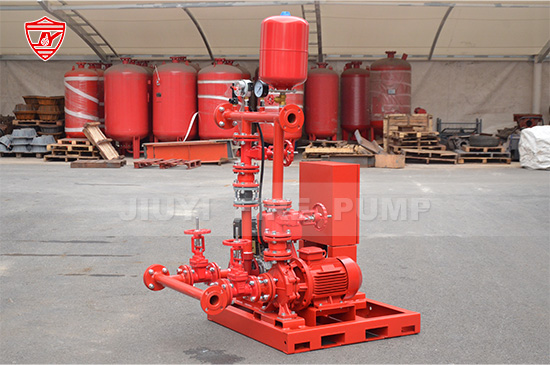
Hazard classification defines the fire risk. Fire risk defines sprinkler demand. Sprinkler demand defines required flow and pressure. And those parameters ultimately define fire pump capacity.
When properly matched, the fire pump becomes the backbone of a reliable fire protection system. When improperly sized, it becomes a weak link.
For industrial facilities, commercial buildings, and high-risk environments, careful coordination between hydraulic design, hazard assessment, and pump performance curves ensures optimal system reliability.