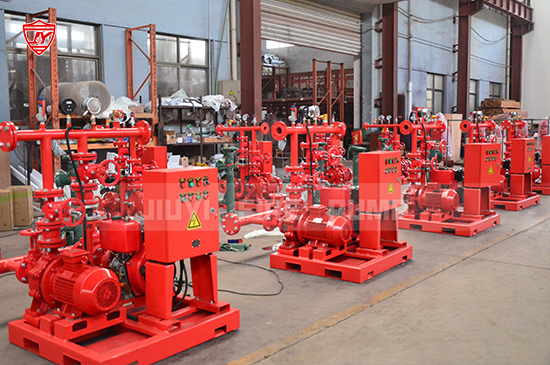
Designing a fire pump system for a 50-story building is fundamentally different from designing one for a low-rise or mid-rise structure. As building height increases, static pressure, zoning complexity, water storage strategy, and compliance requirements become significantly more demanding. A properly engineered fire pump system ensures reliable water delivery at the required flow and pressure under the most remote and critical fire scenarios.
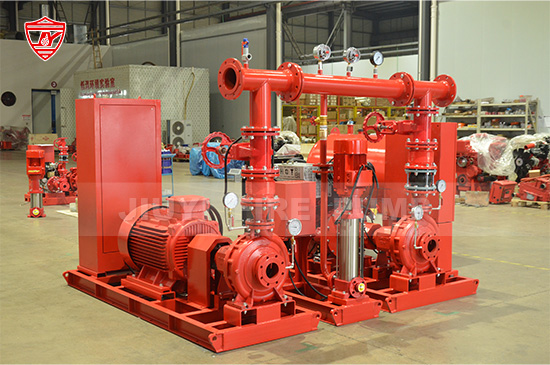
For fire protection engineers, contractors, and developers, understanding the principles behind high-rise fire pump system design is essential to achieving performance, safety, and code compliance.
Understanding the Challenges of 50-Story Buildings
A 50-story building typically reaches heights of 150–250 meters, depending on floor-to-floor dimensions. At this elevation, the most critical challenge is static head pressure.
Every 10 meters of vertical elevation requires approximately 1 bar (14.5 psi) of pressure just to lift water. In a 200-meter building, static pressure alone can exceed 290 psi at the base if a single-zone system is used. This creates multiple design concerns:
Excessive pressure at lower floors
Overstress of pipes, fittings, and valves
Increased risk of leakage and equipment damage
Code limitations on maximum allowable pressure
Because of these factors, pressure zoning is not optional in tall buildings — it is mandatory.
Code Compliance: NFPA 20 and High-Rise Standards
In most international projects, high-rise fire pump systems must comply with NFPA standards, especially:
NFPA 20: Installation of Stationary Pumps for Fire Protection
NFPA 14: Installation of Standpipe and Hose Systems
NFPA 13: Installation of Sprinkler Systems
NFPA 20 defines fire pump performance, controller requirements, redundancy, suction conditions, and testing procedures. In high-rise applications, it is common to use UL listed fire pumps to ensure certification and inspection acceptance.
Additionally, many jurisdictions require:
Redundant fire pumps
Emergency power supply
Seismic protection
Fire-rated pump rooms
Determining Fire Flow Requirements
The starting point of fire pump system design is determining required fire flow and pressure. This depends on:
Occupancy classification
Hazard level
Sprinkler system density
Standpipe requirements
Local fire authority regulations
For a 50-story mixed-use tower, the design may need to accommodate:
Automatic sprinkler demand
Standpipe demand for manual firefighting
Combined system demand
Standpipe systems in high-rise buildings often require 500 gpm for the most remote standpipe, with additional flow depending on the number of risers. When combined with sprinkler demand, total system flow may reach 1,000–2,500 gpm or more.
Once flow is determined, required residual pressure at the highest and most remote outlet must be calculated.
Static and Residual Pressure Calculations
High-rise fire pump design requires precise hydraulic calculations.
Key components include:
Static head (height difference between pump and highest outlet)
Friction loss in vertical risers
Friction loss in horizontal branch lines
Required residual pressure at discharge point
Safety margin
For example:
If the highest sprinkler head is 180 meters above the pump, static head equals approximately 256 psi. If required residual pressure at that head is 15 psi, and friction losses total 20 psi, then:
Total required pump discharge pressure =
256 + 15 + 20 = 291 psi
Such high pressure is impractical for a single-zone system, which leads to the next design principle: pressure zoning.
Pressure Zoning Strategy
A 50-story building typically uses two to four pressure zones.
Each zone serves a defined vertical range, such as:
Zone 1: Floors 1–15
Zone 2: Floors 16–30
Zone 3: Floors 31–50
Each zone has:
Dedicated fire pump or pressure-reducing valves
Independent risers
Controlled maximum working pressure
Zoning reduces excessive pressure at lower floors and ensures components operate within safe limits. It also improves system reliability and maintenance flexibility.
There are two primary approaches:
Series pump configuration
Separate pump rooms for upper zones
In very tall buildings, intermediate mechanical floors may house booster fire pumps to supply upper zones.
Selecting the Right Type of Fire Pump
Choosing the appropriate pump type is critical for high-rise performance.
Common options include:
Horizontal Split Case Pump
Suitable for high flow and moderate pressure. Easy maintenance. Often used in lower zones.
Vertical Turbine Fire Pump
Ideal when water source is underground tank or sump. Also suitable for high-pressure applications. Common in high-rise buildings with limited pump room space.
Multistage Vertical Inline Pump
Can achieve high pressure but must be carefully evaluated for code compliance.
For 50-story buildings requiring high discharge pressure, multistage or vertical turbine fire pumps are frequently selected.
As a manufacturer of vertical turbine fire pumps, we often see this type specified in high-rise projects because it:
Handles high-pressure requirements
Works well with deep water tanks
Provides stable performance
Meets UL and NFPA 20 requirements
Electric vs Diesel Fire Pumps
Power reliability is crucial in high-rise buildings.
Electric Fire Pump
Lower maintenance
Clean operation
Suitable when reliable utility power and emergency generator are available
Diesel Engine Fire Pump
Independent from utility grid
Highly reliable during power outages
Often required by code as backup
In many 50-story buildings, engineers specify:
One electric fire pump (primary)
One diesel fire pump (backup)
One jockey pump for pressure maintenance
Redundancy ensures compliance and uninterrupted protection.
Fire Pump Room Design Considerations
Fire pump rooms in high-rise buildings must meet strict criteria.
Key design factors:
Located at lowest level (usually basement)
Two-hour fire-rated enclosure
Adequate ventilation (especially for diesel pumps)
Drainage and floor slope
Sufficient space for maintenance clearance
Suction pipe design to prevent cavitation
Proper suction design is critical. NFPA 20 requires:
Straight pipe length before pump suction
Avoidance of elbows directly at pump inlet
Positive suction head conditions
Improper suction piping is a common cause of pump failure during testing.
Water Storage and Supply Strategy
High-rise buildings require reliable water supply.
Options include:
Underground Fire Water Tank
Common and stable. Works well with vertical turbine fire pumps.
City Water + Tank Combination
Ensures redundancy.
Gravity Roof Tank
Used in some regions to provide initial pressure before pump activation.
Tank sizing must account for:
Required fire duration (often 60–120 minutes)
Total fire flow demand
Refilling capability
In many 50-story buildings, tanks exceed 300–1,000 cubic meters depending on hazard level.
Jockey Pump Design
The jockey pump maintains system pressure and prevents unnecessary fire pump starts.
Improper jockey pump sizing can cause:
Frequent fire pump cycling
Pressure instability
Excessive wear
Jockey pump flow is typically 1–5% of main fire pump flow, with slightly higher discharge pressure than the main pump cut-in setting.
Managing High Pressure at Lower Floors
Even with zoning, lower floors may experience excessive pressure.
Solutions include:
Pressure reducing valves (PRVs)
Pressure regulating hose valves
Pressure relief valves at pump discharge
Code often limits maximum system pressure to 175 psi unless high-pressure rated components are used.
Careful valve selection and testing are essential.
System Testing and Commissioning
Before occupancy, the entire fire pump system must undergo:
Hydrostatic testing
Flow testing at rated capacity
Controller functional testing
Diesel engine performance testing
Alarm verification
Flow testing must verify:
100% rated flow at rated pressure
150% flow at minimum 65% rated pressure
Proper commissioning ensures system reliability when it is needed most.
Reliability and Redundancy
For a 50-story building, system failure is not acceptable.
Best practices include:
Dual fire pumps
Independent power supply
Separate risers
Seismic bracing
Regular maintenance schedule
A well-designed system considers not only hydraulic performance but also long-term operational reliability.
Common Design Mistakes to Avoid
Oversizing pumps without zoning
Ignoring static head impact
Improper suction piping layout
Underestimating friction loss
Selecting incorrect pressure class components
Inadequate pump room ventilation
High-rise fire pump design requires coordination between mechanical, electrical, structural, and fire protection engineers.
Conclusion
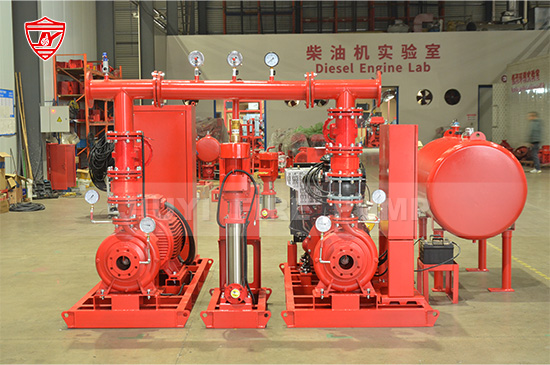
Designing a fire pump system for a 50-story building is a complex engineering task that requires careful hydraulic calculation, strict adherence to NFPA standards, proper zoning strategy, and reliable equipment selection.
The key principles include:
Accurate fire flow and pressure calculation
Multi-zone pressure control
High-pressure capable fire pumps
Redundant power and pump configuration
Code-compliant pump room and water storage design
With the correct design approach and high-quality fire pump equipment, a 50-story building can achieve safe, stable, and compliant fire protection performance for decades.
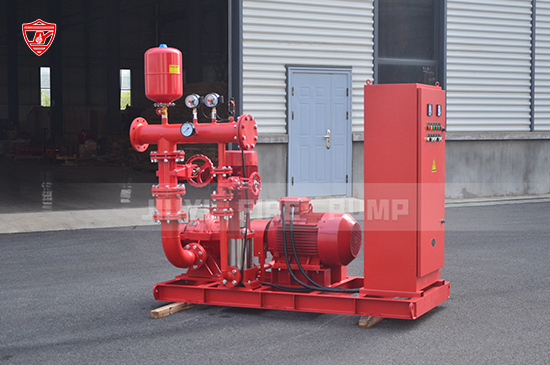
For high-rise projects, selecting experienced fire pump manufacturers who understand NFPA 20 requirements, high-pressure applications, and vertical turbine solutions is essential to ensuring long-term system reliability and safety.
.jpg)