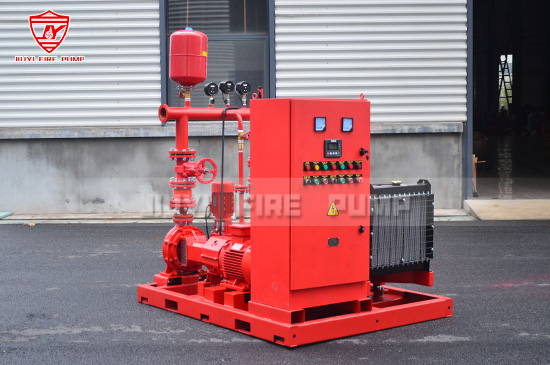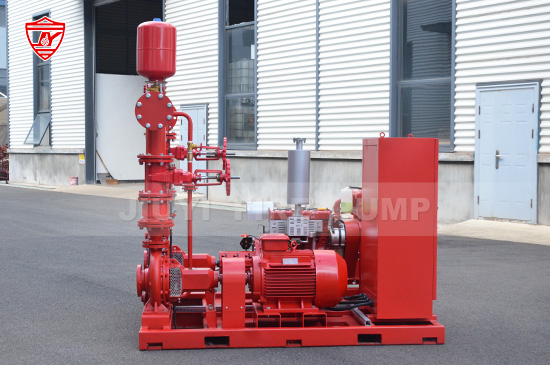
Fire pumps play a critical role in fire protection systems by ensuring sufficient water pressure and flow to sprinklers, hydrants, and fire suppression equipment. However, even the most powerful and well-designed fire pump cannot perform reliably if the suction conditions are poor. One of the most important yet often misunderstood parameters in fire pump system design is minimum suction head.
Understanding fire pump minimum suction head is essential for system designers, engineers, contractors, and facility owners. Improper suction conditions can lead to unstable pump operation, cavitation, reduced flow, mechanical damage, and in severe cases, complete pump failure during an emergency. This article explains what fire pump minimum suction head is, why it matters, how it is determined, and how to ensure your fire pump system is designed to meet this requirement reliably.
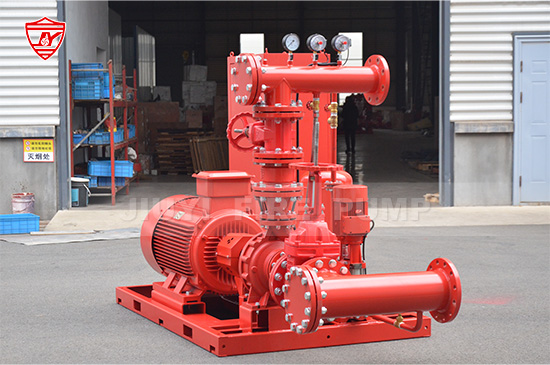
Suction head refers to the pressure or head available at the pump inlet. In simple terms, it describes how much water pressure is pushing water into the fire pump before the pump adds energy to move water through the system. Suction head can be positive or negative depending on whether the water source is above or below the pump centerline.
When the water supply is above the pump, such as in a gravity-fed tank or elevated reservoir, the pump experiences positive suction head. When the water source is below the pump, such as an underground tank or suction from a municipal main with limited pressure, the pump may experience low suction head or even suction lift.
Minimum suction head is the lowest acceptable inlet pressure or head at which the fire pump can operate safely and deliver its rated performance without excessive risk of cavitation, vibration, or damage. This value is closely related to the concept of net positive suction head required by the pump.
Fire pump minimum suction head is the minimum pressure head required at the suction flange of the pump to ensure stable operation and adequate performance. It represents the lowest suction condition under which the pump can still deliver its rated flow and pressure without causing harmful effects such as cavitation.
This parameter is influenced by several factors, including pump design, pump speed, impeller geometry, water temperature, and system layout. Manufacturers test fire pumps to determine their performance under various suction conditions and provide guidance on acceptable minimum suction head for reliable operation.
In practice, minimum suction head ensures that the pump always receives enough water pressure to keep the pump fully primed and to prevent vapor formation at the impeller eye. When suction pressure drops below this minimum, water can begin to vaporize, leading to cavitation. Cavitation not only reduces performance but also causes long-term damage to pump components.
Minimum suction head is not just a theoretical concept. It has direct and practical implications for fire pump reliability and system safety.
First, fire protection systems must work under the most demanding conditions, including peak water demand and low supply pressure. If suction head is insufficient during a fire event, the fire pump may fail to deliver the required flow and pressure, compromising the entire fire protection system.
Second, low suction head increases the risk of cavitation. Cavitation occurs when local pressure drops below the vapor pressure of water, causing vapor bubbles to form and collapse violently on the impeller surface. This leads to noise, vibration, performance loss, and erosion of pump components.
Third, operating a fire pump under poor suction conditions can shorten the lifespan of bearings, seals, and impellers. Over time, repeated cavitation and vibration can lead to premature failures, increasing maintenance costs and downtime.
Finally, regulatory standards and inspection authorities often require verification that suction conditions meet minimum requirements. Non-compliant suction head can result in failed inspections, delayed project approvals, and costly redesigns.
Minimum suction head is closely related to the concept of net positive suction head. Net positive suction head available is the total suction head available at the pump inlet, taking into account static head, atmospheric pressure, friction losses in suction piping, and vapor pressure of the liquid. Net positive suction head required is the minimum head required by the pump to avoid cavitation.
In fire pump applications, ensuring that the available suction head exceeds the required suction head by a safe margin is critical. While minimum suction head is often discussed in practical terms by installers and engineers, the underlying principle is ensuring that net positive suction head available is greater than net positive suction head required under all operating conditions.
Fire pump manufacturers provide performance curves and suction requirements based on testing. Designers must evaluate the water source, suction piping configuration, and operating conditions to ensure that the minimum suction head is always maintained, even under worst-case scenarios such as low water levels or high demand.
Several factors influence the minimum suction head required for a fire pump system.
The elevation difference between the water source and the pump plays a major role. Pumps located below the water level benefit from positive suction head, while pumps located above the water source experience suction lift, which reduces available suction head.
The diameter and length of suction piping also affect suction head. Long or undersized suction pipes create friction losses that reduce the pressure available at the pump inlet. Sharp bends, valves, and fittings further increase losses and reduce effective suction head.
Water temperature affects vapor pressure. Higher water temperatures increase vapor pressure, reducing the margin between suction pressure and vapor pressure. Although fire protection systems typically use relatively cool water, temperature effects should still be considered in certain environments.
Water supply characteristics, such as municipal main pressure fluctuations or tank water levels, can cause variations in suction head. Designers must account for worst-case supply conditions to ensure minimum suction head is maintained at all times.
Pump operating speed and capacity also influence suction requirements. Higher flow rates increase velocity in suction piping and increase friction losses, reducing available suction head. As flow increases, the risk of cavitation increases if suction conditions are not adequate.
Insufficient suction head can cause several operational problems in fire pump systems.
One common issue is unstable pump operation, characterized by fluctuating pressure and flow. This instability can trigger alarms, cause unnecessary pump cycling, and reduce system reliability.
Another problem is excessive noise and vibration, which are often early signs of cavitation. These symptoms may be dismissed during routine testing, but they indicate that suction conditions are marginal and could worsen during an actual fire event.
Reduced pump capacity is another consequence. Even if the pump does not fail completely, low suction head can prevent the pump from reaching its rated performance, reducing available water flow to sprinklers and hydrants.
Long-term mechanical damage is also a serious concern. Cavitation erosion can damage impellers and casings, while vibration can loosen fasteners and accelerate bearing wear. Over time, these issues can compromise the pump’s ability to perform when needed most.
Ensuring adequate minimum suction head begins with proper system design. Engineers should evaluate the water source characteristics and determine the lowest possible suction pressure under worst-case conditions. This includes considering minimum tank levels, lowest municipal supply pressure, and maximum system demand.
Suction piping should be designed to minimize friction losses. This means using adequately sized pipes, minimizing the number of fittings, and avoiding unnecessary elevation changes. Straight, short suction runs with smooth flow transitions help maintain higher suction head.
Placing the fire pump below the minimum water level of the supply source is one of the most effective ways to ensure positive suction head. Where possible, pump rooms should be located below tank water levels to provide gravity-fed suction.
Proper inlet pipe design is also important. Eccentric reducers should be installed correctly to prevent air pockets, and suction piping should be supported to avoid misalignment and vibration that could affect pump performance.
During commissioning and testing, suction pressure should be measured under various operating conditions to verify that minimum suction head requirements are met. Any signs of cavitation or unstable operation should be investigated and corrected before the system is placed into service.
Installation quality has a direct impact on suction conditions. Improper pipe alignment, air leaks in suction piping, or partially closed valves can significantly reduce suction head. All suction connections should be airtight to prevent air ingress, which can disrupt pump priming and reduce effective suction pressure.
During commissioning, it is important to test the pump at different flow points, including rated flow and higher flow conditions if applicable. Monitoring suction pressure during these tests provides valuable insight into whether minimum suction head is maintained across the operating range.
Regular maintenance and inspection should also include checks on suction piping, strainers, and valves to ensure there are no obstructions or deterioration that could increase losses over time.
For fire protection projects, minimum suction head should be treated as a core design parameter, not an afterthought. Early collaboration between pump manufacturers, system designers, and contractors can help ensure that suction conditions are adequately addressed.
Manufacturers can provide performance data and suction requirements specific to each fire pump model. Designers should use this information to validate their hydraulic calculations and verify that the available suction head exceeds the minimum requirement with an appropriate safety margin.
Facility owners and operators should also understand the importance of maintaining water supply conditions. Changes to water source configuration, such as lowering tank levels or modifying piping, can inadvertently reduce suction head and compromise fire pump performance.
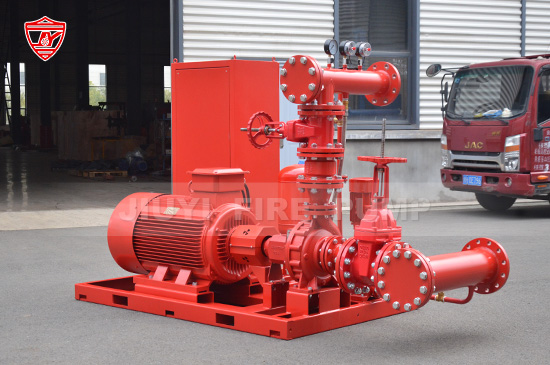
Fire pump minimum suction head is a fundamental factor that directly affects the reliability, safety, and longevity of fire pump systems. It defines the minimum inlet pressure required for stable pump operation and plays a critical role in preventing cavitation, performance loss, and mechanical damage.
By understanding the principles behind suction head, considering all factors that influence it, and implementing sound design and installation practices, fire protection professionals can ensure that fire pump systems perform as intended when they are needed most. For manufacturers, emphasizing proper suction conditions in technical guidance and project support helps customers build safer, more reliable fire protection systems that meet both regulatory requirements and real-world performance demands.