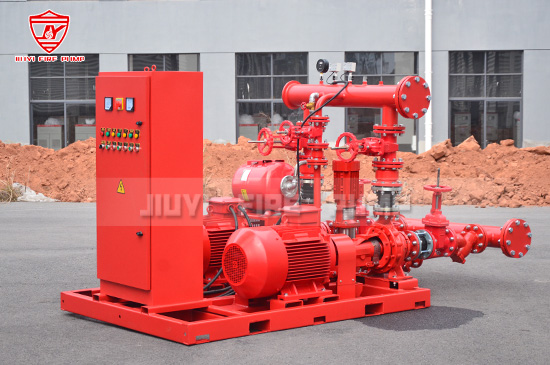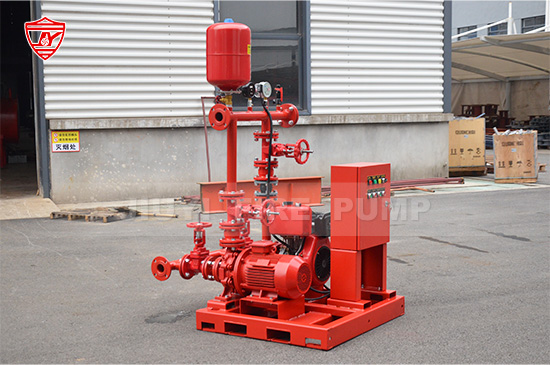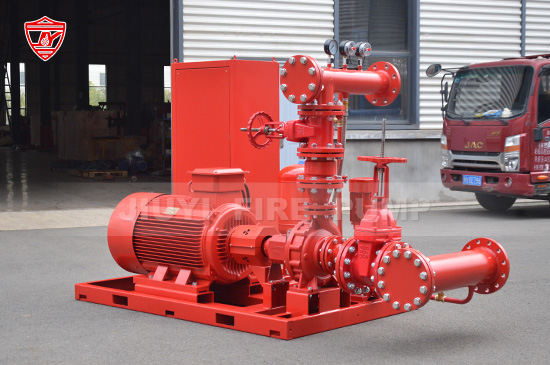
Fire pump engine exhaust temperature is the temperature of the exhaust gases produced by a diesel engine while it is operating. For diesel-driven fire pumps, exhaust temperature is an important operating parameter that can provide valuable information about engine combustion, cooling, loading, exhaust flow, and overall engine condition.
A diesel fire pump must be capable of starting and operating reliably when a fire protection system demands water. Unlike ordinary industrial equipment, a fire pump may remain unused for long periods and then be required to operate immediately during an emergency. For this reason, monitoring the engine during testing and operation is an important part of maintaining system readiness.
Exhaust temperature should not be confused with engine coolant temperature or oil temperature. These are different measurements that provide different information about engine operation. Exhaust temperature specifically reflects conditions in the combustion and exhaust system and can help maintenance personnel identify abnormal operating conditions before they develop into more serious problems.
For fire protection professionals, contractors, facility managers, and pump system operators, understanding diesel fire pump exhaust temperature can make routine inspections and troubleshooting more effective.
.jpg)
The exhaust system carries hot combustion gases away from the diesel engine. The temperature of these gases is affected by many factors, including engine load, fuel injection, air supply, combustion efficiency, ambient conditions, cooling system performance, and exhaust system design.
A stable exhaust temperature during normal operation generally indicates that the engine is operating under expected conditions. A significant change from the engine manufacturer's normal operating range, however, may indicate a problem that requires investigation.
Exhaust temperature monitoring can help identify:
The exact significance of an exhaust temperature reading depends on the specific diesel engine design. Therefore, exhaust temperature should always be evaluated against the engine manufacturer's specifications rather than against one universal temperature value.
These two measurements are sometimes confused, but they serve different purposes.
Coolant temperature measures the temperature of the engine's cooling medium and provides information about the engine cooling system and overall engine thermal condition.
Exhaust gas temperature measures the temperature of combustion gases leaving the engine. It provides more direct information about combustion and exhaust conditions.
For example, an engine could have a coolant temperature within its expected range while experiencing an abnormal exhaust temperature because of a fuel injection, air supply, or exhaust restriction issue.
For this reason, both measurements can be useful when evaluating the operating condition of a diesel fire pump engine.
A high exhaust temperature does not automatically mean that the engine has failed. It is a symptom that should be investigated together with other operating parameters.
Diesel engines require an adequate supply of clean air for combustion. A blocked air filter, restricted intake, damaged intake components, or other airflow problems can reduce the amount of air entering the engine.
Insufficient air can affect combustion and increase exhaust gas temperature.
Regular inspection of the air intake system is therefore important, especially in dusty industrial environments where filters can become contaminated more quickly.
The exhaust system must allow combustion gases to leave the engine efficiently. A blocked muffler, damaged exhaust pipe, excessive back pressure, or improperly designed exhaust components can interfere with gas flow.
An exhaust restriction can increase engine back pressure and may cause abnormal exhaust temperatures.
During installation and maintenance, the exhaust system should be checked to ensure that it is installed according to the engine manufacturer's requirements.
Fuel delivery has a direct effect on diesel engine combustion. Problems with fuel injectors, fuel quality, fuel pressure, or fuel delivery can affect the combustion process.
If one or more cylinders are not operating correctly, exhaust temperature readings may change significantly. Depending on the engine design and monitoring system, unusual temperature differences between cylinders can also provide useful diagnostic information.
Engine load has a major influence on exhaust temperature. As the engine works harder, fuel consumption and combustion heat can increase.
A diesel fire pump should operate within its specified performance and engine operating range. If operating conditions cause the engine to work outside its intended range, exhaust temperature may increase.
Pump performance, engine speed, discharge pressure, and flow should therefore be considered together when investigating unusual temperature readings.
Although exhaust temperature is not the same as coolant temperature, problems with the engine cooling system can contribute to abnormal thermal conditions.
Potential causes include insufficient coolant flow, blocked cooling components, damaged water pump components, or inadequate heat removal.
When abnormal exhaust temperature occurs together with increasing coolant temperature, the cooling system should receive particular attention.
High exhaust temperature usually receives more attention, but unusually low exhaust temperature can also provide useful information.
A low reading may be associated with low engine load, incomplete combustion, fuel delivery problems, incorrect operating conditions, or an individual cylinder not contributing normally.
For a fire pump engine, the reading should always be interpreted in context. A lower exhaust temperature during a light-load test may be completely normal, while a sudden change from previously established operating conditions could indicate a developing problem.
Comparing current readings with historical test results can therefore be more useful than relying on a single number.
There is no single universal "normal" exhaust temperature for every diesel fire pump.
The acceptable exhaust temperature depends on the specific engine model, engine speed, load, turbocharger configuration, ambient conditions, exhaust system arrangement, and manufacturer specifications.
This is an important point when discussing diesel fire pump maintenance. A temperature that is normal for one engine may not be appropriate for another engine.
Instead of using a generic temperature as a pass/fail limit, operators should refer to the diesel engine manufacturer's technical documentation and the approved operating parameters for the specific fire pump package.
The most useful approach is to establish normal operating readings during commissioning and routine testing and then monitor changes over time.
Exhaust temperature can be measured using temperature sensors, thermocouples, or other instruments designed for high-temperature exhaust applications.
Depending on the engine and monitoring arrangement, temperature may be measured at a common exhaust outlet or at individual cylinders.
A modern diesel fire pump package may integrate engine operating information into the controller or monitoring system. This can make it easier for operators to observe important engine parameters during testing.
Measurement equipment should be correctly positioned, properly calibrated, and suitable for the expected temperature range.
Incorrect sensor installation can produce misleading readings and make troubleshooting more difficult.
Routine testing provides an opportunity to observe the diesel engine under controlled operating conditions.
During a test, operators should pay attention not only to exhaust temperature but also to other important parameters, including:
The purpose is not simply to record one temperature value. Instead, the objective is to understand whether the complete fire pump system is operating consistently.
If exhaust temperature gradually changes over multiple tests, the trend may be more valuable than an isolated reading.
For example, if an engine normally produces stable exhaust temperatures but begins showing a persistent increase under comparable test conditions, maintenance personnel should investigate the cause rather than waiting for a major failure.
When an abnormal exhaust temperature is identified, troubleshooting should be systematic.
First, verify the accuracy of the temperature measurement. A faulty sensor or incorrect installation can create a false alarm.
Next, check the operating conditions. Confirm engine speed, pump load, flow, pressure, and ambient conditions.
Then inspect the air intake, fuel system, cooling system, and exhaust system.
If the problem remains, compare the readings with the engine manufacturer's specifications and maintenance procedures. For engines equipped with individual cylinder temperature monitoring, comparing cylinder readings can provide additional diagnostic information.
Engine maintenance should be performed by qualified personnel following the manufacturer's instructions and the requirements applicable to the fire protection installation.
A fire pump is a critical component of a building or industrial fire protection system. Its value is not simply determined by its rated flow and pressure. The pump and its driver must be capable of reliable operation when required.
For diesel-driven fire pumps, engine condition is therefore an essential part of overall fire pump reliability.
Exhaust temperature monitoring can contribute to preventive maintenance by helping identify changes in engine operation. Detecting abnormal conditions early can reduce the risk of unexpected engine problems during a fire emergency.
It can also improve maintenance decisions. Instead of relying only on fixed maintenance intervals, technicians can use operating data and historical trends to determine when further inspection may be appropriate.
Reliable exhaust temperature performance begins with proper system design and correct equipment selection.
A fire pump manufacturer should consider the compatibility of the diesel engine, pump, controller, cooling arrangement, exhaust system, and other components as a complete package.
During factory testing, operating parameters can be evaluated under controlled conditions. This provides an important opportunity to verify the performance of the complete fire pump package before shipment.
For projects requiring certified or listed fire pump equipment, the selected pump package should be designed and manufactured according to the applicable certification and project requirements.
At BETTER Technology Group, fire pump systems are developed with attention to pump performance, diesel engine operation, control systems, testing, and overall system reliability. Comprehensive testing helps verify that the fire pump package performs as intended before it reaches the project site.
For facility owners, contractors, and maintenance teams, several practices can improve exhaust temperature monitoring.
Follow the engine manufacturer's specifications.
Never use a generic temperature limit when the engine manufacturer provides a specific operating range.
Record test results.
Historical data makes it easier to identify gradual changes in engine performance.
Look for trends.
A repeated increase or decrease under similar operating conditions deserves attention.
Check related parameters.
Exhaust temperature should be evaluated together with engine speed, coolant temperature, oil pressure, pump flow, and discharge pressure.
Inspect the exhaust system.
Restrictions, damage, poor installation, or excessive back pressure can affect engine operation.
Maintain the air intake system.
Clean air is essential for efficient diesel combustion.
Investigate unusual readings promptly.
A temperature change may be an early indication of a developing engine or system problem.
.jpg)
Fire pump engine exhaust temperature is an important operating parameter for diesel-driven fire pump systems. It provides useful information about combustion, airflow, fuel delivery, engine loading, cooling conditions, and exhaust performance.
There is no single exhaust temperature that applies to every diesel fire pump. The correct operating range depends on the specific engine and system configuration, so readings should always be compared with the manufacturer's specifications and established baseline data.
Regular testing, accurate measurement, trend monitoring, and systematic troubleshooting can help fire protection professionals identify abnormal conditions before they become serious problems.
For a diesel fire pump, reliable performance depends on more than the pump itself. The engine, controller, cooling system, fuel system, exhaust system, and pump must work together as a dependable fire protection package. Proper monitoring of engine exhaust temperature is one useful part of maintaining that reliability and ensuring that the fire pump is ready when it is needed most.