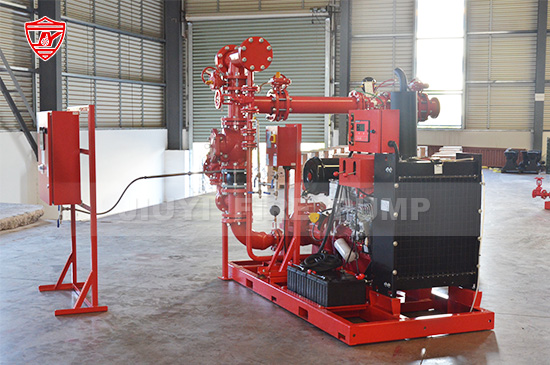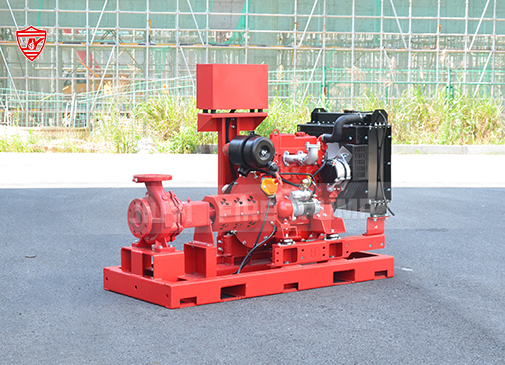
A diesel fire pump is an essential part of many fire protection systems, particularly where an independent engine-driven backup is required. However, even a high-quality diesel engine fire pump cannot operate reliably if its starting batteries are neglected.
The batteries provide the electrical energy required to start the diesel engine when the fire pump receives a start signal or when the system pressure drops below the required level. In an emergency, a weak, discharged, corroded, or damaged battery can prevent the diesel engine from starting when it is needed most.
For fire safety professionals, facility managers, contractors, and maintenance teams, proper diesel fire pump battery maintenance should therefore be treated as an essential part of overall fire pump maintenance.
This guide explains how to inspect, test, maintain, and replace diesel fire pump batteries and how to identify common problems before they affect system readiness.
.jpg)
Unlike an electric fire pump, a diesel fire pump relies on a diesel engine as its driver. The engine must start quickly and automatically when the fire protection system requires water flow.
The starting batteries are responsible for supplying the initial electrical power needed to crank the engine. If the battery cannot provide sufficient starting current, the diesel engine may fail to start even when the fuel system, pump, controller, and other components are operating correctly.
A diesel fire pump system may remain unused for long periods because it is designed primarily for emergency operation. This makes battery condition particularly important. A battery can gradually lose capacity through aging, self-discharge, poor charging, high temperatures, corrosion, or lack of maintenance without showing an obvious problem during normal conditions.
Regular battery inspection helps ensure that the diesel fire pump remains operational when an emergency occurs.
The first step in diesel fire pump battery maintenance is a visual inspection.
Check the batteries, cables, terminals, connections, battery tray, and surrounding area. Look for signs of physical damage, corrosion, leakage, swelling, cracks, loose connections, or abnormal discoloration.
The battery should be securely installed, and the terminals should be properly connected. Battery cables should not show signs of excessive wear, cracking, or damage.
Pay particular attention to the battery terminals. Corrosion around the terminals can increase electrical resistance and reduce the amount of current available to the starter motor.
The battery compartment should also be kept clean and dry. Do not store unnecessary materials around the batteries or block ventilation openings.
A simple visual inspection can often identify developing problems before they become serious.
Battery voltage is an important indicator of battery condition, but voltage alone does not provide a complete assessment of battery health.
A properly maintained battery should be connected to the approved charging system associated with the diesel fire pump. The charger is designed to keep the battery ready for emergency starting without continuously overcharging it.
During routine inspections, verify that the charger is operating normally and that there are no charger alarms or abnormal indications on the fire pump controller.
Check the battery voltage according to the battery and engine manufacturer's requirements. If the voltage is consistently below the expected level, investigate the cause rather than simply replacing the battery.
Possible causes include:
The charging system and battery should be considered together because a healthy battery can still become discharged if the charger is not operating correctly.
Battery terminals are exposed to conditions that can cause oxidation and corrosion.
Corroded terminals can increase resistance in the starting circuit. When the diesel engine requires a high starting current, this additional resistance can result in insufficient power reaching the starter motor.
During maintenance, inspect the positive and negative terminals and cable connections. If corrosion is present, clean the terminals using an appropriate battery-terminal cleaning method and follow the battery manufacturer's safety recommendations.
After cleaning, ensure that connections are secure and properly protected according to the manufacturer's instructions.
Never ignore minor corrosion simply because the diesel engine can still start. A connection that works under normal conditions may become unreliable when the battery is subjected to a demanding starting cycle.
The battery is only one part of the starting circuit. Battery cables, terminals, connectors, and grounding connections are equally important.
Inspect the cables for loose connections, damaged insulation, excessive bending, abrasion, or overheating.
Check that connections are tight and free from corrosion. Particular attention should be given to the negative or grounding connection because a poor ground can cause starting problems that may initially appear to be a battery failure.
If cables become hot during starting tests, investigate the cause. Excessive resistance in a cable or connection can generate heat and reduce starter performance.
Use cable sizes and connection components recommended for the specific diesel engine and fire pump package.
Some lead-acid batteries require periodic electrolyte-level inspection, while sealed or maintenance-free batteries have different maintenance requirements.
For batteries that require electrolyte maintenance, check the level according to the battery manufacturer's instructions. Low electrolyte levels can reduce battery performance and may cause permanent internal damage.
Only use the recommended fluid and follow the manufacturer's instructions when servicing the battery.
Do not add materials or chemicals that are not specifically approved for the battery type.
Because battery designs differ, maintenance personnel should always identify the battery type before performing electrolyte maintenance.
One of the most important parts of diesel fire pump battery maintenance is confirming that the battery can actually provide sufficient starting power.
A battery may show an acceptable voltage while having significantly reduced capacity. This is why voltage inspection should be combined with appropriate battery testing.
Depending on the battery type and manufacturer's recommendations, maintenance teams may use suitable battery testers to evaluate starting capability and condition.
The battery should also be observed during a diesel engine starting test. Pay attention to whether the starter motor turns the engine normally and whether the engine starts within the expected operating sequence.
If the engine cranks slowly, repeatedly struggles to start, or the battery voltage drops excessively during starting, investigate the battery and the entire starting circuit.
A battery test is particularly valuable when a battery is approaching the end of its expected service life.
A diesel fire pump battery depends on its charger to remain ready between emergency events.
Inspect the charger regularly and verify that it is receiving the correct electrical supply. Check charger indicators, alarms, connections, and output according to the equipment manufacturer's instructions.
A failed charger can gradually discharge otherwise healthy batteries. If the problem remains unnoticed, the diesel fire pump may eventually have insufficient starting power.
When troubleshooting a discharged battery, do not automatically assume that the battery itself is defective. Always check the charger and electrical connections as part of the investigation.
Temperature has a significant effect on battery performance and service life.
High temperatures can accelerate battery aging and reduce expected service life. Low temperatures can reduce available starting capacity, making engine starting more difficult.
The battery room or equipment area should therefore be maintained within the environmental conditions recommended by the battery and diesel engine manufacturers.
Where diesel fire pump equipment is installed in environments with significant temperature variation, additional attention should be given to battery condition and charging performance.
A battery that performs adequately in moderate temperatures may provide significantly less starting capability under extreme conditions.
Batteries are consumable components and will eventually need replacement.
Do not wait until a battery completely fails before replacing it. Signs that a battery may require replacement include repeated low-voltage conditions, poor starting performance, physical swelling, leakage, severe corrosion, failed battery tests, or significantly reduced capacity.
Battery age should also be considered. The actual service life varies according to battery type, operating environment, charging conditions, usage, and manufacturer specifications.
When replacing a diesel fire pump battery, select a battery that meets the requirements of the diesel engine and fire pump package. Capacity, voltage, starting performance, physical dimensions, terminal configuration, and environmental suitability should all be verified.
Installing an incorrectly specified battery can create starting reliability problems and may affect the overall performance of the fire pump system.
Good maintenance is not only about performing inspections; it is also about documenting them.
Maintain records of battery inspections, voltage measurements, battery tests, charger checks, engine starting tests, cleaning activities, and battery replacements.
Maintenance records can help identify gradual deterioration. For example, if battery voltage or starting performance has declined over several inspections, maintenance personnel can take corrective action before the battery becomes unreliable.
Records are also useful during audits, fire protection system inspections, commissioning activities, and troubleshooting.
A well-organized maintenance history provides valuable information about the condition of the diesel fire pump system.
Several battery-related problems occur repeatedly in diesel fire pump installations.
Low battery voltage: This may be caused by battery aging, insufficient charging, excessive electrical loads, or loose connections.
Corroded terminals: Corrosion increases electrical resistance and can reduce starting performance.
Battery leakage: Leakage may indicate battery damage, aging, or another battery-related problem and should be addressed promptly.
Battery swelling: Swelling can indicate internal deterioration or abnormal operating conditions. The battery should be evaluated and replaced when necessary.
Slow engine cranking: Slow cranking may result from weak batteries, poor connections, damaged cables, or starter problems.
Repeated battery discharge: This can indicate a faulty charger, excessive electrical consumption, poor battery condition, or another problem within the starting circuit.
Correct diagnosis is important. Replacing the battery without identifying the underlying cause may result in the new battery experiencing the same failure.
For fire safety professionals responsible for diesel fire pump systems, battery maintenance should be incorporated into the overall fire pump maintenance program.
A practical approach includes regular visual inspections, checking charger operation, inspecting terminals and cables, monitoring battery voltage, conducting appropriate battery condition tests, performing engine starting tests, and replacing batteries when their condition no longer meets operational requirements.
Maintenance should always follow the applicable fire protection requirements, project specifications, equipment manufacturer's instructions, and local regulations.
It is also important to distinguish between routine maintenance and corrective maintenance. A battery that passes a visual inspection may still have insufficient starting capacity. Combining visual inspection, electrical testing, and operational testing provides a more reliable assessment.
.jpg)
Diesel fire pump batteries may be relatively small components compared with the pump, diesel engine, or water supply system, but their role is critical. If the battery cannot start the diesel engine, the fire pump may not be able to provide the required emergency water supply.
Regular diesel fire pump battery maintenance helps reduce unexpected failures and supports the operational readiness of the entire fire protection system.
For facility owners, fire protection contractors, maintenance professionals, and system designers, battery condition should therefore be considered an essential part of diesel fire pump reliability.
A reliable diesel fire pump begins with a reliable starting system. By maintaining batteries, chargers, cables, terminals, and associated components correctly, fire safety teams can help ensure that the diesel fire pump is ready to perform when an emergency requires it.