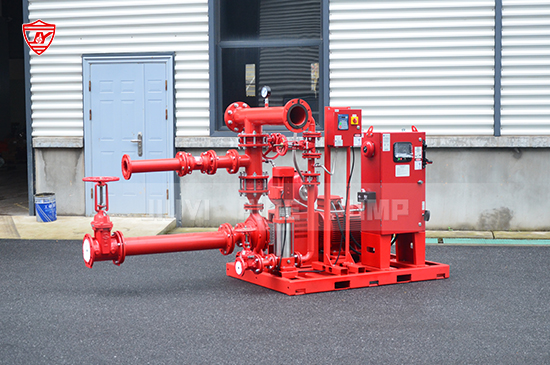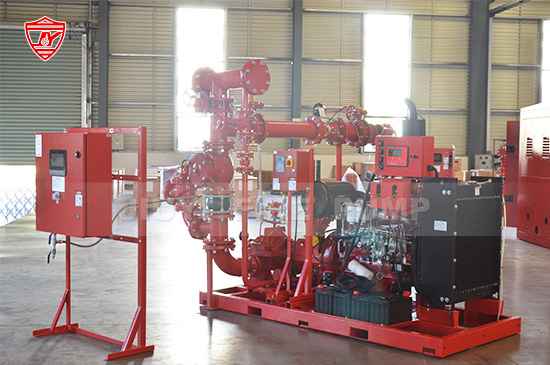
A diesel fire pump is a critical part of a fire protection system, particularly when reliable backup pumping capacity is required. When a diesel fire pump fails to start, the problem should be investigated immediately. A pump that cannot start when required may leave the entire fire protection system unable to deliver the necessary water flow and pressure.
Fortunately, many diesel fire pump starting problems can be identified through a systematic troubleshooting process. The key is to avoid replacing components unnecessarily and instead determine whether the problem is related to the starting system, batteries, fuel supply, controller, engine, sensors, or another part of the installation.
This guide explains the most common reasons a diesel fire pump will not start and provides a practical troubleshooting approach for fire safety professionals, facility managers, contractors, and maintenance teams.
.jpg)
Diesel fire pumps are commonly used in fire protection systems where dependable pump operation is essential. A diesel-driven pump can provide an independent source of mechanical power for the fire pump when electrical power is unavailable or when the system design requires a diesel driver.
The diesel engine must be capable of starting automatically when the fire protection system detects a pressure drop or when the fire pump controller receives the appropriate start signal.
A starting failure can therefore result from two different areas: the pump system may not be sending a start command, or the diesel engine may receive the command but fail to start.
Understanding this distinction is the first step in effective troubleshooting.
Before working on the engine itself, check the diesel fire pump controller.
The controller is responsible for monitoring system conditions and controlling the automatic starting sequence. If the controller is not operating correctly, the engine may never receive the command to start.
Check whether the controller has normal power and whether any alarm, fault, or warning indication is displayed. Review the controller's operating status and determine whether it is in automatic mode.
A diesel fire pump that is left in an incorrect operating mode may not respond automatically when system pressure drops.
Also inspect the connections between the controller and engine. Loose terminals, damaged wiring, poor connections, or control circuit problems can prevent the starting signal from reaching the engine.
If the controller indicates a specific fault, investigate that fault before attempting repeated starts.
Weak or discharged batteries are among the most common causes of diesel engine starting failure.
Diesel fire pump engines generally depend on a reliable battery starting system. Even when the battery appears normal, it may not have sufficient capacity to crank the engine effectively.
Check both the battery condition and the battery connections.
Look for:
The battery charger should also be inspected. If the charger is not maintaining the batteries correctly, the engine may gradually lose starting capacity.
For systems using two starting batteries, check each battery and its associated connections. A problem with one starting circuit can affect the reliability of the complete starting system.
Do not rely only on visual inspection. Battery voltage and starting performance should be checked using appropriate test equipment and according to the equipment manufacturer's requirements.
If the engine cranks but does not start, the fuel system should be one of the first areas investigated.
Confirm that there is sufficient diesel fuel in the fuel tank. Then inspect the fuel supply system for restrictions, leaks, contamination, or trapped air.
Common fuel-related problems include:
Diesel fuel can deteriorate when stored for extended periods, particularly when tanks are poorly maintained or exposed to condensation and contamination.
The fuel tank, fuel lines, filters, and engine fuel system should therefore be included in routine inspection and maintenance procedures.
If fuel contamination is suspected, simply adding more fuel may not solve the problem. The complete fuel supply system should be evaluated.
An important troubleshooting question is: does the engine crank when the start command is given?
If the engine does not crank at all, focus on the electrical starting system.
Possible causes include weak batteries, damaged cables, faulty starter components, controller problems, or an interruption in the starting circuit.
If the engine cranks normally but does not start, the problem is more likely to involve fuel delivery, air intake, engine controls, sensors, or another engine-related issue.
This simple distinction can significantly reduce troubleshooting time.
If battery voltage appears acceptable but the engine does not crank, inspect the starter motor and associated starting circuit.
Check the starter connections and wiring for loose or damaged connections. Inspect the starter relay and other components involved in the starting sequence.
A starter motor may also become worn or damaged over time. Unusual noises, slow cranking, or intermittent starting can indicate a developing starter problem.
Repeatedly attempting to start an engine with a defective starter can place unnecessary stress on the batteries and starting system.
The starting circuit should be tested systematically rather than repeatedly activating the start command without identifying the cause.
Another possible reason for a diesel fire pump not starting is an active shutdown or stop condition.
Depending on the engine and controller configuration, certain protection devices or control conditions may prevent normal starting or operation.
Check the controller for shutdown or fault indications and inspect relevant engine protection circuits.
Possible conditions may include abnormal engine parameters, control system faults, or an activated emergency stop circuit.
An emergency stop device should be checked carefully. It should only be reset when it is safe to do so and after determining why it was activated.
Never bypass a safety or protection device simply to make the engine start. Doing so can create a much more serious reliability and safety problem.
Although fuel and batteries are common starting issues, the engine also requires adequate air intake and exhaust conditions.
Inspect the air intake system for excessive blockage, contamination, or physical obstruction. Check whether the air filter requires maintenance according to the engine manufacturer's requirements.
The exhaust system should also be inspected for obvious restrictions or damage.
The engine room itself should have appropriate ventilation for the installed equipment. Poor ventilation can contribute to operating problems, particularly during prolonged operation.
Any inspection or maintenance work involving the engine, ventilation, or exhaust system should be performed using appropriate safety procedures.
A diesel fire pump should be capable of responding to the conditions specified by the fire protection system design.
If the engine does not start automatically, determine whether the controller is actually receiving the required start signal.
For example, if the system is designed to initiate a pump start following a pressure reduction, verify the relevant pressure-sensing components and control circuit.
A problem with pressure sensing or control wiring can create a situation where the engine is perfectly capable of starting but never receives the command to do so.
This is why troubleshooting should begin by determining whether the problem is a command problem or an engine-starting problem.
Engine fluids should be inspected as part of routine diesel fire pump maintenance.
Check engine oil level and inspect for obvious signs of leakage or contamination. Depending on the engine design, other required fluids should also be maintained according to the manufacturer's specifications.
Low fluid levels, leaks, or poor maintenance can eventually affect engine reliability.
However, fluid levels should not be used as the only troubleshooting method. If the engine refuses to start, the complete starting and control system should be evaluated.
Modern diesel fire pump controllers can provide valuable diagnostic information.
Before resetting alarms, record what the controller is reporting. Fault history can help maintenance personnel identify intermittent problems that may otherwise be difficult to reproduce.
Pay particular attention to recurring alarms.
For example, if the same battery, charger, engine, or control alarm repeatedly appears, replacing unrelated components may not solve the underlying problem.
Documenting the fault, operating condition, battery status, controller status, and starting behavior can make troubleshooting much more efficient.
The following table provides a general troubleshooting reference:
| Problem | Possible Cause | Recommended Check |
|---|---|---|
| Engine does not crank | Weak battery | Check battery condition and voltage |
| Engine does not crank | Loose cable | Inspect battery and starter connections |
| Engine does not crank | Controller fault | Check controller alarms and operating mode |
| Engine cranks slowly | Weak battery | Test battery capacity and charger |
| Engine cranks but will not start | Fuel problem | Check fuel level, filters, and fuel supply |
| Engine cranks but will not start | Air in fuel system | Inspect fuel lines and fuel system |
| No automatic start | Controller not in automatic mode | Verify controller operating status |
| No automatic start | Start signal problem | Check pressure sensing and control circuit |
| Repeated battery failure | Charger problem | Check charger operation |
| Engine stops unexpectedly | Protection or fault condition | Review controller and engine alarms |
This table should be treated as a starting point rather than a substitute for the equipment manufacturer's troubleshooting procedures.
The best way to troubleshoot a starting failure is to prevent it from occurring in the first place.
A diesel fire pump should be included in a structured inspection, testing, and maintenance program. Regular testing helps identify deteriorating batteries, charger problems, fuel issues, wiring problems, and other conditions before an emergency occurs.
Important maintenance activities include checking battery condition, inspecting battery chargers, maintaining fuel quality, checking fluid levels, inspecting electrical connections, reviewing controller alarms, and verifying automatic starting performance.
Maintenance records should also be kept so that recurring problems can be identified over time.
Fire pump maintenance should always follow the applicable fire protection requirements, equipment manufacturer's instructions, and project-specific procedures.
Some problems can be identified through routine inspection, but more complex failures require qualified personnel.
If the diesel engine still will not start after basic checks, avoid repeatedly attempting to operate the equipment without understanding the cause.
Professional assistance may be appropriate when there is a suspected engine control problem, fuel injection problem, starter failure, wiring fault, controller malfunction, or other technical issue requiring specialized testing.
Never disable protective functions or permanently bypass control circuits simply to force the pump to operate.
The objective of troubleshooting is not merely to make the engine start once. The objective is to restore reliable automatic operation so the fire pump can perform when it is needed.
.jpg)
When troubleshooting a diesel fire pump that will not start, follow a logical sequence:
First, check the controller and confirm that it is in the correct operating mode. Then determine whether the engine is receiving a start command.
If the engine does not crank, inspect batteries, battery chargers, cables, starter components, and the starting circuit.
If the engine cranks but does not start, investigate fuel supply, fuel filters, fuel quality, air intake, engine controls, and relevant fault conditions.
Finally, review alarm history and maintenance records to identify recurring problems.
A reliable diesel fire pump depends on more than the engine itself. The controller, batteries, charger, fuel system, sensors, wiring, and maintenance program all contribute to system readiness.
For fire safety professionals, understanding these troubleshooting fundamentals can reduce downtime and help maintain the reliability of critical fire protection equipment. As a fire pump manufacturer, we recommend treating diesel fire pump testing and maintenance as an essential part of overall fire protection system management rather than waiting until an emergency reveals a problem.