Fire pump driver horsepower is one of the most important technical considerations when designing, selecting, and installing a fire pump system. The driver provides the mechanical power required to operate the fire pump and deliver the required flow and pressure during a fire emergency.
A fire pump may be hydraulically capable of producing the required performance, but it cannot achieve that performance unless its driver has sufficient power. For this reason, selecting the correct fire pump driver is essential for system reliability, energy performance, and compliance with applicable fire protection requirements.
Fire pump drivers are commonly electric motors or diesel engines. Although both perform the same fundamental function, their sizing, operating characteristics, installation requirements, and selection considerations can be different.
.jpg)
A fire pump driver is the power source that drives the fire pump. It converts energy into the mechanical power required to rotate the pump shaft and move water through the fire protection system.
The two most common types of fire pump drivers are:
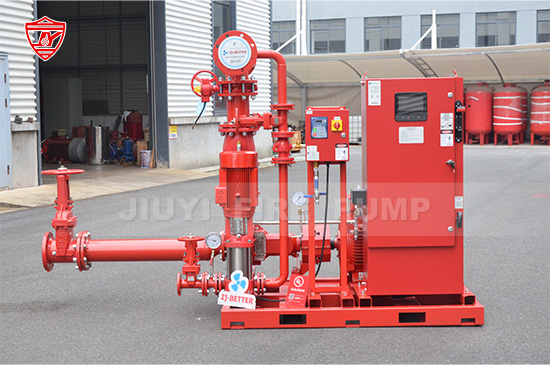
An electric fire pump uses an electric motor connected directly or through an appropriate coupling to the pump. A diesel fire pump uses a diesel engine as its driver and is particularly useful where electrical power may be unavailable, unreliable, or unsuitable as the sole source of fire pump power.
A jockey pump, by comparison, normally uses a smaller electric motor because it is designed to maintain system pressure rather than provide the main firefighting flow.
The driver horsepower must be adequate for the pump's hydraulic requirements across its expected operating range.
The main purpose of calculating fire pump driver horsepower is to ensure that the driver can provide enough power for the pump to perform as required.
If the driver is undersized, it may not be able to operate the pump properly under demanding conditions. This can lead to reduced pump performance, overheating, excessive electrical loading, engine problems, or failure to achieve the required flow and pressure.
An appropriately sized driver provides sufficient power without unnecessarily increasing equipment size and operating costs.
For a fire protection system, this is particularly important because the fire pump is expected to perform reliably when it is needed most. Unlike many ordinary water pumps, a fire pump is part of a life-safety system where inadequate performance can have serious consequences.
Fire pump driver horsepower is primarily related to three factors:
A commonly used hydraulic relationship for water pumps is:
Horsepower = (Flow × Pressure) / (1714 × Efficiency)
When using flow in gallons per minute and pressure in pounds per square inch, the equation can provide an approximate brake horsepower requirement.
For head-based calculations, another commonly used relationship is:
Horsepower = (Flow × Head) / (3960 × Efficiency)
The actual calculation depends on the units used and the characteristics of the pump.
For example, if a pump must deliver a high flow rate against a high pressure, the required driver horsepower will generally increase. If pump efficiency is lower, more input power will also be required to achieve the same hydraulic output.
However, fire pump driver selection should not be based solely on a simplified horsepower calculation. The complete pump performance curve, driver characteristics, starting conditions, operating range, and applicable certification and installation requirements must also be considered.
Pump horsepower and driver horsepower are related but are not exactly the same thing.
Pump horsepower represents the power required by the pump to produce its hydraulic output under a particular operating condition. Driver horsepower refers to the power available from the motor or engine to operate the pump.
Because no pump operates with 100% efficiency, the driver normally needs to provide more input power than the hydraulic power delivered to the water.
For example, if a pump requires a certain amount of shaft power at its rated flow and pressure, the selected driver must have sufficient rated power to meet that requirement.
This is why engineers evaluate the pump's power demand across its operating range rather than simply matching the driver to the nominal hydraulic power.
Electric motors are widely used as fire pump drivers. When selecting a fire pump motor, the motor must be capable of supplying sufficient power for the pump under the required operating conditions.
Motor horsepower is influenced by the pump's flow, pressure, speed, efficiency, and operating characteristics.
The motor also needs to work correctly with the available electrical supply. Important considerations can include:
A fire pump motor should be selected as part of the complete fire pump package rather than treated as an independent component.
The pump, motor, controller, coupling, and associated equipment need to work together as a complete system.
Diesel engines are another important type of fire pump driver, particularly for applications where an independent power source is required.
A diesel fire pump driver must provide adequate power to operate the pump under the required conditions while maintaining reliable performance during an emergency.
Diesel engine selection involves considerations beyond the engine's nominal horsepower. Engine speed, torque characteristics, cooling system, fuel system, ambient conditions, altitude, and operating requirements can all affect the final selection.
Diesel engines may also require appropriate fuel storage, ventilation, exhaust systems, starting batteries, controllers, and other supporting equipment.
When selecting a diesel fire pump package, it is therefore important to evaluate the complete engine and pump combination rather than comparing horsepower figures alone.
Not necessarily.
A larger driver does not automatically make a fire pump system better. The objective is to select a driver that provides sufficient power for the pump and its required operating range.
Oversizing the driver can increase equipment costs, installation requirements, electrical demand, fuel consumption, and other operating considerations.
On the other hand, selecting a driver with insufficient power can compromise pump performance and system reliability.
The ideal selection is therefore based on the actual hydraulic requirements and the manufacturer's certified pump and driver data.
Several factors influence the required driver horsepower.
The greater the required water flow, the more power is generally needed to operate the pump.
Fire protection systems can have very different flow requirements depending on the building type, hazard classification, sprinkler system, hydrant system, process protection, and other design factors.
Higher discharge pressure generally requires greater driver power.
The pump must overcome system resistance and provide sufficient pressure at the required flow rate.
Pump efficiency directly affects power requirements. A more efficient pump can deliver the required hydraulic output with less input power.
This makes hydraulic design and pump efficiency important considerations when evaluating fire pump horsepower.
Pump speed influences pump performance and power demand. Different pump designs may operate at different rotational speeds, so speed must be considered when selecting the driver.
Temperature, altitude, cooling conditions, suction conditions, and other environmental factors can influence driver performance.
This is particularly important for diesel engines, where environmental conditions can affect available engine output.
The pump performance curve provides critical information about flow, pressure, efficiency, and power requirements.
Engineers should evaluate the required driver based on the complete pump performance data rather than relying on a single operating point.
One of the most common mistakes in fire pump selection is considering only the rated flow and rated pressure.
A fire pump can operate at different points on its performance curve. As the operating point changes, the power required by the pump can also change.
The driver must therefore be capable of handling the expected maximum power demand within the applicable operating range.
This is especially important when selecting a motor or diesel engine for a pump that may operate at flows significantly different from its rated point.
The manufacturer's certified performance data is an essential reference for confirming the appropriate driver size.
Fire pump installations are commonly designed with reference to NFPA 20, which provides requirements for the selection and installation of stationary pumps for fire protection.
Driver selection is an important part of this process.
The exact requirements depend on the type of driver, pump, installation, and applicable edition of the standard. In addition, local regulations, certification requirements, authority requirements, and project specifications may also apply.
For projects requiring UL Listed or FM Approved equipment, the pump and driver combination should be selected according to the applicable certification and listing requirements.
This is one reason why simply calculating horsepower using a basic formula is not enough for a complete fire pump selection.
A professional fire pump manufacturer typically considers several technical parameters when matching a pump with its driver.
The process generally begins with the required flow and pressure. Engineers then evaluate the pump's hydraulic performance, efficiency, speed, and power demand.
The required motor or engine is selected based on the pump's power requirements and applicable technical requirements.
The complete package may then be tested to verify performance.
For fire pump manufacturers, testing is particularly important because theoretical calculations alone cannot demonstrate the complete performance of a finished pump package.
A properly equipped fire pump manufacturer should have suitable testing capabilities for verifying pump flow, pressure, power, and other important operating parameters.
Several mistakes can result in incorrect driver selection.
The first is choosing a motor or engine based only on the pump's rated horsepower without reviewing the complete performance curve.
The second is ignoring environmental conditions. For example, diesel engine performance can be affected by altitude and temperature.
The third is treating the pump and driver as separate products rather than as a complete engineered package.
Another common mistake is failing to consider applicable certification requirements. A driver that appears technically suitable may not meet the certification or listing requirements of a particular fire protection project.
Finally, using an estimated horsepower value without confirming the manufacturer's certified data can result in an inappropriate selection.
When selecting a fire pump driver, start with the project's required flow and pressure. Then determine the appropriate pump type and review its performance curve.
Next, determine the maximum power requirement and select a compatible electric motor or diesel engine.
The following questions should be considered:
Working with an experienced fire pump manufacturer can simplify this process and reduce the risk of selecting incompatible equipment.
.jpg)
Fire pump driver horsepower is a critical factor in the design and selection of a reliable fire protection system. The driver must provide sufficient power for the pump to achieve the required flow and pressure under the expected operating conditions.
Electric motors and diesel engines each have specific selection considerations, and the correct driver size should be determined using the pump's complete performance data rather than a simple horsepower calculation alone.
For engineers, contractors, distributors, and facility owners, understanding fire pump driver horsepower makes it easier to evaluate equipment, compare fire pump packages, and avoid common sizing problems.
As a fire pump manufacturer, BETTER Technology Group combines hydraulic pump design, manufacturing, testing, and driver integration to develop complete fire pump solutions for different project requirements. Proper driver selection, accurate performance testing, and careful quality control help ensure that the fire pump system is ready to perform when fire protection is needed most.
.jpg)