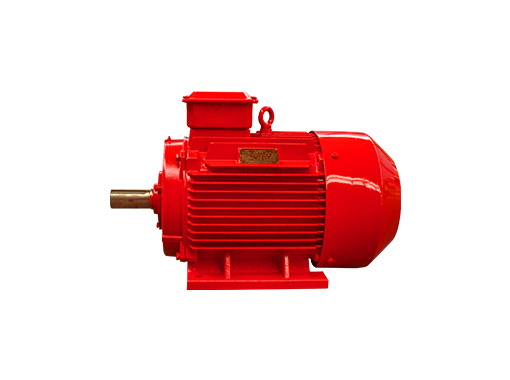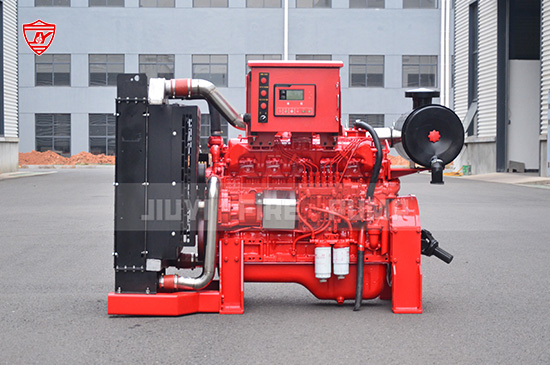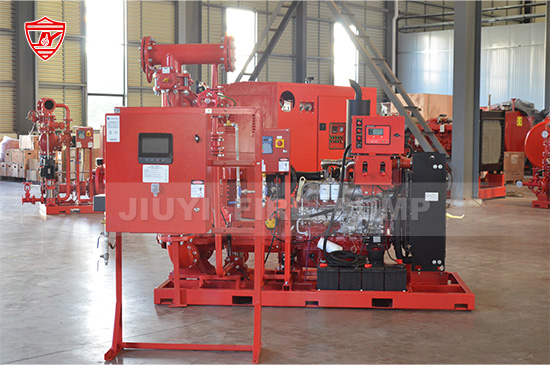
A fire pump is one of the most critical components in a fire protection system. In emergency situations where municipal water pressure is insufficient, the fire pump ensures that sprinklers and standpipe systems receive the pressure and flow needed to control or extinguish a fire. Because of this critical role, fire pumps must undergo regular testing to confirm reliable performance.
One of the most important evaluations during installation, commissioning, and maintenance is the fire pump churn test. This test helps verify that the fire pump can operate correctly under no-flow conditions and maintain the required pressure without instability or mechanical problems.
Understanding the purpose, process, and standards of a fire pump churn test is essential for contractors, building owners, engineers, and fire protection professionals.
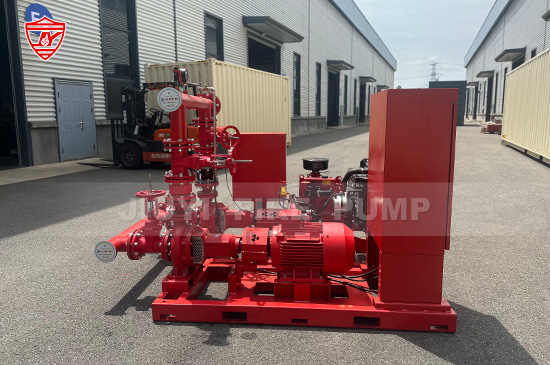
A fire pump churn test is a no-flow operational test performed while the fire pump is running with the discharge valve closed or with minimal water flow. During this condition, the pump operates at its shutoff pressure, commonly referred to as churn pressure.
The primary objective of the churn test is to confirm that the fire pump can maintain stable pressure and operate safely without overheating, vibration, leakage, or abnormal mechanical behavior.
Unlike a full flow performance test, which measures pump capacity under different flow rates, the churn test focuses on pressure stability and mechanical operation when there is little or no water demand.
This test is commonly performed:
The churn test plays an important role in verifying the reliability and safety of the fire pump system.
When operating at shutoff conditions, a fire pump experiences maximum pressure. This operating point can expose issues such as unstable pressure, overheating, or vibration. The churn test confirms that the pump remains mechanically stable under these conditions.
Improper alignment, pipe stress, incorrect rotation, or air trapped inside the system can lead to operational problems. Conducting a churn test after installation helps identify these issues before the system enters service.
During the test, technicians inspect for:
Early detection reduces the risk of unexpected pump failure during an emergency.
NFPA 20 establishes requirements for fire pump installation and testing. The churn test is part of the acceptance and operational verification process required for many fire protection systems.
Excessive churn pressure can damage pipes, fittings, valves, and sprinkler components. Testing helps confirm that the system pressure remains within acceptable limits.
Churn pressure is the maximum pressure produced by the fire pump when no water is flowing through the system.
Under churn conditions:
According to NFPA 20 guidelines, the shutoff pressure of a fire pump should generally not exceed 140% of the rated pressure for centrifugal fire pumps.
For example:
Excessively high churn pressure may indicate:
The exact procedure may vary depending on the system design and local regulations, but the general process follows several standard steps.
Before starting the fire pump, technicians perform a visual and mechanical inspection of the system.
Inspection items include:
Any obvious defects should be corrected before testing begins.
The fire pump is started either manually or automatically through the controller.
Technicians monitor:
The pump should start smoothly without abnormal vibration or delay.
The discharge valve remains closed or nearly closed so that the pump operates with minimal flow.
At this stage, technicians record:
The pump should maintain stable pressure throughout the test period.
The pump is allowed to operate for a specified duration while technicians monitor system performance.
Important observations include:
Stable operation indicates proper pump condition.
After the test is complete, the pump is shut down according to standard procedures.
Technicians then inspect the equipment again for:
Test data is documented for maintenance and compliance records.
NFPA 20 provides guidance for fire pump installation and testing procedures.
Key considerations include:
The fire pump shutoff pressure should not exceed 140% of rated pressure.
The pump must operate without excessive vibration, overheating, or instability.
In systems where churn pressure may exceed safe pressure limits, pressure relief valves may be required to protect system components.
Newly installed fire pump systems must undergo acceptance testing to verify compliance with design specifications and code requirements.
Following NFPA standards helps ensure system reliability and safety.
A churn test can reveal several operational or installation issues.
Possible causes include:
Excessive vibration can shorten equipment life and lead to premature failure.
Mechanical seal leakage may indicate:
Minor leakage may be acceptable depending on seal type, but significant leakage requires attention.
Fire pumps operating under no-flow conditions can generate heat quickly.
Common causes include:
Diesel engine fire pumps also require careful temperature monitoring.
Fluctuating pressure may result from:
Stable pressure is essential for dependable fire protection performance.
If shutoff pressure exceeds design limits, the system may require:
Ignoring excessive pressure can damage the fire protection system.
Although both tests evaluate fire pump performance, they serve different purposes.
Both tests are essential parts of fire pump commissioning and maintenance programs.
Testing frequency depends on local regulations, insurance requirements, and applicable standards.
Typical recommendations include:
Routine testing helps identify problems before emergencies occur.
To achieve accurate and reliable results, several best practices should be followed.
Pressure gauges, flow meters, and electrical instruments should be properly calibrated for accurate readings.
Every fire pump manufacturer may provide specific operational recommendations and limitations.
Detailed records support:
Fire pump testing should be performed by trained technicians familiar with NFPA standards and pump operation.
Controllers, relief valves, batteries, fuel systems, and cooling systems should also be inspected during testing.
Professional fire pump manufacturers play a key role in helping customers achieve reliable testing and long-term system performance.
Manufacturers typically provide:
Working with an experienced manufacturer helps ensure that the fire pump system meets both project requirements and international fire protection standards.
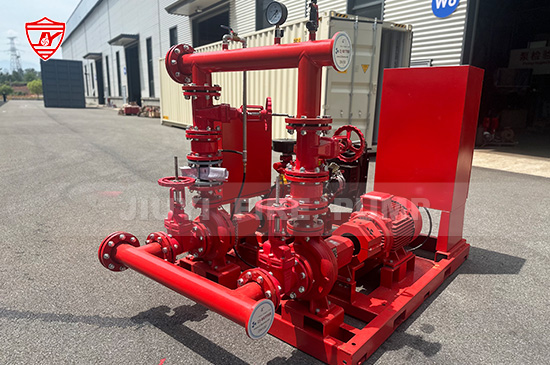
A fire pump churn test is a critical procedure used to verify the operational stability and shutoff pressure performance of a fire pump under no-flow conditions. Although it may appear simpler than a full flow test, the churn test provides valuable insight into mechanical reliability, pressure stability, and overall system safety.
By performing proper churn testing according to NFPA 20 requirements, building owners and fire protection professionals can identify issues early, protect fire system components, and ensure dependable emergency performance.