Fire pumps are a critical part of modern fire protection systems. Whether installed in commercial buildings, industrial facilities, warehouses, or municipal infrastructure, fire pumps must deliver reliable performance during emergencies. However, many facilities overlook one important factor during long-term operation: energy consumption.
Although fire pumps are primarily designed for safety rather than continuous operation, inefficient systems can still lead to unnecessary power usage, increased operating costs, excessive wear, and reduced equipment lifespan. Optimizing fire pump energy consumption is not only beneficial for lowering operational expenses, but also essential for improving overall system reliability and sustainability.
This article explores the most effective strategies for reducing fire pump energy consumption while maintaining full compliance with fire protection standards and ensuring dependable emergency performance.
Before improving efficiency, it is important to understand where energy losses occur in a fire pump system.
Energy consumption in fire pump systems is commonly influenced by:
In many facilities, fire pumps are selected with excessive safety margins. While oversizing may seem safer, it often results in inefficient operation, especially during testing and maintenance cycles.
A properly engineered system should balance fire protection requirements with hydraulic efficiency.
One of the most important factors in reducing energy consumption is proper pump sizing.
An oversized fire pump consumes more energy than necessary and may create additional problems such as:
During fire pump selection, engineers should carefully evaluate:
Using accurate hydraulic calculations helps avoid excessive capacity and improves overall efficiency.
Manufacturers should also provide detailed performance curves to ensure the selected pump operates near its best efficiency point (BEP).
The motor is one of the largest contributors to energy consumption in electric fire pump systems.
High-efficiency motors can significantly reduce power losses while improving operational reliability. Premium efficiency motors are designed to minimize heat loss, reduce electrical waste, and deliver stable performance under demanding conditions.
When selecting a motor, consider:
Modern IE3 and IE4 efficiency-class motors can provide substantial energy savings over the system lifecycle.
In addition, proper motor sizing is equally important. An oversized motor operating under light load conditions often performs inefficiently.
Pipe design directly affects hydraulic efficiency.
Poorly designed piping systems increase friction losses, forcing the fire pump to consume more energy to maintain required pressure and flow.
To optimize the piping system:
Each elbow, valve, and fitting adds resistance to the system. Over time, scaling, corrosion, and sediment buildup can further increase friction losses.
A well-designed piping network helps reduce system resistance and improves overall pump performance.
Variable Frequency Drives (VFDs) are commonly used in many pumping applications to improve energy efficiency by adjusting motor speed according to demand.
In fire pump systems, however, VFD applications must comply with local fire protection regulations and standards such as NFPA 20.
When properly integrated, VFD fire pump systems can provide several benefits:
VFDs are particularly beneficial in systems with variable pressure requirements or high-rise buildings where maintaining stable pressure is challenging.
However, the fire pump must still be capable of delivering full rated performance during emergency conditions.
Working with experienced fire pump manufacturers and fire protection engineers is essential when considering VFD integration.
Poor maintenance is one of the leading causes of energy inefficiency in fire pump systems.
Over time, worn components, lubrication issues, misalignment, and internal corrosion reduce system performance and increase energy demand.
Preventive maintenance should include:
Regular testing helps identify efficiency losses before they become major operational problems.
For example, a partially clogged impeller can significantly reduce hydraulic efficiency, forcing the pump to work harder and consume more power.
Maintaining clean and properly lubricated components helps preserve efficiency and extend equipment life.
Modern fire pump systems increasingly use digital monitoring technologies to improve operational efficiency.
Continuous monitoring allows facility managers to track:
Unexpected changes in these parameters often indicate developing inefficiencies or mechanical issues.
Smart monitoring systems help operators identify:
Data-driven maintenance strategies reduce unnecessary energy waste and improve long-term reliability.
Remote monitoring capabilities also enable faster troubleshooting and reduce downtime.
Pressure losses directly increase energy consumption.
In many systems, unnecessary pressure losses occur due to:
Regular inspection of the hydraulic system helps eliminate avoidable restrictions.
Maintaining adequate suction conditions is especially important. Insufficient suction pressure can lead to cavitation, which damages pump components and reduces efficiency.
To reduce pressure losses:
Improving hydraulic efficiency reduces the workload on the fire pump and lowers energy consumption.
Periodic energy audits provide valuable insights into system efficiency.
A fire pump energy audit typically evaluates:
These audits help identify inefficiencies that may not be visible during routine inspections.
For example, an audit may reveal that the system consistently operates far from the pump’s best efficiency point due to changing facility requirements.
Energy audits also support long-term planning for upgrades and modernization projects.
Older fire pump systems are often less efficient than modern designs.
Aging equipment may suffer from:
Replacing outdated components can significantly improve energy efficiency while enhancing reliability.
Potential upgrades include:
In some cases, upgrading a single component can provide measurable energy savings without replacing the entire system.
Jockey pumps play an important role in maintaining system pressure and preventing unnecessary fire pump starts.
Improper jockey pump settings can lead to excessive cycling, pressure instability, and wasted energy.
To optimize jockey pump performance:
An efficiently operating jockey pump minimizes unnecessary fire pump activation and improves overall system efficiency.
Routine fire pump testing is essential for ensuring emergency readiness, but inefficient testing procedures can waste significant energy and water.
To improve testing efficiency:
Modern test systems can reduce water waste while improving operational consistency.
Efficient testing practices help facilities maintain compliance without excessive operational costs.
Many buyers focus primarily on the initial purchase price when selecting a fire pump system. However, energy consumption, maintenance, and operational efficiency often have a much greater impact on total lifecycle cost.
A lower-cost pump with poor efficiency may result in:
Investing in high-quality, energy-efficient fire pump systems often provides better long-term value.
When evaluating fire pump systems, consider:
A well-designed system delivers both operational reliability and long-term cost savings.
Energy optimization begins with proper system design and equipment selection.
Experienced fire pump manufacturers can help customers:
Manufacturers with strong engineering capabilities can also provide customized solutions for industrial facilities, commercial buildings, data centers, petrochemical plants, and municipal infrastructure.
Choosing reliable equipment and professional technical support is essential for achieving both fire safety and energy efficiency goals.
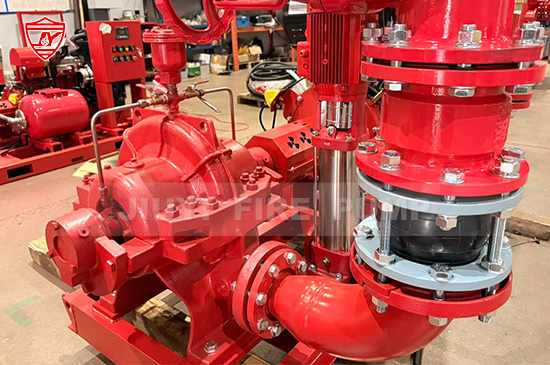
Optimizing fire pump energy consumption requires a combination of intelligent design, efficient equipment selection, preventive maintenance, and continuous monitoring.
While fire pumps are critical life safety systems, they should also operate as efficiently as possible throughout their service life. Reducing unnecessary energy usage not only lowers operational costs but also improves reliability, extends equipment lifespan, and supports sustainability objectives.
By focusing on proper pump sizing, high-efficiency motors, hydraulic optimization, preventive maintenance, and smart monitoring technologies, facilities can significantly improve fire pump system efficiency without compromising fire protection performance.