
Fire pumps are among the most critical components in a fire protection system. During an emergency, they provide the water pressure and flow needed to support sprinkler systems, hydrants, standpipes, and other firefighting equipment. A fire pump is not something facility owners think about every day—but when a fire occurs, its performance can mean the difference between a contained incident and a catastrophic loss.
Because fire pumps often remain idle for long periods, many people assume they require little attention. In reality, this assumption creates one of the biggest risks in fire safety management. Fire pumps that are not maintained properly may fail precisely when they are needed most.
Poor fire pump maintenance does not only affect equipment lifespan. It can compromise fire protection reliability, increase operational costs, create compliance issues, and expose businesses to severe financial and legal consequences.
The most immediate consequence of poor fire pump maintenance is reduced operational reliability.
A fire pump may appear functional while sitting idle in a pump room, but internal issues can develop over time without obvious warning signs. Components such as bearings, seals, couplings, controllers, batteries, cooling systems, and valves can gradually deteriorate.
When maintenance is neglected, common problems include:
These problems often remain hidden until the pump is required to start under emergency conditions. At that point, failure is not simply an equipment issue—it is a life safety risk.
A fire pump that cannot start, cannot maintain pressure, or shuts down unexpectedly can leave an entire building without adequate fire protection.
One of the most dangerous outcomes of neglected fire pump maintenance is startup failure.
Fire pumps must activate quickly and reliably when system pressure drops. If a fire pump fails to start, sprinklers and standpipe systems may not receive enough water pressure to suppress or control a fire.
Common reasons for startup failure include:
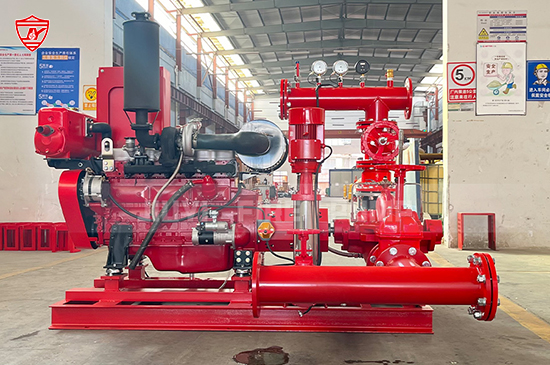
Diesel fire pumps require more maintenance due to their engine-driven design. Without regular testing and servicing, they may fail because of:
Batteries are especially critical. A diesel fire pump may have a perfectly healthy engine but still fail because its batteries are not charged or maintained.
Electric fire pumps may fail to start due to:
Without regular inspection and testing, these issues may go unnoticed until a real fire event.
Even if a poorly maintained fire pump starts successfully, it may still fail to deliver the required hydraulic performance.
A fire pump is designed to provide specific flow and pressure characteristics based on system demand. Over time, neglect can reduce efficiency and output.
Potential causes include:
If pump performance drops below design requirements, the fire protection system may become ineffective.
Consequences include:
A pump operating below rated capacity may create a false sense of security, as the system appears operational but performs inadequately.
Fire pumps are heavy-duty machines operating under demanding conditions. Lack of maintenance accelerates wear and tear.
Over time, neglected maintenance can cause:
Small maintenance issues often develop into major mechanical failures.
For example, a minor seal leak may initially seem insignificant. However, if ignored, it can lead to bearing contamination, lubrication loss, overheating, and eventual pump shutdown.
Preventive maintenance is significantly less expensive than major repairs or equipment replacement.
Water exposure makes fire pumps especially vulnerable to corrosion.
Internal corrosion can affect:
Corrosion is particularly problematic in systems exposed to:
Rust buildup can restrict flow, weaken components, and cause moving parts to seize.
Without regular inspection, corrosion damage often remains hidden until pump disassembly or failure.
Fire pump maintenance is not only a best practice—it is often a legal and insurance requirement.
In many jurisdictions, fire pumps must be inspected, tested, and maintained according to standards such as NFPA 25.
Failure to comply with maintenance requirements can result in:
Required activities typically include:
Skipping these procedures may place building owners in violation of local fire codes and safety regulations.
Insurance providers often expect fire protection systems to be properly maintained.
If a fire occurs and investigation reveals poor maintenance practices, insurers may question whether the loss could have been mitigated.
This can lead to:
In severe cases, neglected maintenance records can complicate recovery efforts after a fire-related incident.
A properly maintained fire pump system demonstrates risk management responsibility and supports smoother insurance processes.
Reactive repairs are almost always more expensive than preventive maintenance.
When maintenance is ignored, failures tend to occur unexpectedly, creating urgent repair situations.
Emergency repairs often involve:
In commercial or industrial facilities, downtime can be extremely costly.
For example:
A scheduled maintenance program reduces these risks by identifying problems before they become operational emergencies.
Fire pumps are long-term investments. With proper maintenance, many systems can operate reliably for decades.
Neglect significantly reduces service life.
Poor maintenance accelerates degradation of:
Replacing a fire pump system is a major capital expense involving:
Routine maintenance helps maximize equipment life and protect investment value.
Ultimately, the most serious consequence of poor fire pump maintenance is compromised life safety.
Fire pumps exist for one purpose: ensuring water is available when lives and property are at risk.
A neglected fire pump increases the likelihood of:
When a fire protection system underperforms, occupants, firefighters, and property are all placed at greater risk.
The cost of maintenance is small compared with the consequences of failure.
To avoid these risks, facilities should implement a structured maintenance program.
Recommended best practices include:
Conduct regular operational tests to verify startup and performance.
These may include:
Testing helps detect issues before emergencies occur.
Inspect for:
Small warning signs often indicate developing problems.
Maintain detailed records of:
Documentation supports compliance and maintenance planning.
Use trained professionals familiar with fire pump systems, controllers, and applicable standards.
Improper maintenance can be nearly as risky as no maintenance.
Keep critical spare parts available where practical, especially for essential facilities.
Examples include:
This reduces repair delays.
Fire pumps are the backbone of many fire protection systems, but their reliability depends entirely on proper maintenance.
When fire pumps are not maintained properly, the consequences can be severe: startup failure, inadequate water pressure, mechanical breakdowns, code violations, increased costs, shortened lifespan, and most importantly, compromised life safety.
A fire pump is not just another mechanical asset—it is emergency equipment that may only get one chance to perform.
.jpg)