When selecting, inspecting, or commissioning a fire pump, three performance points are especially important: rated flow, 150% flow, and churn. These points form the foundation for understanding a fire pump's performance curve and determining whether the pump can deliver the required water supply under different operating conditions.
For fire protection engineers, contractors, system designers, facility managers, and procurement professionals, understanding these three operating points helps prevent incorrect pump selection, supports proper system design, and makes fire pump acceptance testing easier to interpret.
A fire pump is not designed to deliver the same pressure at every flow rate. As water demand increases, the pump's discharge pressure generally decreases. The relationship between flow and pressure is illustrated by the fire pump performance curve, which shows how the pump behaves from zero flow through its rated capacity and beyond.
This article explains rated flow, 150% flow, and churn pressure, how they relate to each other, and why each point matters in a fire protection system.
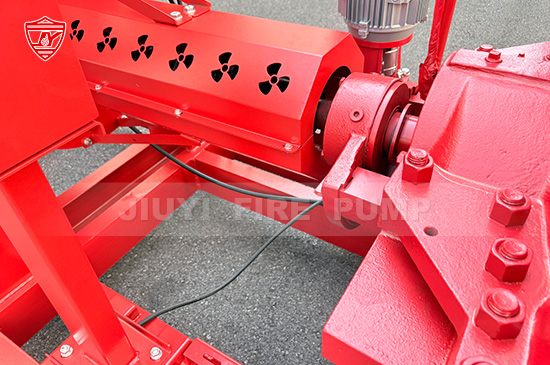
Rated flow is the flow rate at which a fire pump is designed and rated to operate under its specified rated pressure and speed. It represents the pump's nominal capacity and is one of the primary parameters used when selecting a fire pump for a project.
Rated flow is typically expressed in gallons per minute (GPM) in the United States or cubic meters per hour (m³/h) in international markets.
Common fire pump rated capacities include:
250 GPM
500 GPM
750 GPM
1,000 GPM
1,250 GPM
1,500 GPM
2,000 GPM
2,500 GPM
3,000 GPM
The rated flow must be selected according to the hydraulic demand of the fire protection system. This demand may include sprinkler systems, hydrants, standpipes, water curtains, or other fire protection equipment, depending on the project design.
Rated pressure refers to the pressure the fire pump is designed to produce at its rated flow under specified conditions. In practical fire pump applications, rated pressure is commonly expressed in PSI, bar, or meters of head.
For example, a fire pump rated at 1,000 GPM and 100 PSI is designed to deliver approximately 1,000 GPM at a net pressure rise of 100 PSI under its rated operating conditions.
The relationship between flow and pressure is important because the system must receive sufficient water volume while maintaining the pressure needed for firefighting equipment to operate correctly.
Rated flow and rated pressure are therefore considered together, not independently.
The 150% flow point represents an operating condition where the fire pump delivers 150% of its rated flow capacity.
For a pump rated at 1,000 GPM, 150% flow equals:
1,000 × 150% = 1,500 GPM
This point is used to evaluate the pump's ability to deliver increased water volume beyond its rated capacity while maintaining an acceptable pressure level.
For many listed centrifugal fire pumps designed in accordance with NFPA 20 performance requirements, the pump is expected to deliver at least 65% of its rated pressure at 150% of rated flow.
This requirement demonstrates that the pump can provide additional water capacity when demand increases, although the discharge pressure will generally be lower than at rated flow.
Fire conditions can create water demands that exceed the normal design operating point. Multiple firefighting outlets may operate simultaneously, sprinkler systems may discharge across larger areas, and emergency response teams may require additional water.
The 150% flow point provides an important performance reference for understanding how a pump responds when demand increases.
It helps engineers and project contractors evaluate:
Whether the pump can supply additional water volume.
Whether pressure remains within acceptable performance limits.
Whether the pump curve is suitable for the system's hydraulic requirements.
Whether the selected pump provides an appropriate operating range.
Whether the pump meets applicable performance and listing requirements.
However, 150% flow should not automatically be interpreted as the required continuous operating flow of a fire protection system. It is a performance evaluation point, and actual system demand should be determined through hydraulic calculations and project requirements.
Churn refers to the operating condition of a centrifugal fire pump when it is running with zero flow through the discharge system.
It is also commonly called shutoff pressure or no-flow pressure.
Under churn conditions, the pump is running at its rated speed, but water is not being delivered to the fire protection system. The pump develops its maximum discharge pressure under this operating condition, according to its performance characteristics.
Churn pressure is important because it represents the highest pressure the pump may generate under normal pump operating conditions without flow.
For many listed centrifugal fire pumps, the churn pressure is generally limited to 140% of the rated pressure under applicable NFPA 20 performance criteria.
For example, if a fire pump has a rated pressure of 100 PSI, its churn pressure should generally not exceed 140 PSI under the applicable standard requirements.
Centrifugal pumps transfer energy to water through the rotating impeller. As flow decreases, the pump's operating point moves along its performance curve toward the shutoff condition.
At zero flow, the pump may develop a higher pressure than it does at rated flow. However, the pump is not delivering useful water volume to the fire protection system.
Churn pressure is therefore not an indication of the pump's ability to supply firefighting water. It is a pressure reference used to understand the pump's performance at the no-flow operating condition.
Operating a centrifugal fire pump at churn for extended periods is generally undesirable because it can lead to water heating, internal recirculation, mechanical stress, and other operating issues, depending on pump design and system conditions.
Rated flow, 150% flow, and churn are connected through the fire pump performance curve.
A typical centrifugal fire pump curve demonstrates the relationship between flow and pressure:
At churn: Flow is zero, and pressure is generally at its highest.
At rated flow: Flow reaches the pump's rated capacity, and pressure corresponds to the rated pressure.
At 150% flow: Flow increases to 1.5 times the rated capacity, and pressure decreases but remains within the applicable performance requirement.
These three points help engineers understand whether the pump can perform across a range of operating conditions rather than only at a single design point.
Consider a centrifugal fire pump with the following rated specifications:
|
Operating point |
Flow |
Pressure |
|---|---|---|
|
Churn |
0 GPM |
Maximum, generally no more than 140 PSI |
|
Rated point |
1,000 GPM |
100 PSI |
|
150% flow |
1,500 GPM |
Minimum 65 PSI |
This example illustrates the general performance relationship for a pump meeting the applicable NFPA 20 centrifugal fire pump performance criteria.
The example shows that the pump can produce a higher pressure when there is no flow, deliver its rated pressure at its rated flow, and provide additional flow at a reduced pressure.
The actual performance curve must always be reviewed when selecting or evaluating a fire pump.
A fire pump performance curve is one of the most important documents provided by a fire pump manufacturer. It presents the relationship between flow rate and pressure and helps engineers determine whether the selected pump meets the required operating conditions.
The horizontal axis usually represents flow rate, while the vertical axis represents pressure or head.
As flow increases, the pressure generated by a centrifugal pump generally decreases. The curve allows users to identify the pressure available at different flow rates.
When reviewing a fire pump performance curve, pay attention to the following points.
The zero-flow point represents the churn condition. It indicates the pressure the pump develops when operating without discharge flow.
This point is important for evaluating maximum pump pressure and the pressure rating of connected piping, valves, fittings, and other system components.
The rated-capacity point identifies the pump's specified flow and pressure. It is the main reference point used for pump selection and system design.
The pump should be selected to meet the calculated fire protection demand at the required pressure.
This point shows the pump's performance at increased flow. It helps confirm whether the pump can provide the required additional capacity while maintaining the minimum pressure specified by the applicable standard.
The overall shape of the performance curve is also important. Engineers should consider the relationship between pressure, flow, motor power, and operating conditions when evaluating the pump.
A complete fire pump selection should not rely only on rated flow and pressure. The entire performance curve should be reviewed to ensure that the pump is suitable for the intended application.
Understanding rated flow, 150% flow, and churn is essential for selecting a fire pump that matches the project requirements.
If a pump is selected only by its rated flow without considering the pressure available at higher flow rates, the system may not receive sufficient pressure when water demand increases.
Reviewing the 150% flow point helps confirm the pump's additional flow capability and pressure performance.
Churn pressure may be significantly higher than rated pressure. This is especially important when the pump supplies systems with pressure-sensitive components or when the available suction pressure is high.
Engineers should consider the maximum possible system pressure, including pump churn pressure and suction pressure, when evaluating piping, valves, fittings, and other components.
Fire protection system hydraulic calculations determine the required flow and pressure for the system.
The fire pump performance curve should be compared against the calculated demand to ensure that the selected pump can deliver the required water supply.
A pump that has a high rated flow does not necessarily provide the correct pressure at the required operating point. Proper selection requires evaluating both flow and pressure.
The purpose of a fire pump is to provide dependable water supply during emergency conditions.
Understanding its performance at different operating points helps engineers, contractors, and owners make informed decisions about system design, commissioning, and maintenance.
During fire pump acceptance testing and periodic performance testing, the pump's actual performance is evaluated against its rated characteristics and applicable requirements.
Testing commonly involves measuring flow, suction pressure, discharge pressure, and pump speed at different operating conditions.
The test results are used to determine the net pressure developed by the pump and compare actual performance with the manufacturer's published curve.
During the churn test, the pump operates with no discharge flow.
The test verifies the no-flow pressure and provides information about the pump's condition at shutoff.
The pump should be operated according to the manufacturer's instructions and applicable testing requirements. Because no water is being discharged through the normal test flow path, appropriate provisions must be made to prevent overheating or unsafe operating conditions.
During the rated-flow test, the pump is operated at its rated flow.
The measured pressure is compared with the rated performance to verify whether the pump delivers the required capacity and pressure.
During the 150% flow test, the pump is operated at 1.5 times its rated flow, provided the test installation and water supply are capable of safely supporting this condition.
The measured pressure is evaluated against the applicable minimum performance requirement.
For a pump rated at 1,000 GPM, this test point corresponds to 1,500 GPM. For a pump rated at 500 GPM, the corresponding point is 750 GPM.
A properly designed test arrangement should provide sufficient flow measurement accuracy and reliable pressure readings. Test equipment, gauges, flow meters, and installation conditions can all affect the quality of the results.
Testing should be conducted by qualified personnel following applicable standards, manufacturer recommendations, and site safety procedures.
Several misconceptions can lead to incorrect interpretations of fire pump specifications.
Churn pressure is the no-flow pressure. It does not represent the pressure available when the pump is delivering water to the system.
For practical system design, rated pressure and the pressure available at the required flow are more meaningful.
The 150% flow point is a performance reference, not necessarily the system's normal operating condition.
The actual water demand depends on the fire protection system design, hydraulic calculations, and emergency operating requirements.
A higher churn pressure is not necessarily an advantage.
Excessive pressure can create challenges for system components, pressure ratings, and overall system design. The pump should meet the required performance criteria while remaining suitable for the entire fire protection system.
Two fire pumps may have the same rated flow but different performance curves.
Their pressure performance at churn, rated flow, and 150% flow may differ depending on pump design, impeller diameter, speed, and other characteristics.
For this reason, engineers should evaluate the complete performance curve rather than comparing only the rated capacity.
Before specifying or purchasing a fire pump, engineers and contractors should review several key parameters to ensure that the pump matches the project requirements.
1. Required flow rate: Determine the required water demand based on hydraulic calculations and applicable fire protection standards.
2. Required pressure: Confirm the pressure needed at the pump discharge to overcome system elevation, friction losses, and equipment pressure requirements.
3. Pump performance curve: Review the complete curve, including churn, rated flow, and 150% flow, to understand the pump's operating range.
4. Suction conditions: Evaluate the available water supply, suction pressure, tank elevation, piping arrangement, and other relevant conditions.
5. Driver selection: Select an appropriate electric motor or diesel engine based on the pump's required power, operating conditions, and project requirements.
6. System pressure rating: Verify that piping, valves, fittings, and connected equipment can withstand the maximum anticipated pressure, including churn pressure and available suction pressure.
7. Applicable standards and approvals: Confirm that the pump meets the standards, certifications, listings, and project specifications required by the authority having jurisdiction.
A carefully selected fire pump provides the necessary flow and pressure while supporting dependable operation throughout the fire protection system.
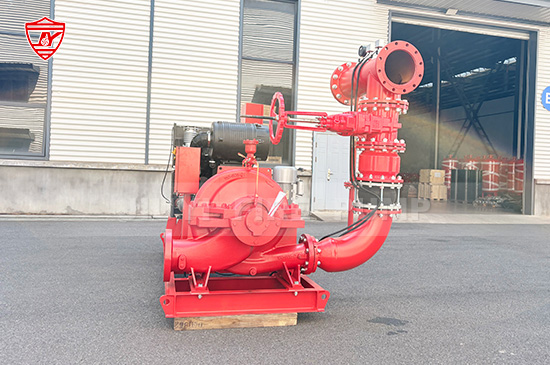
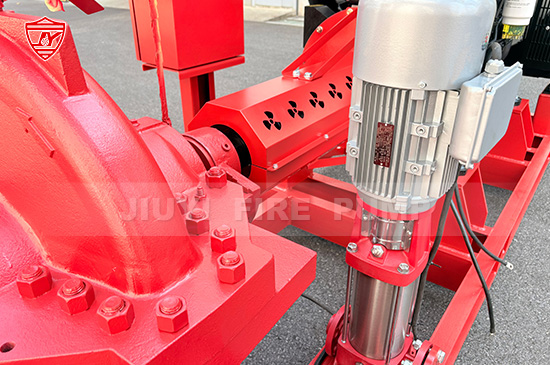
Rated flow, 150% flow, and churn are three fundamental operating points used to understand centrifugal fire pump performance.
Rated flow defines the pump's nominal capacity and pressure. The 150% flow point demonstrates its ability to deliver additional water at reduced pressure. Churn represents the pump's maximum no-flow pressure under the specified operating conditions.
Together, these points provide engineers with a practical framework for evaluating pump performance, selecting suitable equipment, and verifying operation during testing and commissioning.
For fire protection projects, understanding the complete fire pump performance curve is essential to ensure that the selected pump can meet the system's hydraulic requirements under different operating conditions.