Fire protection systems are designed to protect people, property, and critical infrastructure when emergencies occur. However, even a well-designed fire protection system may face unexpected equipment failures, power interruptions, maintenance requirements, or operational challenges. In facilities where fire safety is critical, relying on a single fire pump may introduce unnecessary risks.
Fire pump system redundancy is an important consideration in the design of fire protection systems for industrial facilities, commercial buildings, warehouses, petrochemical plants, data centers, ports, and other high-risk environments. By incorporating backup equipment or alternative power sources, redundant fire pump configurations help ensure that adequate water supply and pressure remain available when the primary equipment cannot operate.
Redundancy is not simply about installing additional pumps. It involves evaluating system demand, equipment reliability, power availability, operating conditions, control strategies, and applicable fire protection standards.
In this article, we explore five key reasons why fire pump system redundancy matters and how it contributes to dependable fire protection.
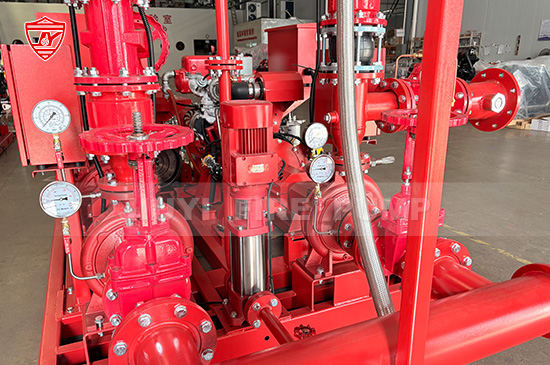
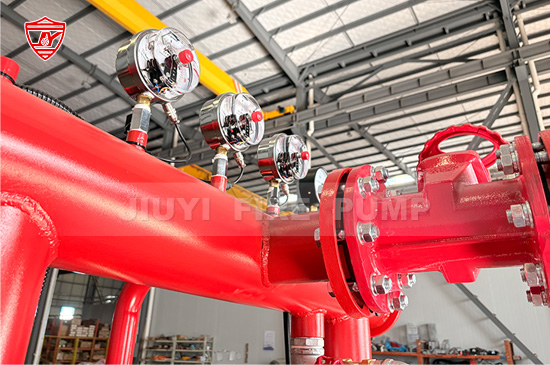
Reliability is one of the most important requirements of any fire protection system. During a fire emergency, the fire pump must deliver the required water flow and pressure to sprinkler systems, hydrants, standpipes, or other firefighting equipment. If the primary fire pump fails to start or cannot achieve the required performance, the consequences may be serious.
A redundant fire pump system provides an additional level of protection against equipment failure. Depending on the system design, a backup pump may be installed to provide an alternative source of water pressure and flow when the primary pump becomes unavailable.
Fire pump failures can result from various factors, including:
Mechanical wear or damage to pump components
Motor or diesel engine failure
Electrical power interruptions
Controller malfunctions
Incorrect installation or commissioning
Unexpected operating conditions
Insufficient water supply
A properly designed redundant system helps reduce dependence on a single piece of equipment. If one pump experiences a problem, another pump may be available to support the fire protection system, subject to the system's hydraulic capacity and control arrangement.
For facilities with large fire protection demands, such as industrial plants, distribution centers, and high-rise buildings, reliability is particularly important. A redundant configuration can help maintain operational readiness and strengthen overall fire protection resilience.
However, redundancy should always be designed according to the actual fire protection requirements of the facility. Additional pumps must be properly sized, configured, and integrated into the system to provide meaningful protection.
Fire pump systems require regular inspection, testing, preventive maintenance, and occasional repairs. Mechanical components, electrical equipment, controllers, diesel engines, batteries, cooling systems, and other accessories may need attention throughout their service life.
When a facility depends on only one fire pump, maintenance or unexpected equipment failure may temporarily affect the availability of its fire protection system. This creates a challenging situation, particularly for facilities that cannot easily suspend operations or remain without adequate fire protection.
Fire pump redundancy can help reduce the impact of equipment downtime.
For example, a facility equipped with two appropriately designed fire pumps may be able to maintain a required level of fire protection while one pump is undergoing maintenance, provided the remaining equipment is capable of meeting the applicable system requirements and the arrangement is permitted by the relevant standards and authorities.
This is particularly valuable in facilities such as:
Manufacturing plants operating continuously
Warehouses with high-value inventory
Oil and gas facilities
Airports and transportation infrastructure
Hospitals and healthcare facilities
Data centers and critical infrastructure
In these environments, maintenance activities must be carefully coordinated with operational schedules and fire safety requirements.
Redundancy provides greater flexibility for maintenance planning. Instead of relying entirely on the availability of a single pump, facility operators can have additional equipment available to support system readiness during planned maintenance or unexpected repairs.
Nevertheless, redundancy does not eliminate the need for proper maintenance. Every installed fire pump should be regularly inspected, tested, and maintained to ensure that it can perform when required.
Power interruptions are among the most common challenges affecting electrically driven equipment. During emergencies, electrical systems may experience failures caused by utility outages, damaged infrastructure, fire-related incidents, or other unexpected events.
An electric fire pump depends on an appropriate electrical power supply to operate. If the power source becomes unavailable and no suitable alternative is provided, the pump may not be able to deliver water to the fire protection system.
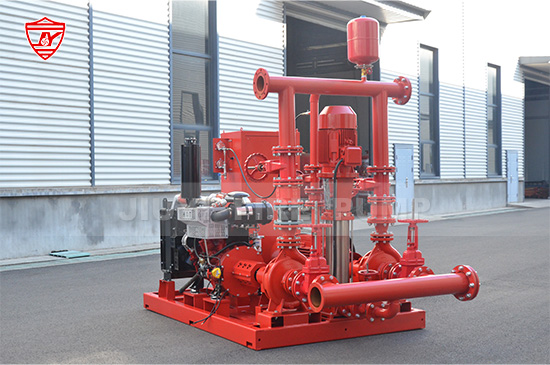
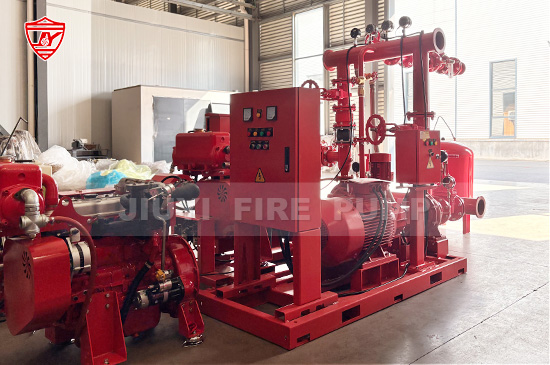
One effective approach to fire pump system redundancy is combining electric-driven and diesel-driven fire pumps.
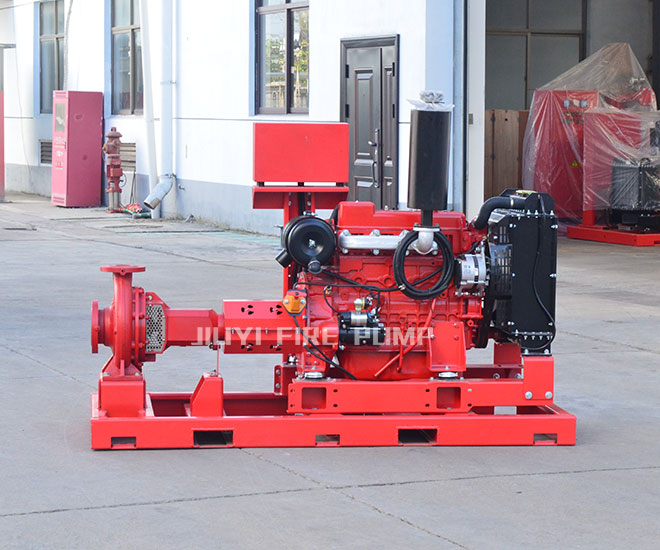
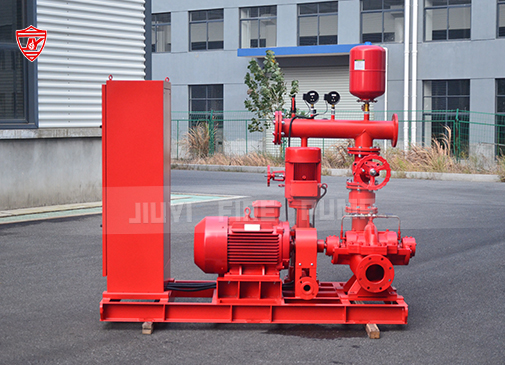
An electric fire pump can serve as the primary pump, while a diesel engine-driven fire pump provides an alternative source of power and operation. Because diesel-driven fire pumps do not depend on the same electrical power supply as electric pumps for their main driving power, they can provide additional operational resilience during electrical outages.
A typical configuration may include:
Electric fire pump: Primary pump driven by an electric motor.
Diesel fire pump: Backup pump driven by a diesel engine.
Jockey pump: Small pressure-maintenance pump used to compensate for minor system pressure losses.
The jockey pump is not intended to replace the main fire pump during firefighting demand. Its primary purpose is to maintain system pressure and reduce unnecessary starting of the main pumps.
For facilities where electrical power availability is a major concern, diesel fire pump systems can be an important part of a redundancy strategy.
The selection of electric and diesel fire pumps should consider the required flow rate, pressure, fuel storage, ventilation, exhaust arrangements, engine cooling, battery systems, controller requirements, and applicable fire protection standards.
Not every facility has the same fire protection requirements. A small commercial building may have different operational risks from a petrochemical plant, large logistics warehouse, industrial production facility, or port terminal.
In high-risk environments, fire incidents may develop rapidly and require significant firefighting water demand. Fire protection systems must be designed to support the required hydraulic performance under challenging operating conditions.
Redundant fire pump arrangements can be particularly valuable in facilities where the consequences of fire are severe.
Manufacturing plants may contain production equipment, combustible materials, electrical systems, and process hazards. Fire pump redundancy helps provide additional confidence in the availability of firefighting water when equipment failure or power interruptions occur.
Oil refineries, chemical plants, and petroleum storage facilities may require substantial firefighting water capacity. Their fire protection systems may serve hydrants, monitors, deluge systems, cooling systems, and other firefighting equipment.
Redundancy should be evaluated according to the site's fire risk, required water demand, and applicable engineering standards.
Large warehouses may contain extensive storage areas, high-value goods, packaging materials, and complex sprinkler networks. Reliable fire pump operation is essential to supporting the designed fire protection system.
Ports handle cargo, fuel, containers, vehicles, and industrial equipment. Fire protection requirements may vary depending on the type of terminal, cargo, and site layout. Redundant pumping arrangements can help strengthen system reliability in these demanding environments.
Shopping malls, hospitals, airports, data centers, and other critical facilities may require careful consideration of fire pump availability, emergency power, system configuration, and operational continuity.
The appropriate redundancy strategy depends on the facility's fire risk assessment, hydraulic calculations, local regulations, and applicable fire protection standards. Installing additional pumps without evaluating these factors does not automatically improve system performance.
Fire pump system redundancy is also an important part of long-term risk management. Fire protection equipment may remain unused for extended periods, but it must be ready to operate when an emergency occurs.
A redundant system provides facility owners, engineers, contractors, and maintenance teams with greater confidence in the availability of critical firefighting equipment.
From a risk management perspective, redundancy helps address several concerns:
Equipment availability: Additional pumping capacity or an alternative pump arrangement can reduce dependence on a single unit.
Maintenance planning: Operators may have greater flexibility when scheduling inspections, repairs, and servicing, depending on the system configuration and remaining available capacity.
Operational resilience: Facilities can better manage unexpected equipment problems or power interruptions when appropriate backup arrangements are provided.
Project reliability: Properly designed fire pump systems help support the overall fire protection strategy and contribute to the protection of buildings, equipment, inventory, and personnel.
Long-term planning: Redundancy considerations during the initial design stage can help avoid costly modifications, operational limitations, or installation challenges in the future.
Although redundant fire pump systems may require higher initial investment, the cost should be evaluated against the facility's fire risk, operational requirements, potential downtime, and consequences of inadequate fire protection.
For many critical applications, reliability is not simply a purchasing consideration. It is a fundamental requirement of responsible fire protection engineering.
Selecting a redundant fire pump system requires more than deciding how many pumps to install. Engineers must evaluate the complete fire protection system and ensure that the proposed arrangement meets the project's requirements.
Important considerations include:
Determine the total fire protection water demand based on the applicable hydraulic calculations. Each pump must be selected according to the required flow rate, pressure, and operating conditions.
Common configurations include electric and diesel fire pump combinations, multiple main fire pumps, and other arrangements designed for specific project requirements.
The configuration should be determined by the applicable standards, project specifications, and fire protection design.
Evaluate the availability and reliability of the electrical power source. Consider whether an alternative driver or power supply is necessary to support fire pump operation during emergencies.
Fire pump controllers must be properly configured to support the intended system operation. Automatic starting sequences, pressure settings, alarm functions, and interconnections should be carefully reviewed.
Installing additional pumps does not increase the available water supply automatically. The water source, storage capacity, suction conditions, piping, and hydraulic performance must be sufficient for the intended operating arrangement.
Fire pump system design should comply with the relevant codes, standards, local regulations, and project requirements. Depending on the project, NFPA 20 and other applicable requirements may be used as references for fire pump installation and system design.
The final system configuration should be reviewed and approved by qualified fire protection professionals and the relevant authorities where required.
Fire pump system redundancy plays an important role in improving fire protection reliability, reducing equipment downtime, supporting operation during power failures, protecting high-risk facilities, and strengthening long-term risk management.
For facilities with demanding fire protection requirements, redundant fire pump arrangements can provide an additional level of operational confidence. However, effective redundancy depends on proper engineering, equipment selection, hydraulic calculations, power supply evaluation, control integration, and regular maintenance.