Selecting the right fire fighting pump is one of the most important decisions when designing or purchasing a fire protection system. A properly selected fire pump provides the flow and pressure required to deliver water to sprinklers, hydrants, hose reels, standpipes, and other firefighting equipment when they are needed most.
However, choosing a fire pump is not simply a matter of selecting the largest pump available. The correct solution depends on hydraulic requirements, building characteristics, water supply, power availability, applicable standards, operating conditions, and the specific requirements of the project.
For engineers, contractors, system integrators, and project owners, understanding the key factors behind fire pump selection can help avoid common problems such as insufficient pressure, excessive energy consumption, incorrect pump sizing, or incompatibility with the overall fire protection system.
This guide explains the major considerations when choosing a fire fighting pump for a new or existing project.
.jpg)
The first step in fire pump selection is determining the required flow rate and pressure.
Every fire protection system has specific hydraulic requirements. The pump must provide enough water at sufficient pressure to satisfy the most demanding point in the system.
Flow is commonly expressed in GPM or LPM, while pressure may be expressed in PSI, bar, kPa, or meters of head.
For example, a project may require a fire pump capable of delivering 500 GPM at a specified pressure. Another industrial installation may require several thousand GPM because of the size and risk level of the protected facility.
The required pump duty point should normally be established through hydraulic calculations rather than estimated from building size alone.
When reviewing pump performance, consider:
The fire pump should be selected based on the actual system demand and the applicable fire protection requirements.
Flow and pressure are closely related, but they are not the same thing.
Flow describes how much water the pump can deliver over a period of time. Pressure describes the force available to move that water through the system.
A pump with high flow but insufficient pressure may not adequately serve elevated floors or remote sprinklers. Conversely, selecting a pump with significantly more pressure than required can create unnecessary system pressure and may increase equipment and operating costs.
The correct fire fighting pump should therefore provide the required flow and pressure at the project duty point.
Pump curves are particularly important during selection. Engineers should review the pump's performance across the expected operating range rather than looking only at the rated point.
Pressure requirements should also be evaluated in terms of total dynamic head.
Total dynamic head represents the energy the pump needs to provide to overcome elevation, friction, system resistance, and the pressure required at the discharge point.
Important factors include:
Static head: The vertical distance the water must travel.
Friction loss: Pressure loss caused by water flowing through pipes, fittings, valves, and other components.
Required residual pressure: The pressure that must remain available at the hydraulically most demanding device.
Suction conditions: The available water pressure or elevation on the pump suction side.
These factors work together to determine the actual pump duty.
Accurate hydraulic calculations are therefore essential for fire pump sizing. A professional fire pump manufacturer can use the project's hydraulic requirements to help determine a suitable pump model and configuration.
The available water supply has a major influence on fire pump selection.
A fire pump may draw water from a municipal water network, dedicated fire water tank, reservoir, underground tank, or another approved water source.
Before selecting the pump, determine:
If the water source is located below the pump, special attention may be required for suction conditions. In some applications, a vertical turbine fire pump may be more suitable than a horizontal pump arrangement.
The water source should always be evaluated together with the pump, suction piping, valves, and system design.
Fire fighting pumps are available in several configurations. The best choice depends on the project requirements.
Horizontal split case pumps are widely used for commercial, industrial, municipal, and large-scale fire protection systems.
They are particularly suitable for applications requiring relatively high flow rates and robust continuous-duty performance. Their construction also allows convenient access to internal components for maintenance.
End suction fire pumps are often selected for applications with more compact requirements.
They can be an effective solution where the required flow and pressure fall within the pump's available performance range and the installation layout favors a compact configuration.
Vertical turbine fire pumps are commonly used when the water source is located below the pump discharge level, such as in a deep fire water tank, reservoir, or underground water source.
The vertical shaft configuration allows the pump to lift water from a lower-level source while delivering the required pressure to the fire protection system.
Vertical in-line configurations can provide a compact installation footprint and may be suitable for certain building fire protection applications.
The final selection should be based on hydraulic requirements, installation conditions, applicable standards, and manufacturer performance data.
Another major decision is the pump driver.
Fire pump systems commonly use electric motors or diesel engines.
Electric fire pumps are widely used where a reliable electrical supply is available.
Advantages can include:
However, the reliability of the electrical supply must be carefully considered. The project may require a dedicated or emergency power arrangement depending on the applicable regulations and system design.
Diesel fire pumps provide an alternative where electrical reliability is limited or where project requirements call for an independent power source.
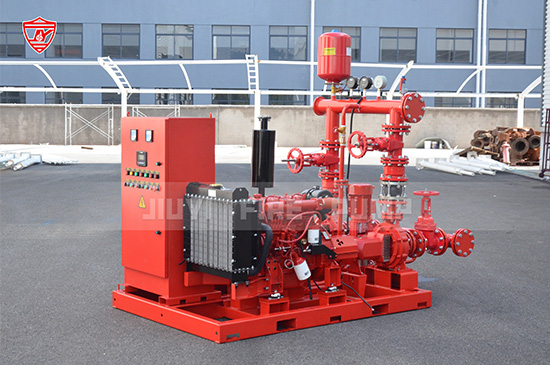
A diesel-driven fire pump system normally includes a diesel engine, controller, batteries, fuel system, cooling system, exhaust system, and associated accessories.
Diesel systems are particularly useful for industrial facilities, remote installations, and projects where an independent driver is desirable.
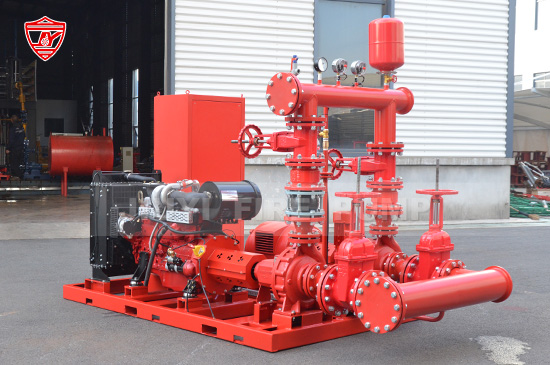
In some installations, both electric and diesel fire pumps are incorporated into the same fire pump system to provide additional operational resilience.
A jockey pump is smaller than the main fire pump and serves a different purpose.
Its primary function is to maintain system pressure and compensate for small pressure losses without starting the main fire pump.
For example, minor leakage or temperature-related pressure changes in a fire protection system may cause the system pressure to fall. The jockey pump can restore the pressure without activating the main fire pump.
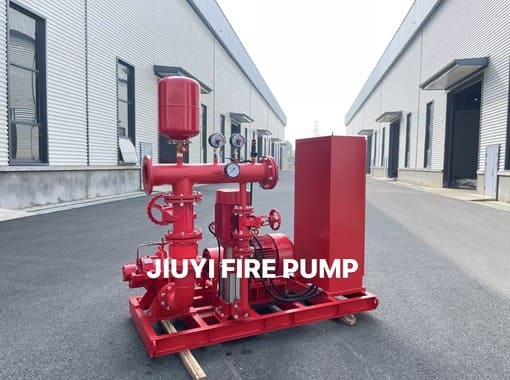
A typical fire pump arrangement may therefore include:
The jockey pump should be correctly sized for the system. It should not be treated simply as a smaller version of the main fire pump.
Fire pumps are safety-critical equipment, so applicable standards and certification requirements must be considered during selection.
Depending on the country, project, authority having jurisdiction, and application, requirements may involve standards such as NFPA 20, UL certification, FM approval, CE requirements, or local fire protection regulations.
For projects requiring certified equipment, selecting a pump that meets the required certification is essential.
For example, a project specification may require a UL Listed fire pump, UL Listed electric motor, certified diesel engine, or a complete listed fire pump package.
Do not assume that certification of one component automatically means that the entire fire pump system has the required certification. Always confirm the certification scope and the specific model or configuration being offered.
The installation environment can affect pump selection and configuration.
Consider whether the pump will be installed:
Outdoor installations may require weather protection and suitable enclosure arrangements. Cold environments may require additional measures to protect water-containing components and diesel systems.
Space is another important consideration. Before ordering equipment, confirm the available pump room dimensions, access routes, foundation requirements, pipe connections, ventilation, exhaust requirements, and maintenance clearance.
A technically suitable pump that cannot be properly installed or maintained is not a good project solution.
A fire pump should not be evaluated as an isolated piece of equipment.
A complete fire pump set may include pumps, drivers, controllers, valves, pressure sensing equipment, batteries, fuel systems, test connections, and other accessories.
The compatibility of all components is important.
For example, when selecting a diesel fire pump set, the engine output must be sufficient for the selected pump across the required operating range. The controller, batteries, fuel tank, cooling system, ventilation, and exhaust arrangement must also be appropriate for the installation.
For electric systems, the motor rating, controller, power supply, starting method, and electrical protection should be coordinated with the project design.
Working with a manufacturer that can provide an integrated fire pump package can simplify procurement, testing, installation, and technical support.
Initial purchase price is important, but it should not be the only selection criterion.
A low-cost pump that does not meet the required performance or certification requirements can create significant problems later.
Consider the total value of the equipment, including:
For a fire protection system, reliability is generally more important than minimizing the initial equipment cost.
Choosing the right fire fighting pump becomes easier when the manufacturer understands both pump technology and fire protection applications.
An experienced manufacturer should be able to review the project duty point, recommend suitable pump types, provide pump curves and technical documentation, and help coordinate the pump, driver, controller, and accessories.
Factory testing is also an important part of quality assurance. Proper performance testing can verify that the pump achieves the required flow and pressure before shipment.
For complex projects, manufacturers with their own engineering, testing, production, and certification capabilities can provide additional value throughout the project lifecycle.
Before placing an order, confirm the following information:
Having these details available before contacting a manufacturer can significantly improve the accuracy and speed of pump selection.
.jpg)
Choosing the right fire fighting pump requires more than matching a pump to a flow rate. The complete fire protection system, including hydraulic requirements, water source, pump type, driver, certification, installation environment, and accessories, must be considered together.
The most important starting point is always the required flow and pressure. From there, engineers and project teams can determine the appropriate pump configuration, drive system, certification, and supporting equipment.
Whether the project requires an electric fire pump, diesel fire pump, jockey pump, split case pump, end suction pump, or vertical turbine fire pump, selecting equipment based on accurate hydraulic calculations and applicable fire protection standards is essential.
As a fire pump manufacturer, BETTER Technology Group focuses on providing engineered fire pump solutions for different project requirements. With the right technical information and professional manufacturer support, project teams can select a fire fighting pump that delivers the required performance, meets applicable standards, and provides dependable protection when it matters most.