
A diesel fire pump must deliver reliable performance when a fire protection system needs it most. One of the most important but often overlooked factors in diesel fire pump reliability is engine cooling. Diesel engines generate significant heat during operation, and without an effective cooling system, excessive temperature can reduce engine performance, accelerate component wear, or even cause engine failure.
For fire protection applications, this issue is especially important because a diesel fire pump is typically required to operate under emergency conditions rather than normal daily operation. When the pump starts, the diesel engine may need to run continuously for an extended period to maintain the required water flow and pressure.
Understanding diesel fire pump cooling helps facility owners, engineers, contractors, and fire protection professionals make better decisions when selecting, installing, testing, and maintaining diesel-driven fire pump systems.
.jpg)
Diesel fire pump cooling refers to the system used to control the operating temperature of the diesel engine that drives the fire pump.
During combustion, a diesel engine converts fuel energy into mechanical energy. A significant portion of that energy is released as heat. If this heat is not effectively removed, engine temperature can rise beyond the acceptable operating range.
A diesel fire pump cooling system normally works together with several engine components, including the radiator or heat exchanger, coolant circuit, thermostat, water pump, hoses, temperature sensors, and related controls.
The exact cooling arrangement depends on the diesel engine and fire pump package design. Common configurations include radiator-cooled engines and heat-exchanger-cooled engines.
Regardless of the configuration, the objective is the same: maintain a suitable engine operating temperature while allowing the diesel fire pump to provide dependable emergency performance.
Cooling is not simply about keeping the engine at a comfortable temperature. It directly affects the reliability, durability, and performance of the complete fire pump system.
The most obvious purpose of cooling is to prevent overheating.
A diesel engine operating at high load produces substantial heat. During a fire emergency, the engine may run continuously while the pump supplies water to sprinklers, hydrants, standpipes, or other fire protection equipment.
If the cooling system cannot remove enough heat, the engine temperature may continue to rise. Excessive temperatures can result in reduced performance, component damage, or automatic protective shutdown depending on the engine and control system.
For a fire pump, an overheating engine is more than a maintenance problem. It can compromise the availability of the fire protection system when emergency water supply is needed.
High temperatures can accelerate the deterioration of important diesel engine components.
Engine oil, seals, gaskets, hoses, bearings, cylinder components, and other parts are designed to operate within specified temperature ranges. Continuous operation outside these ranges can shorten service life.
Effective cooling helps maintain stable operating conditions and reduces unnecessary thermal stress.
For a diesel fire pump manufacturer, cooling performance is therefore an important part of overall engine and pump package reliability.
A diesel engine performs most effectively when operating within its designed temperature range.
If the engine runs too hot, combustion performance, lubrication, and mechanical efficiency can be affected. If the engine runs significantly below its intended operating temperature for extended periods, other problems can also develop, including inefficient combustion and increased deposits.
The cooling system therefore has two important functions: removing excess heat and helping maintain an appropriate operating temperature.
For fire protection equipment, consistent engine performance is particularly important because the pump must be ready to start and operate when required.
The diesel engine provides the mechanical power required to drive the fire pump. If engine performance is affected by excessive temperature, the pump's ability to maintain its required operating condition can also be affected.
A properly designed cooling system helps the diesel engine deliver stable power to the pump.
This creates a direct relationship between engine cooling and fire pump performance:
Effective cooling → stable engine operation → reliable power output → dependable fire pump performance.
This is why cooling should be considered as part of the complete fire pump system rather than as an isolated diesel engine feature.
The cooling method depends on the engine design and fire pump package.
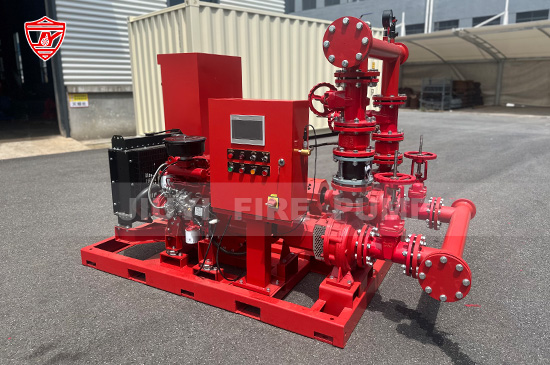
In a radiator-cooled diesel engine, coolant circulates through the engine and absorbs heat from engine components. The heated coolant then passes through the radiator, where heat is transferred to the surrounding air.
A fan helps move air through the radiator to improve heat dissipation.
This type of system is familiar from many industrial diesel engines and can provide an effective cooling solution when the equipment room has suitable ventilation and air movement.
However, room ventilation becomes an important consideration because the cooling process transfers a substantial amount of heat into the surrounding environment.
Another common arrangement uses a heat exchanger.
In this configuration, engine coolant circulates through the diesel engine and transfers heat through the heat exchanger. Water from an appropriate source passes through the other side of the heat exchanger and carries the heat away.
Heat exchanger systems can be particularly useful for stationary fire pump installations where an appropriate water supply is available for engine cooling.
The system must be correctly designed and installed so that the cooling water flow and pressure meet the engine manufacturer's requirements.
A cooling system problem can develop from many different causes.
A low coolant level, blocked radiator, damaged hose, malfunctioning thermostat, inadequate ventilation, restricted water flow, faulty temperature sensor, or cooling-system component failure can all contribute to excessive engine temperature.
The consequences depend on the severity and duration of the problem.
An engine may initially show elevated temperature. If the problem continues, engine performance can deteriorate. In severe situations, components may be damaged or the engine may stop operating.
This is why temperature monitoring is an important part of diesel fire pump operation and maintenance.
Fire protection professionals should not wait until an emergency to discover a cooling problem. Regular inspection and testing provide opportunities to identify abnormal temperatures, leaks, restricted airflow, or other warning signs before they become serious failures.
Cooling performance is closely connected to the design of the fire pump room.
For radiator-cooled diesel fire pumps, adequate ventilation is especially important. The room must be capable of handling the heat generated by the engine and radiator while also providing the air required for combustion and engine operation.
Poor ventilation can cause hot air to accumulate around the engine. As ambient temperature rises, the cooling system may have more difficulty maintaining the required engine operating temperature.
The location of air intake and exhaust openings, ventilation equipment, radiator discharge, and engine exhaust should therefore be considered during fire pump room design.
A technically correct diesel engine can still experience cooling problems if the surrounding installation conditions are unsuitable.
Preventing overheating starts with proper equipment selection and continues throughout installation, commissioning, testing, and maintenance.
First, select a diesel fire pump package designed for the required operating conditions. The engine, cooling system, and pump should be properly matched.
Second, verify installation conditions. The fire pump room should provide appropriate ventilation, exhaust arrangements, ambient conditions, and access for maintenance.
Third, inspect the cooling system regularly. Check coolant levels, hoses, connections, radiator condition, heat exchanger components, and other relevant parts according to the manufacturer's maintenance recommendations.
Fourth, monitor engine temperature during routine testing. An unusual temperature increase may indicate a developing problem even if the pump is still operating.
Finally, investigate warning signs promptly. Coolant leakage, abnormal temperature readings, unusual engine behavior, blocked airflow, or other changes should not be ignored.
Testing is an important way to verify that the complete diesel fire pump system can operate as intended.
During testing, professionals can observe engine temperature, pump performance, operating conditions, and other system parameters.
Performance testing can help identify issues that may not be visible during a simple visual inspection.
For manufacturers, factory testing is also important. A properly equipped test facility allows the diesel engine and fire pump package to be evaluated under controlled operating conditions before shipment.
This provides an additional layer of quality verification and helps ensure that the equipment is suitable for demanding fire protection applications.
For fire protection projects, cooling should also be considered within the applicable fire pump installation requirements and the specific requirements of the selected diesel engine and fire pump package.
NFPA 20 is widely used as a reference for stationary fire pump installations and includes requirements related to diesel engine-driven fire pumps and their installation.
However, project requirements can vary depending on the application, jurisdiction, equipment configuration, and applicable edition of the standard.
Engine and fire pump manufacturers should therefore provide equipment that is properly designed for the intended fire protection application, while engineers and contractors should verify the complete installation against the requirements applicable to their project.
Cooling performance should be one of the factors considered when evaluating a diesel fire pump manufacturer.
A reliable manufacturer should have the engineering capability to integrate the diesel engine, fire pump, cooling system, controller, fuel system, and other components into a complete package.
Manufacturing quality is equally important. Precision machining, assembly control, component inspection, factory testing, and quality management all contribute to the reliability of the final fire pump system.
Testing capability is particularly valuable for diesel fire pump manufacturers because it allows equipment to be evaluated under realistic operating conditions.
For customers, the goal should not simply be to purchase a diesel engine connected to a pump. The objective is to obtain a complete fire pump package that can provide dependable performance when the fire protection system needs it.
.jpg)
So, why does diesel fire pump cooling matter?
Because a diesel fire pump can only provide reliable emergency performance when its driving engine can operate safely and consistently.
An effective cooling system helps prevent overheating, protects engine components, supports stable power output, and contributes to the overall reliability of the fire pump package. Proper ventilation, installation, testing, inspection, and maintenance are equally important to ensure that the cooling system performs as designed.
For fire protection professionals, cooling should therefore be considered during every stage of a diesel fire pump project, from equipment selection and engineering design to commissioning and long-term maintenance.
.jpg)