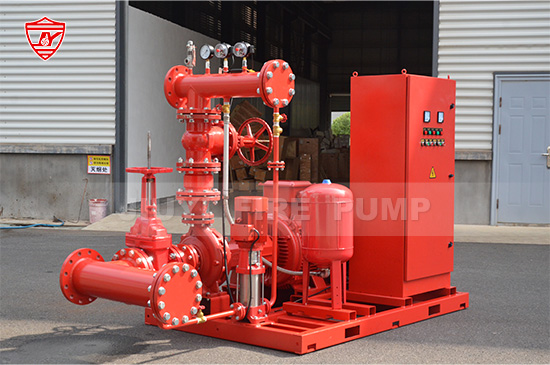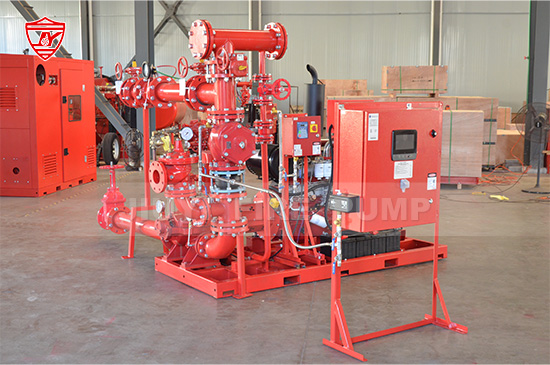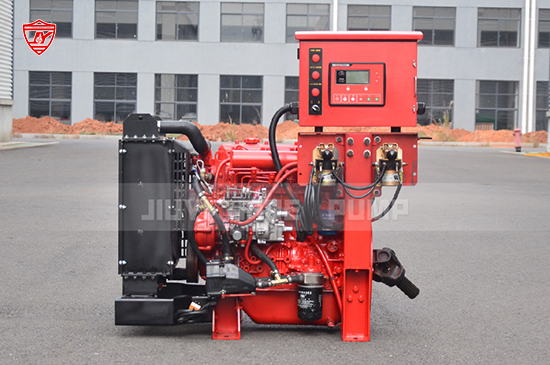
Choosing the correct fire pump flow and pressure is one of the most important decisions when designing or upgrading a fire protection system. An incorrectly sized pump may fail to deliver sufficient water during a fire emergency, while an oversized pump can increase equipment costs, energy consumption, and system pressure problems.
For fire protection engineers, contractors, consultants, and building owners, proper fire pump sizing starts with understanding two fundamental parameters: flow rate and pressure. The selected fire pump must deliver the required water flow at the pressure needed by the most demanding part of the fire protection system.
This article explains how to choose the correct fire pump flow and pressure, what factors affect fire pump sizing, and how to avoid common mistakes during fire pump selection.
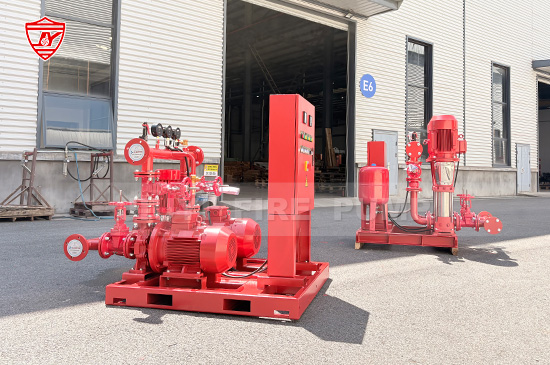
The first step in selecting a fire pump is determining its required duty point, also called the design point or rated point.
The duty point consists of two key values:
For example, a fire protection system may require a pump to deliver 1,000 GPM at 120 PSI. This means the pump must be capable of supplying 1,000 gallons per minute while maintaining the required pressure at the specified operating condition.
The correct fire pump should be selected based on the hydraulic demand of the entire fire protection system rather than simply choosing a pump with the highest available flow or pressure.
The duty point is normally determined through hydraulic calculations based on the building's fire protection design. Depending on the application, the calculation may consider automatic sprinklers, standpipes, hose stations, hydrants, water curtains, foam systems, or other fire protection equipment.
Understanding the duty point is therefore the foundation of proper fire pump sizing.
Fire pump flow rate represents the volume of water the pump must supply to the fire protection system over a specific period.
The required flow depends on several factors, including:
For a sprinkler system, the required flow is generally determined by the hydraulic demand of the most demanding design area, together with any required hose stream allowance.
For systems with multiple fire protection functions, the required flow may be higher. For example, a high-rise building with sprinklers and standpipes may require significantly more water than a small commercial building protected only by sprinklers.
It is important to understand that the largest pipe size or the largest building area does not automatically determine the required fire pump flow. The actual flow requirement should be established through a properly engineered hydraulic calculation.
A common mistake is selecting a pump based only on the water supply pipe size. Pipe diameter can influence the available flow and pressure, but it does not by itself determine the required fire pump capacity.
Once the required flow has been determined, the next step is to calculate the pressure the fire pump must provide.
The required pump pressure generally needs to overcome several components of system resistance.
A simplified approach is:
Required Pump Pressure = Required System Pressure + Elevation Loss + Friction Loss + Other Losses - Available Suction Pressure
Each component must be evaluated carefully.
The fire protection equipment located at the most hydraulically demanding point must receive sufficient pressure to operate correctly.
For example, sprinkler heads require a minimum pressure to produce their designed discharge. Standpipe hose connections may also require a specific residual pressure.
The fire pump must provide enough pressure to ensure that the required flow reaches the most remote or demanding point in the system.
Water pressure decreases as elevation increases.
In a multi-story building, the fire pump may be installed in a basement or ground-level pump room while the highest sprinkler or standpipe connection is located many floors above it.
The greater the vertical distance, the greater the pressure loss caused by elevation.
For this reason, high-rise buildings often require significantly higher fire pump pressure than low-rise buildings with similar flow requirements.
As water flows through pipes, valves, fittings, elbows, check valves, backflow preventers, and other components, pressure is lost due to friction.
The amount of friction loss depends on:
Higher flow rates generally result in greater friction losses. Smaller pipes can also produce significantly higher pressure losses than larger pipes at the same flow.
Therefore, a fire pump should not be selected by looking only at the pressure required at the sprinkler or hose connection. The designer must account for the complete hydraulic path from the pump to the most demanding point.
Before choosing a fire pump, it is essential to understand the existing water supply.
The available water supply may come from:
The water supply should be evaluated through a flow test or other appropriate engineering assessment.
The key questions are:
The available water supply affects the required fire pump pressure.
For example, if the water supply can already provide part of the required pressure, the fire pump may only need to add the pressure difference. If the available water supply is insufficient, the fire pump must provide a greater pressure increase.
However, the pump selection should always be based on the actual system design and applicable fire protection standards.
After determining the required flow and pressure, the next step is to evaluate the fire pump performance curve.
A pump's performance curve shows how the pump performs at different flow rates and pressures.
When selecting a fire pump, the required duty point should be compared with the pump curve to confirm that the pump can meet the system demand.
The evaluation should not focus only on the rated point. The pump should also be checked at other operating conditions, including shutoff and maximum expected flow, to ensure that the pump operates within acceptable performance limits.
For a properly selected fire pump, the pump curve should provide suitable performance across the expected operating range.
This is particularly important for systems where the actual demand may vary significantly. A pump that performs well at one operating point may not be suitable if the system requires a much wider operating range.
For this reason, experienced fire pump manufacturers typically recommend reviewing the complete certified pump performance curve rather than selecting equipment based solely on a catalog rating.
Choosing a pump with significantly higher flow and pressure than required may appear to provide additional safety, but oversizing can create its own problems.
An oversized fire pump may result in:
If the pump generates excessive pressure, pressure-reducing devices or other system components may be required to control the pressure.
The goal of fire pump sizing is not to select the largest possible pump. The goal is to select a pump that reliably meets the required fire protection demand while operating within the applicable design and performance requirements.
A correctly selected pump provides sufficient flow and pressure without creating unnecessary system complications.
Undersizing a fire pump presents an even more serious problem.
If the pump cannot provide sufficient flow or pressure, the fire protection system may fail to meet its design requirements during an emergency.
Potential consequences include:
For this reason, fire pump sizing should always be based on professional hydraulic calculations and verified system requirements.
The pump should be capable of meeting the required flow at the required pressure under the specified water supply conditions.
The required flow and pressure also influence the type of fire pump that should be selected.
Common fire pump types include:
Horizontal split case pumps are widely used for large commercial, industrial, and high-demand fire protection systems. They are suitable for applications requiring high flow rates and are commonly used in dedicated fire pump rooms.
End suction fire pumps are often used for smaller fire protection systems where space is limited and the required flow is moderate.
Vertical turbine pumps are commonly selected when the water source is located below the pump, such as an underground water tank, well, reservoir, or other suction source where a conventional horizontal pump arrangement is unsuitable.
Electric motor-driven fire pumps are widely used where a reliable electrical power supply is available. They can provide stable and efficient operation and are commonly integrated into automatic fire pump systems.
Diesel engine fire pumps are often used when electrical power is unavailable, unreliable, or when the project requires an independent backup driver.
In many systems, electric and diesel fire pumps are combined to provide primary and backup pumping capacity.
A jockey pump is not designed to meet the main firefighting demand. Instead, it maintains system pressure during normal conditions and compensates for minor pressure losses.
Choosing the right pump type is just as important as choosing the correct flow and pressure.
Fire pump selection should be based on the applicable fire protection standards and local regulations.
For many international projects, NFPA 20, Standard for the Installation of Stationary Pumps for Fire Protection, is an important reference for fire pump installation and equipment requirements.
However, requirements may vary depending on the country, project location, authority having jurisdiction, insurance requirements, and specific building regulations.
For international projects, engineers should verify:
UL Listed and FM Approved equipment may be required for certain projects or markets. The exact certification requirements should be confirmed before equipment selection.
One of the most effective ways to avoid incorrect fire pump sizing is to involve the manufacturer early in the project.
A professional fire pump manufacturer can help review:
The manufacturer can also help confirm whether the selected pump is suitable for the required operating range.
For large or complex projects, providing the manufacturer with complete project information can significantly improve the accuracy of equipment selection.
Important information may include the required flow, required pressure, water source, suction pressure, elevation, system type, power supply, project location, applicable standards, and certification requirements.
Consider a commercial building where the hydraulic calculation determines that the fire protection system requires a flow of 1,000 GPM.
The most remote sprinkler area requires a specific residual pressure. The system also includes pipe friction losses, elevation losses, and other component losses.
After completing the hydraulic calculation, the design team determines that the fire pump must deliver 1,000 GPM at 120 PSI.
The pump selection should then focus on a fire pump whose certified performance curve can meet this duty point while satisfying the applicable requirements.
The designer should then verify:
This example demonstrates why a fire pump cannot be selected based on flow alone. A pump rated at 1,000 GPM may not be suitable if it cannot provide the required pressure at that flow.
Likewise, a pump capable of producing 120 PSI at shutoff may not provide 120 PSI when operating at 1,000 GPM.
The actual performance curve is therefore critical.
Before finalizing fire pump selection, confirm the following:
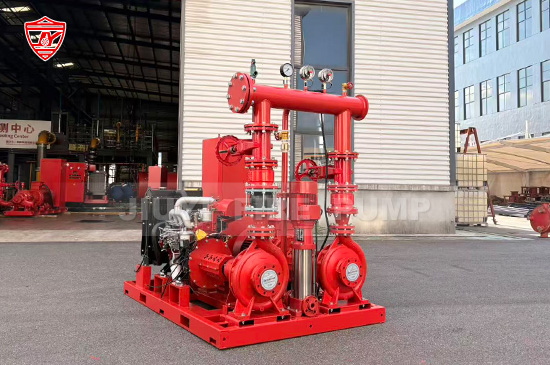
Choosing the correct fire pump flow and pressure is a critical part of designing a reliable fire protection system. The process should begin with a professional hydraulic calculation that determines the required flow and pressure at the system's most demanding operating condition.
The correct fire pump must account for system demand, elevation, friction losses, available water supply, pump performance, and applicable standards. Selecting a pump based only on nominal flow or pressure can result in an unsuitable system.
Whether the project requires an electric fire pump, diesel engine fire pump, horizontal split case pump, end suction pump, vertical turbine pump, or complete fire pump set, accurate equipment selection is essential for reliable fire protection performance.