Selecting the right electric fire pump is an important part of designing a reliable building fire protection system. The pump must provide sufficient water flow and pressure to support sprinklers, standpipes, hydrants, hose systems, or other firefighting equipment when required.
However, selecting an electric fire pump is not simply a matter of choosing a motor with enough horsepower. The pump, motor, controller, water supply, electrical system, piping, and fire protection requirements must work together as a complete system.
For building owners, fire protection engineers, contractors, and system integrators, understanding the key factors involved in electric fire pump selection can help prevent incorrect sizing, installation problems, and inadequate system performance.
This guide explains the most important considerations when selecting an electric fire pump for a building.
.jpg)
The first step in selecting an electric fire pump is determining the required flow rate.
The required flow depends on the building's fire protection system and the hydraulic demand calculated for the project. Different buildings can have significantly different water requirements depending on their size, occupancy, hazard classification, sprinkler design, standpipe system, and other fire protection equipment.
Fire pump flow is commonly specified in gallons per minute (GPM) or liters per minute (LPM).
For example, a small building may require a relatively low flow rate, while a large commercial building, warehouse, industrial facility, or high-rise building may require a much higher flow.
The required flow should be established through the project's hydraulic calculations and applicable fire protection requirements rather than estimated only from building area.
Flow alone is not enough to select an electric fire pump.
The pump must also provide sufficient pressure at the required flow.
The required pressure is influenced by several factors, including:
Building height
Elevation difference
Pipe friction losses
Sprinkler requirements
Standpipe requirements
Hydrant requirements
Valve and fitting losses
Required residual pressure at the most demanding point
For multi-story buildings, elevation can have a significant effect on the required pump pressure. Water must reach the highest and most hydraulically demanding location with sufficient pressure.
This means that a pump with a high flow rating may still be unsuitable if its pressure performance does not meet the project requirements.
The required pump pressure should be evaluated as part of the total dynamic head calculation.
Total dynamic head represents the energy the pump must provide to overcome elevation, friction losses, and the pressure required by the fire protection equipment.
A basic evaluation should consider:
Static elevation: The vertical distance between the water source and the point requiring water.
Friction loss: Pressure lost as water flows through pipes, elbows, valves, fittings, and other components.
Required system pressure: The pressure required at the most hydraulically demanding sprinkler, hydrant, hose connection, or other firefighting device.
Available suction pressure: The pressure available at the pump inlet from the water supply.
These factors should be evaluated together before selecting the pump.
Accurate hydraulic calculations are essential because oversizing or undersizing the pump can create unnecessary problems for the system.
The electric fire pump does not operate independently of the water source.
Before selecting the pump, determine where the fire protection system will obtain its water.
Common water sources include:
Municipal water supply
Dedicated fire water tank
Underground water tank
Reservoir
Storage cistern
Other approved water sources
The available water supply should be evaluated for both flow and pressure.
For example, if the water source cannot provide sufficient suction conditions, simply selecting a larger pump will not necessarily solve the problem.
The suction pipe arrangement, water level, tank configuration, available pressure, and installation elevation should all be considered during the design stage.
Electric fire pumps are available in different configurations. The appropriate pump type depends on the building, required flow and pressure, installation space, water source, and project specifications.
Horizontal split case pumps are widely used in commercial and industrial fire protection applications.
They are particularly suitable for systems requiring relatively high flow rates. Their construction also provides convenient access to internal components for inspection and maintenance.
End suction pumps can be suitable for building fire protection applications where the required flow and pressure fall within the pump's performance range.
They can provide a compact solution and are often considered where installation space is limited.
Vertical in-line pumps can offer a compact footprint because the pump and motor are arranged vertically.
This configuration may be useful in buildings where available pump room space is limited, provided that the pump meets the required hydraulic and applicable fire protection requirements.
Vertical turbine pumps are typically considered when the water source is located below the pump, such as in a deep tank or reservoir.
The vertical turbine configuration allows the pump to draw water from a lower-level source and is commonly used in applications with specific suction and water source requirements.
The pump type should therefore be selected based on the complete installation rather than simply the available floor space.
The electric motor is one of the most important components of an electric fire pump system.
The motor must have sufficient power to drive the pump throughout its required operating range.
When selecting the motor, consider:
Motor power
Voltage
Frequency
Phase
Rated speed
Starting current
Ambient temperature
Installation conditions
Applicable certification requirements
The motor should be properly matched to the pump performance curve.
If the motor is undersized, it may not be able to drive the pump at the required operating conditions. If it is significantly oversized, the system may become unnecessarily large and costly.
Motor selection should therefore be based on actual pump performance data and the applicable fire protection requirements.
One of the main advantages of an electric fire pump is the straightforward integration with a building's electrical infrastructure. However, the reliability of the electrical supply must be carefully considered.
The project team should determine:
Available voltage
Frequency
Number of phases
Transformer capacity
Available short-circuit current
Feeder arrangement
Cable sizing
Emergency power requirements
Electrical installation conditions
A fire pump requires a reliable power supply because its purpose is to operate during a fire emergency.
Depending on the building and applicable requirements, the electrical supply may need to be designed with specific levels of reliability or emergency power arrangements.
The fire pump manufacturer should receive accurate electrical information before the motor and controller are finalized.
The controller is an essential part of an electric fire pump system.
Its primary function is to automatically start the electric fire pump when the system pressure falls to the designated starting point and to provide appropriate control and monitoring functions.
The controller must be compatible with the selected motor and the electrical characteristics of the project.
Important considerations may include:
Motor voltage
Motor horsepower or kW
Starting method
System pressure settings
Manual and automatic operation
Alarm functions
Monitoring requirements
Applicable standards and certifications
The controller and motor should be considered together rather than selected independently.
Fire protection equipment is safety-critical, so applicable standards should be identified before equipment selection.
Depending on the project location and specifications, requirements may include NFPA standards, UL certification, FM approval, CE requirements, or local fire protection regulations.
If the project requires a UL Listed electric fire pump, the buyer should verify that the specific pump model and relevant components meet the required listing conditions.
It is important to distinguish between certification of individual components and certification of a complete fire pump assembly.
Project specifications should clearly identify which components require certification and which standards apply to the complete system.
A pump model should never be selected based only on its rated flow.
The pump performance curve provides important information about how the pump behaves at different flow rates.
When reviewing the curve, engineers should consider:
Rated flow
Rated pressure
Shutoff pressure
Pressure at different flow conditions
Maximum expected flow
Motor power requirements
The operating point should be located appropriately on the manufacturer's certified or approved performance data.
This helps ensure that the selected electric fire pump can satisfy the system demand without creating unnecessary pressure or motor loading.
The building environment can have a major influence on pump selection.
Before ordering an electric fire pump, verify:
Pump room dimensions
Door and access dimensions
Foundation requirements
Pump orientation
Pipe connection locations
Maintenance clearance
Ventilation
Ambient temperature
Drainage
Electrical equipment location
The pump room should provide enough space for installation, inspection, testing, and future maintenance.
This is especially important for large split case pumps, where the equipment and associated piping can require considerable space.
For high-rise buildings, additional consideration may also be required for pressure zoning and the overall arrangement of fire protection systems.
An electric fire pump should be evaluated as part of a complete system.
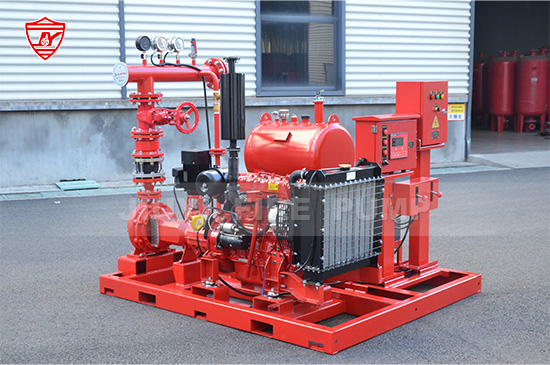
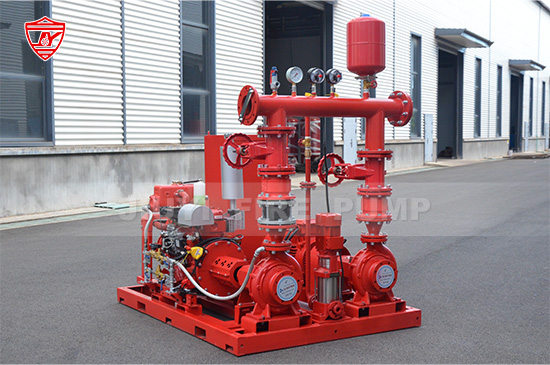
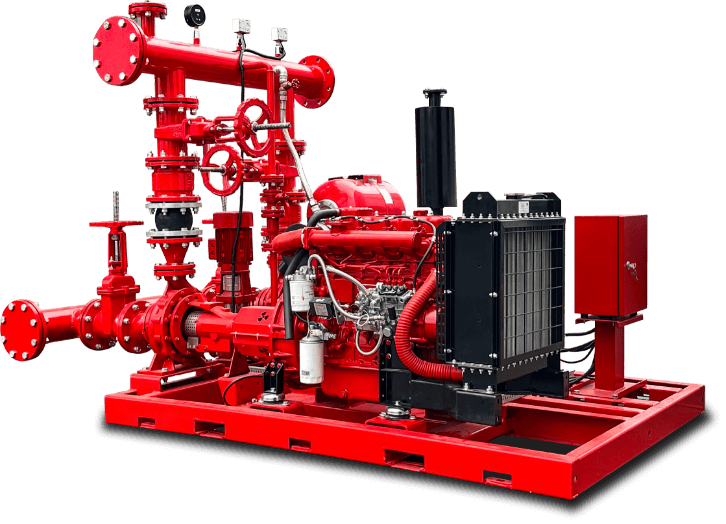
A typical electric fire pump package may include:
Electric fire pump
Electric motor
Fire pump controller
Jockey pump
Jockey pump controller
Pressure sensing equipment
Suction and discharge components
Valves
Test equipment
Monitoring and alarm components
The compatibility of these components is important for reliable system operation.
For example, the jockey pump should be appropriately selected to maintain system pressure without unnecessarily starting the main electric fire pump.
A coordinated package from an experienced fire pump manufacturer can simplify engineering, procurement, installation, testing, and commissioning.
A common misconception is that selecting a larger fire pump automatically provides better protection.
In reality, the pump should be appropriately sized for the system requirements.
An unnecessarily large pump can result in:
Higher equipment costs
Larger motor requirements
Increased electrical infrastructure requirements
Higher installation costs
Excessive system pressure
More complicated system design
The goal is not to select the largest available pump. The goal is to select a pump that meets the required flow and pressure while remaining compatible with the complete fire protection system.
Fire protection equipment must remain ready for operation over the life of the building.
When selecting an electric fire pump, consider how the system will be tested and maintained after installation.
The project should provide appropriate arrangements for periodic pump testing and inspection.
The manufacturer should also be able to provide technical documentation such as:
Pump performance curves
Installation instructions
Motor information
Controller documentation
Operation manuals
Maintenance recommendations
Factory test records
Certification documents where applicable
Factory performance testing is particularly valuable because it provides an opportunity to verify pump performance before the equipment is shipped to the project site.
Selecting an electric fire pump involves more than choosing a pump model from a catalog.
An experienced manufacturer should be able to review the project's hydraulic requirements, recommend suitable pump configurations, match the pump with the correct electric motor, coordinate the controller, and provide the necessary technical documentation.
For projects with special requirements, manufacturer engineering support can also help address issues related to water supply, installation conditions, electrical systems, testing, and certification.
A manufacturer with integrated design, production, testing, and quality control capabilities can provide better coordination across the complete fire pump package.
Before requesting a quotation or placing an order, prepare the following information:
Required flow rate
Required pressure
Total dynamic head
Available suction pressure
Water source
Building height
Fire protection system type
Required pump type
Motor voltage
Motor frequency
Motor phase
Available electrical power
Required controller type
Applicable fire protection standards
Required certification
Pump room dimensions
Installation environment
Jockey pump requirements
Testing requirements
Project delivery schedule
Providing this information to the manufacturer will make the selection process more accurate and reduce the risk of equipment mismatches.
.jpg)
Selecting an electric fire pump for a building requires a complete understanding of the fire protection system. The correct pump must provide the required flow and pressure while working reliably with the water supply, electrical system, motor, controller, piping, and other fire protection equipment.
The selection process should begin with hydraulic calculations and the required duty point. From there, the project team can determine the appropriate pump type, motor power, controller, certification, and installation arrangement.
Whether the project requires an end suction pump, horizontal split case pump, vertical in-line pump, or another electric fire pump configuration, the equipment should be selected according to actual project requirements rather than simply choosing the largest or lowest-cost option.
For building owners, contractors, engineers, and fire protection professionals, working with an experienced fire pump manufacturer can help ensure that the selected equipment is properly matched to the project and supported with appropriate testing, documentation, and technical assistance.
A correctly selected electric fire pump is an essential part of a reliable fire protection system. By evaluating hydraulic demand, water supply, electrical power, pump performance, certification, installation conditions, and long-term maintenance requirements, project teams can make a technically sound selection that supports dependable fire protection for the building.